Pirates liked to present themselves as hard men of action, practical, ruthless, guided by profit and survival. Yet scratch beneath that image and something more fragile appears. Life at sea was unpredictable in ways that defied reason. Storms rose without warning, ships vanished, wounds festered, and luck seemed to decide far too much. In that kind of world, superstition was not an indulgence. It was a coping mechanism, a quiet attempt to impose order on chaos.
As a historian, I find it difficult not to sympathise. Faced with the open ocean and a wooden hull between oneself and oblivion, a few rituals begin to feel less foolish and more… sensible.
Why Superstition Thrived at Sea
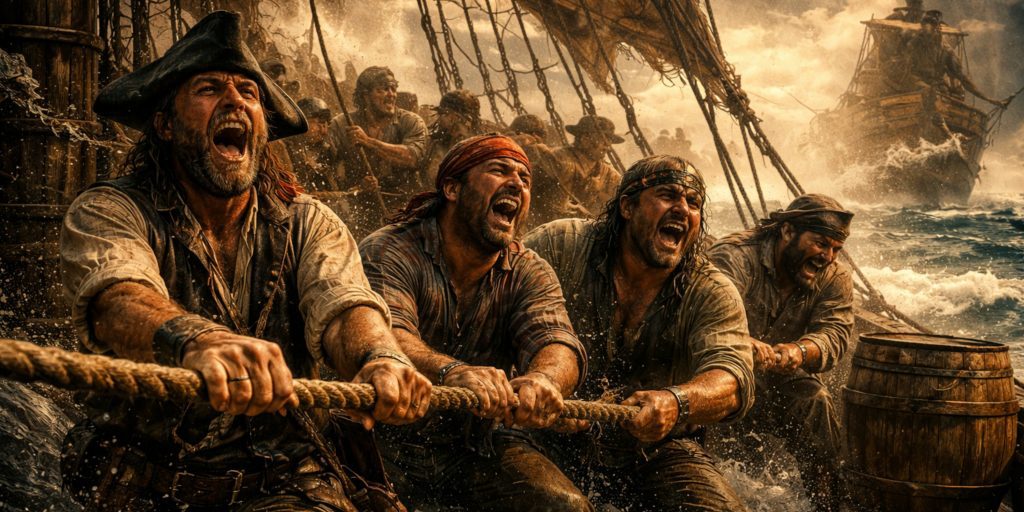
Pirate crews inherited much of their thinking from the wider maritime culture of the seventeenth and early eighteenth centuries. Sailors across Europe carried deeply rooted beliefs about luck, fate, and unseen forces. Pirates did not abandon these ideas. If anything, they leaned into them.
Several conditions made superstition almost inevitable:
- Constant exposure to danger, storms, disease, and violence
- Limited scientific understanding of weather and navigation
- Long periods of boredom followed by sudden crisis
- A reliance on collective morale to function as a crew
In such circumstances, superstition offered a kind of structure. It explained the unexplainable and gave sailors the comforting illusion that behaviour could influence outcome.
It also served a social purpose. Shared beliefs created cohesion. If everyone agreed that a certain act brought bad luck, then avoiding it became a form of discipline.
Common Pirate Superstitions
Pirates did not invent many of their beliefs, but they certainly preserved them with enthusiasm. Some are familiar even now.
Whistling and the Wind
Whistling on deck was often forbidden. It was believed to summon storms or “whistle up the wind.” Given how quickly weather could turn, it is not surprising that crews preferred silence to experimentation.
Women on Board
Women were widely thought to bring bad luck. This belief is often repeated, though with some irony. Ships themselves were frequently referred to as female, and carved figureheads were often women. Evidently, a woman made of wood was acceptable. A real one was another matter entirely.
The Colour Black
Black cats were considered lucky by some sailors, which stands in contrast to land-based superstition. Pirates were not immune to contradictions. They simply chose the version that suited them.
Starting a Voyage on Certain Days
Friday was considered an unlucky day to begin a journey. Attempts to challenge this belief did occur, and almost always ended badly enough to reinforce it. One wonders how many doomed voyages were quietly blamed on the calendar rather than poor planning.
Rituals, Charms, and Personal Habits
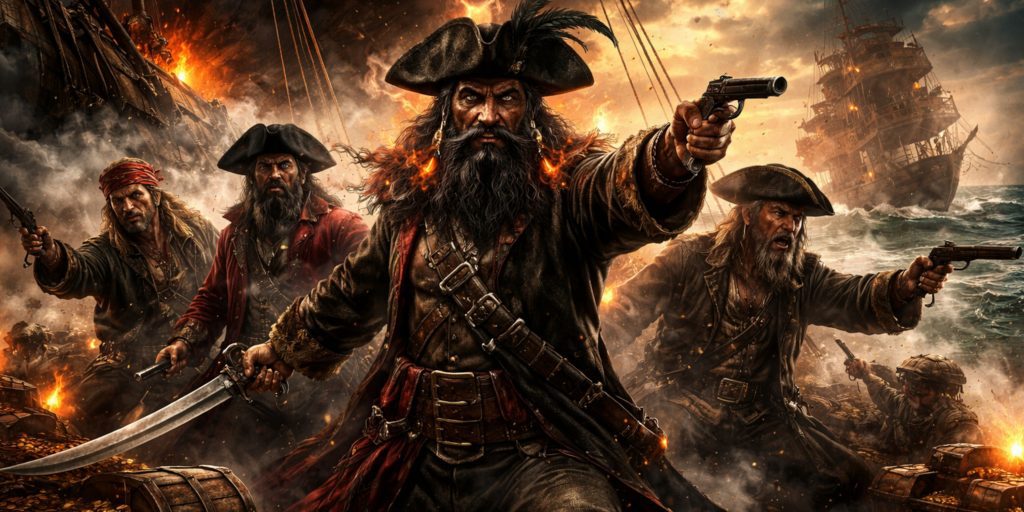
Superstition was not always collective. Many pirates carried private rituals that they guarded carefully.
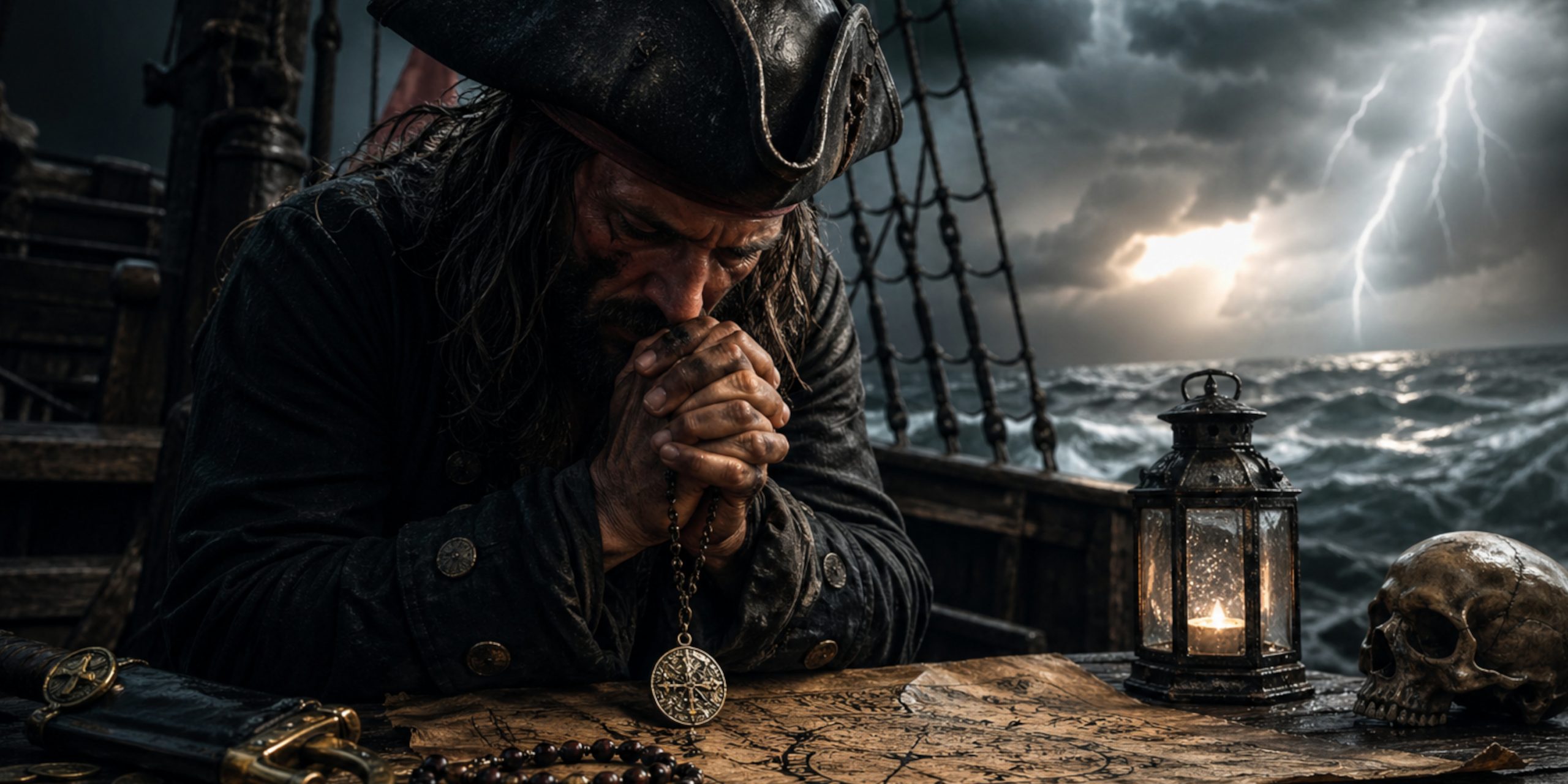
Coins sewn into clothing, charms tied to belts, or small tokens kept hidden in sea chests were common. These objects often had no intrinsic value. Their importance lay in what they represented, protection, luck, or simply a sense of control.
Some pirates followed strict routines before battle. A particular way of tying a sash, sharpening a blade, or even stepping onto deck with a certain foot first could become essential. Break the ritual, and doubt crept in.
There is something revealing here. These men, often portrayed as fearless, relied on habit and symbolism to steady themselves before violence.
The Supernatural and the Sea
The sea has always invited imagination. Pirates were no exception.
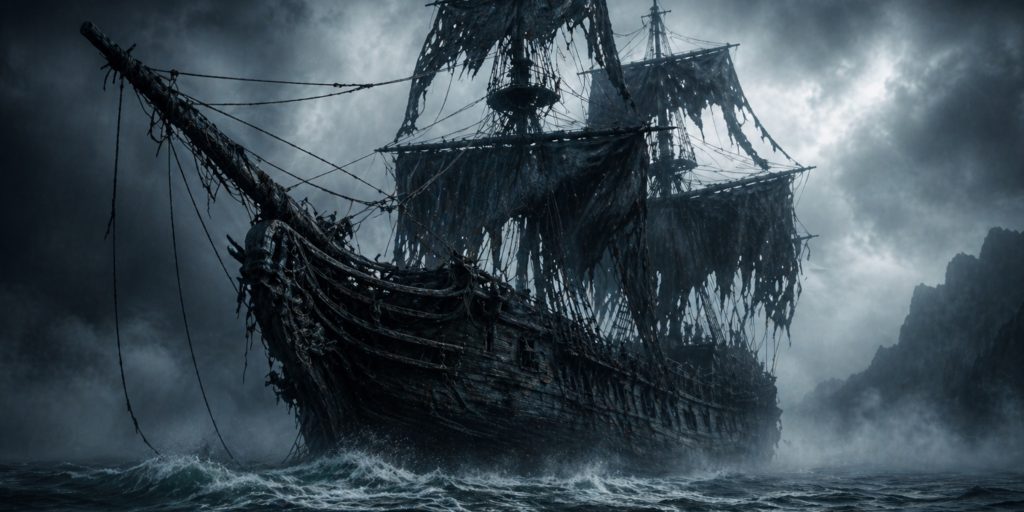
Ghost ships, sea monsters, and cursed waters all appear in accounts of the period. Sightings were reported with conviction, even if modern readers might raise an eyebrow.
Bioluminescence, strange lights, and unfamiliar marine life could easily be interpreted as something otherworldly. Without a scientific framework, the supernatural offered a convenient explanation.
Fear of the dead was also present. Executed pirates were sometimes believed to haunt coastlines or ships. Given the violent ends many met, it is perhaps unsurprising that their stories refused to stay buried.
Discipline Through Fear and Belief
Superstition was not only about comfort. It could also enforce behaviour.
Captains and officers occasionally encouraged certain beliefs because they maintained order. If a crew believed that disobedience angered unseen forces, then discipline became easier to enforce without constant punishment.
This blurred the line between belief and manipulation. Some pirates genuinely held these ideas. Others likely recognised their usefulness and allowed them to persist.
Either way, superstition functioned as a form of control. Not always rational, but often effective.
Luck, Fate, and Reputation
Pirates were acutely aware of reputation. A captain known as “lucky” attracted followers. One known for disaster struggled to maintain authority.
Superstition fed into this perception. Success could be interpreted as proof of favour from fate. Failure, as a sign of curse or ill omen.
This created a feedback loop. A successful raid reinforced belief in rituals and signs. A failed one deepened suspicion and anxiety. It is not hard to imagine how quickly a crew’s confidence could shift.
A Historian’s View
It is tempting to dismiss pirate superstition as ignorance, but that feels too easy. These beliefs reflect the environment in which pirates lived. When knowledge is limited and risk is constant, the human mind looks for patterns, however tenuous.
In some respects, pirate superstition is not so different from modern habits. We still cling to routines before important events, still attribute success to luck, still avoid small actions that feel “wrong” for reasons we cannot quite articulate.
The difference is scale. For pirates, the stakes were immediate and often fatal. A storm did not ruin a day. It ended lives.
So they whistled less, carried charms, avoided Fridays, and trusted in signs. Not because they were foolish, but because they were human.
And frankly, standing on a creaking deck with the horizon swallowing the sky, I suspect many of us would do exactly the same.