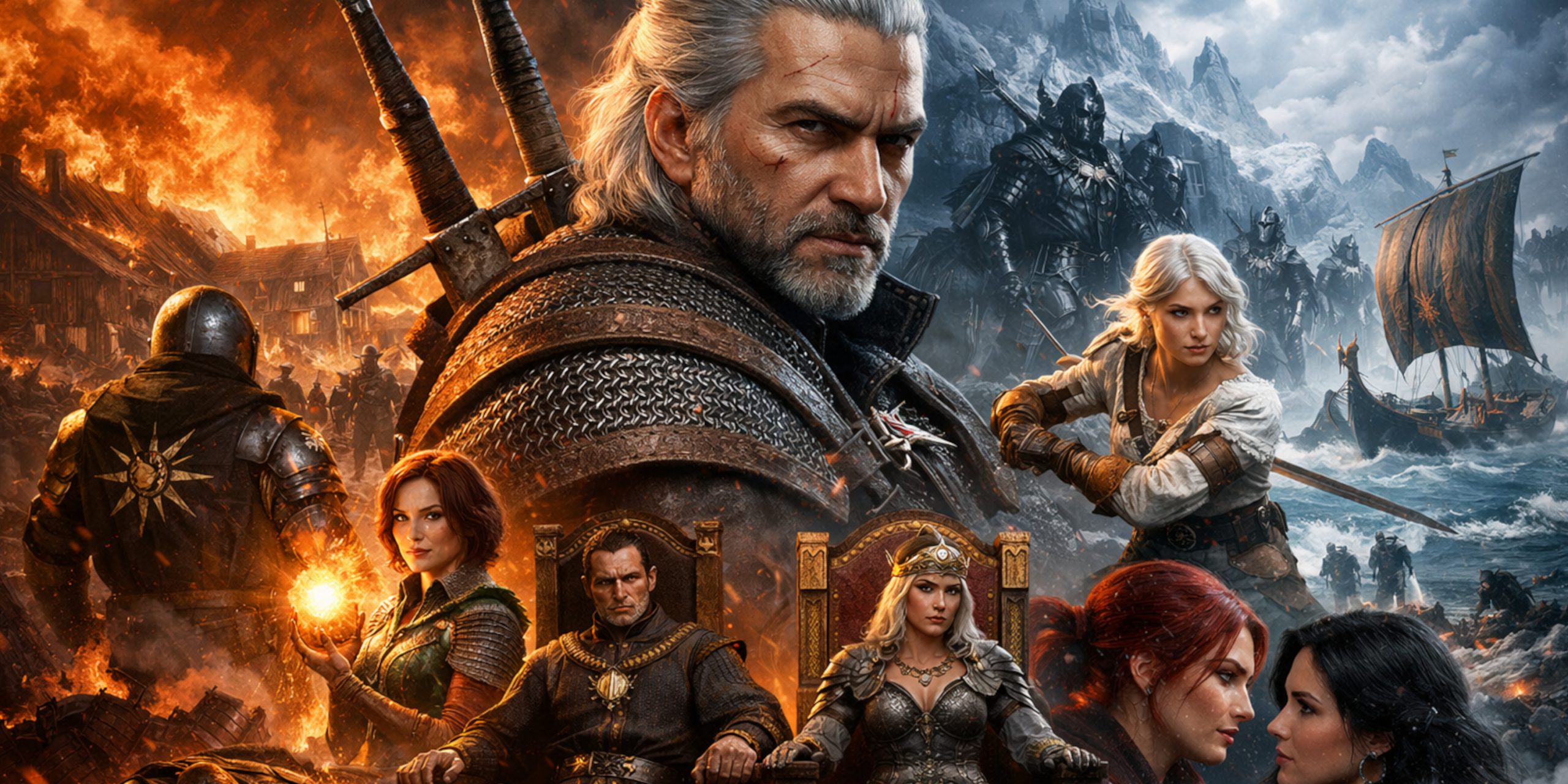
If there is one thing The Witcher 3 absolutely loves, it is making you feel strangely confident right before it quietly ruins somebody’s life.
You pick one dialogue option because it sounds vaguely supportive. Ten hours later, an entire kingdom is burning, your favourite side character is dead, and Geralt is standing in a swamp looking like he has just realised he left the oven on.
The Witcher 3 does not really have “good” and “bad” choices. It has messy choices, political choices, emotional choices, and the occasional choice where every option feels like being asked whether you would rather be bitten by a wolf or taxed by Nilfgaard.
These are the biggest decisions in the game that genuinely change the world around you.
Ciri’s Fate Changes Everything
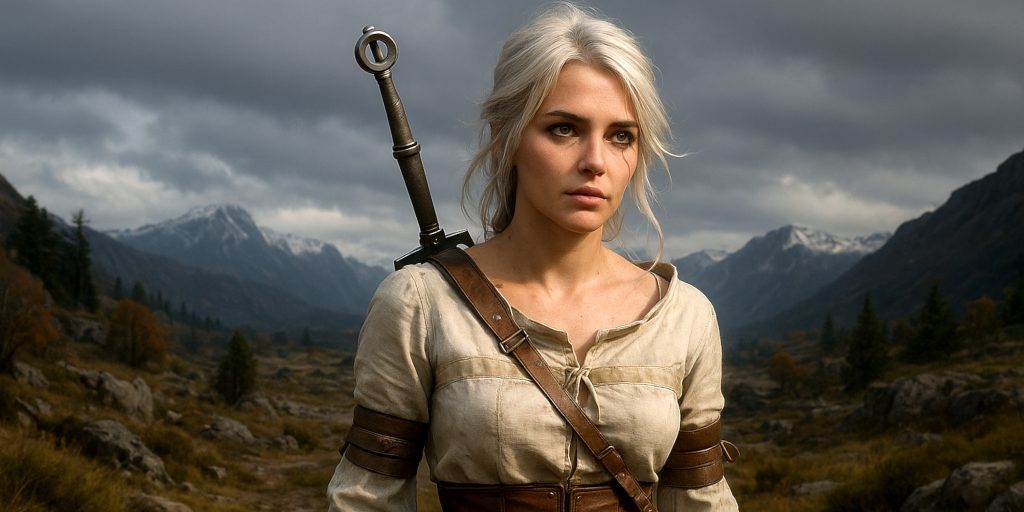
This is the biggest choice in the game, even though it does not look like one at first.
The game quietly tracks how you treat Ciri during the final act. Not how powerful she is, not whether you won every fight, but whether Geralt acts like an overbearing parent who thinks every problem can be solved by awkward advice and hovering.
To get Ciri’s best outcomes, you need to encourage her independence. That means:
- Having a snowball fight with her after Kaer Morhen
- Letting her speak to the Lodge of Sorceresses alone
- Letting her trash Avallac’h’s laboratory instead of telling her to calm down
- Visiting Skjall’s grave with her
- Refusing payment from Emhyr if you take her to him
If you make enough supportive choices, Ciri survives. If you do not, she dies confronting the White Frost.
That one outcome changes Geralt, Nilfgaard, and arguably the entire future of the Continent.
Ciri Becomes a Witcher
For a lot of players, this feels like the happiest ending.
If you support Ciri and avoid taking her to Emperor Emhyr, she becomes a witcher and travels the world on her own terms. Geralt gives her a silver sword and the two ride off into what is probably the closest thing this series allows to a happy ending.
It changes the world because Ciri walks away from politics entirely. Nilfgaard loses the chance to put the heir of Cintra on the throne, and one of the most powerful people in existence chooses monster hunting over ruling.
Honestly, after everything she goes through, that feels fair. If anybody has earned the right to disappear into the wilderness and spend a few years shouting at drowners, it is Ciri.
Ciri Becomes Empress of Nilfgaard
This ending only happens if several things line up.
You must:
- Encourage and support Ciri
- Take her to see Emhyr
- Refuse his reward
- Make sure Nilfgaard wins the war
If all of that happens, Ciri becomes the new ruler of Nilfgaard.
This completely reshapes the political map. Nilfgaard gains a far more compassionate ruler than Emhyr, the North loses any real chance of resisting the empire, and Ciri sacrifices her personal freedom for stability.
It is one of the most bittersweet endings in the game. Geralt clearly hates it. Ciri clearly does not entirely want it. Yet there is a strange sense that she might genuinely make the world better.
Which is very noble of her. Personally, if someone offered me the throne of Nilfgaard, I would fake my own death and move to Toussaint immediately.
If Ciri Dies, the World Feels Empty
If you make too many negative choices, Ciri dies during her confrontation with the White Frost.
Geralt survives, but barely in the emotional sense of the word. The final scenes become far darker, with Geralt hunting down the last Crone in Crookback Bog before quietly disappearing into grief.
The world itself changes because there is no future waiting for it. No empress. No witcher Ciri. No hope that somebody better might eventually take over.
The Continent carries on, but it feels colder, harsher, and strangely smaller.
Killing or Sparing Radovid Decides the War
The assassination plot against Radovid is one of the most important side stories in the game.
If you ignore the quest line and never complete “Reason of State”, Radovid survives and eventually wins the war.
That is terrible news for almost everyone.
Under Radovid:
- Redania conquers much of the North
- Mages are hunted and executed
- Non-humans are persecuted even more aggressively
- Nilfgaard is pushed back
Radovid is already unhinged by the time Geralt meets him. By the ending, he is essentially running the Continent like a paranoid bonfire with a crown.
Completing the assassination changes everything. Once Radovid dies, the future of the war depends on who you support next.
Choosing Roche or Dijkstra Changes the Future of the North
After Radovid dies, there is one final choice that feels weirdly unfair.
Dijkstra betrays Roche, Ves, and Thaler. You can either walk away and let him kill them, or defend your friends.
If you side with Roche:
- Dijkstra dies
- Nilfgaard wins the war
- Temeria survives as a vassal state
- Emhyr remains emperor
If you side with Dijkstra:
- Roche, Ves, and Thaler die
- Dijkstra takes control of Redania
- The North defeats Nilfgaard
- Temeria disappears
This is one of those classic Witcher choices where your head and your heart start arguing with each other.
Dijkstra is arguably the more competent ruler. Roche is the more loyal friend. The game basically asks whether you want to save the North or save the people who helped you.
Naturally, many players react by staring at the screen for five minutes and muttering “why are you making me do this?”
The Ruler of Skellige Changes an Entire Kingdom
Skellige has three possible futures depending on who becomes ruler.
Cerys Rules Skellige
If you support Cerys during the succession quest, she becomes queen.
This is generally the most peaceful and stable outcome.
Cerys pushes Skellige away from endless raiding and toward diplomacy, trade, and rebuilding. For once, Skellige stops behaving like an island chain powered entirely by axes and unresolved family issues.
The islands become calmer and more prosperous.
Hjalmar Rules Skellige
If you support Hjalmar, he becomes king.
Hjalmar is brave, charismatic, and about as subtle as a horse falling through a tavern roof.
Under his rule, Skellige continues its tradition of war and raiding. The kingdom remains strong, but it is also constantly fighting.
The world beyond Skellige ends up dealing with a more aggressive kingdom that is always one ale too many away from another invasion.
Svanrige Takes Power
If you ignore the succession quest entirely, Svanrige becomes king.
This is probably the most surprising outcome. Svanrige centralises power and turns Skellige into a far more organised monarchy.
He brings order, but through force. Civil conflict breaks out, old clan traditions are weakened, and Skellige becomes more powerful at the cost of becoming less free.
It is one of the most quietly unsettling endings in the game. Nobody talks about it much because most players accidentally crown Cerys while trying to be nice.
What Happens to Keira Metz Matters More Than You Think
Keira Metz can survive, die, or end up at Kaer Morhen.
If you send her to Kaer Morhen, she later helps during the battle and can end up travelling with Lambert.
If you let her go to Radovid with Alexander’s notes, Radovid has her executed.
If you fight her, she dies there and then.
Keeping Keira alive has a surprisingly big effect on the story. She helps defend Kaer Morhen, Lambert survives more easily, and the ending feels slightly less tragic.
Also, letting Radovid get his hands on a powerful sorceress because she says she has “a plan” is one of those decisions that has the same energy as trusting a suspiciously cheap horse salesman in Velen.
Whether You Save Lambert Changes the Fate of the Witchers
During the Battle of Kaer Morhen, Lambert can die if you do not help him quickly enough.
If he survives, he remains one of the last witchers in the world and can even leave with Keira.
If he dies, the old witcher schools lose another survivor, and Kaer Morhen feels even more like a fading memory.
The game never makes a huge speech about it. It just quietly removes another piece of the old world.
That is very Witcher, really. Nothing explodes. You just suddenly realise there is one less sarcastic mutant wandering around being rude to everybody.
Choosing Triss or Yennefer Changes Geralt’s Ending
This does not change the entire political map, but it changes Geralt’s world.
If you romance Yennefer, Geralt eventually settles down with her.
If you romance Triss, he leaves with her to Kovir.
If you try to romance both, Geralt gets spectacularly humiliated and ends the game alone.
Which, to be fair, is probably the most realistic consequence in the entire game.
The relationship choice shapes Geralt’s future in a huge way because after all the war, death, monsters, and catastrophically awkward family reunions, this is one of the few decisions that is actually about him.
The Bloody Baron’s Fate Changes Velen
The Bloody Baron quest line has two major outcomes.
If Anna survives, the Baron takes her away in the hope of finding a cure.
If Anna dies, the Baron hangs himself.
Neither ending is especially cheerful, because this is Velen and joy appears to have been banned by local law.
Still, the result changes the fate of Crow’s Perch and the people around him. Without the Baron, the region falls further into chaos. With him alive, there is at least a chance, however slim, that he might finally become something better than the wreck he has been.
Hearts of Stone Has Its Own World-Changing Choice
In Hearts of Stone, you eventually decide whether to save Olgierd von Everec or let Gaunter O’Dimm take his soul.
If you save Olgierd:
- Gaunter is defeated
- Olgierd gets a second chance at life
- Geralt learns a little more about the terrifying thing pretending to be a man
If you do not:
- O’Dimm claims Olgierd’s soul
- Geralt can ask for a reward
- One of the most unsettling characters in the series walks away smiling
This choice does not reshape kingdoms, but it changes the moral tone of the entire expansion.
Saving Olgierd feels like one small victory in a world that rarely offers them.
Blood and Wine Lets You Decide Toussaint’s Future
The Blood and Wine expansion has several endings depending on who survives.
You can:
- Save both Anna Henrietta and Syanna
- Let Syanna kill Anna Henrietta
- Kill Dettlaff and lose Syanna
These choices determine whether Toussaint ends the story with peace, revenge, or a royal disaster that feels like it should come with dramatic opera music.
The best ending comes from reconciling the sisters and uncovering the truth about their past.
Which is easier said than done. Toussaint spends most of the expansion looking like a fairy tale, right up until you realise it is actually one of the darkest stories in the entire game wearing a very expensive hat.
Takeaway
The Witcher 3 is brilliant because its choices do not just change the final cutscene. They ripple through entire kingdoms, friendships, families, and futures.
You are not deciding whether to be good or evil. You are deciding which version of a broken world gets to survive.
Sometimes that means making Ciri laugh with a snowball fight.
Sometimes it means deciding the fate of empires.
And sometimes it means accidentally flirting with both Triss and Yennefer, then spending the rest of the game learning a valuable lesson in consequences.