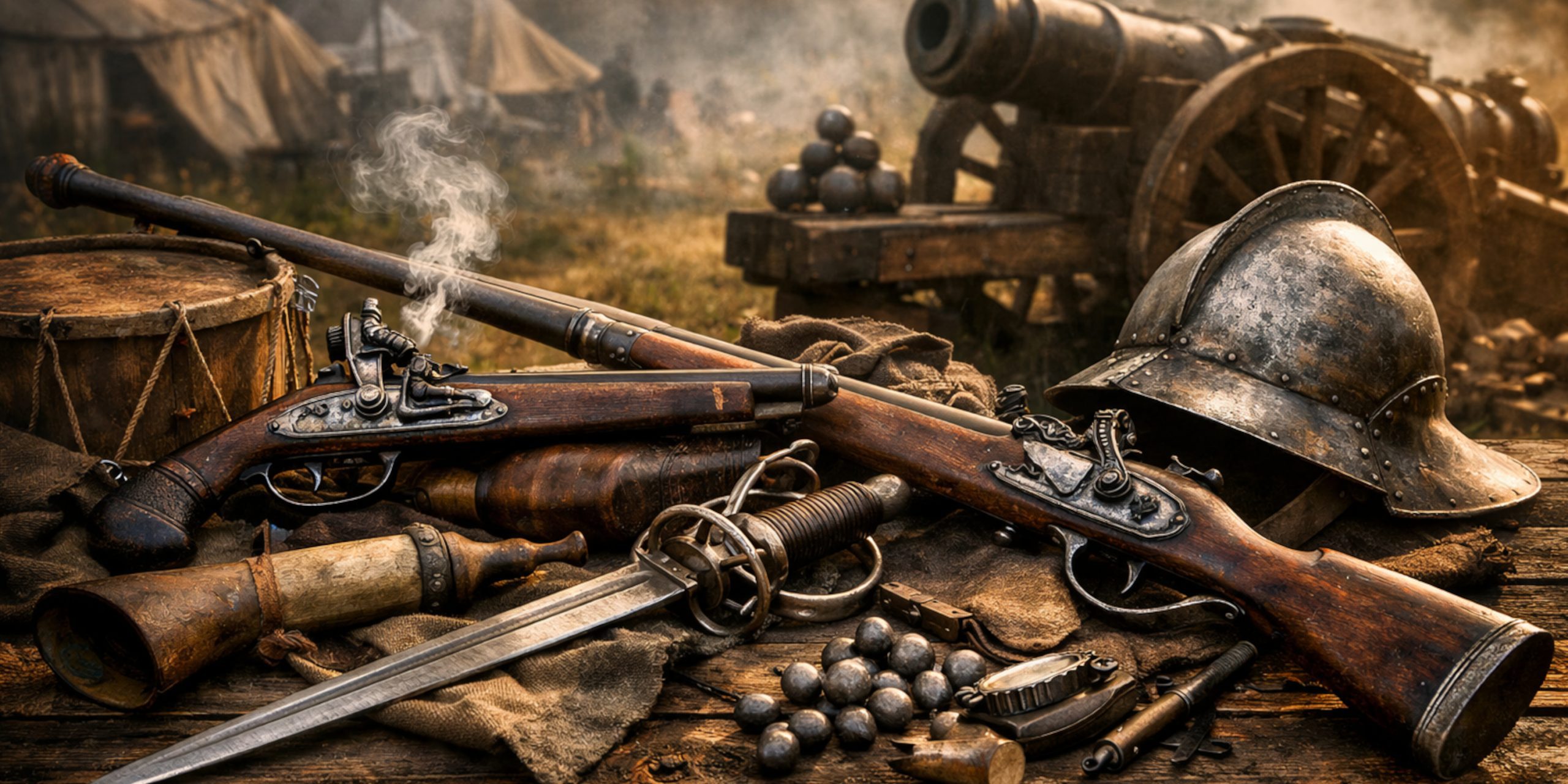
The Thirty Years’ War was fought between 1618 and 1648, and if there is one thing this conflict did particularly well, besides reducing large parts of Central Europe to misery and smoke, it was showcasing an extraordinary mixture of old and new weapons.
On one side stood medieval survivors such as the pike and wheel-lock pistol. On the other marched increasingly modern firearms that would eventually make armour and heroic cavalry charges look rather optimistic. It was a war in which a soldier might carry a rapier at his hip, a pistol in his saddle holster, and still have to spend most of the day desperately trying not to be skewered by a very long stick.
What follows are the weapons that came to define the conflict.
The Matchlock Musket
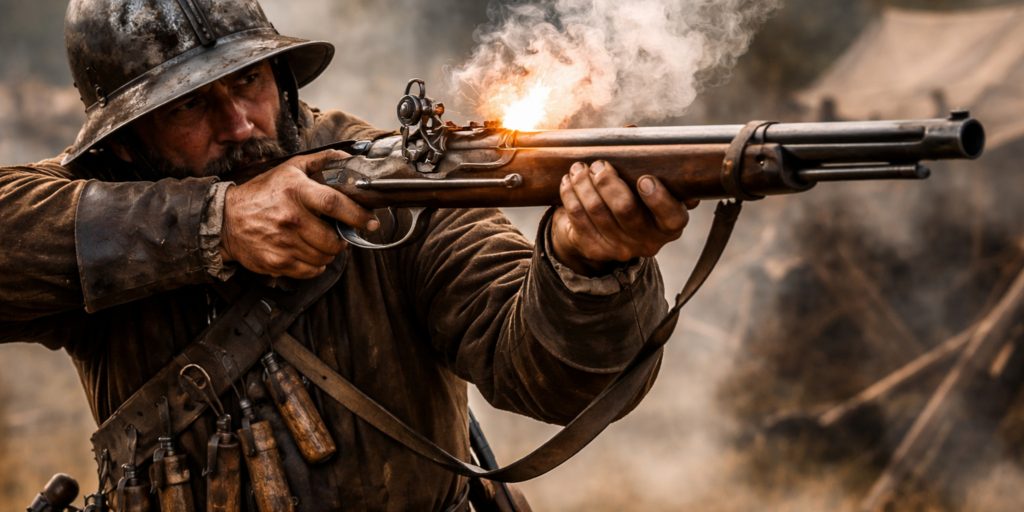
No weapon better symbolises the Thirty Years’ War than the matchlock musket. It was the standard firearm of infantry across Europe and by the middle of the war it had become the real killer on the battlefield.
Early muskets were heavy, cumbersome things, often weighing 7 to 10 kilograms. Many required a forked rest to support the barrel while firing. The soldier carried a lit length of slow-burning cord, called a match, which dropped into the priming pan when the trigger was pulled.
The entire process sounds absurdly fragile because it was. Rain could ruin the powder. Wind could blow sparks into the wrong place. Nervous recruits occasionally managed to set themselves, or their neighbours, on fire.
Yet the weapon was devastating.
Typical Specifications
| Feature | Typical Matchlock Musket |
|---|---|
| Length | 140 to 170 cm |
| Weight | 7 to 10 kg |
| Calibre | Around .60 to .80 |
| Effective range | 50 to 100 metres |
| Rate of fire | 1 to 2 shots per minute |
At close range, a musket ball could smash through armour, bone, and most illusions of personal invincibility. Heavy cavalry who had once ridden confidently across battlefields suddenly discovered that steel breastplates were no longer the reassuring guarantee they had been a century earlier.
By the later stages of the war, lighter muskets began to appear. These no longer needed a rest and could be fired more quickly. Gustavus Adolphus of Sweden was especially keen on these lighter weapons, because unlike many generals of the period, he appreciated that soldiers are generally more useful when they can actually move.
The Pike
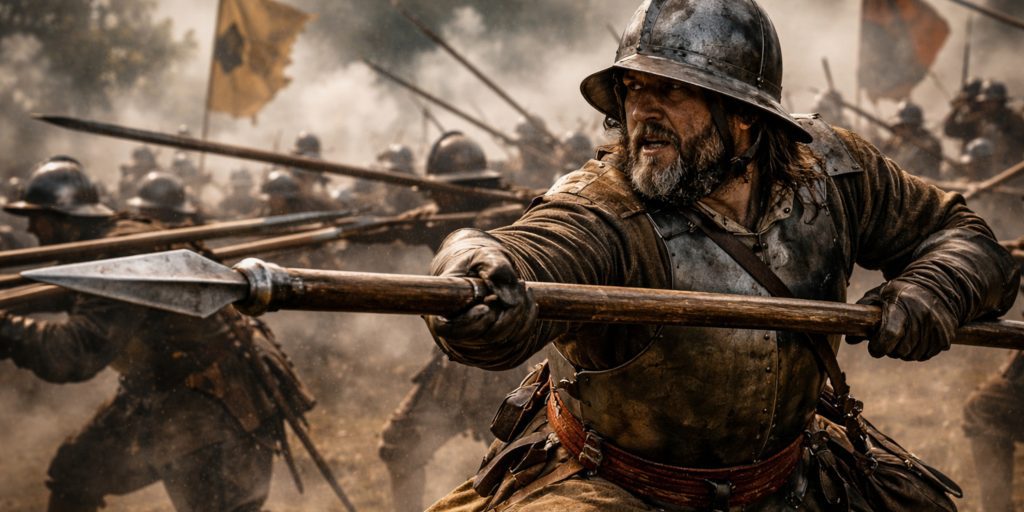
The pike remained essential throughout the war. Even as firearms spread, infantry formations still relied on ranks of pikemen to protect musketeers from cavalry.
A pike was usually between 4 and 6 metres long, essentially turning a line of infantry into a moving forest of spear points. Cavalry horses were not especially enthusiastic about charging into this arrangement, and frankly one can hardly blame them.
Why the Pike Still Mattered
- Protected musketeers while they reloaded
- Formed dense defensive squares against cavalry
- Allowed infantry to hold ground against enemy advances
- Could be used offensively in close formation
The classic formation of the early war was the pike-and-shot block, with musketeers on the outside and pikemen clustered in the centre. The Spanish tercio became famous for this arrangement.
Formations often contained several thousand men. To contemporaries they looked impressive. To later commanders they increasingly looked like an excellent target for artillery.
By the 1640s, pike formations were shrinking as firearms became more dominant, but they did not disappear entirely. The bayonet would eventually replace them, though that belongs to a later century and a rather different argument.
The Rapier
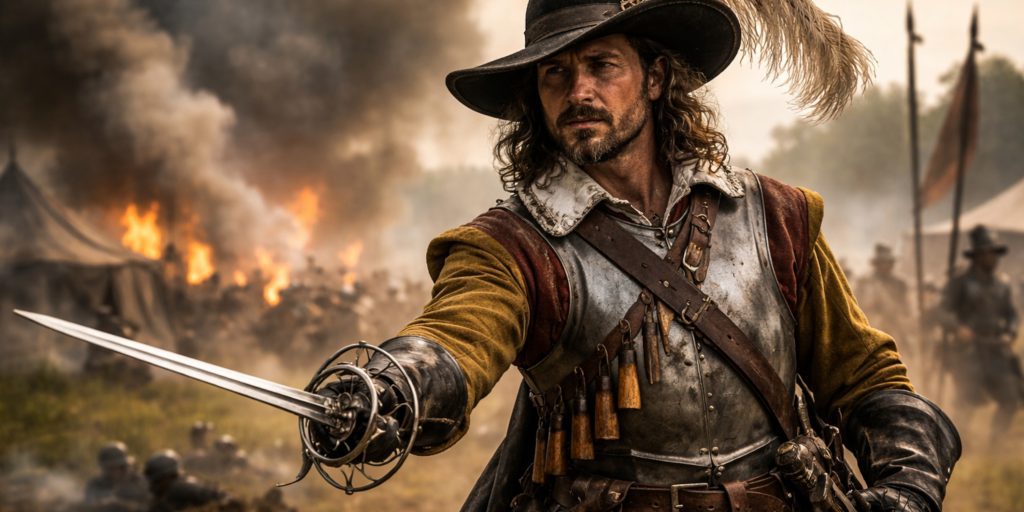
The rapier was not usually a battlefield weapon in the same sense as the musket or pike, but it was everywhere in the Thirty Years’ War. Officers, noblemen, cavalrymen and anyone with a sense of style carried one.
The rapier was a long, slender sword designed primarily for thrusting. It had developed in the late sixteenth century and became deeply fashionable across Europe.
Typical Characteristics
| Feature | Rapier |
| Blade length | 90 to 120 cm |
| Use | Thrusting, civilian duels, officer sidearm |
| Hilt | Complex swept or cup hilt |
| Typical owner | Officers, nobles, gentlemen |
On campaign, officers often wore ornate rapiers with elaborate hilts. These could be beautifully crafted, though they were not always practical in the chaos of a battlefield. One gets the impression that some noblemen spent rather more time choosing the decoration on their sword hilt than learning how to survive artillery fire.
The rapier also reflects the increasingly blurred line between military life and aristocratic fashion. Many officers saw themselves as gentlemen first and soldiers second, which occasionally produced a degree of battlefield confusion that would have been amusing had it not usually ended in death.
The Broadsword and Cavalry Sabre
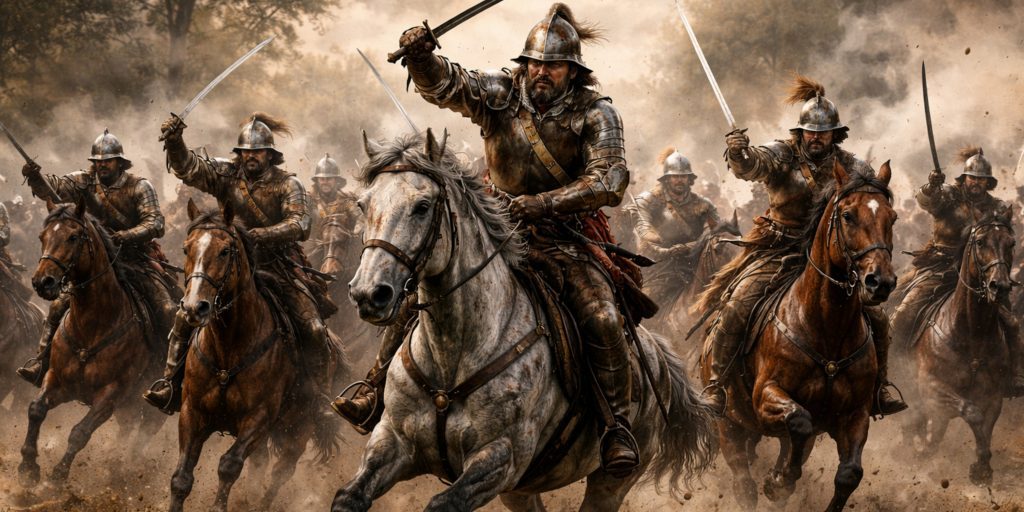
Cavalry in the Thirty Years’ War usually preferred sturdier swords than the rapier. These included broadswords, backswords and early cavalry sabres.
Heavy cavalry such as cuirassiers often carried straight, broad-bladed swords suitable for hacking at enemy infantry or other riders.
The famous cuirassiers of the period, especially those serving the armies of the Holy Roman Empire and Sweden, were equipped with:
- Two wheel-lock pistols
- A sword or broadsword
- Sometimes a carbine
- Armour including a breastplate and helmet
Cavalry swords tended to have broad blades around 80 to 100 cm long. They were designed less for elegant fencing and more for the bluntly practical business of surviving a melee.
Some cavalry sabres, especially in eastern and central Europe, showed clear influence from Hungarian and Polish styles.
Cavalry often used curved sabres that were excellent for slashing attacks from horseback. The Polish hussars, in particular, had a terrifying reputation and very little interest in allowing their enemies a quiet afternoon.
The Wheel-Lock Pistol
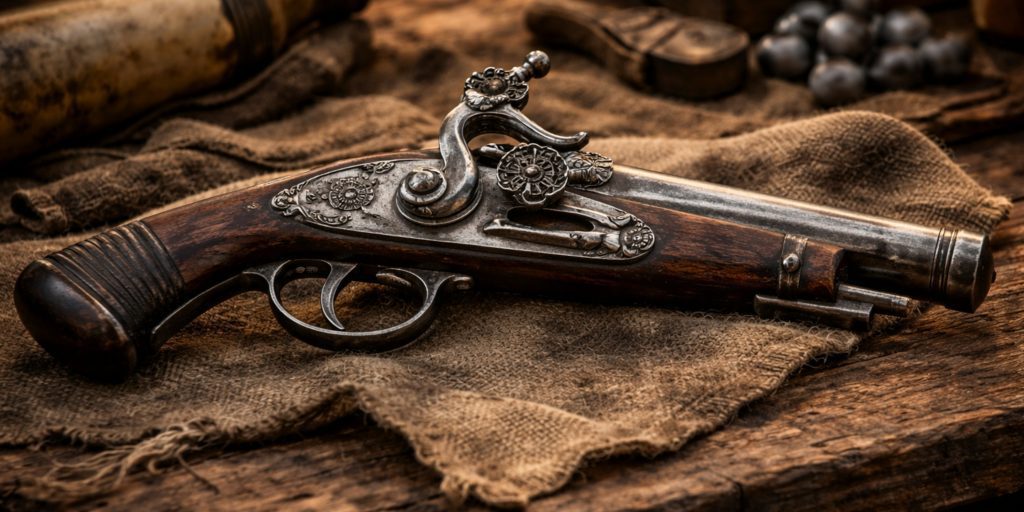
Before the flintlock became widespread, the wheel-lock pistol was the classic cavalry firearm.
It worked using a spring-loaded wheel that spun against a piece of pyrite to create sparks. The mechanism was ingenious and impressively complicated. It was also expensive and rather delicate, which meant it was perfectly suited to wealthy cavalry officers and absolutely unsuitable for anyone likely to drop it in mud.
Typical Use
Cavalrymen often carried a pair of wheel-lock pistols in saddle holsters. During a charge they would fire one or both pistols at close range and then draw their swords.
| Feature | Wheel-Lock Pistol |
| Length | 30 to 60 cm |
| Effective range | Under 20 metres |
| Rate of fire | Single shot before lengthy reload |
| Typical users | Cuirassiers, cavalry officers |
The pistol was central to the tactic known as the caracole. Cavalry rode forward in ranks, fired their pistols, then wheeled away to reload while the next rank advanced.
In theory this was orderly and clever.
In practice it often looked like a queue of nervous horsemen politely taking turns to miss each other.
Generals such as Gustavus Adolphus increasingly abandoned the caracole in favour of direct charges with sword in hand.
The Flintlock Musket
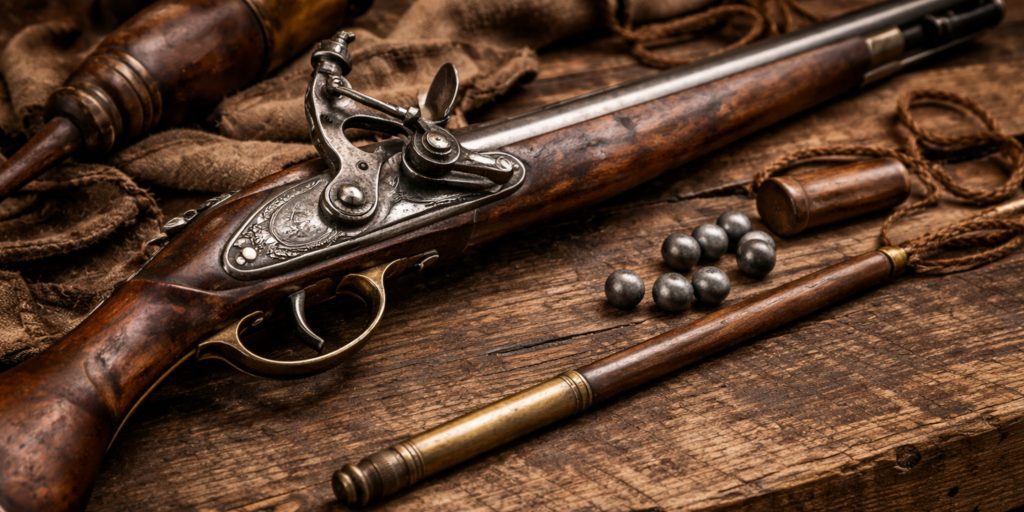
By the later years of the war, the flintlock musket began to appear alongside older matchlocks.
The flintlock mechanism used a piece of flint striking steel to create sparks. This was more reliable than the matchlock and removed the need to carry a constantly burning match.
Advantages Over the Matchlock
- Faster to use
- More reliable in wet weather
- Safer to carry near powder stores
- Easier to manage during night operations
The flintlock did not fully replace the matchlock until after the war, but its appearance marks the beginning of a new era in warfare.
One can almost sense the exhausted soldiers of Europe looking at the flintlock and thinking, at last, a firearm that does not require carrying around a smouldering piece of string like a particularly dangerous candle.
The Cannon
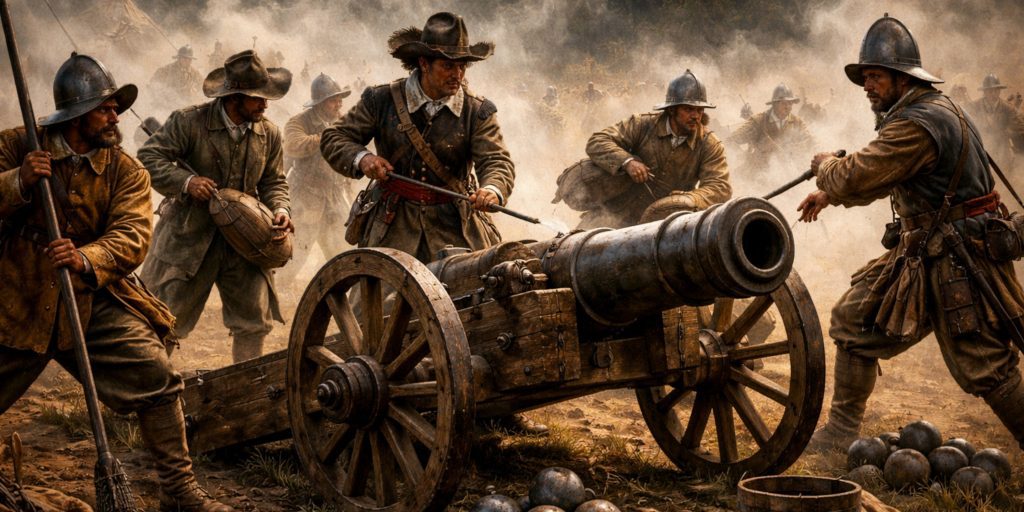
Artillery played an increasingly important role during the Thirty Years’ War. Cannon could devastate fortifications, smash infantry formations and completely ruin a general’s carefully arranged battle plan.
The Swedish army under Gustavus Adolphus became famous for its lighter, more mobile artillery.
Common Types of Artillery
| Type | Typical Role |
| Field cannon | Support infantry in battle |
| Culverin | Long-range gun for sieges and field use |
| Demi-culverin | Medium artillery piece |
| Mortar | High-angle fire during sieges |
Sieges were a defining feature of the war, and artillery often determined their outcome. Cities such as Magdeburg suffered catastrophic destruction.
The Halberd
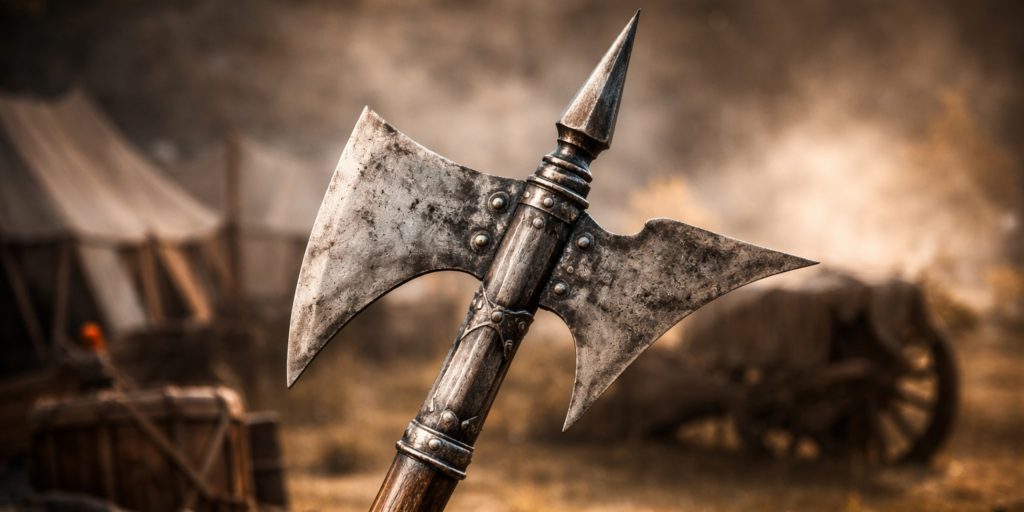
The halberd survived as both a practical weapon and a badge of rank.
A halberd combined an axe blade, a spike and a hook on the end of a long shaft. It was especially useful for sergeants and officers who needed something more distinctive than a pike.
Why Officers Carried Halberds
- Easier to identify in battle
- Useful for directing troops
- Effective in close combat
- Symbolised authority
The weapon was less common among ordinary infantry by the later stages of the war, but it remained widespread among NCOs and guards.
There is something wonderfully theatrical about the halberd. It seems designed by a committee that could not decide whether they wanted an axe, spear or hook, and simply answered, yes.
The Dagger and Main-Gauche
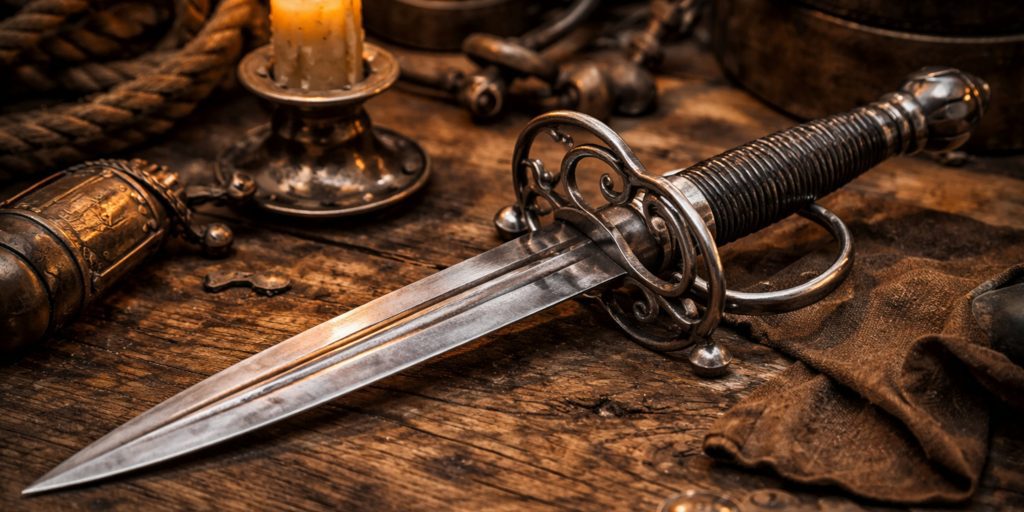
Daggers were carried by soldiers across Europe. Officers and noblemen sometimes paired a rapier with a left-hand dagger, or main-gauche, for parrying.
These weapons were often beautifully decorated and could be surprisingly elaborate.
On the battlefield, daggers served several purposes:
- Last resort weapon
- Tool for finishing a wounded opponent
- Utility knife for daily camp life
- Companion weapon in duels
This may not be the most romantic aspect of the war, but soldiers have always discovered that a small blade is useful for everything from cutting food to opening letters to threatening people who have borrowed your boots.
How These Weapons Changed Warfare
The Thirty Years’ War marked the transition from medieval to modern warfare.
At the start of the conflict, armies still relied heavily on pikes, cavalry charges and traditional ideas of honour in battle. By the end, firearms and artillery had become dominant.
The key developments included:
- Muskets becoming more important than pikes
- Cavalry shifting from pistol tactics to direct charges
- Artillery becoming lighter and more mobile
- Armour gradually becoming less effective
- Flintlocks beginning to replace older firearms
This was not a neat or tidy transformation. The Thirty Years’ War was chaotic, brutal and painfully experimental. Generals tried new tactics, often with dreadful consequences. Soldiers carried a mixture of weapons from different centuries. Entire armies marched into battle looking as though they had raided a museum and then added gunpowder.
Yet by 1648 the future was clear. The age of the pike was fading. The musket would dominate the battlefield for the next two centuries.
Seven Swords Takeaway
The iconic weapons of the Thirty Years’ War reveal a world in transition. Matchlock muskets and pikes still stood side by side, while cavalry clung to swords and pistols with varying degrees of success. The rapier remained a symbol of status, even when status did very little to stop a musket ball.
As a historian, I find these weapons endlessly fascinating because they capture a strange moment between two eras. The old medieval world had not quite disappeared, but the modern one had already arrived, loaded a musket, and was preparing to fire.
There is also something deeply human in these weapons. Behind every musket, pike or sword stood an exhausted soldier trying to survive one of Europe’s worst wars. Some did so with skill, some with courage, and some, rather unfortunately, with a lit match cord too close to their powder horn.