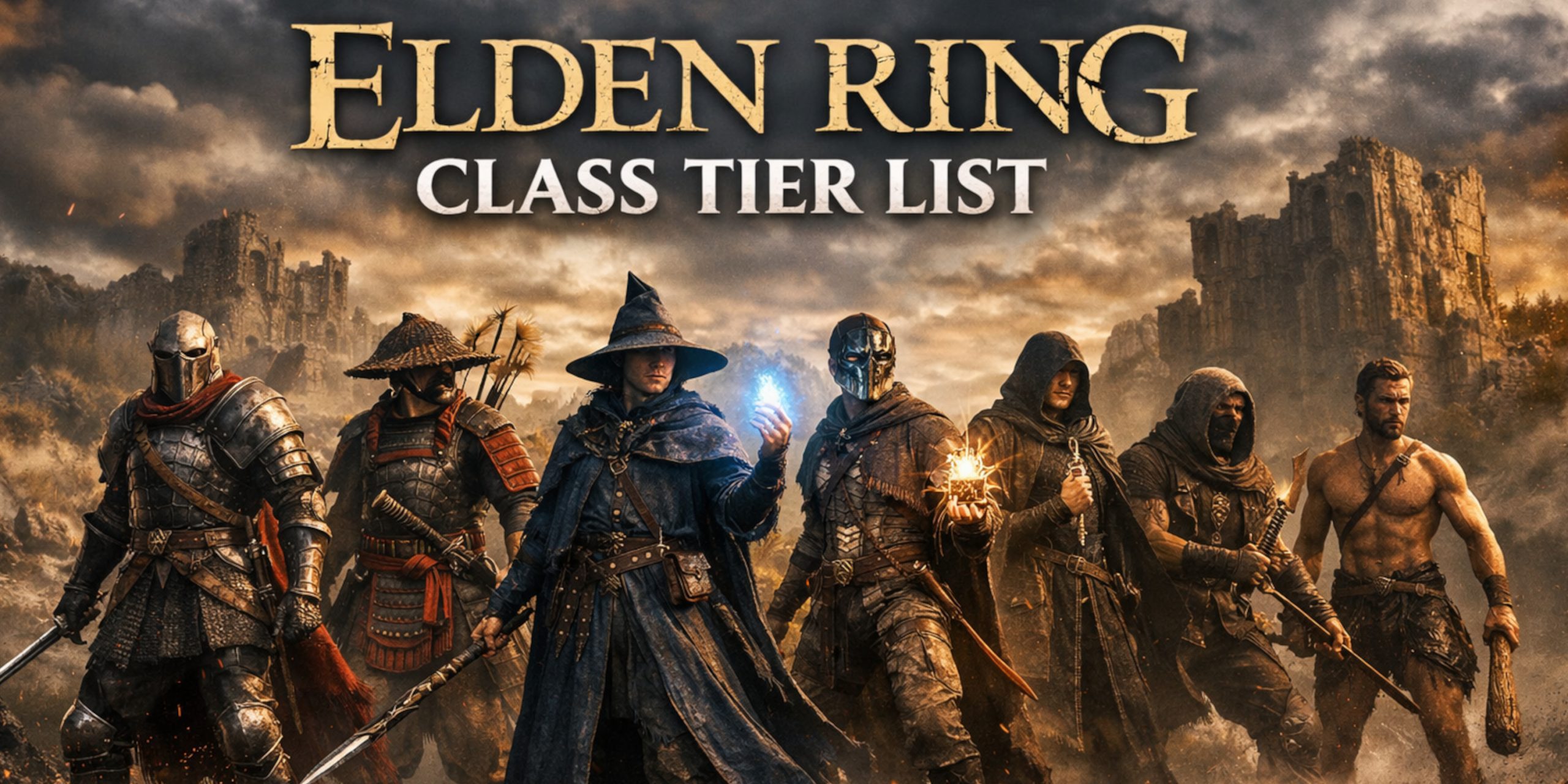
Choosing a starting class in Elden Ring feels like the first big decision of the adventure. The game does not lock you into anything permanently, yet those opening hours can feel very different depending on what you pick. Some classes walk into the Lands Between with a confident stride. Others arrive wearing a bucket on their head and hope for the best.
Veterans know the truth. A starting class is really a starting toolkit. Weapons, stats, and spells shape how forgiving the early game feels. If you pick something well rounded, the journey begins smoothly. If you pick something strange, you may spend the first hour questioning your life choices.
This tier list focuses on early strength, versatility, and build potential. It considers PvE progression first, with PvP viability as a secondary factor.
S Tier Classes
These classes offer the strongest starts and the most flexible build paths. They make the opening areas far more forgiving while still scaling beautifully into late game builds.
Vagabond
The Vagabond is the closest thing Elden Ring has to a classic knight. Heavy armour, strong strength and dexterity, and one of the best starting loadouts in the game.
It begins with a longsword and halberd, both excellent weapons that can carry you well into the mid game. The armour also provides real protection early on, which matters more than people realise when a random soldier can two shot you.
What makes Vagabond shine is efficiency. Its stat spread works for strength builds, quality builds, and even some hybrid setups later.
If someone asked for the safest possible start in Elden Ring, this would be the answer.
Why it ranks S tier
- Strong starting armour
- Excellent early weapons
- Flexible stat distribution
- Smooth path into multiple late game builds
Samurai
The Samurai has quietly become one of the most popular starting classes in the entire game.
The reason is simple. It begins with the Uchigatana, a weapon that inflicts bleed and scales well throughout the game. Bleed damage is incredibly strong in Elden Ring, especially against bosses with large health pools.
The Samurai also begins with a longbow, giving early ranged options without needing to invest in magic.
It feels like starting the game with a toolkit that already knows what it is doing.
Why it ranks S tier
- Uchigatana is a top tier early weapon
- Bleed damage melts many bosses
- Good armour and mobility
- Ranged bow options from the start
A Tier Classes
These classes are extremely strong but require a little more familiarity with the game or slightly more investment to reach their full potential.
Astrologer
The Astrologer is Elden Ring’s pure sorcery class. It begins with high intelligence and access to powerful early spells like Glintstone Pebble, which remains surprisingly effective even into the mid game.
For players who prefer fighting from a distance, this class can make the early game dramatically easier. Enemies often fall before they even reach you.
However, spellcasting requires careful FP management and positioning. If something gets too close, the Astrologer can feel fragile.
Once upgraded with stronger spells, though, the class becomes extremely powerful.
Strengths
- Powerful ranged damage
- Excellent intelligence scaling
- Fast access to strong sorceries
Weaknesses
- Fragile early defence
- Requires careful resource management
Prisoner
The Prisoner is one of the most interesting hybrid classes in the game. It blends dexterity and intelligence, allowing for both melee combat and sorcery.
The starting weapon, the Estoc, is fast and precise. Meanwhile the Prisoner begins with the spell Magic Glintblade, which floats briefly before firing, creating interesting timing strategies in combat.
The class rewards creativity. It is not as straightforward as Vagabond or Samurai, but players who enjoy hybrid builds often find it incredibly satisfying.
B Tier Classes
These classes are perfectly viable but slightly less efficient early on.
Warrior
The Warrior is built around dexterity and mobility. It begins with dual scimitars, encouraging aggressive and fast paced combat.
Dual wielding can deal excellent damage once players understand power stancing. Early on, however, the Warrior lacks the defensive security of heavier classes.
It shines in the hands of players who enjoy quick dodges and relentless offence.
Confessor
The Confessor blends faith magic and melee combat. It begins with healing and support incantations along with a broadsword.
The class feels a bit like a wandering knight priest. Balanced, adaptable, but slightly unfocused at the start.
Once faith builds gain access to stronger incantations later in the game, the Confessor becomes far more impressive.
Hero
The Hero leans heavily into strength builds. It starts with a powerful axe and high strength stat, encouraging a straightforward approach. Hit enemies very hard and try not to get hit back.
The early game can feel slightly rough because heavy weapons are slower, and timing matters. Once upgraded though, strength builds can become devastating.
C Tier Classes
These classes are more niche. They are still viable but require more patience or game knowledge to shine.
Prophet
The Prophet focuses on faith casting, but its starting spells are not as immediately powerful as the Astrologer’s sorceries.
Catching Flame can be strong up close, yet the class feels awkward early on. Once better incantations appear later in the game, the Prophet becomes much more interesting.
The opening hours, however, require patience.
Bandit
The Bandit is built around arcane and stealth gameplay. It begins with a dagger and a short bow.
This can be effective for bleed and critical builds, yet the early damage output feels modest compared with stronger melee classes.
Experienced players can make the Bandit shine, especially with arcane bleed builds, but beginners may struggle.
D Tier Class
Wretch
The Wretch is the infamous challenge start.
You begin at level one with a club, minimal clothing, and the statistical balance of someone who woke up after a long night and wandered into a battlefield.
It looks terrible on paper, yet experienced players sometimes prefer it because the perfectly balanced stats make future builds easier to customise.
For new players, though, the early game is rough.
Very rough.
How Much Do Starting Classes Really Matter
In truth, starting classes matter far less than people assume.
Elden Ring allows players to completely reshape their builds through levelling and gear. By the mid game, most characters begin to look similar regardless of where they started.
The real difference lies in the first several hours. Some classes provide smooth progress through early bosses like Margit. Others make those fights feel like an endurance test.
Choosing something comfortable simply means enjoying the early adventure more.
Takeaway
Every class in Elden Ring can eventually become powerful. The game rewards experimentation and patience more than rigid optimisation.
Still, certain starts make the journey easier.
If you want efficiency, Vagabond or Samurai are excellent choices. If magic appeals, Astrologer opens the door to devastating sorcery builds. If you prefer experimentation and chaos, the Wretch offers complete freedom.
Personally, I respect anyone who walks into the Lands Between with nothing but a club and optimism. That kind of confidence usually ends in a humiliating death within ten minutes, but the ambition is admirable.
And honestly, that first humiliating death is part of the charm.