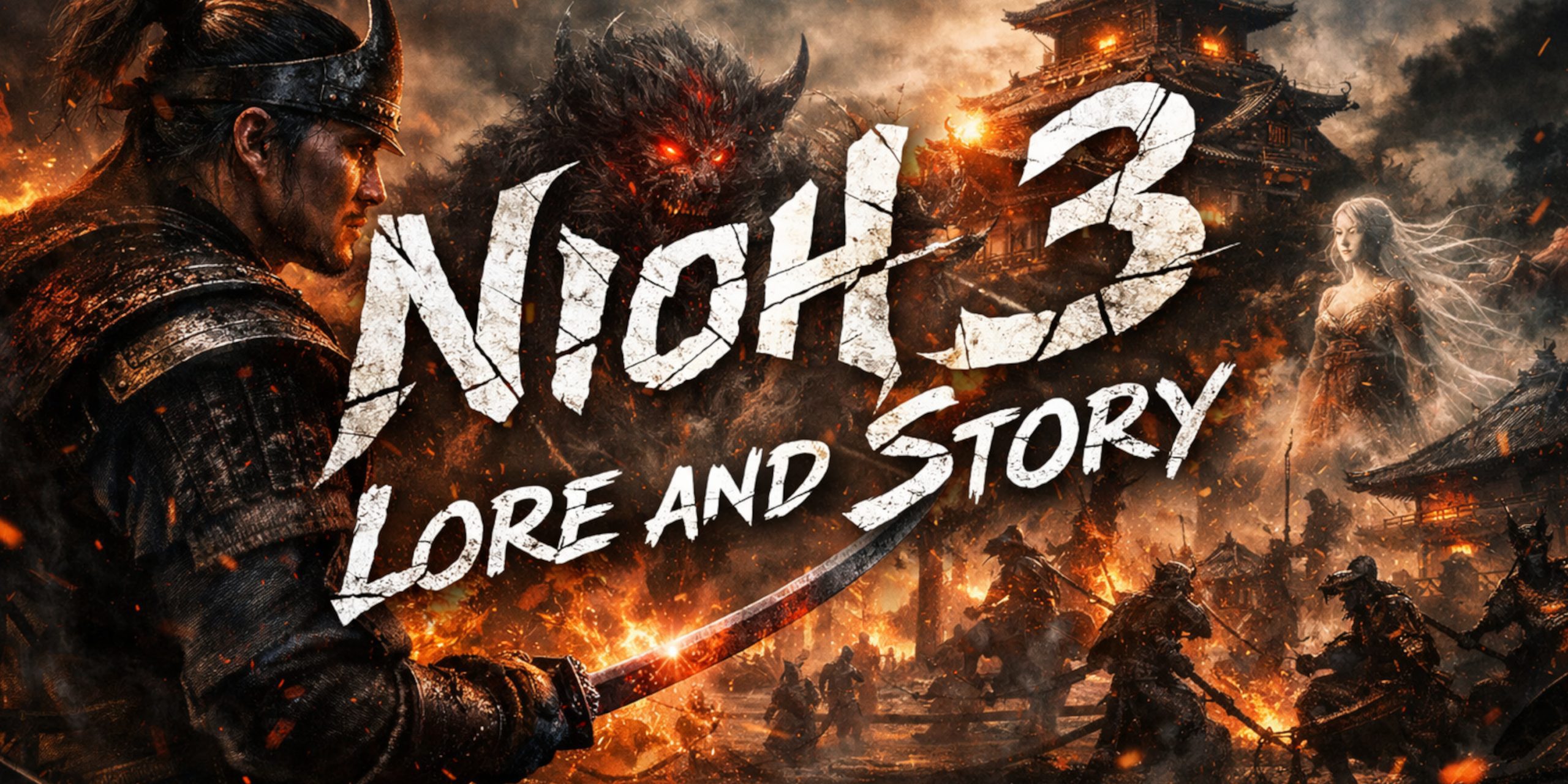
Nioh 3 takes the series into a new stretch of Japanese history, but the basic recipe is still deliciously cruel. You get political collapse, supernatural horror, ambitious warriors, and a world that looks one bad decision away from catching fire. Which, to be fair, it usually is.
This time the story shifts to the Bakumatsu period, the final years of the Tokugawa shogunate. That change matters. Nioh 3 is not just another tale of warlords trying to bash each other into unity. It is a story set during the breakdown of an old order, when authority is contested, loyalties are fragile, and the supernatural feels less like an intrusion and more like the natural result of human chaos.
At its core, Nioh 3 is about power in an age of collapse. It is about who gets to rule, what that rule costs, and why demons always seem to show up when politics gets ugly. Frankly, if yokai had a favourite historical condition, it would probably be national instability.
What Is Nioh 3 About?
Nioh 3 tells the story of a warrior rising through a fractured Japan while human conflict and supernatural corruption spiral together. The game frames this journey around the rise of a heroic Shogun, which immediately gives the plot bigger political weight than a simple survival story.
That means the narrative works on a few levels at once. On the surface, it is a brutal action story full of battles, yokai, cursed regions and duels with people who really should have stayed home. Beneath that, it is about the struggle to impose order on a country that no longer agrees on what order should look like.
The protagonist is not just travelling through history. They are helping shape it. That is a pretty major difference from the feeling of being a wandering outsider who happens to keep running into national emergencies.
The Bakumatsu Setting Explained
The Bakumatsu period was the turbulent final phase of the Edo era, when the Tokugawa shogunate began to lose its grip and Japan entered a period of deep political tension. For Nioh 3, it is a brilliant setting because it is already loaded with instability before the monsters even arrive.
Earlier Nioh games leaned heavily into the Sengoku era, a time defined by warlords, conquest and military unification. Nioh 3 moves into a later crisis, one shaped more by political fracture, competing visions of the future, and the sense that the old world is dying in real time.
That shift gives the story a different mood. This is not the birth of a new order through straightforward conquest. It is the collapse of an old one, followed by a desperate struggle to decide what comes next. The result feels darker, stranger and a little more haunted.
Why Nioh 3 Feels Different from Nioh and Nioh 2
The earlier games thrived on the chaos of the Sengoku period. Their worlds were violent, unstable and deeply theatrical, but they were still stories about consolidation and ambition. Nioh 3 is working with a different kind of pressure.
This is a world fraying at the edges. The institutions that once held power are weakening. Rival groups are circling. The country is full of ideological conflict, local unrest and uncertainty about the future. That makes the supernatural side of the story feel even more convincing within the series’ logic.
In Nioh, yokai rarely appear out of nowhere for no reason. They gather where fear, obsession, hatred, war and grief have already poisoned the atmosphere. A collapsing political system is practically an engraved invitation.
So yes, Nioh 3 still has the same dark fantasy DNA. It just swaps the energy of expansion for the dread of breakdown.
The Core Lore of Nioh 3
The lore of Nioh 3 rests on the same rich foundation as the rest of the series: Japanese history reimagined through folklore, spiritual corruption and supernatural warfare. Human ambition and historical conflict are never separate from the monster side of the story. They feed each other.
That is one of the smartest things about Nioh as a series. The yokai are not just enemies to be fought. They are reflections of imbalance. They emerge from disturbed places, twisted desires, broken loyalties and traumatic events. In other words, they are not random horror decorations. They are the emotional and spiritual consequences of the age.
In Nioh 3, that means the lore is not just about what monsters exist. It is about why they thrive now. The answer is simple enough: because the human world is already in pieces.
The Role of Yokai in the Story
Yokai remain central to Nioh 3’s identity. They are part folklore, part nightmare, and part historical commentary. They make the game feel mythic, but they also make the human side of the story more revealing.
A yokai encounter in Nioh is often the external form of an internal crisis. A battlefield soaked in rage produces more than bodies. A ruined village full of fear does not stay quiet for long. A leader consumed by obsession rarely destroys only himself.
That is why the supernatural in Nioh 3 matters so much. It gives physical form to the moral and political rot spreading through the period. The monsters are terrifying, but they are also symptoms.
To put it less elegantly, the demon in front of you is often just the historical disaster behind you wearing teeth.
Who Are the Main Powers in Nioh 3?
While the game’s story is built around its own dramatised version of history, the broad structure points to three major pressures shaping the narrative.
First, there are defenders of the old order, those tied to the shogunate or to systems of authority that are beginning to crack. These figures are often motivated by loyalty, fear, pragmatism, or a stubborn inability to admit that history has moved on.
Second, there are reformist or insurgent forces, people who want change, power, revenge, or some combination of all three. These are the factions that thrive in uncertain periods, when the old rules are fading and violence starts to look like opportunity.
Third, there is the supernatural layer itself. Yokai, curses, spiritual disturbances and corrupted figures do not sit outside the political conflict. They deepen it. In Nioh, the human and supernatural spheres are always tangled together, usually in the least reassuring way possible.
The Protagonist’s Role in the Story
The protagonist in Nioh 3 seems designed to be more than a witness. This is a character who moves from surviving chaos to becoming one of the forces that defines the future. The phrase rise of a heroic Shogun tells you exactly how ambitious the story wants to be.
That does not necessarily mean the hero is a spotless saviour. Nioh has never really gone in for clean moral fairy tales. Its protagonists usually gain power by moving through bloodshed, spiritual danger and difficult alliances. They may be heroic, but they are rarely untouched.
That is what makes the story interesting. The protagonist is trying to restore or create order, but to do that they must engage directly with violence, corrupted power and forces that blur the line between human and monstrous. In Nioh, heroism often comes with a slightly cursed aftertaste.
Is Nioh 3 Connected to the Earlier Games?
Yes, but mostly in spirit rather than through a simple direct continuation.
Nioh 3 clearly belongs to the same broader world of historical fantasy, yokai mythology and supernatural conflict. It shares the same creative identity as Nioh and Nioh 2, and it builds on the same idea that Japanese history can be retold as a struggle shaped by demons, spiritual energies and human ambition.
At the same time, it appears to stand on its own as a new chapter with a different historical focus, a different protagonist arc and a different national crisis at its centre.
That is probably the right call. A long-running action series needs continuity, but it also needs room to breathe. You can only explain so many centuries of political turmoil with demonic interference before it starts to sound like the worst administrative report in Japanese history.
Major Themes in Nioh 3
Power and Legitimacy
One of the biggest themes in Nioh 3 is the question of who has the right to rule. In an age of collapse, military strength alone is not enough. Authority also depends on symbolism, fear, belief and the ability to convince others that your rule is necessary.
That is where the protagonist’s rise becomes so important. Their story is not just about becoming strong. It is about becoming credible in a world where institutions are failing.
History and Haunting
Bakumatsu is a perfect setting for a haunted story because it sits between worlds. The old Japan is not gone, but the new one has not fully arrived. That kind of historical in-between space suits Nioh beautifully.
It allows the game to explore memory, loss, anxiety and transition through both politics and folklore. The setting is historical, but it already feels ghostly.
Violence and Transformation
Nioh has always treated violence as something transformative. Every battle leaves a mark. Every victory changes the person who earned it. In Nioh 3, that idea looks especially important because the protagonist is climbing toward national power, not just individual survival.
The obvious question follows. What kind of person do you become when power is won by cutting your way through a broken country and its nightmares?
Humanity and Monstrosity
This is classic Nioh territory. The line between human evil and supernatural horror is never clean. Yokai may be literal monsters, but the games keep asking whether human greed, obsession and cruelty are any less destructive.
Quite often, the answer is no. The yokai are just more honest about it.
Nioh 3 Story Breakdown
If you strip the story back to its essential shape, Nioh 3 follows a clear progression.
The world begins in disorder. Japan is politically unstable, authority is slipping, and conflict is spreading through both the human and spiritual realms.
The protagonist enters that disorder not as a passive observer, but as someone capable of surviving it and gradually mastering it. Through battles, alliances, betrayals and confrontations with yokai forces, they rise in stature and influence.
As the story unfolds, the political and supernatural crises stop looking like separate problems. They become part of the same larger breakdown. The corruption in the land mirrors the corruption in power. Human conflict summons spiritual consequences, and spiritual horror intensifies human conflict.
By the time the protagonist reaches the story’s later stages, the question is no longer whether order can be restored. It is what kind of order will replace the world that has fallen apart.
That is the real heart of Nioh 3. Not just defeating monsters, but deciding what emerges after the chaos.
What Nioh 3 Is Really Trying to Say
At its deepest level, Nioh 3 is about transition. It is about what happens when a society loses confidence in its old structures and has no easy consensus about what should replace them.
The game uses yokai and folklore to make that transition feel mythic, but the emotional core is still human. Fear of change. Hunger for control. Loyalty to dying systems. The temptation to become ruthless in the name of stability.
That is why the story works. The supernatural side gives the game spectacle and menace, but the real drama comes from the fact that its monsters grow out of recognisable human problems.
Nioh 3 is not just about demons attacking Japan. It is about Japan becoming the kind of place where demons make sense.
Final Verdict
Nioh 3’s lore looks strong because it uses its historical setting for more than surface flavour. The Bakumatsu era gives the game a period of genuine uncertainty and collapse, while the yokai framework turns that instability into something mythic and disturbing.
The result is a story about ambition, legitimacy, corruption and survival in a world where politics and horror are impossible to separate. That makes Nioh 3 feel both familiar and fresh. It still has the soul of Nioh, but the shift in era gives the narrative a different emotional charge.
If you came away thinking Nioh 3 feels like a story about demons, war, national identity and one very exhausted hero trying to drag history into a new shape, then yes, that is pretty much the idea.
And honestly, it suits the series.
FAQ: Nioh 3 Lore and Story
What is Nioh 3 about?
Nioh 3 is about a warrior rising through the chaos of Bakumatsu-era Japan while human conflict and yokai corruption spread together. The story centres on power, order and the cost of becoming a heroic Shogun.
Is Nioh 3 connected to Nioh 1 and Nioh 2?
Yes, in tone and worldbuilding. It shares the same historical fantasy style and supernatural themes, but it appears to tell a fresh story in a different period of Japanese history.
What period is Nioh 3 set in?
Nioh 3 is set during the Bakumatsu period, the final years of the Tokugawa shogunate, when Japan was politically unstable and heading toward major change.
Are yokai important in Nioh 3?
Yes. Yokai are central to the game’s lore and story. They reflect spiritual corruption, human conflict and the wider breakdown of order in the world.