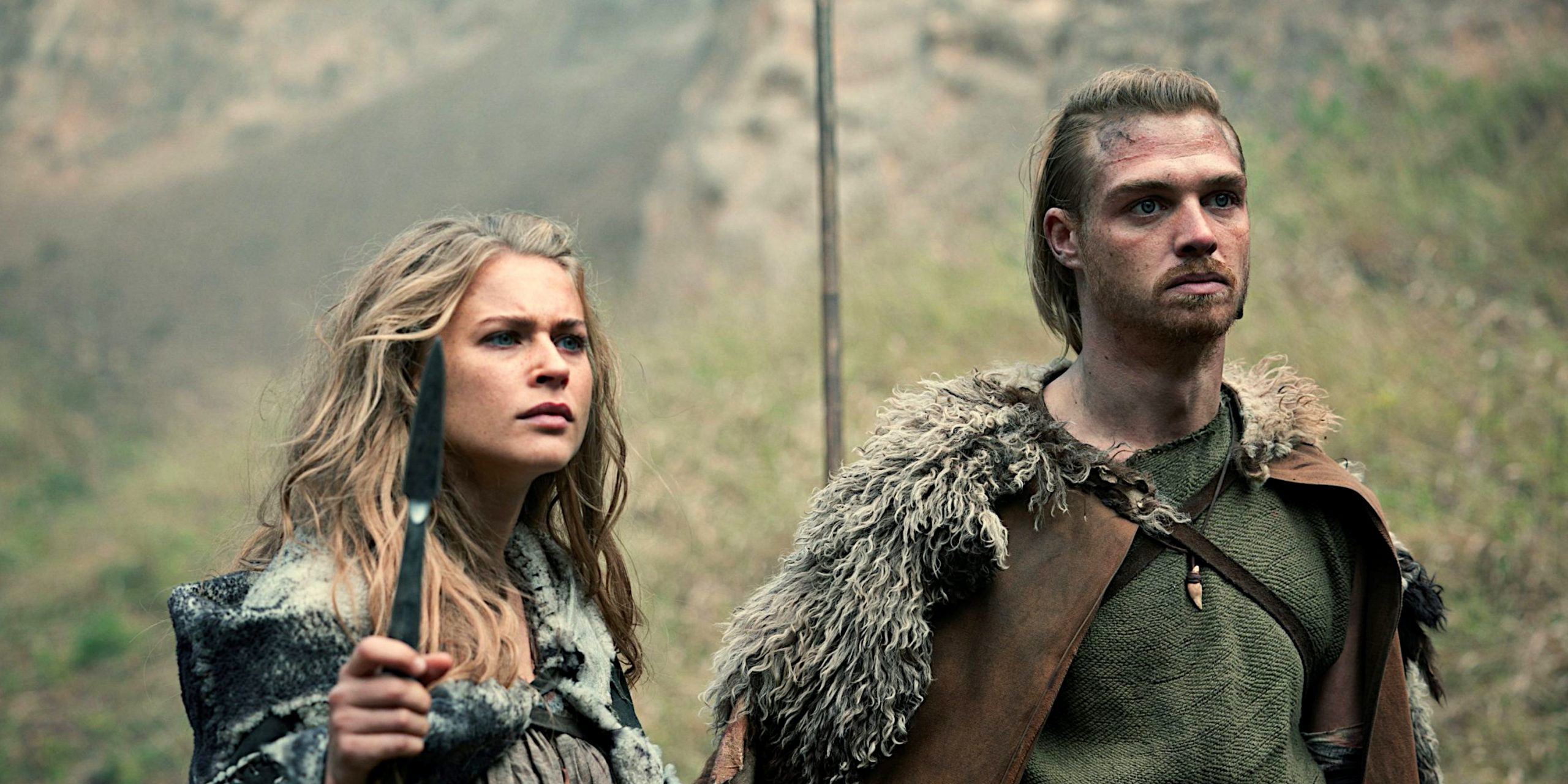
Netflix’s Barbarians does not try to be subtle. It wants blood in the mud, politics shouted across campfires, and people making terrible decisions with absolute conviction. That makes it perfect for character driven history. Some figures shape the story and the fate of Germania, others mostly exist to get stabbed, glared at, or morally corrected.
This ranking looks at impact rather than likeability. Who actually moves events, bends alliances, or leaves a mark that lingers beyond their final scene.
1. Arminius
Arminius is the gravitational centre of the series. Everything bends around him, including Rome’s expectations and the tribal politics of Germania.
Why he matters
- He embodies the central tension of the show, Roman discipline versus tribal identity
- His choices directly lead to the catastrophe in the Teutoburg Forest
- He is both architect and casualty of the rebellion, which keeps him human rather than heroic wallpaper
Arminius works because the show lets him be uncertain. He hesitates, lies, adapts, and occasionally looks like a man who realises too late what he has started. Historically and dramatically, nothing happens without him.
2. Thusnelda
Thusnelda is the series’ sharpest political mind, even when she pretends otherwise. Her arc quietly rewires who holds power in the story.
Why she matters
- She challenges male dominated tribal authority without speeches that sound like modern lectures
- Her decisions drive conflict between Cherusci leadership factions
- She becomes a symbol of resistance that Rome never fully understands
She is not written as flawless or gentle. She is angry, proud, and often reckless. That is exactly why she works. The show is better whenever she stops listening to men explaining the world to her.
3. Segestes
Segestes is impact through irritation. He does not swing the biggest sword, but he poisons rooms with his presence.
Why he matters
- He represents collaboration with Rome as a political strategy
- His betrayal reshapes tribal loyalties and accelerates open war
- He embodies the cost of survival without honour
Segestes feels painfully real. History is full of men like him, convinced they are being pragmatic while burning every bridge behind them.
4. Varus
Varus is the walking argument against arrogance. He does not need to be complex. His certainty is the problem.
Why he matters
- He personifies Roman overconfidence in Germania
- His refusal to read the room seals Rome’s fate
- His downfall is the narrative payoff the entire series builds towards
Varus is not a cartoon villain. He is worse. He is competent, experienced, and completely blind to the limits of imperial power.
5. Folkwin Wolfspear
Folkwin begins as a familiar archetype, angry young warrior with something to prove. The show wisely lets him grow.
Why he matters
- He offers a ground level view of tribal warfare
- His personal vendetta fuels early conflicts
- He evolves from brute force to reluctant leader
He is the audience surrogate in mud soaked boots. Not subtle, but effective.
6. Ari
Ari exists to show how divided loyalty destroys people long before it destroys empires.
Why he matters
- He mirrors Arminius as a warning rather than a rival
- His tragedy highlights the cost of Roman assimilation
- He gives emotional weight to Rome’s internal fractures
He does not change history, but he explains it.
7. Marbod
Marbod is power without presence. A king who rules by reputation more than action.
Why he matters
- He represents an alternative path for Germania
- His neutrality affects the balance of power
- He shows that refusing to choose is still a choice
He is interesting precisely because he frustrates everyone around him, including the viewer.
8. Tiberius
Tiberius appears briefly but carries imperial gravity.
Why he matters
- He provides contrast to Varus’ incompetence
- He reminds the audience that Rome learns from failure
- He frames Germania as a problem Rome will not forget
Less screen time, more historical weight.
Takeaway
Barbarians works because it understands that history turns on people, not speeches. The characters who matter most are not always the bravest or the most virtuous, but the ones who force decisions. Arminius may stand at the centre, but the series succeeds because everyone around him pushes, pulls, or undermines his path.
It is messy, loud, occasionally blunt, and far more thoughtful than it pretends to be. Much like the history it adapts.