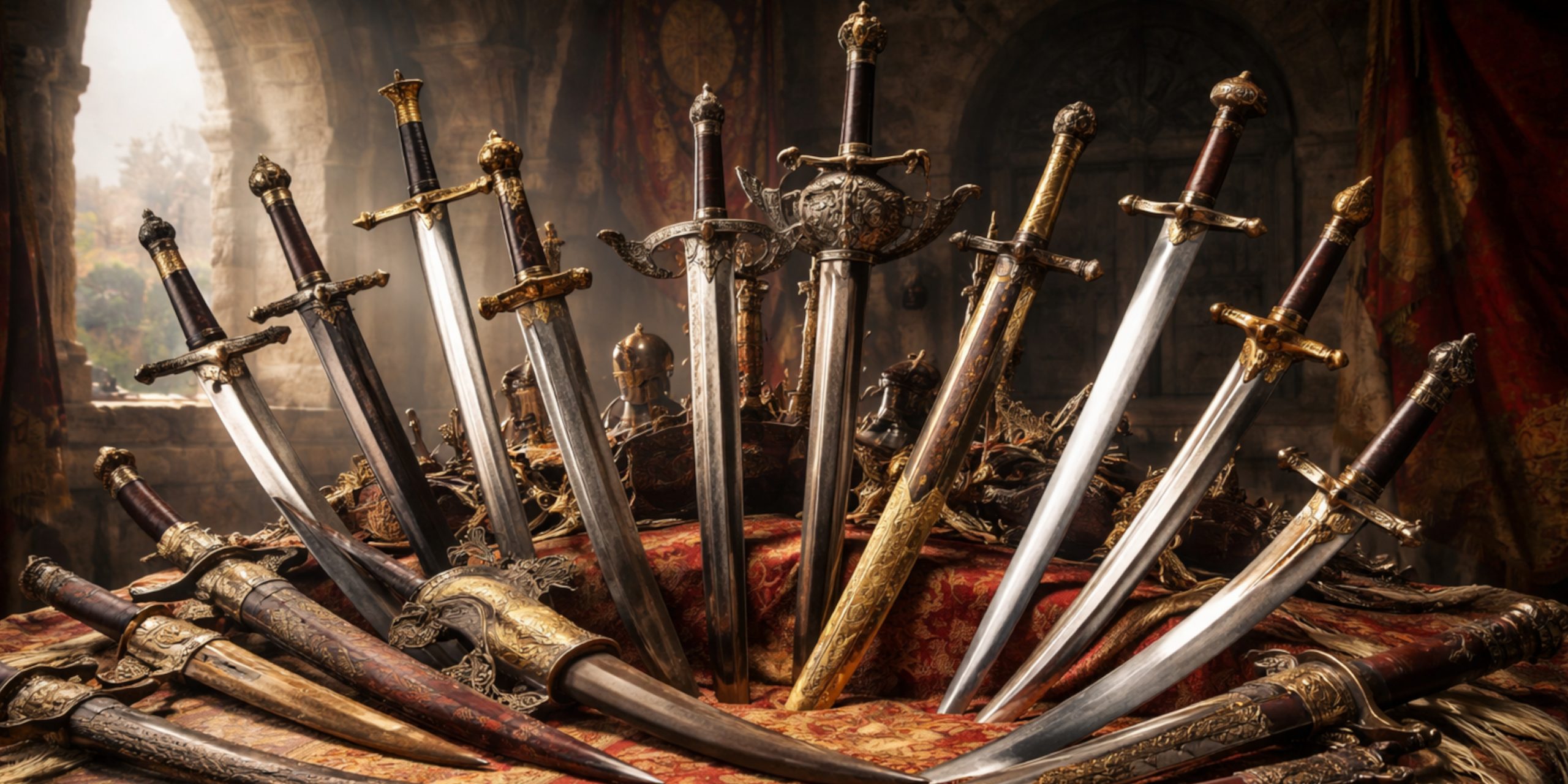
Spain’s sword history is as layered and diverse as its dynasties and terrain. From early Iberian blades forged before Roman conquest to the finely tempered rapiers of the Siglo de Oro, Spanish swordsmiths consistently blended practicality with artistry. These weapons were not just tools of war or self-defence but expressions of cultural identity, regional pride, and technological skill. Their evolution mirrors the country’s broader political shifts, foreign influences, and innovations in metallurgy.
Below is a breakdown of 100 sword types from Spain, organised by era. Each period reflects distinct styles, materials, and functions, shaped by trade, warfare, and craftsmanship.
Pre-Roman Iberian (up to 218 BCE)
This era saw the emergence of unique indigenous styles, influenced by Celtic and Phoenician cultures. Swords were typically short, wide-bladed, and well-suited for close-quarters combat. Iberian metallurgy was surprisingly advanced, using iron and occasionally steel in regionally distinctive forms.
- Falcata
- Iberian Gladius
- Lusitanian short sword
- Tartessian blade
- Vettonian curved sword
- Celtiberian straight sword
- El Argar dagger-sword
- Balearic slasher
- Pre-Roman Iron leaf-blade
- Double-edged Iberian war knife
Roman Hispania (218 BCE – 409 CE)
Under Roman control, local swordsmiths adopted Roman military standards while retaining regional techniques. The gladius and spatha were dominant, with improved consistency in steel quality thanks to Roman logistical networks.
- Gladius Hispaniensis
- Roman Spatha (Hispanic variant)
- Auxilia infantry sword
- Cavalry spatha of Tarraco
- Legionary gladius (Toletum type)
- Spatha with Iberian hilt
- Sica of Romanised Iberia
- Curved gladius variant
- Toledo-forged pugio
- Roman officer’s ceremonial sword (Hispanic style)
Visigothic Period (409–711)
After Rome’s collapse, the Visigoths developed distinctive weapons that fused late Roman forms with Germanic aesthetics. The spatha endured but was heavier and broader. Blades often featured decorative inlays and rich scabbards.
- Visigothic broadsword
- Long spatha of Toledo
- Curved Gothic sabre
- High-backed hilt sword
- Visigothic officer’s sword
- Toledo pattern-welded sword
- Gold-inlaid ceremonial blade
- Mounted warlord’s longsword
- Gothic hunting sword
- Chieftain’s heirloom blade
Al-Andalus (711–1212)
Islamic conquest brought curved blades, Central Asian styles, and techniques such as crucible steel. The blending of Arab, Berber, and Iberian traditions produced swords with elegant curves, ornate hilts, and laminated steels.
- Andalusian Saif
- Berber cavalry sword
- Cordoba curved blade
- Toledan sabre
- Damascened Moorish longsword
- Falchion of Almería
- Emir’s ceremonial scimitar
- Double-fullered saif
- Muwallad hybrid blade
- Curved blade with Kufic inscription
Christian Reconquista (1212–1492)
As Christian kingdoms reconquered the peninsula, swordsmithing flourished again in northern cities. There was a return to cruciform arming swords and the emergence of two-handed blades for knights, often forged in Toledo or Burgos.
- Castilian knight’s sword
- Navarrese longsword
- Toledo arming sword
- Two-handed Montante
- Leonese crusader sword
- Galician falchion
- Sword of Santiago (pilgrimage type)
- Cross-hilted broadsword
- Catalan claymore-type
- Asturian heavy infantry blade
Spanish Renaissance & Empire (1492–1600)
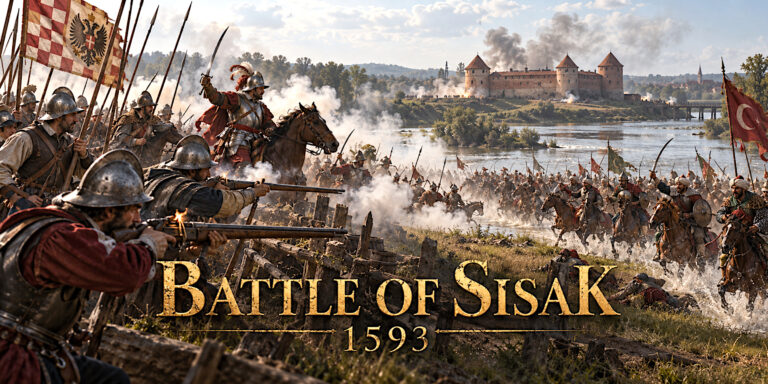
This was the golden age of Spanish blades, marked by global expansion and the refinement of fencing. The espada ropera became popular among nobles, while the military relied on cut-and-thrust blades for pike-and-shot warfare.
- Espada ropera
- Toledan cup-hilt rapier
- Spanish estoc
- Daga de mano izquierda
- Infantry broadsword
- Navaja de guerra
- Sword of Pizarro (military conquest style)
- Conquistador’s cut-and-thrust sword
- Colonial cavalry sword
- Ceremonial empire rapier
Habsburg and Early Bourbon Spain (1600–1750)
Rapiers evolved into shorter and sturdier types for battlefield and duelling. Spain’s military faced new threats across Europe, prompting heavier cavalry sabres and better-balanced infantry blades. Bladesmiths in Toledo and Valencia remained world-renowned.
- Heavy cup-hilt rapier
- Spanish walloon sword
- Dragoon sabre (early form)
- Grenadier hanger
- Officer’s duelling rapier
- Espadín court sword
- Guard sword (civic police)
- Sword of the tercio pikeman
- Spanish cuttoe
- Baroque-inlaid gentleman’s sword
Late Bourbon and Napoleonic Spain (1750–1814)
Sword design shifted with the Enlightenment and France’s influence. Infantry sabres became standard, while ornate smallswords fell out of use. Spain adapted French patterns but often retained native flair in grip design and etching.
- Spanish Model 1764 sabre
- Colonial sabre (New Granada style)
- Carabineros cavalry sword
- Infantry hanger of 1799
- Toledo duelling sabre
- Napoleonic-era officer sword
- Royal Guard sabre
- Basque partisan’s blade
- Spanish Model 1803 cutlass
- Catalan guerrilla sword
19th Century to Early 20th (1814–1931)
Industrialisation brought mass-produced military swords, although traditional hand-forging persisted in certain regions. The navy adopted cutlasses, and ceremonial swords took on more symbolic than practical roles. Civil wars influenced regional sword styles.
- Model 1860 cavalry sabre
- Guardia Civil short sword
- Artillery sabre (model 1880)
- Toledo court sword
- Naval boarding cutlass
- Carlists’ curved sword
- Officer’s M1895 sabre
- Republican militia blade
- Mounted police sword
- Dueling sabre of Madrid fencing schools
Franco Era and Postwar (1939–1975)
After the Civil War, swords were mostly ceremonial, yet military academies and police forces retained them for parade and dress. Toledo continued to produce blades, albeit more for collectors and diplomats.
- Franco-era general’s sword
- Military Academy sabre
- Air Force officer’s dress sword
- Toledo parade sword
- Falange ceremonial sabre
- Civil Guard sword
- Postwar naval cutlass
- Colonial officer’s sabre (Ifni)
- Military fencing sabre
- Diplomatic gift sword
Contemporary and Revivalist (1975–present)
Today, Spanish swords are crafted mainly for collectors, historical fencing, and ceremonial use. Toledo remains a centre for artisanal reproduction, blending medieval styles with modern metallurgy. Traditional smithing sees periodic revivals driven by historical interest.
- Replica falcata
- Montante training sword
- Historical fencing rapier
- Modern military dress sword
- Ceremonial royal sword
- Toledo artisan blade
- Sport fencing sabre (Spanish grip)
- Custom pilgrimage sword
- Navaja hybrid duelling blade
- Reenactment-grade Spanish longsword
Seven Swords Takeaway
Spain’s sword heritage spans over two millennia, marked by cultural layering, technological ingenuity, and enduring pride in craftsmanship. From the war blades of the Celtiberians to the delicate curve of an Al-Andalus saif or the lethal balance of a Renaissance rapier, each sword tells part of the story. Many of these weapons are no longer wielded in battle but remain powerful symbols of identity, artistry, and resilience.