Olaf Tryggvason sits in that uncomfortable space between history and saga where certainty thins and personality grows larger. He ruled Norway for barely five years, roughly 995 to 1000, yet managed to leave fingerprints on religion, kingship, naval warfare, and the tone of later Norwegian memory. Some rulers build slowly. Olaf arrived loudly, ruled intensely, and vanished just as dramatically. That alone earns attention, but the details are what keep historians awake at night.
Early Life and Rise to Power
Olaf was born into the tangled aristocracy of late Viking Age Norway, a descendant of Harald Fairhair, though the sagas insist on polishing that lineage like a family heirloom. His childhood reads less like royal grooming and more like survival training. Orphaned early, captured by raiders, sold into slavery, and eventually redeemed, Olaf spent his formative years moving through the Baltic world, Kievan Rus’, and the North Sea corridor.
This matters because Olaf was not shaped in a Norwegian vacuum. He absorbed ideas, tactics, and ambitions abroad, particularly from the Christian courts and warbands he encountered in England and eastern Europe. When he returned to Norway with ships, silver, and a sharp sense of opportunity, he did not arrive as a local chieftain playing catch-up. He arrived as a man who thought on a wider map.
Kingship and Rule of Norway
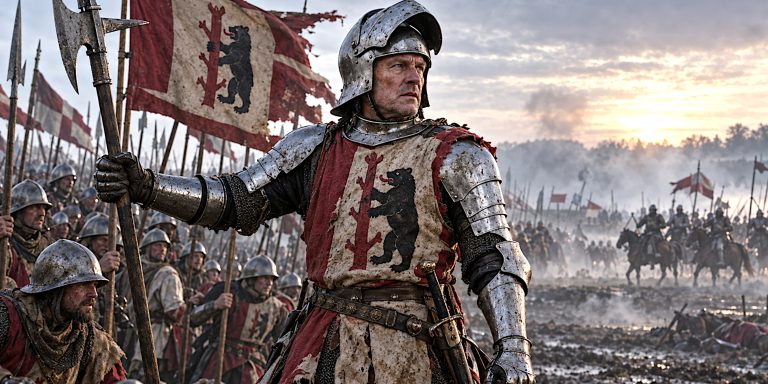
Olaf seized power swiftly after the death of Håkon Sigurdsson, exploiting both political exhaustion and religious tension. His kingship was personal and confrontational. Loyalty was demanded, resistance punished, and conversion enforced. He ruled more like a war leader than a consensus builder, which suited the moment but limited his longevity.
Christianisation under Olaf was not a gentle affair. Churches went up, idols came down, and reluctant chieftains faced exile, mutilation, or worse. From a modern perspective, it reads as brutality dressed in theology. From Olaf’s perspective, religion was statecraft. A Christian king was a legitimate king in the European order he admired and intended to join.
Arms and Armour
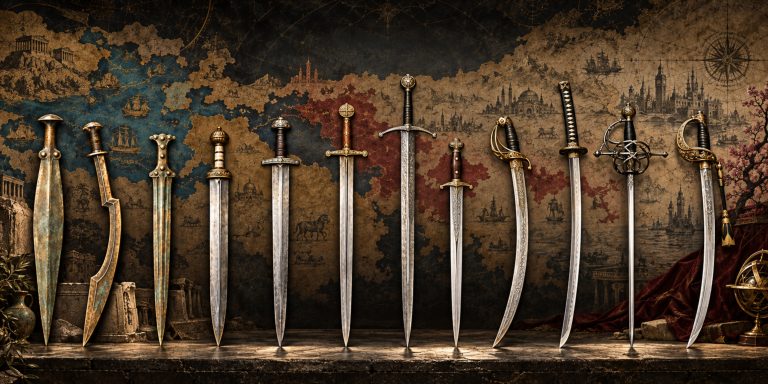
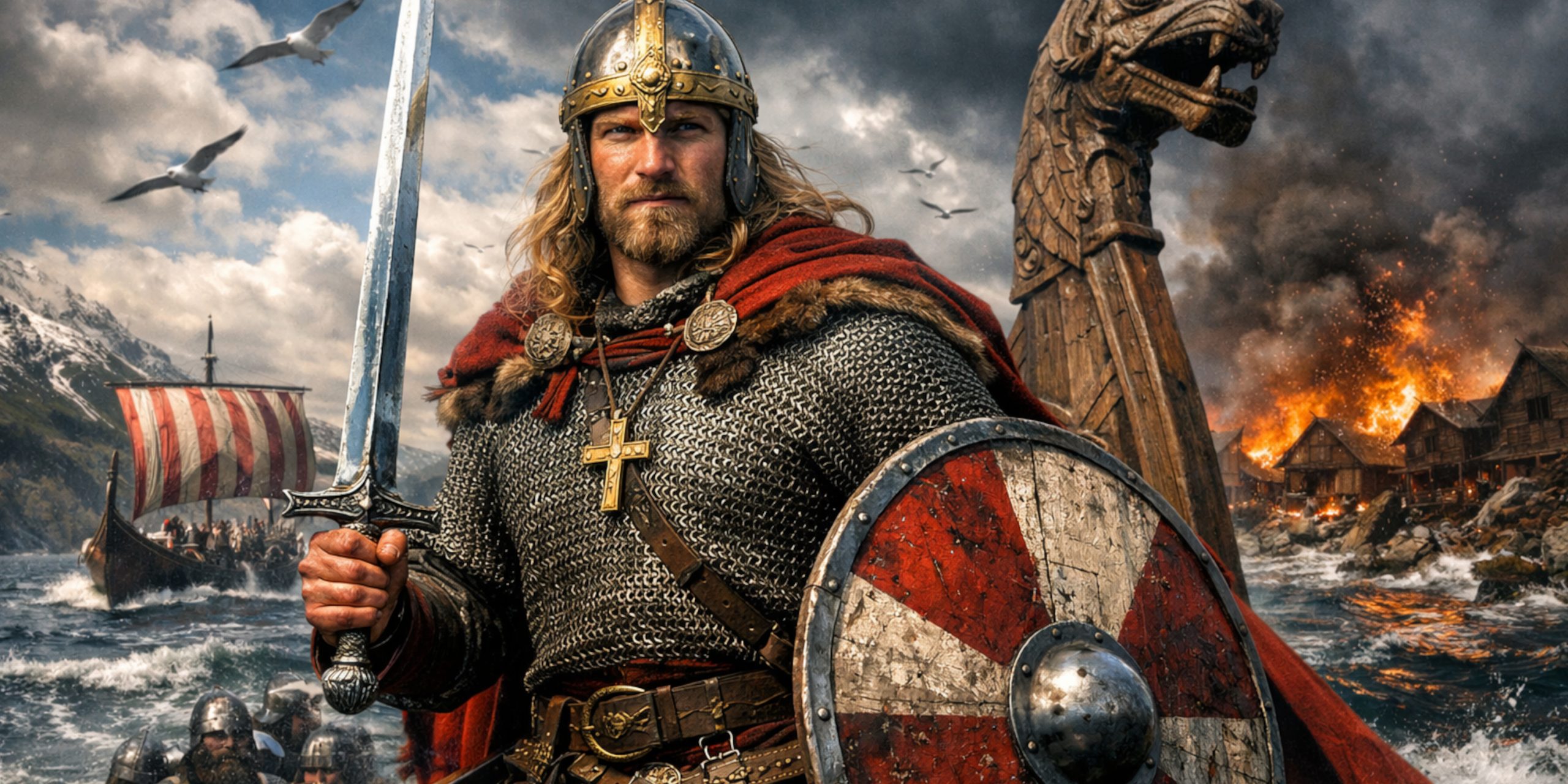
No weapon can be firmly tied to Olaf himself, despite what museum labels and souvenir shops might suggest. What we can do is place him squarely within the martial culture of the late tenth century, when equipment was practical, personal, and often inherited.
Likely arms and armour associated with Olaf and his household warriors
- Pattern-welded Viking swords, typically Petersen Types H, K, or S, broad-bladed with short guards and lobed pommels
- Long seaxes used as secondary weapons, especially aboard ships
- Spears with leaf-shaped or angular heads, cheap, versatile, and devastating in naval combat
- Round shields of linden or pine, leather-faced and brightly painted, built for shipboard fighting
- Mail shirts for elite retainers, rare and expensive, often worn without padding
- Helmets were uncommon but likely present among Olaf’s closest men, simple iron caps rather than fantasy horned nonsense
Olaf’s real advantage was not equipment but organisation. His fleets were disciplined, aggressive, and coordinated. The saga emphasis on named swords and heroic duels distracts from the more interesting truth. Olaf won because he moved faster and struck harder at sea.
Battles and Military Acumen
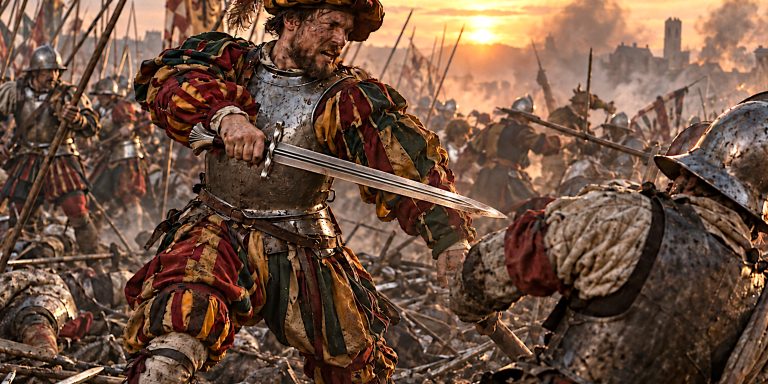
Olaf’s military reputation rests almost entirely on naval warfare, and rightly so. He was a commander of ships, not shield walls.
Early Campaigns
Before kingship, Olaf fought widely in the Baltic and British waters, honing a style built around sudden assaults, tight formations, and psychological dominance. He preferred initiative over attrition.
Battle of Svolder, c.1000
The defining moment of Olaf’s life and death. Facing a coalition led by Sweyn Forkbeard of Denmark, Olaf Skötkonung of Sweden, and Eirik Håkonsson of Norway, Olaf was outnumbered and outmanoeuvred. His fleet was ambushed, likely in the western Baltic, though the exact location remains debated.
Olaf’s tactical error was overconfidence. He fought bravely, ship lashed to ship, turning the engagement into a floating fortress. It was spectacular and doomed. When defeat became inevitable, Olaf disappeared, either killed or drowned. The sagas insist on a heroic leap into the sea. Historians shrug and admit we will never know.
As a commander, Olaf was bold, decisive, and occasionally reckless. His strength was momentum. Once stalled, his options narrowed quickly.
Religion, Politics, and Personality
Olaf was not subtle, and he did not try to be. He believed kingship meant action. His faith appears genuine, but it was wielded as a political tool with enthusiasm. This combination made enemies quickly and permanently.
As a historian, I find Olaf fascinating precisely because he refused moderation. He is a reminder that charisma can build states, but impatience can break them just as fast.
Archaeology and Material Evidence
There are no confirmed personal artefacts of Olaf Tryggvason. Any claim otherwise should be met with polite scepticism. What archaeology does provide is context.
Relevant archaeological evidence
- Excavations in Trondheim, Olaf’s royal and ecclesiastical centre, reveal early Christian structures likely linked to his reign
- Viking ship burials from the late tenth century demonstrate the elite martial culture Olaf ruled
- Crosses, grave markers, and church foundations across Norway align with the rapid Christianisation described in written sources
- Numismatic evidence suggests increased silver circulation during his reign, supporting accounts of wealth redistribution
The archaeology does not confirm the sagas. It supports the world they describe, which is often the best we can hope for.
Where to See Artefacts Today
While nothing can be placed directly in Olaf’s hands, several institutions provide material that reflects his world.
- Norwegian University of Science and Technology Museum in Trondheim, with Viking Age weapons and ecclesiastical finds
- The National Museum of Cultural History in Oslo, holding swords, mail fragments, and religious artefacts from the period
- British Museum in London, for comparative Viking Age material from Olaf’s campaigns abroad
- Swedish History Museum in Stockholm, offering context on the coalition that defeated him
Standing in front of these objects, it becomes clear how thin the line is between legend and iron reality.
Legacy and Final Thoughts
Olaf Tryggvason failed as a long-term ruler but succeeded as a catalyst. He accelerated Norway’s conversion, redefined royal authority, and left a story compelling enough that later kings borrowed his image even when they rejected his methods.
I suspect Olaf would have hated that. He did not strike me as a man interested in legacy management. He wanted results, immediately, and accepted the cost. History obliged him with a short reign, a violent end, and a reputation that refuses to settle quietly.
Watch the documentary: