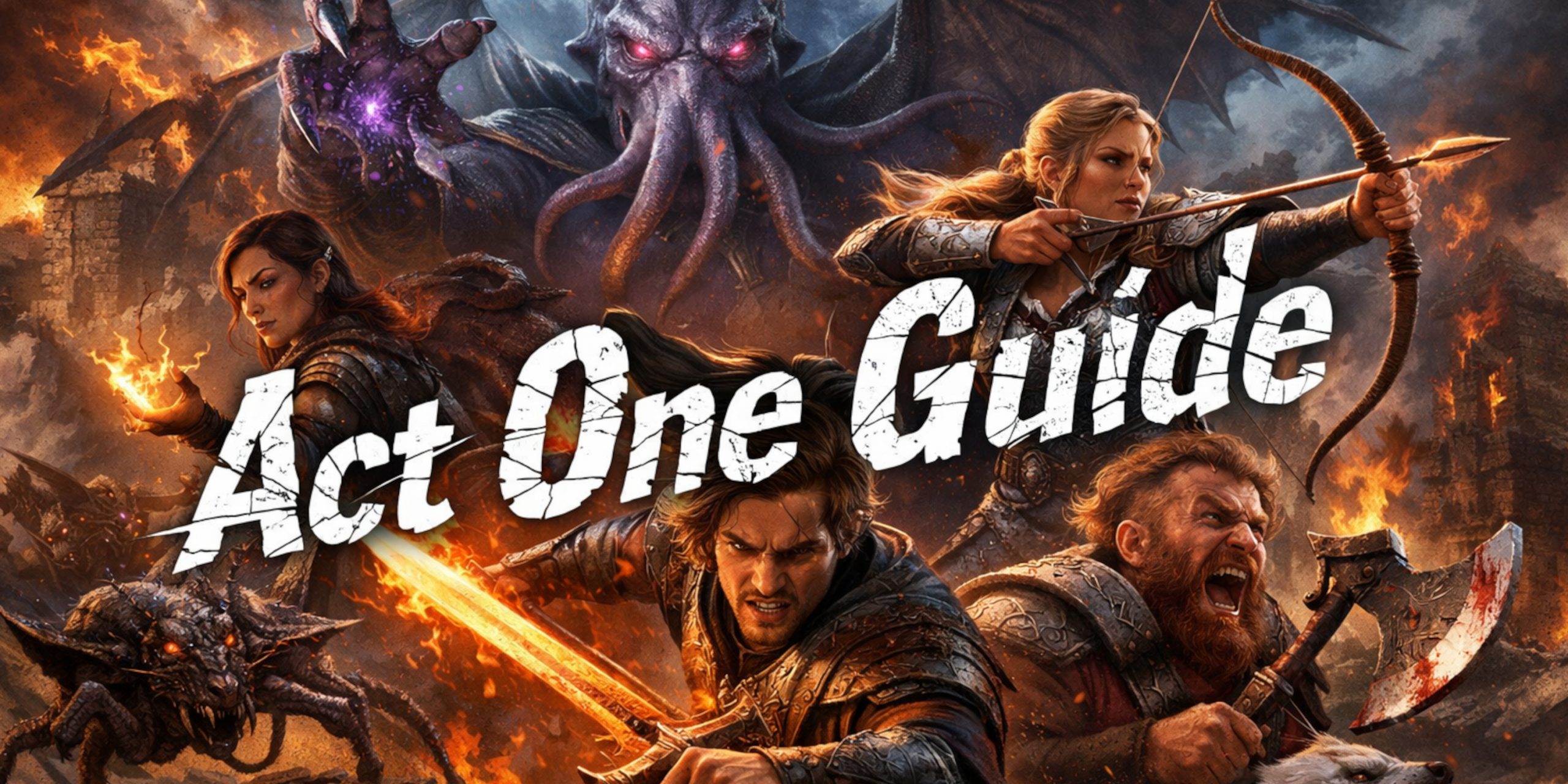
Act One of Baldur’s Gate 3 is a masterclass in controlled chaos. It throws systems, characters, moral choices, and very sharp teeth at you, then politely pretends it has done nothing of the sort. This guide is written for players who want to see as much as possible without draining the joy out of discovery. Think direction rather than instructions, with a few hard truths sprinkled in.
Where Act One Actually Begins
You wake up on a crashed Nautiloid beach with a parasite in your head and absolutely no plan. Act One quietly begins the moment you gain control, not when a quest marker tells you so. The beach, the ruins, and the surrounding cliffs are all teaching areas. Every fight nudges you toward verticality, environmental damage, and the simple joy of pushing people into bad situations.
Loot everything. Talk to everyone. Read books even when they look useless. They often are, but when they are not, they matter a lot.
Early Companions and Why They Matter
You can recruit several companions before you ever reach civilisation. Do it. Even if you plan to bench them later, their early conversations add context and options that disappear if you rush ahead.
Shadowheart arrives with secrets and a shield that saves lives more often than she admits. Astarion is an excellent early damage dealer and an ongoing lesson in why charisma does not equal trustworthiness. Gale offers raw magical utility and the faint anxiety of someone who definitely knows more than he is saying. Lae’zel is direct, efficient, and refreshingly uninterested in your feelings.
You do not need to like them. You do need their skills.
Emerald Grove and the Art of Not Picking a Side Too Fast
The Emerald Grove is Act One’s moral crossroads, and the game is daring you to oversimplify it. Druids, tieflings, refugees, rituals, and fear all collide here. Every loud argument hides a quieter problem underneath.
Slow down. Speak to the healers, the guards, the children, and the ones who look like they are pretending not to care. Several quests overlap, and resolving one too early can quietly lock another away. This area rewards patience more than bravery, which is rare for a fantasy RPG and deeply appreciated.
Goblin Camp Without Burning the World Down
The Goblin Camp is not a dungeon. It is a social experiment with knives. You can fight your way through, but infiltration, deception, and selective violence often lead to cleaner outcomes and better rewards.
Use disguises. Use persuasion. Use the environment. The camp is packed with vertical spaces, breakable objects, and creatures who trust you far too easily. This is one of Act One’s best lessons in solving problems sideways rather than head on.
Side Quests You Should Not Skip
Some side quests feel small until you realise they shape entire regions later. The ruined chapel introduces resurrection mechanics and consequences. The hag’s swamp is a masterclass in unsettling design and long term consequences disguised as kindness. The burning inn rewards fast thinking rather than brute force.
If a quest feels strange or slightly uncomfortable, it is probably important.
Combat Tips That Will Save You Reloads
High ground matters more than raw stats. Shove is absurdly powerful and always worth checking. Surfaces are not decoration. Fire, ice, grease, and poison decide fights faster than your weapon.
Short rests are generous. Long rests move the story forward. If companions keep hinting that you should rest, listen. Act One hides a lot of character development behind camp conversations, and skipping them changes how people treat you later.
The Underdark and Why You Should Go There Early
The Underdark sounds like endgame content. It is not. It is Act One’s secret second act, packed with loot, lore, and enemies that punish sloppy positioning.
Enter when you feel confident, not when you feel finished. The Underdark offers powerful gear, unforgettable encounters, and some of the best environmental storytelling in the game. It also teaches humility very quickly.
Choices, Consequences, and Letting Things Break
You will make mistakes. You will fail rolls. Characters will dislike you for reasons that feel unfair. That is fine. Act One is designed to bend, not shatter.
Resist the urge to reload every bad outcome. Some of the most interesting paths open only when things go wrong. The game respects commitment far more than perfection.
When Act One Ends Without Warning
Act One does not announce its ending. It simply lets you step forward, then closes the door behind you. Before you do, make sure you have explored the surface areas, resolved Grove related conflicts in the way you can live with, and dipped into the Underdark at least once.
If it feels like you are ready, you probably are. If it feels like there is more, there definitely is.
Final Thoughts From Someone Who Took Too Long Anyway
Act One is generous, messy, and quietly demanding. It rewards curiosity more than optimisation and honesty more than cleverness. If you treat it like a checklist, it shrinks. If you treat it like a place, it grows.
Also, push at least one enemy off a cliff. Not for strategy. For tradition.