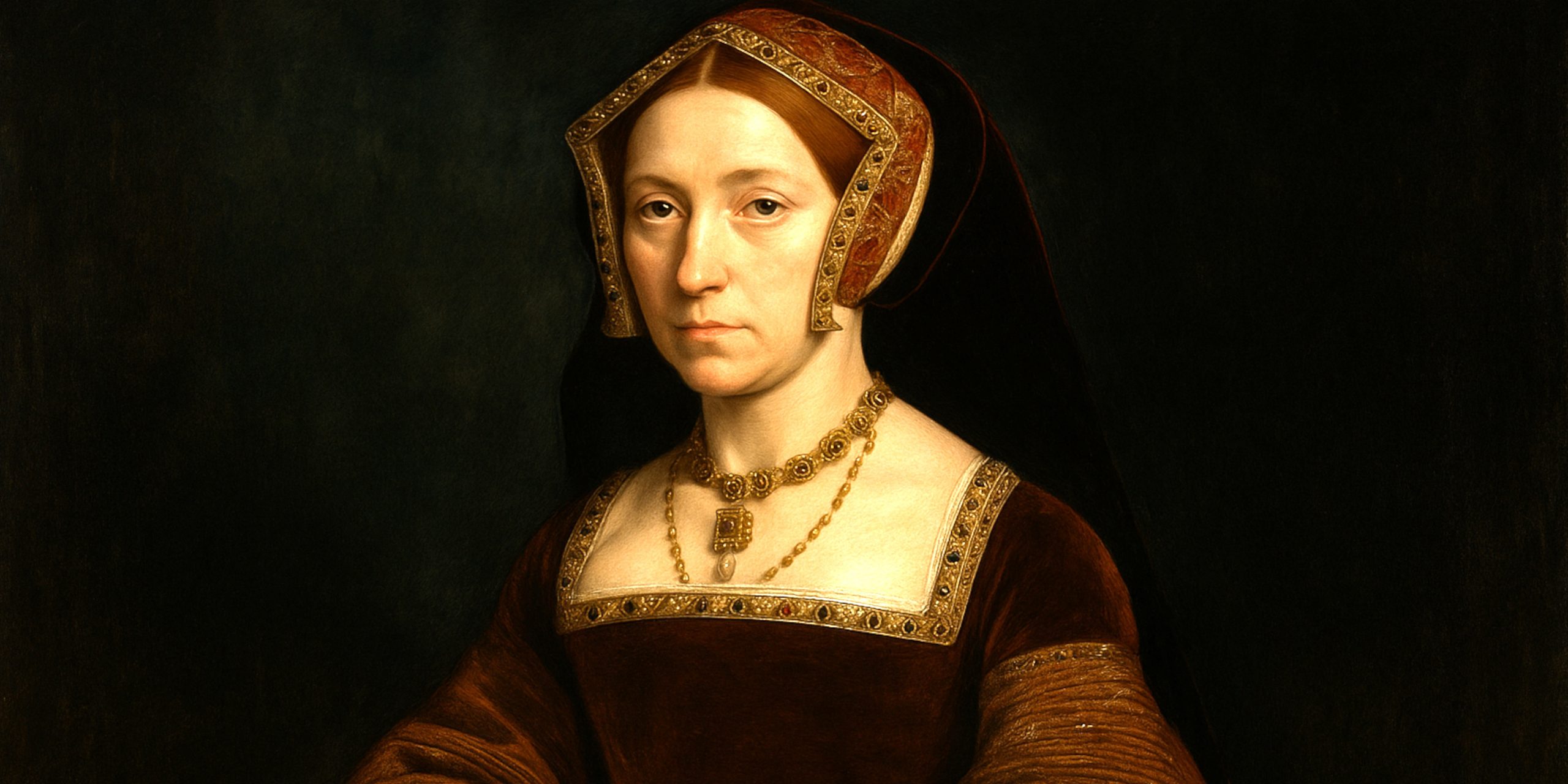
Quiet figures in Tudor history often cause the most trouble, usually because they slip through the noise and then rewrite the script while everyone is looking the other way. Jane Seymour fits that mould rather well. She is remembered as the gentle third wife of Henry VIII, the one who managed to give him the son he had demanded for years, and the one who died before court politics could swallow her whole. It is a simple image. Too simple for comfort. When you peel it back, Jane was far more than the meek foil to Anne Boleyn. She was well trained in the careful arts of Tudor survival, and she played a shorter game at court yet a smarter one.
Despite appearing mild and dutiful, Jane arrived in Henry’s life at the precise moment when he was ripe for admiration rather than debate. A historian can hardly resist raising an eyebrow at the timing.
Early Life and Family
Jane was born into the Seymour family of Wiltshire, a clan that knew perfectly well how to climb when given a ladder. The Seymours were ambitious, though they hid it behind pastoral charm and polite bowing. Jane received the usual noblewoman’s education. She could manage a household, sew with care, and speak enough French to survive court, but it was her instinct for reading a room that set her apart.
She served first Katherine of Aragon, then Anne Boleyn. That alone tells you she was observant. Few women endured both courts without being pushed or trampled. Jane managed it with the quiet skill of someone who did not advertise her opinions.
Courtship with a King
By the late 1530s, Henry VIII was bruised emotionally, politically and, one suspects, in pride. Anne Boleyn’s reign had been fire and argument. Jane’s presence felt like cool water in comparison. Her manner pleased the king. She rarely contradicted him, which must have felt a novelty after Anne.
Her household upbringing had trained her to present calm where others displayed ambition. Henry believed he had found peace. The Seymours knew they had found opportunity. Historians often describe the Seymour family as opportunistic, which is polite shorthand for absolutely determined.
Jane became engaged to Henry almost immediately after Anne’s downfall. The speed has alarmed many historians. Jane herself appears to have accepted it with the composure of someone who understood that hesitation was a luxury.
Queen Consort and the Long Awaited Heir
Jane’s queenship lasted barely a year and a half, yet it produced the event that defined Tudor politics. In October 1537 she delivered a healthy son, the future Edward VI. England erupted in relief. Henry declared himself finally fulfilled.
Jane’s bonds with her stepsisters Mary and Elizabeth are worth noting. She pressed Henry to reconcile with Mary, and her influence softened the king’s stance long enough for the princess to be restored to favour. It was a small act, but one that still earns her a page in the good books.
Of her relationship with Elizabeth, the records are quieter. That is not surprising. Tudor men kept better notes on quarrels than on family harmony.
Death and Royal Mourning
Jane died shortly after Edward’s birth, probably from complications of puerperal fever. Her death genuinely affected Henry. For once he did not rage or rebuild his domestic life within weeks. He wore black. He gave her a lavish funeral. He requested to be buried beside her. This has convinced many that Jane was his favourite wife. Whether that reflects affection, relief, or the convenience of a male heir is left to personal interpretation.
Henry’s grief might have been sincere, though he still managed to resume government without missing too many dinners.
Legacy and Historical Reputation
Jane’s legacy is startlingly large for so short a reign. Her brothers rose rapidly at court once Edward was born, which tells you exactly how political capital worked in Tudor England. Edward Seymour eventually became Lord Protector during the minority of King Edward VI. Thomas Seymour, not to be outdone, managed to fling himself into scandal with customary enthusiasm.
Jane herself became a symbol of quiet virtue in contrast to the drama of Henry’s other marriages. Victorian historians adored her for this, which should always make one suspicious. Jane was no fool. She lasted at court because she sensed which way the wind blew, and she kept her sails trimmed accordingly.
She is remembered today as the only wife Henry VIII chose to be buried with, which is perhaps the closest thing Tudor marriage ever had to a happy ending.
Watch the documentary: