The Caudine Forks tends to catch the eye not for a sweeping clash of arms, but for the absence of any real fighting at all. It is a lesson in strategy, pride and poor route planning, with the Roman Republic forced into one of the most humiliating submissions in its long history. As a historian, I cannot help feeling a reluctant sympathy for the Roman commanders. We have all taken a wrong turn now and then, although ours rarely end with a forced procession beneath spears.
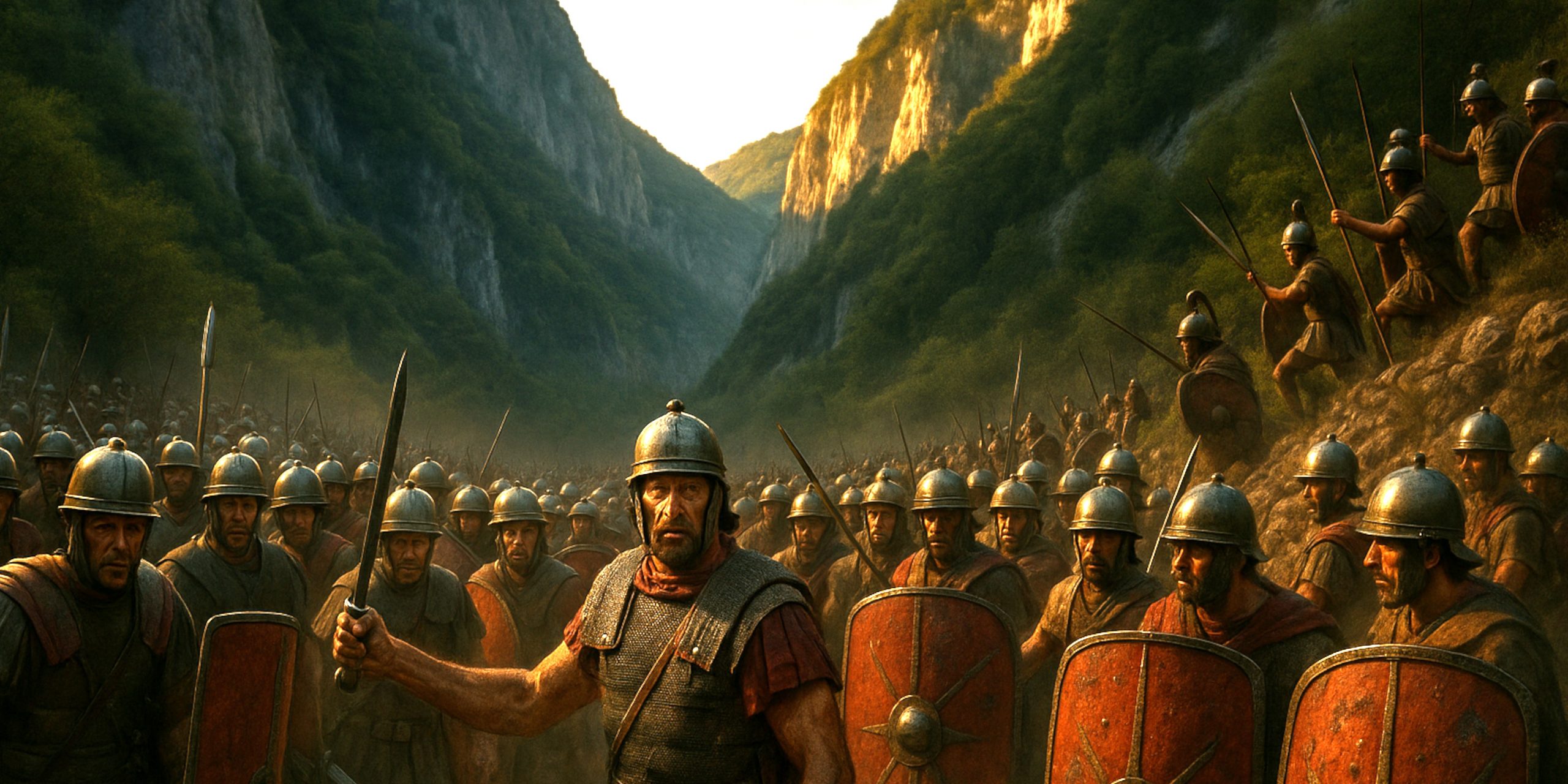
The Battle of the Caudine Forks in 321 BC sits within the Second Samnite War and stands as one of Rome’s most embarrassing military failures. Rather than a stand up fight, the Romans were trapped in a mountain pass near Caudium by the Samnite commander Gaius Pontius. Both consuls, Titus Veturius Calvinus and Spurius Postumius Albinus, became unwilling architects of an ordeal that scarred Roman memory for generations.
The encounter showed that superior numbers and swagger are poor substitutes for reconnaissance. Rome discovered that truth in the hardest way.
Forces
Commanders
| Side | Senior commander | Other leaders |
|---|---|---|
| Roman Republic | Consul Titus Veturius Calvinus | Consul Spurius Postumius Albinus |
| Samnite Confederation | Gaius Pontius | Advisory influence from his father Herennius |
Approximate Troop Composition
| Side | Infantry | Cavalry | Notes |
|---|---|---|---|
| Roman Republic | c. 16,000 legionaries | c. 1,200 cavalry | Two consular armies marching together |
| Samnite Confederation | c. 10,000 to 12,000 warriors | Light cavalry contingents | Well placed in the high ground controlling the pass |
The Romans carried professional discipline, yet discipline cannot unmake geography. The Samnites, with fewer men, held the decisive advantage by controlling the narrow approach roads and valley exits.
Arms and Armour
Roman Equipment
| Item | Description |
|---|---|
| Sword | Gladius Hispaniensis or early Italian short sword used before the later Republican standard. Ideal for close and thrusting work. |
| Armour | Bronze or iron pectoral plates and early lorica hamata among wealthier ranks. |
| Shield | Scutum, oblong and curved. |
| Helmet | Montefortino type with cheek guards. |
| Projectiles | Light javelins and the early pilum variants. |
Samnite Equipment
| Item | Description |
|---|---|
| Sword | Curved sica style blades and straight iron swords for thrusting. |
| Armour | Linen cuirasses, bronze breastplates and greaves. |
| Shield | Round or oval shields with wooden cores and bronze facings. |
| Helmet | Distinctive crested helmets with articulating cheek pieces. |
| Missiles | Javelins suited for hill fighting. |
The Samnites fought with agility and local terrain in mind. The Romans brought heavier kit suited for open battle. Neither expected Caudine Forks to become a test of humiliation rather than arms.
History and Evolution of Events
The Second Samnite War had been grinding Rome for years. Determined to force a quick resolution, the consuls marched through the Apennines, assuming the passes around Caudium were unsecured. Pontius, aware of their approach, blocked the exit and the entrance of the narrow wooded valley.
The trap snapped shut with painful neatness. The Romans found themselves penned without a viable attack route. Any attempt to break out would have meant a bloodbath on steep slopes controlled by javelin throwing Samnites.
Advantages and Disadvantages
Roman Advantages
- Larger overall force.
- Experienced consular armies.
- Superior heavy infantry in open ground.
Roman Disadvantages
- Caught in a bottleneck with no manoeuvre space.
- No prepared defences.
- Food and morale rapidly declined.
- No tactical solution that did not involve catastrophic losses.
Samnite Advantages
- Complete control of the terrain.
- Ability to dictate terms without risking battle.
- Strong political motivation to secure favourable peace.
Samnite Disadvantages
- Could not annihilate the Roman force without unacceptable risk.
- Holding thousands of Romans could become a burden if negotiations dragged.
Battle Timeline
| Year | Event |
|---|---|
| 321 BC | Roman consuls march through Caudine Forks. |
| Day 1 | Romans discover the exits blocked. Scouts report no escape. |
| Day 2 | Minor attempts at forcing passage fail due to height advantage of Samnites. |
| Day 3 | Negotiations begin between Pontius and the consuls. |
| Day 4 | The humiliating terms are agreed. The Romans must march beneath the Samnite spears and surrender hostages. |
| Aftermath | Roman anger flares. The consuls later resign, and Rome prepares for renewed campaigning. |
Contemporary Quotes
Livy, as ever, cannot resist a touch of drama. In Book 9 of his Ab Urbe Condita, he writes:
“Never had any Roman army been brought into such a position, nor exposed to such ignominy.”
On the Roman mood:
“Their spirits were lessened not by wounds, but by the shame that clung to them like a second skin.”
Samnite sentiment, recorded through tradition, captures Pontius’ confidence:
“Fortune has delivered them to us without the labour of battle.”
These voices remind us that the event stung far more deeply than any lost battlefield.
Archaeology
There is no single excavated battlefield at Caudine Forks. What we have instead are the shaping features of the landscape around modern Arienzo and Montesarchio. Surveys show narrow wooded defiles that match ancient accounts. Pottery scatters and road traces confirm long standing routes across the pass.
Samnite burials from the region reveal typical equipment, including crested helmets and decorated shields. Roman finds in nearby valleys show troop movement but no sign of conflict debris, a silent confirmation of the battle’s bloodless nature.
Legacy
The humiliation hardened the Roman Republic. Rather than accept their place, the Romans responded with a surge of resolve, returning to the field with renewed aggression. The Caudine Forks became a moral wound that demanded strategic revenge.
Samnium enjoyed a brief political triumph. Yet the moment did not yield long term security, since Rome’s appetite for retribution proved far stronger than the diplomatic victory.
For historians, the event is a stark reminder that terrain can tilt the fate of nations. A well chosen mountain pass can prove more powerful than a legion’s finest steel.
Watch the documentary: