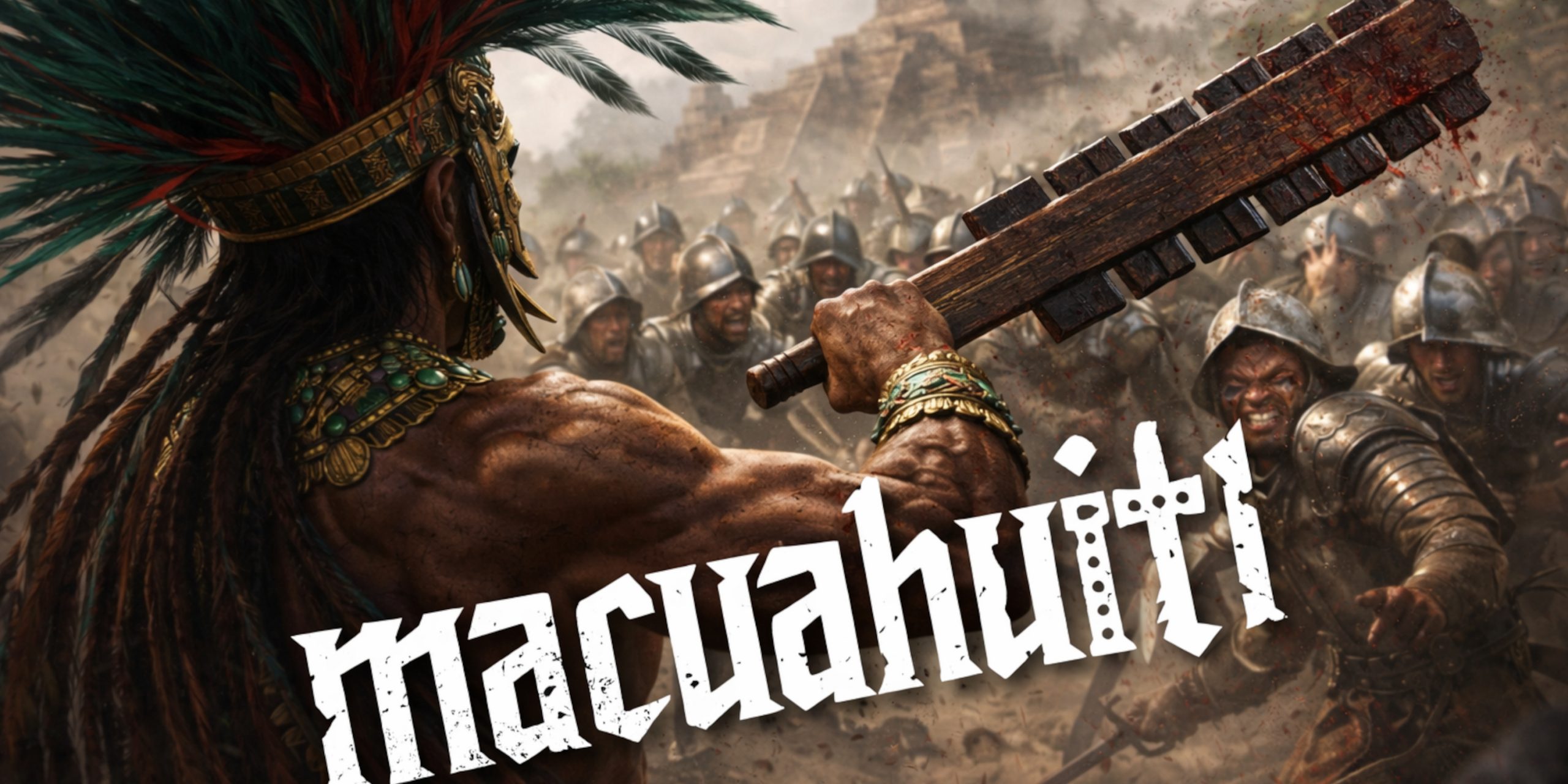
The macuahuitl has a habit of being called an Aztec sword, which is useful shorthand but a little sloppy. It was really a hardwood weapon edged with obsidian blades, something between a club and a cutting sword, and to Spanish conquistadors it must have looked deeply strange. European soldiers knew steel. What they did not know was a weapon that seemed simple at first glance and then proved capable of opening flesh with horrifying efficiency.
Spanish accounts make one point very clear. The macuahuitl was not dismissed. It was feared, remembered, and spoken of with a mix of shock and reluctant respect. That alone tells you plenty.
What Was the Macuahuitl?
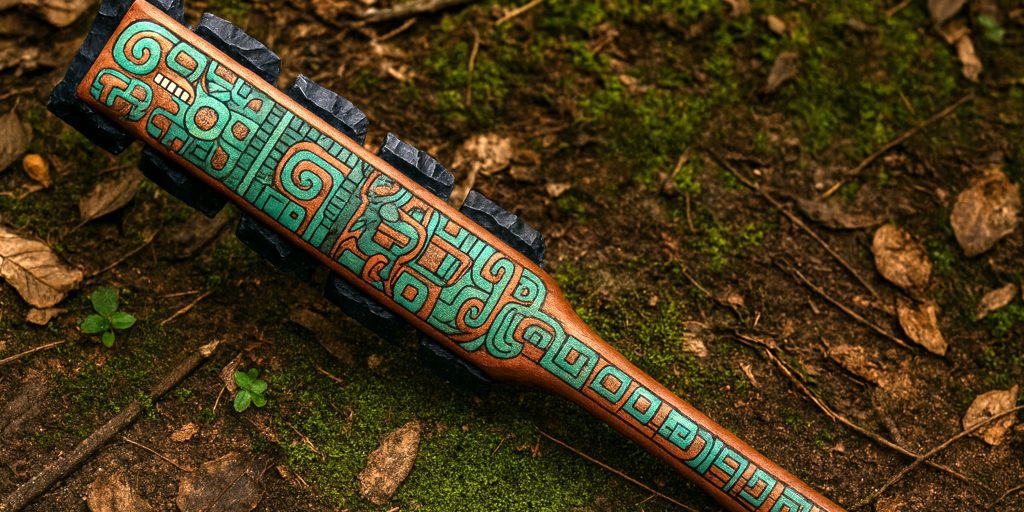
The macuahuitl was a wooden Aztec weapon, usually shaped rather like a flat paddle, with obsidian blades inserted along the edges. Obsidian, despite looking almost decorative to modern eyes, can produce an edge of astonishing sharpness. The drawback is that it is brittle. This was not a weapon built for repeated steel-on-steel punishment, but it could inflict savage wounds in the opening moments of close combat.
Most examples appear to have been about the size of a short sword, though larger two-handed forms also existed. It was widely used in central Mexico before and during the Spanish conquest. This was no ceremonial curiosity. It was a real battlefield weapon, part of a serious and highly developed martial culture.
Why It Frightened Spanish Conquistadors
The first reason is the obvious one. It could do terrible damage.
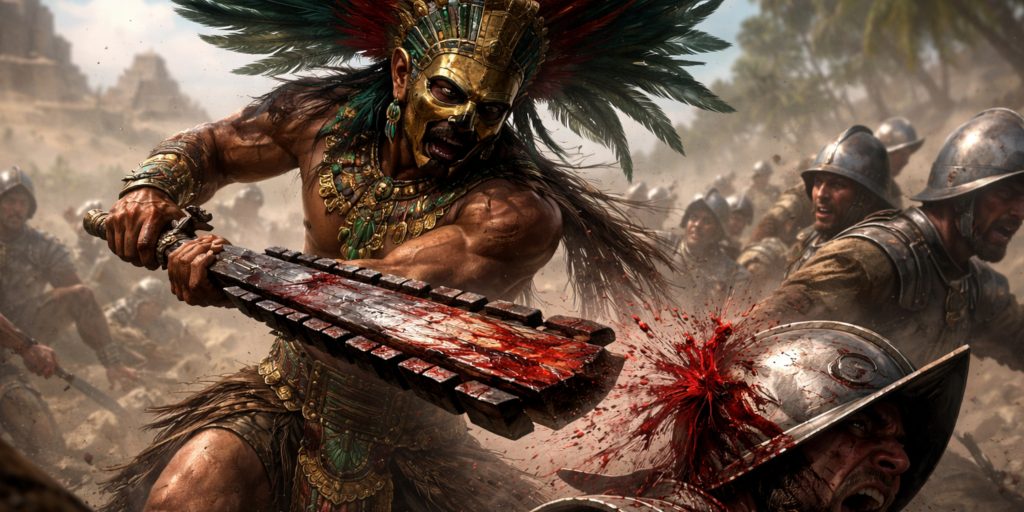
The macuahuitl combined weight, leverage, and razor-sharp obsidian edges. Even if the blades were more fragile than steel, the initial blow could be devastating. Spanish writers repeatedly stressed its ability to inflict appalling cuts, and some even claimed it could maim or nearly decapitate a horse. Since cavalry was one of the Spanish army’s great tactical and psychological advantages, any weapon capable of threatening horse and rider at once was bound to inspire panic.
The second reason was shock. Conquistadors expected steel, horses, armour, and firearms to decide matters cleanly. Instead, they found that unfamiliar did not mean ineffective. That discovery tends to arrive with rather more force than one would prefer.
The third reason was the quality of the warriors using it. Spanish chroniclers did not describe frightened men flailing wildly with crude clubs. They described determined and skilled fighters, operating within a disciplined warrior tradition. A dangerous weapon in trained hands becomes something else entirely.
The Famous Stories About Its Cutting Power
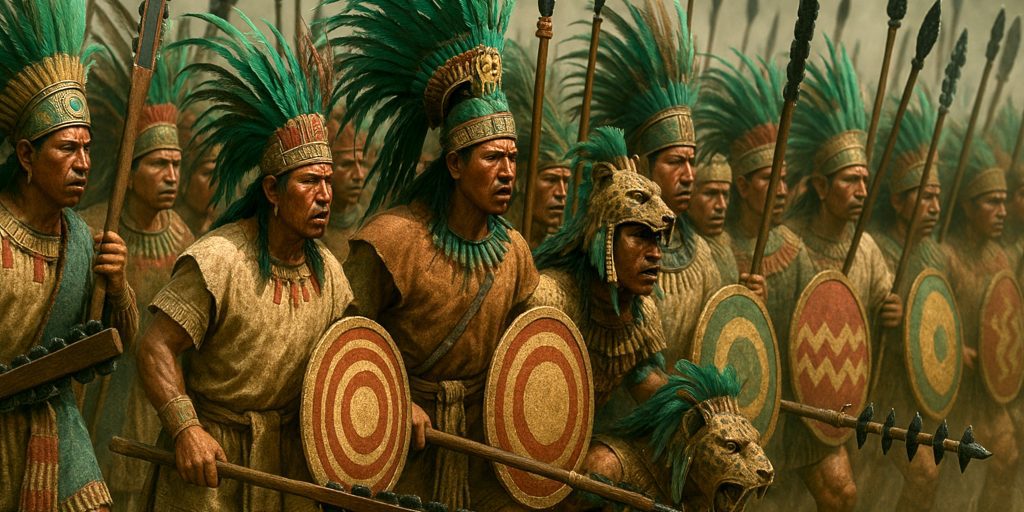
Much of the macuahuitl’s reputation rests on conquest-era accounts of its cutting ability. The most famous claim is that it could cut so deeply into a horse as to almost take off its head. Historians should treat that sort of story with care. Early conquest narratives are full of exaggeration, bravado, and the natural tendency of soldiers to make the enemy sound as terrifying as possible after a battle.
Still, the persistence of these stories matters. Even allowing for dramatic retelling, the weapon clearly left a profound impression on men who had seen a great deal of violence already. Spanish soldiers did not talk about it as a curiosity. They wrote about it as a battlefield threat.
That is the key point. Whether every account is literally accurate in every detail is almost secondary to the broader truth that the macuahuitl earned its reputation the hard way.
Contemporary Quotes
Bernal Díaz del Castillo, one of the best-known chroniclers of the conquest, described a blow from one of these weapons that left a horse horribly wounded, in some versions nearly decapitated. Translation varies, which is historian’s code for saying every edition has found its own way to keep us mildly irritated, but the sense remains the same. The weapon was regarded as shockingly effective.
Other early Spanish descriptions, including accounts linked to the Anonymous Conqueror, also stress the terrible cuts these weapons could inflict. Across the surviving narratives, the pattern is consistent. The macuahuitl appears not as a sideshow, but as a weapon worthy of real alarm.
More broadly, Spanish chroniclers repeatedly treated Mesoamerican weapons with seriousness. They were not describing toys or theatrical props. They were describing the arms of a sophisticated military culture that proved far harder to crush than many of them had expected.
Why the Macuahuitl Worked in Aztec Warfare
The macuahuitl made sense within the warfare of central Mexico. It was effective at close range, capable of inflicting brutal slashing wounds, and well suited to the style of combat in which disabling and capturing opponents could matter alongside killing them. That is an important distinction. Aztec warfare did not always operate on precisely the same battlefield assumptions as European warfare.
This is where many lazy comparisons go wrong. The macuahuitl was not trying to be a Toledo sword. It belonged to a different military system, with different tactical aims and different ideas about how battle should be fought. Judged within that system, it was an intelligent and highly effective weapon.
Its Weaknesses Against Spanish Arms
For all its fearsome reputation, the macuahuitl had clear limitations.
Obsidian is incredibly sharp, but it is also fragile. Against steel armour, mail, or repeated hard impacts, the blades could chip or break. Spanish swords had greater durability, better thrusting ability, and more flexibility in prolonged combat. Firearms, crossbows, artillery, horses, and protective equipment all gave the Spanish important advantages.
That said, a weapon does not need to be flawless to be terrifying. It only needs to be effective enough to ruin a man’s confidence before he has time to think through the materials science of the problem.
Why Spanish Superiority Was Never That Simple
The macuahuitl also matters because it undermines the lazy old story that the conquest was merely steel defeating stone. That version is tidy, and history is rarely tidy.
The Spanish had major advantages, certainly, but they also faced disciplined warriors, formidable city defences, difficult terrain, and fierce resistance. Their victory depended on many factors, including alliances with indigenous enemies of the Aztecs, disease, political fracture, and relentless campaigning. It was not won because their opponents lacked effective weapons.
The macuahuitl is a useful corrective here. It reminds us that Mesoamerican warfare was not primitive. It was different, which is not the same thing at all.
The Macuahuitl in Historical Memory
Part of the weapon’s enduring fascination lies in its appearance. It looks dramatic, unusual, and faintly unreal to modern audiences. Conveniently, it also seems to have been exactly the sort of thing that inspired alarm in the men who faced it. That is quite a combination.
Authentic surviving examples are very rare, which means historians rely on a mixture of written accounts, codices, archaeology, and modern reconstructions. That leaves room for debate, but it also keeps the subject lively. The macuahuitl is not just a museum label. It is still discussed because it forces people to rethink easy assumptions about warfare, technology, and the conquest of the Americas.
Why the Macuahuitl Still Shocks
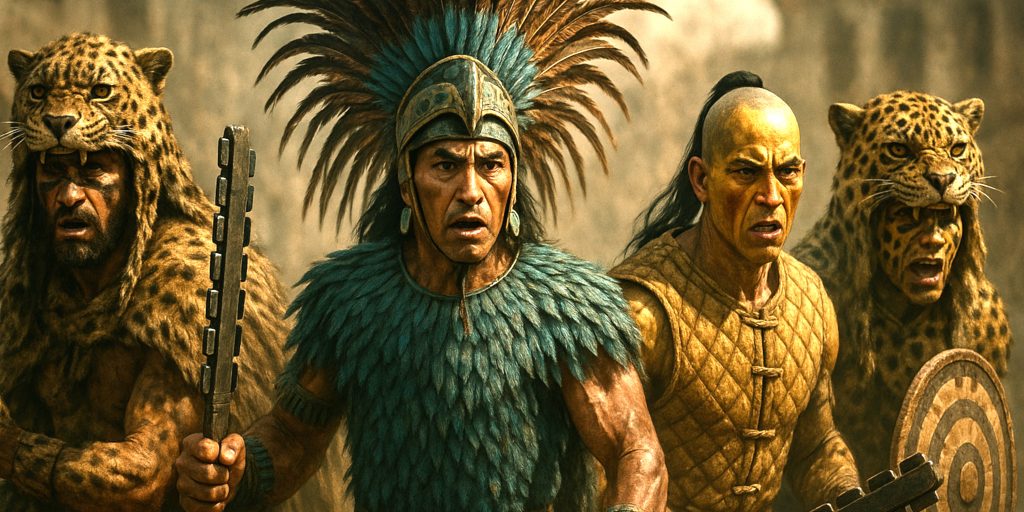
The macuahuitl matters because it tells us something larger than the story of a single weapon. It shows that Aztec military culture was skilled, organised, and capable of producing arms that seriously unsettled European invaders. It reminds us that the conquest was brutal, uncertain, and full of moments when the outcome was not nearly as obvious as later storytelling liked to pretend.
As a historian, I think that is why the weapon still grips people. It looks simple, but simplicity can be deceptive. A hardwood blade lined with obsidian does not sound especially impressive until you picture meeting one at close range on a crowded causeway outside Tenochtitlan. At that point, most abstract debates about technological progress would probably lose their charm.
Legacy of the Aztec War Club
The macuahuitl terrified Spanish conquistadors because it was unfamiliar, efficient, and wielded by warriors who knew precisely how to use it. It was not a crude substitute for steel. It was a weapon designed for its own martial world, and in that world it was deadly.
That is the detail worth remembering. Military sophistication does not always arrive wrapped in polished metal and European assumptions. Sometimes it arrives as a slab of hardwood edged with obsidian, and leaves a conquistador with a very bad day and a much improved respect for his enemy.
Key Takeaways
- The macuahuitl was a wooden weapon edged with razor-sharp obsidian blades
- Spanish conquistadors feared it because it could inflict horrific cutting wounds
- Contemporary Spanish accounts describe it with real alarm, not mockery
- It worked well within Aztec warfare, especially in close combat
- Its reputation helps challenge simplistic myths about the Spanish conquest