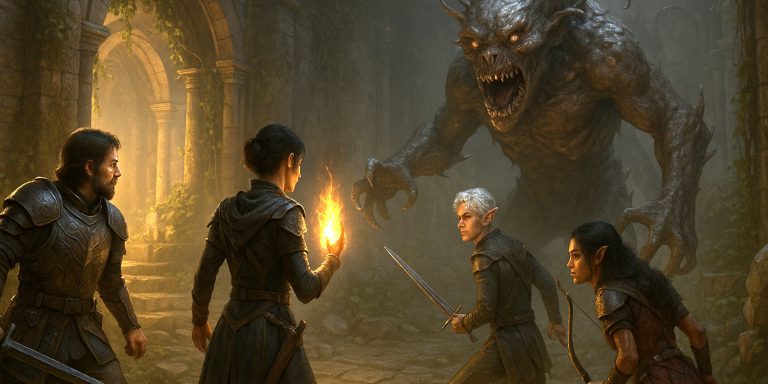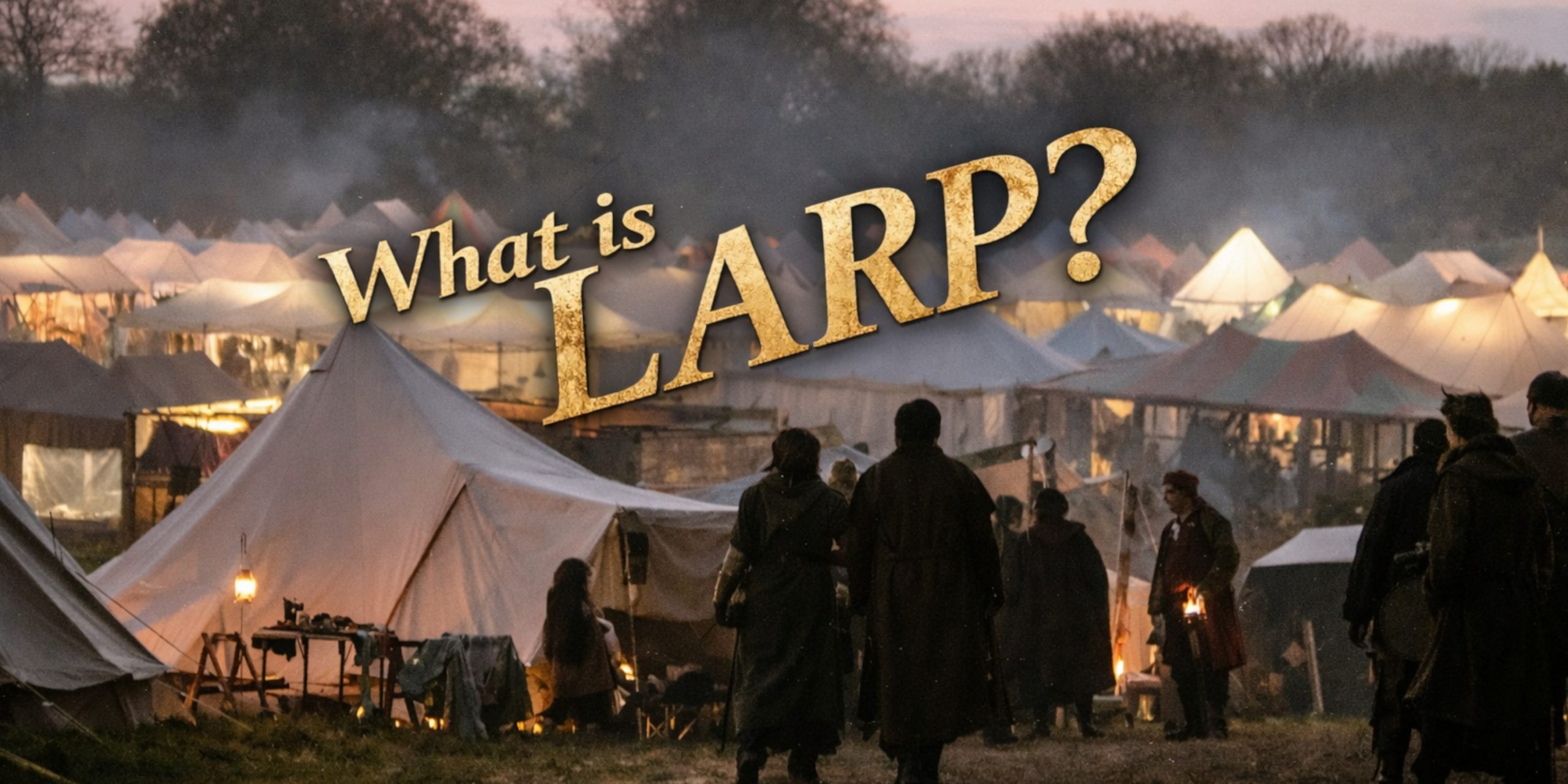
Live Action Role Playing, usually shortened to LARP, is what happens when storytelling stops being theoretical and starts walking around in boots. Instead of sitting at a table describing actions, participants physically act out characters in a shared fictional world. You dress the part, stay in character, and interact with others as if the setting is real, at least for the duration of the event.
Think of it as collaborative storytelling with consequences. Your words matter, your choices matter, and occasionally your terrible decision to trust the wrong person really matters. It is immersive, social, and unapologetically earnest, which is part of the charm.
How LARP Works in Practice
Every LARP has three core elements: a setting, a rules system, and a group of people willing to commit. Before the event, players create characters with backstories, goals, and limitations shaped by the game world. When the event begins, you play that character continuously, often referred to as being in character.
There are organisers behind the scenes who manage the story, play non player characters, and keep things moving when chaos becomes slightly too authentic. Some plots are planned, others emerge naturally through player interaction. The best moments are usually the ones nobody expected.

Where LARP Comes From
LARP has hisrory, it did not appear out of nowhere. It grew from several hobbies that were already circling the same idea. Tabletop role playing games in the 1970s encouraged shared storytelling and character driven play. Historical re enactment groups were already wearing period clothing, camping outdoors, and arguing about authenticity. Experimental theatre was exploring immersive performance where audiences became participants.
By the late 1970s and early 1980s, these threads began to merge. Early LARPs appeared in Europe and North America, sometimes as live versions of tabletop games, sometimes as dramatic social experiments with minimal rules. The term Live Action Role Playing stuck because it described exactly what was happening, even if it sounded slightly clumsy.
Over time, regional styles developed. Scandinavian LARP became known for emotional depth and social themes. German and Central European events scaled up into massive fantasy gatherings. British LARP settled into a familiar blend of plot, combat, and dry humour, usually delivered in a muddy field with tea nearby.
Types of LARP You Will Encounter
Fantasy LARP is the most recognisable, featuring swords, magic, factions, and taverns that somehow always become political. Historical LARP aims for period inspired settings, sometimes tightly researched, sometimes loosely suggestive. Immersive drama focused LARP prioritises character relationships, moral choices, and tension over combat.
There are also modern and science fiction LARPs, which prove that intense negotiations over fictional space laws can be just as dramatic as any medieval siege.
DrachenFest LARP Facts:
Combat, Safety, and Foam Weapons
Yes, LARP includes fighting. No, it is not full contact brawling.
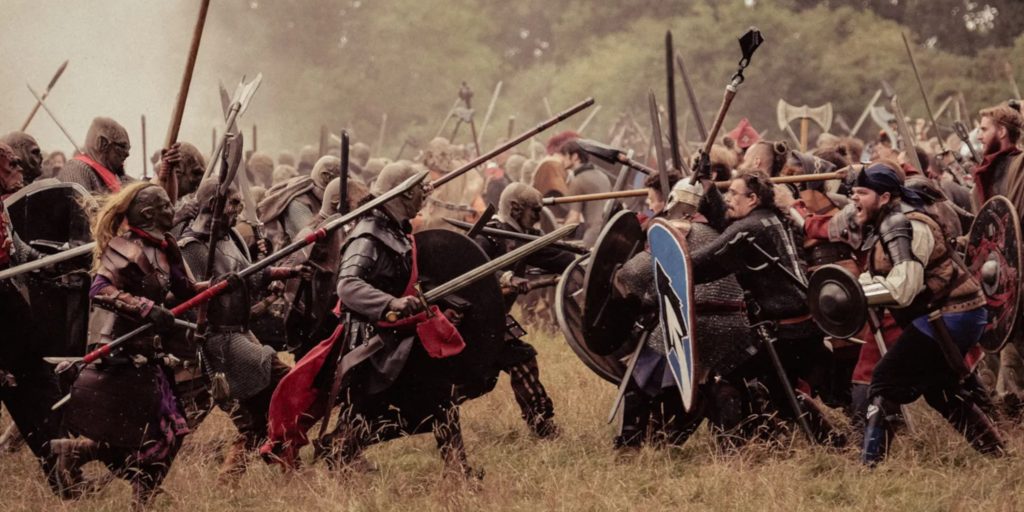
Weapons are constructed from foam and flexible materials, designed to look convincing while remaining safe. Combat rules emphasise control and awareness rather than strength. Safety briefings are standard, consent is taken seriously, and most groups are far stricter than newcomers expect.
The aim is immersion, not injury. Anyone who forgets that tends to have a short LARP career.
Costumes and Commitment
Costumes range from simple thrifted outfits to gear that looks like it belongs in a museum case. Some players enjoy keeping things basic. Others treat LARP as an excuse to learn sewing, leatherworking, and light armour construction.
Effort is encouraged, not policed. The unspoken rule is to try, be respectful of the setting, and avoid anything that breaks immersion for others. Nobody expects perfection, just intent.
Events and Taking Part
Most LARPs are run as organised events lasting from a single day to a full weekend, sometimes longer. Locations include campsites, forests, old halls, and anywhere that can plausibly become another world once modern signs are hidden.
Participation begins before arrival. Players sign up, create characters, and read the setting guide so they do not accidentally undermine twenty years of fictional history. New players are usually supported with clear introductions and accessible roles.
At the event, you stay in character for most of the time. You eat, negotiate, argue, plot, and occasionally fight as your character would. Some moments are scripted, many are not. You do not need to be the centre of attention. Running a tavern, trading information, or quietly observing can be just as valuable as leading a faction.
When the event ends, there is a clear step out of character. People debrief, laugh about poor decisions, and pack away costumes that now require repairs.
Check out our list of information and dates for some of the best LARP events around the globe.
How Big Are LARP Events?
LARP events vary enormously in size, which shapes the experience.
Small events usually involve 20 to 50 players. These focus on deep character interaction, personal stories, and tightly woven plots. Everyone knows everyone by the end, for better or worse.
Medium sized events range from around 50 to 300 participants and are the most common entry point in the UK. They balance story, combat, and social play while still making individual actions feel meaningful.
Large events can involve hundreds or even thousands of players. Some European festivals host over 5,000 participants and operate like temporary fantasy cities. The spectacle is huge, the battles are loud, and the sense of scale is unmatched, though players need to be proactive to carve out personal stories.
Why People Get So Invested
LARP offers something rare. It is social without being passive, creative without being solitary, and physical without requiring competitive athleticism. It gives people space to explore identity, leadership, and conflict in a low risk environment where mistakes become part of the story.
It also helps that dramatic speeches are not only allowed but appreciated.
Is LARP for You?
LARP is not for everyone, and that is fine. If pretending to be a fictional character sounds exhausting, you can safely skip it. But if you enjoy stories, history, games, or just trying something that takes itself seriously without taking itself too seriously, LARP is worth a look.
Curiosity and a willingness to engage matter far more than confidence.
Watch the promotion for Conquest of Mythodea:
We would like thank Clare at Profound Decisions (Empire) and Tom Garnett for their support and kind permission to reproduce their images to illustrate this article. Image credit: Tom Garnett