
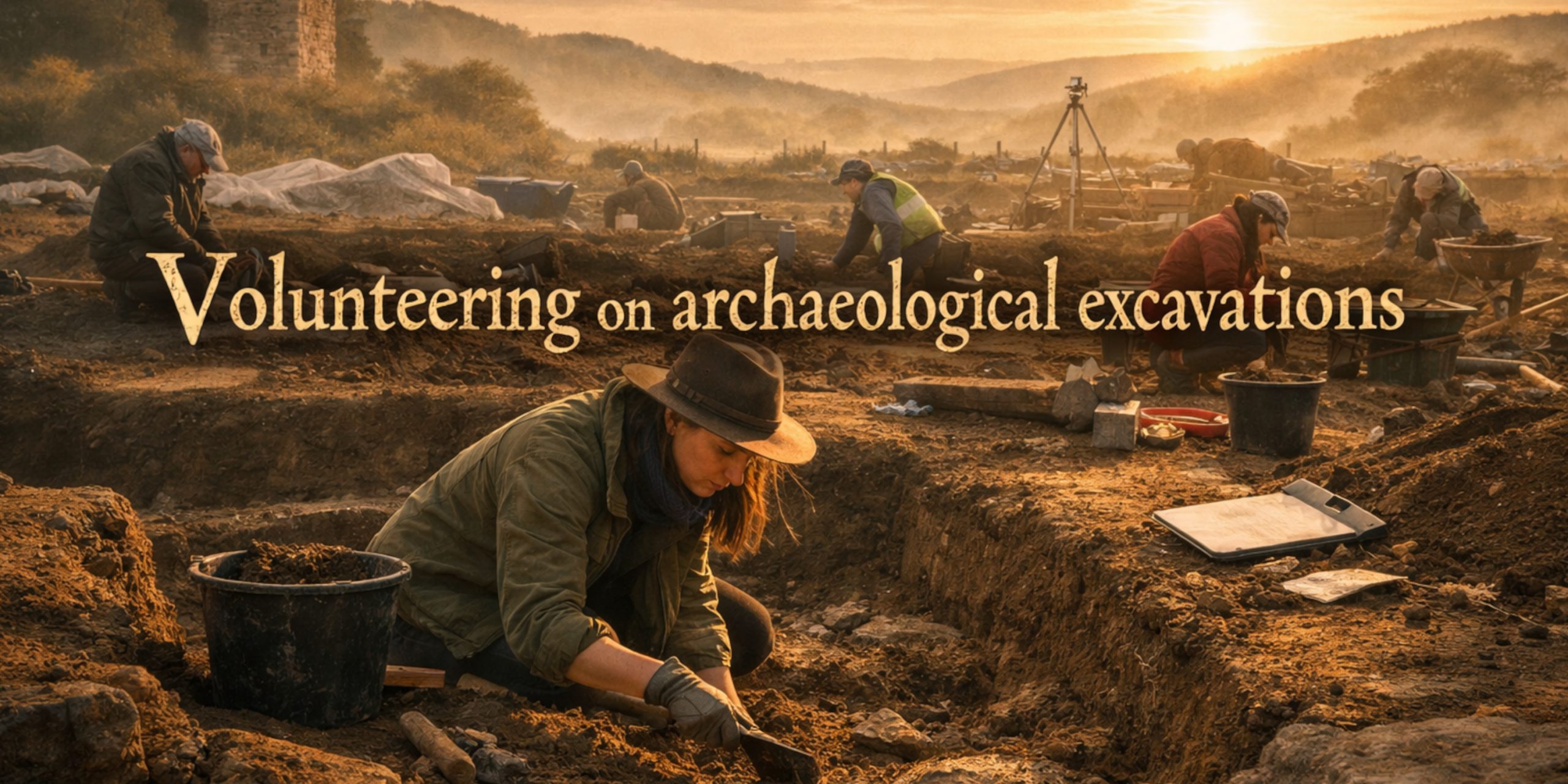
If you have ever fancied spending your time uncovering Roman pottery, medieval foundations, or some gloriously obscure fragment of Britain’s past, volunteering on an archaeological excavation in the UK can absolutely make that possible. It can also involve cold fingers, wet socks, and a surprising amount of enthusiasm about soil layers. Archaeology has a way of doing that to people.
The good news is that volunteer opportunities do still exist across the UK, and many are open to complete beginners. The less romantic truth is that not every dig is free, not every excavation takes volunteers, and not every day ends with the discovery of a Saxon treasure. Much of archaeology is careful method, patient recording, and learning how not to destroy the very evidence you came to uncover. Which, to be fair, is a solid principle in most areas of life.
This guide explains how volunteering on archaeological excavations in the UK actually works, where to find opportunities, what skills you can learn, and how to choose a first dig that is worth your time.
Can You Volunteer on Archaeological Excavations in the UK?
Yes, you can. Across the UK, there are still many opportunities for the public to get involved in archaeology through excavations, community heritage projects, finds processing, fieldwalking, survey work, and post-excavation tasks.
That said, not all digs are open to volunteers. Commercial archaeology projects are usually run by professional units working to tight schedules, legal obligations, and development deadlines. They are not designed for curious members of the public to wander in with a trowel and heroic expectations. Volunteer opportunities are far more common on community digs, heritage projects, university field schools, museum programmes, and public archaeology excavations.
So, yes, the door is open. You just need to walk through the right one.
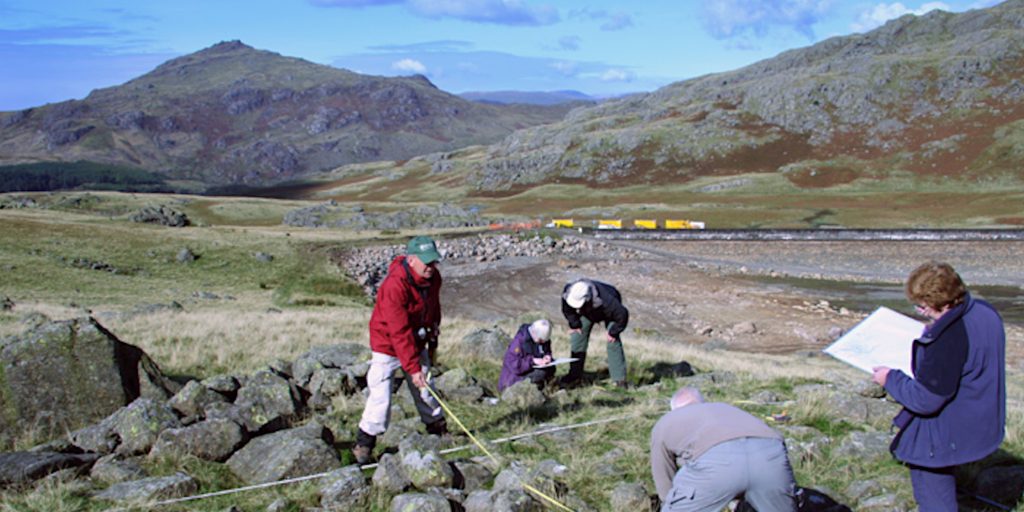
Lake District National Park Volunteering
What “Volunteering” Means in UK Archaeology
This is where many people get caught out.
In archaeology, volunteering can mean several different things. Some projects are genuinely unpaid and community-led. Others are run by local archaeology societies or museums and rely on volunteers as part of a wider heritage programme. Then there are structured public digs and training excavations where participants pay for the experience.
That does not make those projects any less real. The archaeology is still real, the skills are still useful, and the work is still supervised properly. It simply means you need to read the details carefully before signing up.
If a dig sounds exciting, that is lovely. If it also costs money, requires your own transport, and expects you to bring half your wardrobe in waterproof form, that is useful to know before the cheerful brochure tone works its magic.
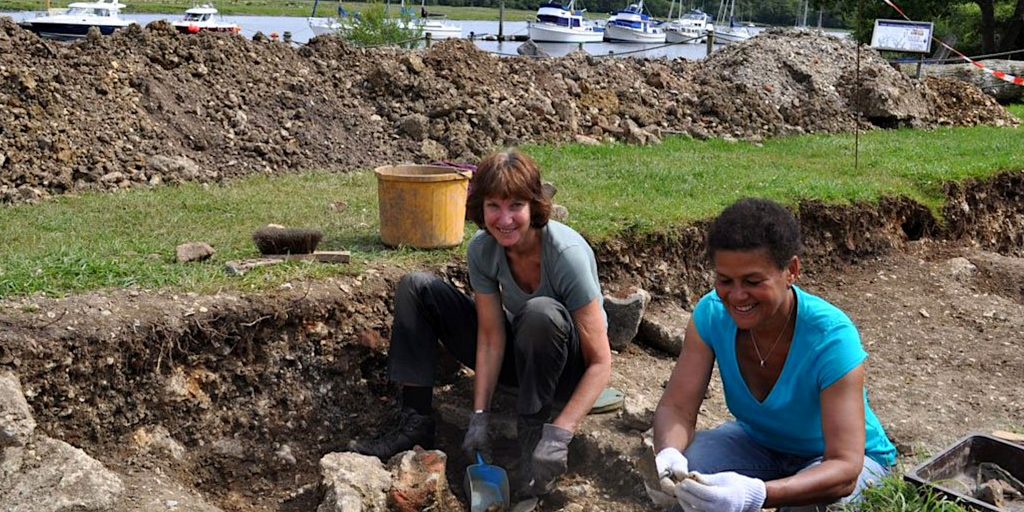
New Forest National Park Archeology Volunteering
Who Should Consider It?
Volunteer archaeology can suit more people than you might think.
It is ideal for history lovers who want hands-on experience, students hoping to gain fieldwork skills, career changers who suspect they may have chosen the wrong path, and local heritage enthusiasts who want to be involved in something tangible. It is also a good fit for people who enjoy practical work outdoors and do not mind the idea of spending a day talking earnestly about stratigraphy.
If that sounds alarmingly specific, spend one afternoon on a dig and see how quickly it becomes normal.
You do not need to be an academic, and you do not need to arrive with specialist knowledge. What helps most is curiosity, patience, and the ability to accept correction without behaving as though the trench has personally insulted you.
Do You Need Experience?
Usually, no.
Many volunteer excavations in the UK are designed to welcome beginners. On a well-run site, you will be shown how to use tools properly, how to clean back a trench, how to recognise basic soil changes, how to bag finds, and how to record what you are doing.
Experience is obviously useful. If you have already been on a dig, you are likely to settle in faster. But most beginner-friendly projects are not expecting you to identify features instantly or produce flawless site records on day one. They are expecting you to learn.
That matters because archaeology is not just about enthusiasm. A site needs people who can follow instructions, work carefully, and understand that slower is often better. Excavation is one of those rare activities where doing less, more carefully, can count as genuine progress.
Where to Find Archaeology Volunteering Opportunities in the UK
The best place to begin is usually close to home. Local archaeology societies, museums, community heritage groups, historic sites, and university departments can all be excellent sources of opportunities.
Starting local makes sense for practical reasons. It is cheaper, easier to commit to, and more likely to lead to repeat involvement. A nearby community project may not sound as glamorous as excavating a famous abbey or castle, but regular field experience on a well-organised site is far more valuable than one flashy week somewhere remote.
You can also look at:
- Community excavation projects
- Local archaeological societies
- Museum volunteer programmes
- University field schools
- Heritage organisations
- Public archaeology projects with beginner training
- Historic sites running seasonal digs or survey programmes
The best first opportunity is not necessarily the most impressive one on paper. It is the one that teaches you properly.
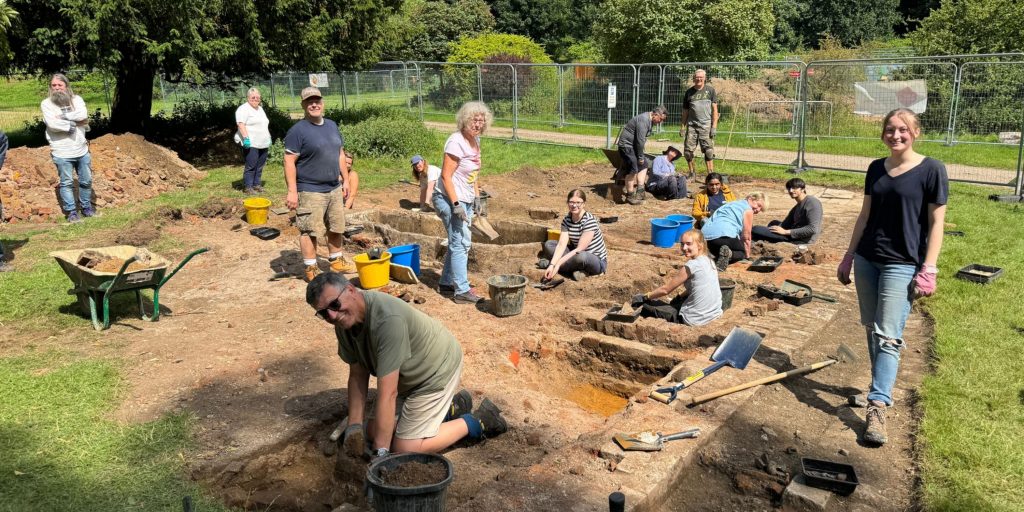
Types of Archaeological Volunteering
A lot of people picture archaeology volunteering as standing in a trench with a trowel from morning to evening. That does happen, but it is only part of the picture.
Volunteers may also help with finds washing, sorting and bagging artefacts, cataloguing, archive work, post-excavation processing, fieldwalking, geophysical survey, environmental sampling, drawing plans, public interpretation, or outreach events.
This is worth stressing because archaeology is not just digging. Digging is only useful when it is linked to recording, analysis, and interpretation. A trench without context is just a hole with academic ambitions.
In many ways, finds processing and post-excavation work can teach as much as excavation itself. You begin to understand how evidence is built into a wider historical picture, and why the smallest fragment can matter if it is recorded properly.
What a Day on a Dig Actually Looks Like
A real excavation day is more orderly than people imagine.
You usually arrive in the morning, sign in, and attend a health and safety briefing. You are shown the site layout, introduced to the trench or working area, and given instructions about the task for the day. If you are new, someone will normally explain the basics before you start.
From there, the day may involve cleaning surfaces, excavating deposits, moving spoil, sieving soil, identifying changes in texture or colour, bagging finds, filling in paperwork, taking measurements, or helping with finds washing later on.
There will often be moments when you uncover something interesting. There will also be moments when you spend ten minutes staring at a patch of earth while someone more experienced decides whether it is archaeology or just a deeply unhelpful natural feature.
Both experiences are entirely authentic.
There is also usually a point, somewhere between the second tea break and the first ache in your knees, when you realise you are completely absorbed. That is often when archaeology begins to make sense.
What Skills Can You Learn?
A good volunteer dig teaches far more than most people expect.
You may learn how archaeologists excavate carefully, how stratigraphy works, how features are recognised, how finds are handled, how records are kept, and why documentation matters as much as discovery. You may also gain experience in teamwork, outdoor working, basic site etiquette, and practical observation.
This is one of the strongest reasons to volunteer. It replaces vague ideas about archaeology with an understanding of how the discipline actually functions. That is valuable whether you are considering a career in heritage or simply want a deeper appreciation of the past.
You stop seeing archaeology as treasure hunting and start seeing it as evidence-based reconstruction. Frankly, that version is far more interesting.
How Much Does It Cost?
This varies a great deal.
Some opportunities are free, especially through local groups, museums, and community heritage projects. Others charge a fee for participation, particularly if they are structured training digs or public excavation experiences. Those costs can cover staff supervision, insurance, equipment, facilities, accommodation, or specialist teaching.
You should also factor in travel, lunch, boots, waterproof clothing, gloves, and sometimes accommodation if the site is not local.
So yes, volunteering in archaeology can be affordable, but it is not always free. This is one of those areas where the word “volunteer” can sound nobler than the booking form that follows.
The solution is simple enough. Read the details, check exactly what is included, and decide whether the project offers real value.
What Should You Bring?
Most digs will provide guidance, but the essentials are fairly predictable.
Bring sturdy boots, clothes you do not mind ruining, waterproofs, layers, a packed lunch, water, and something for sun protection. Gloves can help, though some people prefer to work without them for finer tasks. Knee pads are not glamorous, but they are among the wisest archaeological inventions of the modern age.
A notebook is useful. So is common sense.
What you do not need is an outfit that suggests you expect to be photographed heroically with a Roman mosaic by lunchtime. Bring practical kit, not cinematic confidence.
Is It Good for Career Experience?
Yes, absolutely.
For anyone considering archaeology, museums, heritage work, conservation, or related academic study, volunteering is one of the best ways to test whether the field suits you. It gives you practical experience, introduces you to real methods, and helps you understand what professional archaeology is actually like.
That matters because archaeology is easy to admire from a distance. It is rather different when you are cold, muddy, trying to complete paperwork, and suddenly very aware that a badly filled finds bag can ruin good evidence.
If you enjoy the process anyway, that is a very useful sign.
A single volunteer dig will not transform your CV overnight, but it is an excellent starting point. Repeated experience, especially on well-run projects, can be genuinely valuable.
Are There Opportunities for Young People?
Yes, but the rules vary.
Some projects welcome younger participants, especially community digs, museum activities, youth archaeology clubs, and family heritage events. Others have minimum age requirements or require parental supervision. It depends on the nature of the site, the kind of work involved, and the organisation running it.
So if you are looking for opportunities for a teenager or younger volunteer, always check the project details first. Archaeology may deal with ancient things, but its paperwork is extremely modern and takes itself very seriously.
Probably for the best.
How to Choose the Right First Dig
Your first project should be beginner-friendly, well supervised, and clear about what volunteers actually do.
Look for projects that explain the training on offer, who is leading the excavation, what the daily routine looks like, and whether beginners are genuinely welcome. A small, well-organised local excavation with good supervision is usually better than a glamorous project that sounds impressive but offers little structure.
Personally, I would always choose competence over spectacle. Give me a trench with proper guidance, sensible recording, and someone patient enough to explain why that patch of darker soil matters. A famous site is exciting, of course, but a good supervisor is gold dust.
History is thrilling. Good field practice is even better.
Common Misconceptions About Volunteer Archaeology
A few myths appear again and again.
You do not need a degree to get started.
You do not need previous excavation experience for many beginner-friendly projects.
You are not guaranteed to find something dramatic.
You may have to pay.
And no, archaeology is not just treasure hunting with a more respectable haircut.
It is careful, disciplined, evidence-based work. That is exactly why it produces knowledge rather than just stories people would like to tell.
Takeaway
Volunteering on archaeological excavations in the UK remains one of the most rewarding ways to connect with the past in a direct, practical way. It can be muddy, repetitive, oddly moving, physically tiring, intellectually absorbing, and occasionally hilarious for reasons that only make sense when three adults are arguing softly over a stain in the ground.
If you choose a well-run project and arrive with realistic expectations, it can be a brilliant experience. Not because every day ends with a major discovery, but because you begin to understand how the past is actually uncovered, piece by piece, layer by layer, note by note.
There is something quietly powerful about helping reveal a fragment of a lost building, a buried surface, or an object last touched centuries ago. Even when the day leaves you damp, aching, and newly respectful of decent socks, it still feels worthwhile.
That, I think, is the real pull of archaeology. Not drama, not fantasy, not the hope of instant revelation. Just the strange privilege of being allowed, for a little while, to meet the past on its own terms.
Watch the Talk:
Online Resources for Finding Archaeology Volunteering Opportunities
If you are looking for volunteering opportunities online, a few websites are genuinely useful and save a lot of aimless searching. Some list community digs and heritage roles, others focus on public excavation experiences, and a few are better if you are edging toward training or paid fieldwork. The trick is knowing which is which, so you do not end up clicking through twelve pages only to discover the role closed three months ago.
Council for British Archaeology Volunteer Hub
The Council for British Archaeology Volunteer Hub is one of the best starting points for UK-based opportunities. It lists archaeology and heritage volunteering roles across the country and includes everything from excavation projects to museum, conservation, and community heritage work. It is especially useful if you want a broad starting point rather than a single dig.
DigVentures
DigVentures is one of the most visible public archaeology platforms in the UK. It offers in-field excavation experiences, project listings, courses, and community-focused archaeology opportunities. Its dig calendar and project pages are particularly useful if you want hands-on participation and are open to structured, supervised experiences rather than only free volunteer roles.
York Archaeology Training Digs
York Archaeology runs training digs that give members of the public hands-on experience on real archaeological sites. These are a strong option if you want a more guided introduction with a clear training angle, especially if you are new and want proper structure rather than being thrown into a trench and left to form a relationship with confusion.
BAJR, British Archaeology Jobs and Resources
BAJR is better known for professional archaeology jobs, but it is still worth checking because it remains a major archaeology resource hub in the UK. It is more useful if you are moving beyond casual volunteering and starting to look at traineeships, fieldwork routes, or early career opportunities. In other words, this is where the mud begins to look suspiciously like a professional commitment.
Youth Archaeology Club
For younger people, the Youth Archaeology Club is a very good place to start. Its opportunities section points users toward archaeology and heritage activities, and it also directs people to wider volunteering resources. This is especially helpful for teenagers and families trying to find age-appropriate routes in.
Battlefields Trust
If your interest leans toward battlefield archaeology and landscape-based heritage work, the Battlefields Trust can be worth watching. Its volunteering pages highlight projects where volunteers may receive training and take part in fieldwork linked to historic battle sites.
Local and Regional Heritage Project Pages
It is also worth checking the websites of local archaeology trusts, regional heritage partnerships, and individual excavation projects. Current examples on the CBA listings include community excavations and volunteer roles at projects such as Abbey Cwmhir and Archaeological Research Services. These project-specific pages can be excellent because they often explain exactly what the work involves, whether beginners are welcome, and how to apply.










Hi, I am interested in helping out at a archaeology site, possibly Tintagel Castle. Could you let me have more information please.
Please note, I am 68 years of age and fairly fit.
That’s fantastic. I would recommend you choose a dig near you from the section’ Current UK Archaeological Digs Accepting Volunteers’ and give them a call.