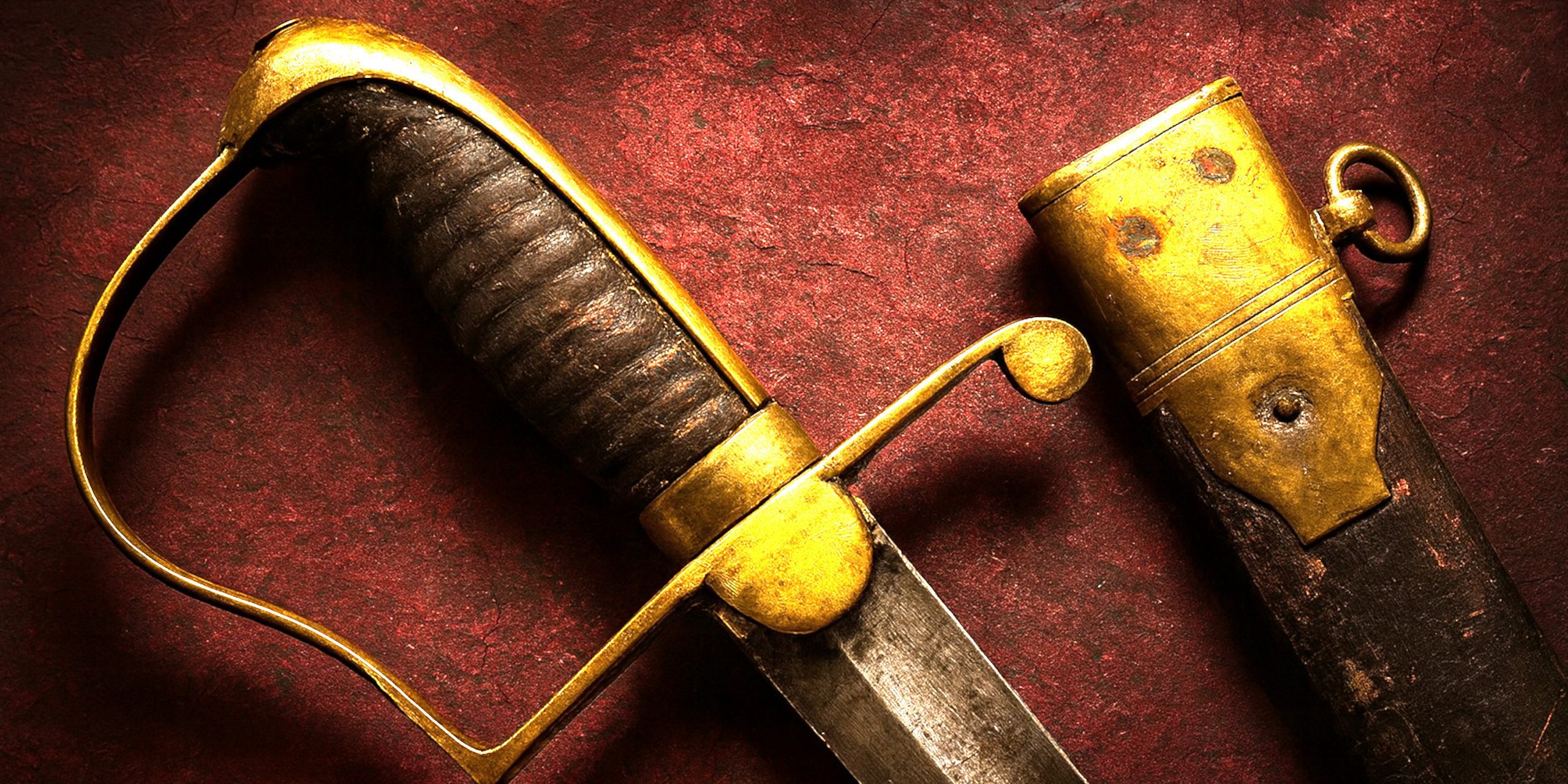
The US Model 1812 officer’s spadroon belongs to an interesting transitional moment in early American military identity. It carries a certain elegance, yet it also exposes the United States Army’s attempt to standardise weapons during a period when supply, training, and design ambitions frequently clashed. The sword is light, formal in posture, and tied to a generation of officers who often moved between administrative duties and active field command.
The Model 1812 officer’s spadroon served as a symbol of rank and refinement more than a dedicated battlefield tool. Its slim profile and straight blade made it comfortable to wear on long marches or during garrison life. It reflects the lingering influence of European design on American arms before domestic production matured into its own recognisable style.
Specification
A brief overview of typical specifications.
| Feature | Details |
|---|---|
| Blade type | Straight, single edged with partial false edge |
| Blade length | Usually 30 to 32 inches |
| Overall length | Around 36 to 38 inches |
| Hilt | Gilt brass, often with urn or eagle pommel |
| Guard | Stirrup guard or simple knucklebow pattern |
| Grip | Wood core with leather wrap and wire binding |
| Scabbard | Black leather with brass mounts |
| Weight | Light, roughly 1.5 to 2 pounds |
Key points
- Designed for officers rather than enlisted personnel
- Intended for dress wear, signalling authority during inspections and ceremonies
- Optimised for a thrusting motion rather than heavy cutting
History and Evolution
The Model 1812 emerged from the young republic’s desire to present a more professional military image. Earlier patterns largely borrowed from British and French forms. The 1812 model continued this habit, blending neoclassical ornament with practical austerity.
Production varied between contractors, which resulted in noticeable differences in hilt decoration and blade thickness. The War of 1812 strengthened the call for standardised weapons, yet officers still enjoyed considerable latitude in personal choice. Many carried imported British spadroons with minor adjustments to suit American taste, particularly the adoption of the spread eagle motif.
By the 1820s, fashion shifted toward more curved and cut-oriented sabres. The light spadroon began to feel outdated beside the growing preference for robust cavalry models and heavier infantry officer swords. Still, the 1812 spadroon lingered in some militia units until the mid nineteenth century.
Advantages and Disadvantages
Advantages
- Extremely light and easy to carry
- Convenient for dress occasions and formal duties
- Quick in the hand for thrusting techniques
- Attractive ornamentation that suited officers concerned with appearance
Disadvantages
- Limited cutting power
- Blade can feel too flexible for vigorous combat
- Provides less protection than more complex guards
- Variability in manufacturing quality creates inconsistency for collectors and reenactors
Comparison with Similar Weapons
| Weapon | Strengths | Limitations |
|---|---|---|
| US Model 1812 Spadroon | Light, elegant, ideal for thrusting | Weak in heavy combat, modest guard protection |
| British 1796 Infantry Officer’s Sword | Influential pattern, refined look, strong European roots | Similar limitations in cutting capacity |
| US Model 1840 Army Officer’s Sword | More robust blade, improved guard styling | Heavier and less suited to a pure ceremonial role |
| French AN XI Infantry Sword | Solidly built with better balance | Typically plainer in decoration than American versions |
The Model 1812 sits squarely in the lineage of slim, straight-bladed officer swords that valued appearance and posture over battlefield resilience.
Legacy
Although overshadowed by later sabres, the Model 1812 retains value as an emblem of early American military culture. It reflects the period’s blend of imported influence and emerging national symbolism. Surviving examples often carry elegant federal eagles, sunburst motifs, and neoclassical lines that mirror the artistic tastes of the early republic.
Collectors value it for the connection to the War of 1812 and the slow consolidation of American arms manufacturing. In museums, it usually appears alongside militia gear, officer uniforms, and early ordnance experiments.
Where to See
- National Museum of American History in Washington, D.C.
- West Point Museum in New York
- Various state military museums that hold War of 1812 collections
- Smaller regional historical societies with militia officer displays
Collector’s Guide
What Matters Most
- Maker marks
- Integrity of the grip wrap and wire
- Clarity of eagle or federal motifs
- Original scabbard presence
- Overall straightness of the blade
Current Market
Prices continue to fluctuate depending on condition and provenance.
| Condition | Typical Auction Range |
|---|---|
| Excellent with scabbard | £1,200 to £2,000 |
| Good with minor wear | £750 to £1,100 |
| Fair, missing scabbard | £350 to £600 |
| Heavily worn or repaired | £150 to £300 |
High provenance examples, particularly those tied to known officers or documented militia units, can exceed these figures.
Buying Tips
- Inspect the blade for bends or excessive flex
- Ensure the grip wrap is original rather than a later restoration
- Confirm that the scabbard mounts match the sword’s period
- Beware of composite pieces made from mixed parts