Watching The White Queen can feel like being dropped into a medieval group chat where everyone shares a surname and half the cast wants the throne. Alliances flip, marriages rewrite loyalties, and the family tree looks less like a tree and more like a plate of spaghetti. This guide cuts through the confusion. Think of it as a practical map with commentary from someone who has paused the show one too many times to check who is related to whom.
The Royal Starting Point, Edward III
Everything begins with Edward III, whose many sons seeded a century of chaos. Two lines matter most here.
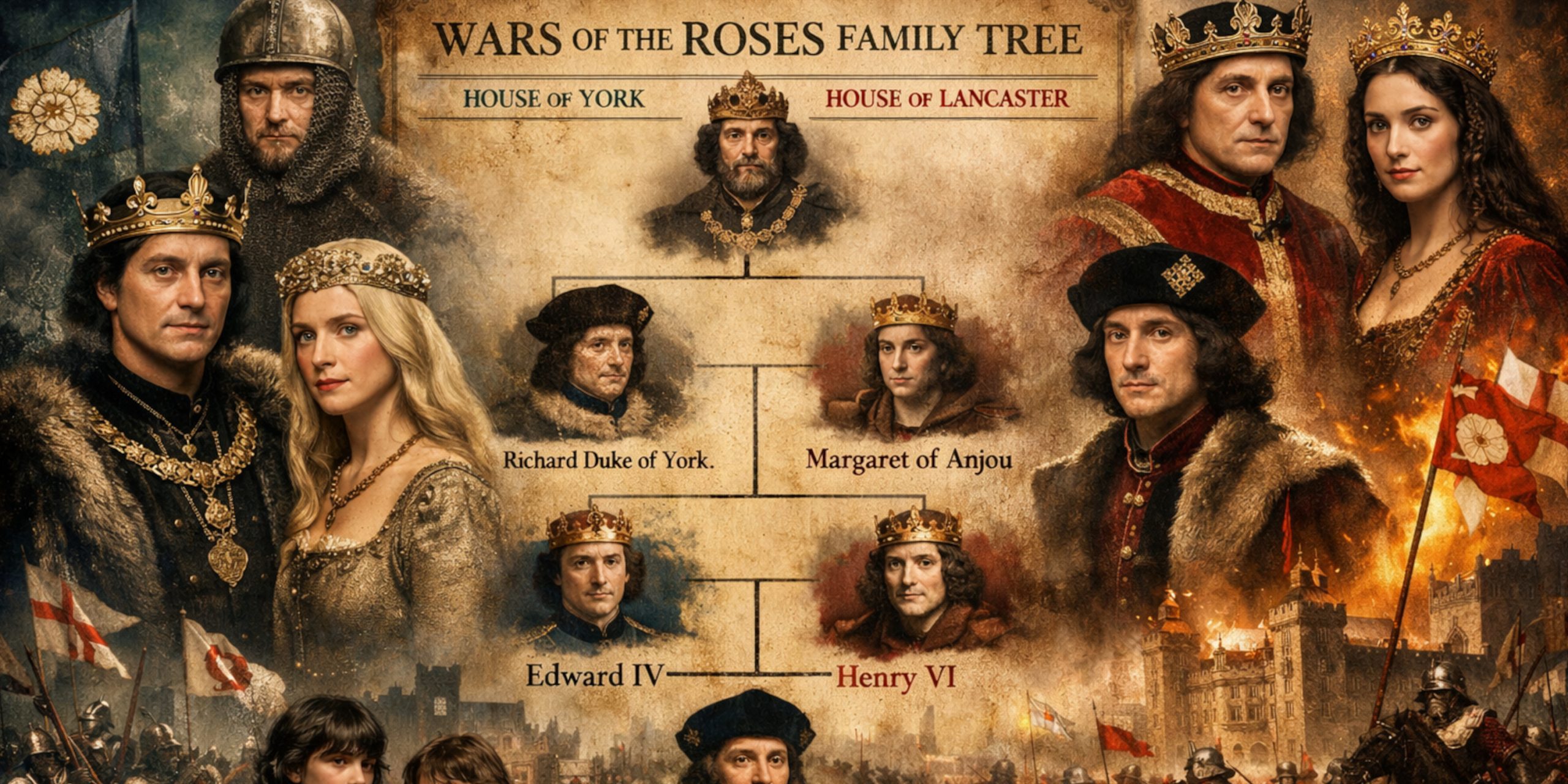
The House of Lancaster descends from John of Gaunt. The House of York descends from Edmund of Langley, with an extra claim through Lionel of Antwerp that quietly strengthens Yorkist legitimacy. Medieval succession was rarely neat, and this mess is the reason the Wars of the Roses never feel straightforward.
The Lancastrians, Kings Who Knew the Crown Could Slip
Henry IV seized the throne and started the Lancastrian run. His son Henry V held it together with battlefield success and sheer force of will. Then came Henry VI, a gentle, pious man utterly unsuited to civil war politics.
Henry VI’s marriage to Margaret of Anjou brings fire into the story. She is strategic, relentless, and very aware that her son’s inheritance depends on crushing Yorkist claims. If The White Queen has a Lancastrian engine, it is her.
The Yorkists, A Claim Sharpened by Bloodlines
The Yorkist challenge centres on Richard Plantagenet, whose bloodline makes his claim hard to dismiss. He dies before wearing the crown, but his sons finish the job.
Edward IV is the Yorkist star of the show. Charismatic, impulsive, and very good at winning battles, he takes the throne and immediately complicates everything by marrying for love.
His brother Richard III enters later, burdened with one of history’s worst reputations. The show leans into the ambiguity. Was he a villain, a pragmatist, or a man crushed by circumstances. Probably all three.
Elizabeth Woodville, The Woman Who Rewrote the Board
Elizabeth Woodville is the heart of The White Queen. A widow from a Lancastrian family who marries Edward IV, she forces two rival houses into the same bed. This is not a romantic footnote. It reshapes court politics overnight.
Her large family gains power fast, which irritates the old nobility and helps fracture Yorkist unity. Watching the Woodvilles climb feels a bit like seeing new money walk into a room full of people who think titles should come with a pedigree and silence.
The Nevilles, Power Brokers with Whiplash Loyalties
If you want to understand why nothing stays stable, meet Richard Neville, better known as Warwick the Kingmaker. He helps Edward IV rise, then helps remove him, then tries to reinstall Henry VI. Consistency is not his brand.
His daughters tie the story together. Anne Neville marries into both sides of the conflict, first Lancastrian, then Yorkist, eventually becoming Richard III’s queen. Her life reads like a political relay race she never volunteered to run.
The Next Generation, Where It All Gets Dark
Edward IV and Elizabeth Woodville’s sons, including Edward V, vanish into history as the Princes in the Tower. Their disappearance fuels Richard III’s downfall and stains the Yorkist legacy beyond repair.
Meanwhile, a distant Lancastrian claimant waits in the wings. Henry Tudor carries just enough royal blood to matter and enough ambition to finish the fight. His victory ends the Wars of the Roses and quietly tells everyone that Plantagenet family arguments are officially over.
How This All Helps When Watching The White Queen
Once you see the family tree as a set of overlapping claims rather than neat sides, the show clicks. Characters are not switching loyalties on a whim. They are protecting bloodlines, marriages, and futures that depend on who sits the throne that week. It is messy, personal, and deeply human, which is why the drama still works centuries later.
If you ever forget who is related to whom, you are not failing the show. The show is being historically accurate.
The Seven Swords Takeaway
The White Queen is less about heroes and villains and more about inheritance anxiety taken to its logical extreme. Every marriage is a gamble. Every child is a political statement. Once you track the family tree, the chaos stops being confusing and starts being darkly entertaining.
Waitch the Trailer: