Among the many figures who shaped the Crusader era, Nur ad-Din Zangi stands out as one of the most formidable. He rarely receives the same attention as his famous successor, Saladin, yet without Nur ad-Din there would likely have been no Saladin at all.
Nur ad-Din ruled northern Syria from 1146 until his death in 1174. During those decades he transformed a fragmented region into a disciplined and increasingly unified Muslim front against the Crusader states. He was a patient strategist, a devout ruler, and a relentless military organiser. His reputation among medieval chroniclers borders on reverence.
Reading the sources, one notices something unusual. Even writers who normally enjoy criticising rulers speak of him with a kind of cautious admiration. That alone suggests a man who left a strong impression on his age.
Origins and Rise to Power
Nur ad-Din Mahmud ibn Zangi was born in 1118. He was the son of Imad ad-Din Zangi, the powerful atabeg of Mosul and Aleppo. Zangi himself had already shaken the Crusader world by capturing Edessa in 1144, the first major Crusader state to fall.
When Zangi was assassinated in 1146 the territories were divided between his sons. Nur ad-Din took control of Aleppo. What looked like a fragile inheritance soon turned into something much stronger.
From Aleppo he began expanding carefully. He avoided reckless campaigns and focused instead on consolidating power in Syria. Damascus became his central objective. After years of manoeuvring, diplomacy, and pressure, the city finally accepted his rule in 1154.
With Damascus secured, Nur ad-Din now controlled most of Syria. The Crusader states suddenly faced a unified frontier.
Political Vision and Religious Authority
Nur ad-Din understood that warfare alone would not defeat the Crusaders. He aimed to reshape the political and religious landscape of the region.
He promoted Sunni Islam and built religious schools known as madrasas across Syria. These institutions trained scholars and judges who reinforced his legitimacy. This effort also countered rival influences from Shi’a dynasties such as the Fatimids in Egypt.
He presented himself not simply as a warlord but as a ruler carrying out a religious duty. Jihad, in his framing, was both a political campaign and a moral project.
It was careful statecraft. A ruler who could claim both military success and religious legitimacy held enormous influence.
Arms and Armour of Nur ad-Din’s Armies
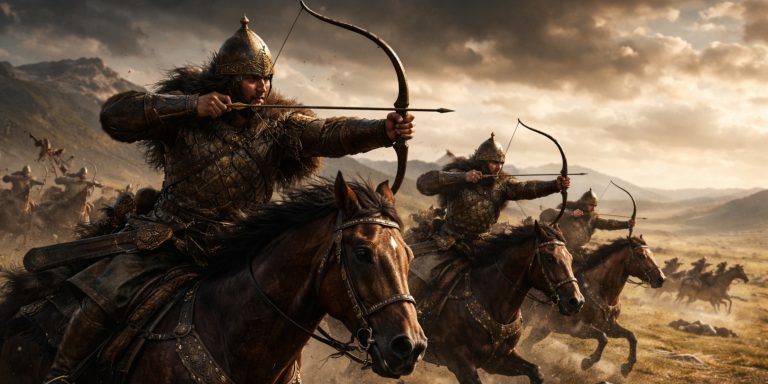
Nur ad-Din’s forces reflected the military traditions of the medieval Islamic world, mixed with local Syrian and Turkic elements. Cavalry formed the core of his field armies, supported by disciplined infantry and specialist archers.
Common Weapons
| Weapon | Description |
|---|---|
| Curved sabres (Saif) | The dominant cavalry sword, ideal for slashing from horseback |
| Straight double edged swords | Often used by elite warriors and guards |
| Lances | Primary cavalry shock weapon |
| Composite bows | Powerful recurved bows used from horseback |
| Maces and war hammers | Effective against armoured opponents |
| Daggers and jambiyas | Secondary weapons for close combat |
Turkic cavalry in particular relied heavily on the composite bow. These archers could strike from a distance while manoeuvring rapidly across the battlefield.
Armour
| Armour Type | Description |
|---|---|
| Mail shirts | Worn by cavalry and elite infantry |
| Lamellar armour | Overlapping plates sewn into leather or cloth |
| Helmets with nasal guards | Conical helmets common across the region |
| Round shields | Often made from wood, leather, or metal |
| Quilted armour | Lighter protection for mobility |
Compared with Crusader knights, Nur ad-Din’s forces favoured mobility over sheer weight of armour. This gave them tactical flexibility, particularly in open terrain.
Major Battles and Military Acumen
Nur ad-Din fought numerous campaigns against the Crusader states. His approach combined patience, intelligence gathering, and carefully chosen engagements.
Key Campaigns
Battle of Inab (1149)
One of his earliest major victories. Nur ad-Din defeated Prince Raymond of Antioch, whose death weakened the northern Crusader states significantly.
Campaigns around Damascus (1150s)
Rather than storm the city outright, Nur ad-Din used diplomacy and pressure until Damascus ultimately accepted his authority.
Campaigns in Egypt (1160s)
These expeditions were led by his general Shirkuh, accompanied by a young officer named Saladin. Egypt eventually fell under their control, dramatically shifting the balance of power in the region.
Frontier Warfare against the Kingdom of Jerusalem
Nur ad-Din maintained constant pressure through raids, fortifications, and strategic sieges. His aim was to wear down Crusader resources rather than gamble everything on one battle.
His strategy resembles a long chess game rather than a dramatic duel.
Relationship with Saladin
Nur ad-Din’s greatest legacy may lie in the rise of Saladin.
Saladin served under Nur ad-Din’s general Shirkuh during the Egyptian campaigns. After Shirkuh’s death, Saladin became vizier of Egypt.
In theory he ruled Egypt on behalf of Nur ad-Din. In practice he was building a power base that would eventually eclipse his former master.
When Nur ad-Din died in 1174 the political landscape changed overnight. Within a few years Saladin emerged as the dominant power in the region.
Without Nur ad-Din’s groundwork, however, Saladin would have inherited far less.
Archaeology and Surviving Structures
Several architectural works commissioned by Nur ad-Din still survive and offer valuable insight into his reign.
Nur al-Din Bimaristan, Damascus
Perhaps the most famous surviving building associated with him. This hospital, founded in 1154, functioned as both a medical centre and a teaching institution.
Its architecture remains remarkably well preserved.
Nur ad-Din Minbar
Nur ad-Din commissioned a famous wooden pulpit intended for the Al Aqsa Mosque in Jerusalem after its eventual liberation. Although he died before Jerusalem was captured, Saladin later installed it there after 1187.
The original minbar survived for centuries before being destroyed in a fire in 1969.
Aleppo Citadel Works
Archaeological studies suggest Nur ad-Din invested heavily in strengthening Aleppo’s fortifications. These defensive improvements formed part of a wider strategy to secure northern Syria.
Excavations in the citadel area continue to reveal layers from his era.
Artefacts from His Reign
Although personal items belonging directly to Nur ad-Din are rare, several artefacts from his period survive in museum collections.
Coins
Coins minted during his reign are among the most accessible artefacts. They typically bear Arabic inscriptions affirming his authority and religious legitimacy.
Examples appear in collections such as:
- The British Museum, London
- The Museum of Islamic Art, Doha
- The Aleppo National Museum
Weapons and Armour
Weapons from the broader Zengid period survive in various Middle Eastern and European collections. These include sabres, lamellar armour fragments, and composite bow components.
Precise attribution to Nur ad-Din’s personal forces is difficult, though stylistic features match descriptions from medieval chronicles.
Contemporary Quotes
Medieval chroniclers provide some revealing glimpses of Nur ad-Din’s reputation.
The historian Ibn al-Athir wrote:
“He was among the most just of rulers and the most devoted to the defence of Islam.”
Another chronicler described his personal discipline:
“He lived simply and gave much of his wealth to the cause of war and religion.”
Western writers sometimes acknowledged his abilities as well, though often with a degree of wary respect.
Personality and Leadership
Nur ad-Din appears to have combined personal austerity with political ambition.
He reportedly avoided excessive luxury and maintained a strict routine of prayer and administration. Chroniclers frequently emphasise his piety, though historians always approach such claims with caution.
What seems clear is that he ruled with a sense of purpose. His policies were consistent over decades, which is not always the case with medieval rulers.
A historian cannot help noticing that he behaved less like a conqueror chasing glory and more like a careful architect constructing something meant to endure.
Death and Legacy
Nur ad-Din died in Damascus in 1174 at the age of fifty six. His death left Syria politically fragile. His young son inherited the throne, but real power soon shifted.
Within a few years Saladin absorbed much of Nur ad-Din’s territory and emerged as the dominant leader of the Muslim world.
Even so, Nur ad-Din deserves recognition as the man who laid the strategic foundations for the later defeat of the Crusader states.
If Saladin delivered the decisive blow, Nur ad-Din built the hammer.
Historical Assessment
Modern historians often view Nur ad-Din as one of the most capable rulers of the Crusader era.
He united key Muslim territories, stabilised Syria, and created the political environment that made later victories possible. His careful blend of religion, administration, and military power proved remarkably effective.
For a figure who rarely appears in popular films or novels, his influence on the course of the Crusades was enormous.
History has a habit of remembering the man who wins the final battle. Sometimes the more interesting story belongs to the man who quietly prepared the ground years earlier.