If you have even a mild weakness for longships, frostbitten landscapes and morally complicated warriors, Norse Oath of Blood probably caught your eye. It promises myth-soaked Scandinavia, political grudges that last generations and combat that feels closer to a shield wall than a button-mashing contest.
Here is a clear breakdown of what the game is about, where it is set and how it actually plays.
Setting: A Harsh World of Gods and Grudges
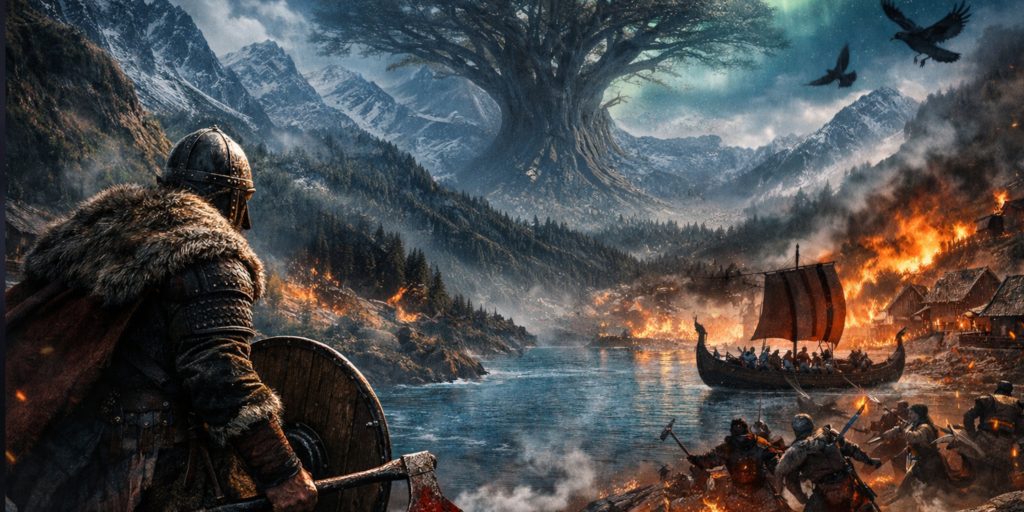
Norse Oath of Blood is set in a late Viking Age Scandinavia that leans heavily into both history and mythology. Think fractured jarldoms, tense trade routes and the constant presence of the old gods in everyday life.
The world feels divided between:
- Coastal settlements struggling to survive winter and rival raids
- Expanding warbands chasing wealth and reputation
- Sacred groves and mythic spaces where Odin, Thor and Freyja are more than stories
The game blends grounded politics with mythic undertones. You are not just fighting for land. You are navigating honour, kinship and oaths that bind families together for generations. Breaking one is not a minor inconvenience. It can spark a feud that defines your entire campaign.
Visually, the setting leans into cold blues, firelit halls and rough timber architecture. There is mud, smoke and a lot of fur. It feels lived in rather than polished.
Story: Oaths, Betrayal and Legacy
At its core, Norse Oath of Blood revolves around a broken oath. Your character, usually a young warrior tied to a prominent clan, is dragged into conflict after a betrayal that shatters a fragile alliance.
The narrative focuses on three key pillars.
Family loyalty. Blood ties matter, but they are not always comforting. You may be asked to defend relatives who are clearly in the wrong.
Reputation. Honour is a currency. Your actions shape how other jarls treat you. Mercy can be respected. It can also be seen as weakness.
Faith and fate. The game plays with the idea of wyrd, the Norse concept of destiny. Certain story moments hint that some outcomes are unavoidable, yet your choices still shape how events unfold.
Conversations are weighty without becoming bloated. Dialogue choices often feel morally grey rather than clearly heroic or villainous. You are not saving the world. You are trying to secure your people’s survival in a brutal age.
Gameplay: Combat, Choice and Clan Building
Combat System
Combat is deliberate and grounded. Expect stamina management, directional attacks and shield mechanics that reward timing over panic.
Weapons typically include:
- One handed swords paired with round shields
- Dane axes built for heavy, sweeping strikes
- Spears that control distance in tight formations
Fights feel heavy. Shields splinter. Armour absorbs rather than ignores damage. If you rush in wildly, you will learn very quickly that Vikings did not survive by being reckless.
Choice and Consequence
Major decisions affect alliances, trade access and even which regions become hostile. Supporting one clan may close off storylines with another. The ripple effects are noticeable.
This gives the campaign replay value. You cannot see every outcome in a single run, and that feels intentional rather than restrictive.
Clan and Settlement Management
Beyond combat, you manage a growing settlement.
You recruit warriors, allocate resources and decide whether to invest in:
- Defensive fortifications
- Shipbuilding and raiding capacity
- Religious structures that influence morale and belief
There is a strategic layer beneath the action. If you neglect your people while chasing glory, famine and unrest will catch up with you. It is surprisingly humbling.
Tone and Themes
The game avoids romanticising the Viking Age. Raiding is profitable but costly. Violence leaves scars. Leadership carries pressure rather than constant triumph.
Themes that stand out include:
- The tension between pagan belief and emerging external influences
- The fragility of alliances built on convenience
- The idea that legacy matters more than short term victory
It feels personal. You are not just conquering. You are shaping how your clan will be remembered.
Who Will Enjoy Norse Oath of Blood?
If you enjoy historically inspired RPGs with a mythic edge, this is very much your territory. Fans of slow, tactical combat and meaningful narrative choices will likely appreciate its pacing.
Players looking for constant spectacle might find it restrained. The game prefers simmering tension to explosive chaos. Personally, that restraint works in its favour. It trusts you to sit with consequences rather than immediately sprint to the next battle.
Takeaway
Norse Oath of Blood is built around one simple idea: promises have weight. The setting reinforces it, the story revolves around it and the gameplay punishes you when you ignore it.
It is not a power fantasy in the usual sense. It is a study in responsibility, loyalty and the uncomfortable reality that sometimes the hardest fight is not against an enemy, but against your own pride.
If you have ever wanted a Viking game that takes honour seriously and lets your decisions echo across generations, this is one worth watching closely.