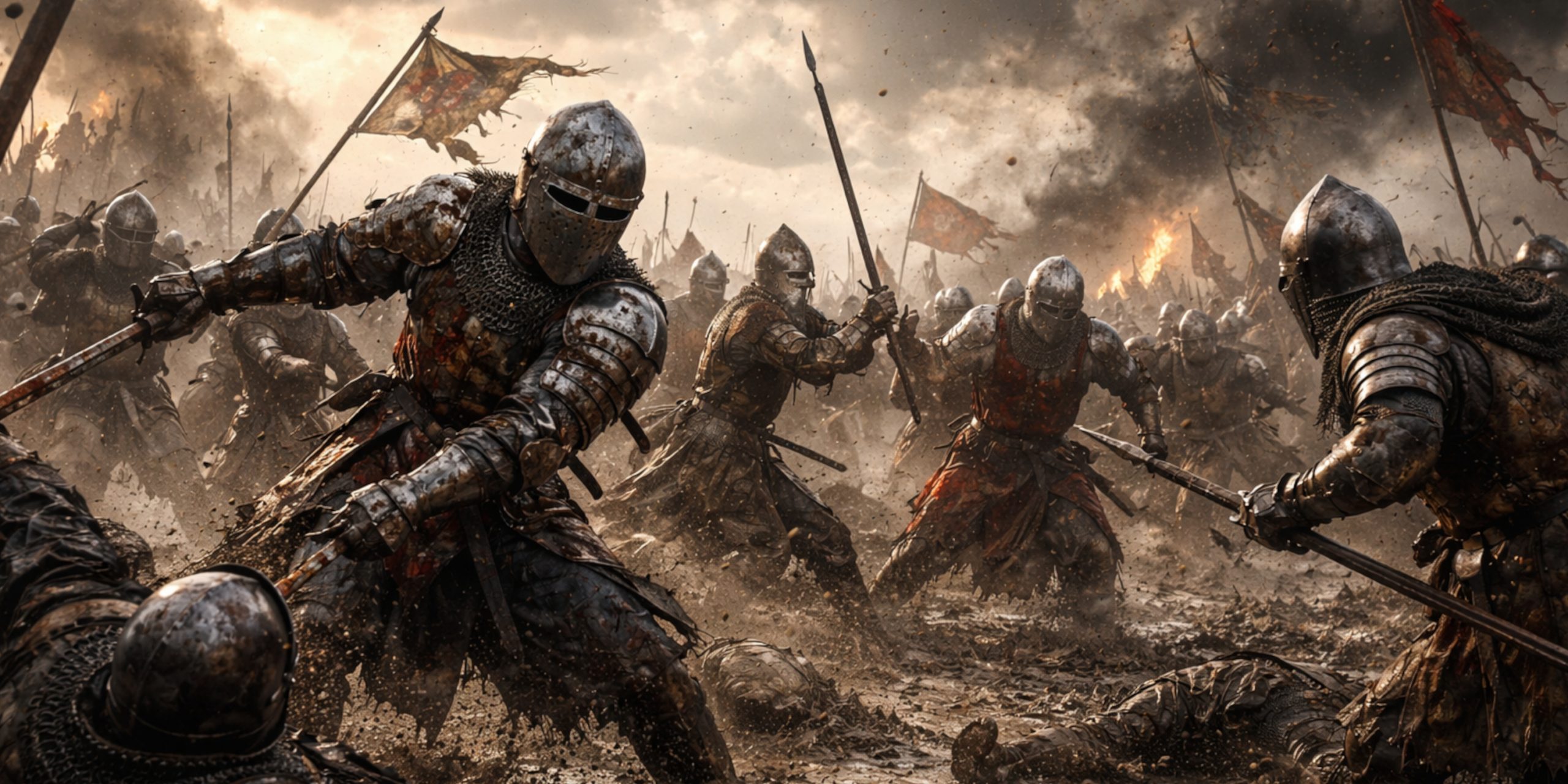
Most soldiers never fought the way films show
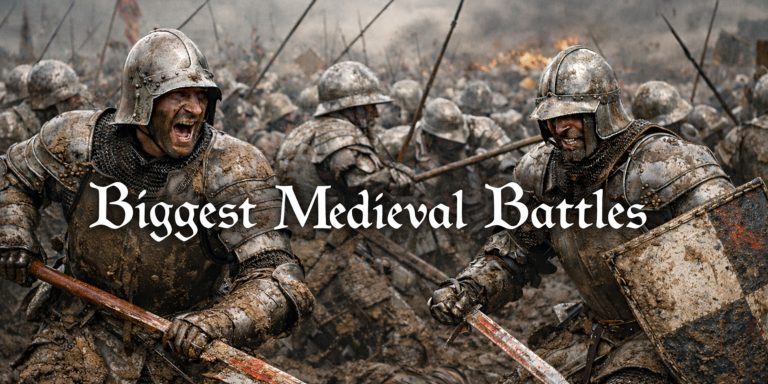
The romantic image of sword to sword combat between evenly matched warriors belongs to tournament culture and later fencing manuals. On real battlefields, the work was done by spears, bills, poleaxes, and missile weapons. At the Battle of Towton, the largest and bloodiest battle ever fought on English soil, archaeology shows widespread head trauma caused by polearms and blunt force, not elegant blade cuts. Many skulls display multiple wounds, suggesting repeated strikes delivered long after a man had fallen. This was not a duel. It was systematic violence.
Swords mattered, but mostly when formations broke or when finishing a fight already decided. Their reputation owes more to symbolism and status than battlefield efficiency.
Commanders lost control frighteningly fast
Medieval battles were exercises in controlled chaos that often tipped into plain chaos within minutes. Orders were passed by shouted commands, banners, and horn signals. Once dust, smoke, and noise took over, even experienced commanders struggled to know where their own men were.
At the Battle of Hastings, Norman cavalry repeatedly believed the battle lost when parts of their line retreated. Rumours of William’s death nearly collapsed morale. His decision to lift his helmet and show his face was not heroic theatre. It was crisis management.
This problem never went away. Medieval generals planned carefully, then hoped their plans survived first contact.
Terrain killed more men than courage saved
The ground underfoot mattered as much as weapons or numbers. At the Battle of Agincourt, rain-soaked clay turned the French advance into a grinding slog. Men-at-arms fell, struggled to rise under the weight of armour, and were trampled by those behind them. English archers exploited this mercilessly, switching from arrows to mallets, knives, and axes once the enemy stalled.
Contemporary accounts dwell on divine favour. The battlefield mud deserves equal billing. As a historian, I remain suspicious of any victory that ignores weather in its explanation.
Most deaths happened after the battle broke
The most lethal phase of a medieval battle was the rout. Once cohesion collapsed, fleeing soldiers were cut down without resistance. At Battle of Bannockburn, English troops trapped by terrain and panic suffered catastrophic losses as retreat became impossible. Many drowned in marshy ground or were crushed by their own side.
This pattern repeats across medieval warfare. Standing your ground was dangerous. Running at the wrong moment was fatal.
Armour worked, but exhaustion beat it
Good armour saved lives. Many battlefield skeletons show few fatal torso wounds. Instead, damage concentrates on the head, neck, and joints. At Towton, several skulls show healed injuries from earlier campaigns, proof that armour and experience often kept men alive.
What armour could not stop was exhaustion. A man knocked over, pinned, or too tired to rise became vulnerable. Killing often meant immobilising first, then finishing the job at leisure. This is not glamorous, but it is consistent.
Ransom shaped behaviour on the field
Medieval warfare ran on money as much as ideology. Noble prisoners were assets. At the Battle of Poitiers, the capture of the French king Jean II mattered more than the casualty count. Knights actively sought high-status opponents, sometimes sparing them while slaughter continued around them.
This selective mercy created brutal class divisions on the battlefield. Chivalry protected those who could pay for it.
Discipline mattered more than heroics
Victories often went to armies that stayed organised the longest. Swiss pikemen built a reputation not on individual skill but on cohesion. At the Battle of Morgarten, disciplined infantry using terrain and formation destroyed a larger feudal force.
Heroic charges look impressive in chronicles. Tight ranks win battles.
Battles were rare because they were reckless
Medieval wars were mostly about sieges, raids, and starvation. A pitched battle risked everything. At the Battle of Montgisard, Baldwin IV’s victory was stunning precisely because such gambles usually failed. One wrong move could end a dynasty.
Most commanders avoided battle unless cornered or confident. Confidence, unfortunately, often came from bad intelligence.
Victory created as many problems as it solved
Winning meant dealing with prisoners, wounded, unpaid troops, and political fallout. After Battle of Bosworth Field, Henry VII still faced rebellions, pretenders, and financial strain. The battlefield decided the crown. It did not guarantee stability.
Medieval warfare was a process, not an event.
The Takeaway
Medieval battles were not heroic set pieces. They were violent, uncertain episodes shaped by terrain, morale, logistics, and fear. Understanding them properly means accepting that luck often mattered more than genius, and that survival depended on discipline and timing rather than bravery alone. As a historian, I find that far more interesting than any clean, cinematic version.