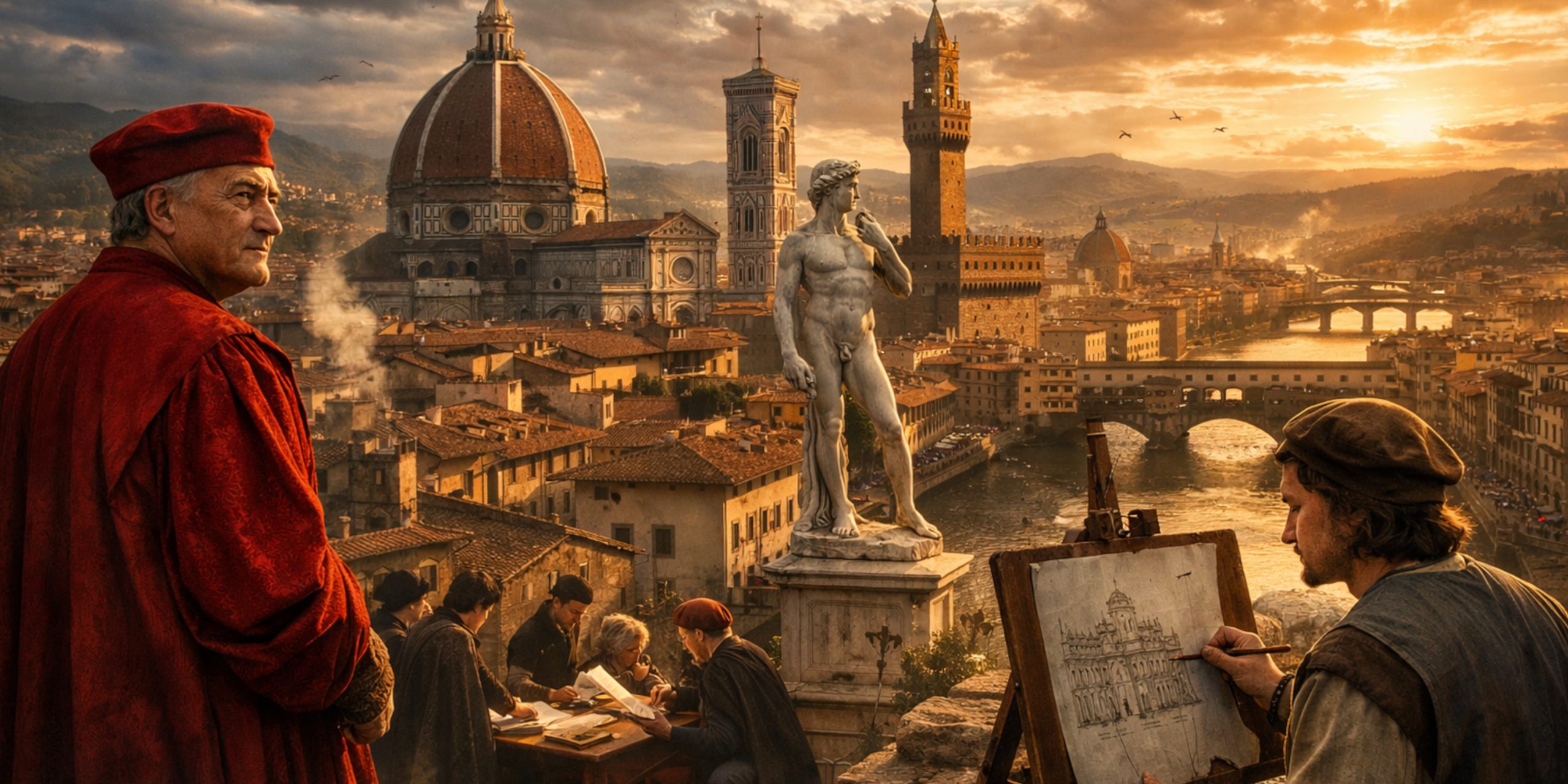
Florence during the Renaissance sometimes feels unreal. A relatively small city suddenly becomes the centre of art, banking, politics, and intellectual life for much of Europe. Walk through the story and one name keeps appearing again and again. The Medici.
If Renaissance Florence were a stage, the Medici family were the producers, financiers, and occasionally the lead actors. They rarely ruled as kings, yet their influence ran through almost every part of the city’s life. To understand Florence at its peak, it helps to follow the rise, fall, and return of this remarkably ambitious family.
Florence Before the Medici
Before the Medici emerged as the dominant power, Florence was already wealthy and fiercely independent.
It was technically a republic governed by elected officials and guilds. In theory this meant shared power. In practice the city was a noisy competition between powerful families, merchants, and bankers who all wanted influence.
Florence prospered because of several advantages.
- A thriving wool and textile trade
- Banking networks stretching across Europe
- A politically active merchant class
- Strong civic pride that encouraged building projects and public art
By the early fifteenth century Florence was rich but unstable. Rival families fought for control, alliances shifted constantly, and exile was a common political outcome. Into this environment stepped the Medici, a family with something more valuable than noble titles. Money.
The Banking Empire That Changed Everything
The Medici did not conquer Florence with armies. They did it through banking.
The Medici Bank became one of the most powerful financial institutions in Europe during the fifteenth century. Branches operated in cities such as Rome, Venice, London, and Bruges. They handled deposits, loans, currency exchange, and most importantly, papal finances.
Handling the accounts of the papacy was an enormous advantage. It brought prestige, influence, and a steady flow of wealth.
This financial power allowed the Medici to build alliances throughout the city. Loans were extended to merchants. Friends were rewarded with opportunities. Enemies often discovered their credit had quietly dried up.
The system was subtle. Florence still looked like a republic, yet the family controlling the city’s financial arteries slowly gained political control.
Cosimo de’ Medici and Quiet Power
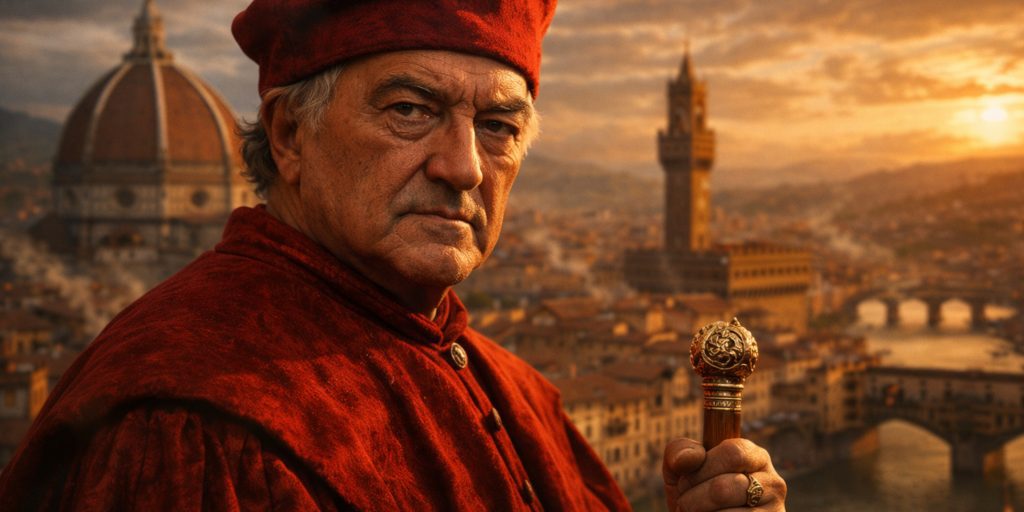
The real architect of Medici dominance was Cosimo de’ Medici.
Cosimo had an unusual approach to power. He avoided the appearance of ruling directly. Instead he worked through influence, networks, and careful political management.
He funded allies in government and supported civic projects that made him popular with ordinary Florentines. Churches were restored. Libraries expanded. Public works improved daily life.
Exile briefly interrupted his career when rivals forced him from the city in 1433. The experiment did not last long. Florence soon realised that pushing out its most powerful banker had serious economic consequences.
Cosimo returned a year later to a city ready to welcome him back.
From that point onward the Medici were effectively the unofficial rulers of Florence.
Art, Artists, and the Renaissance Explosion
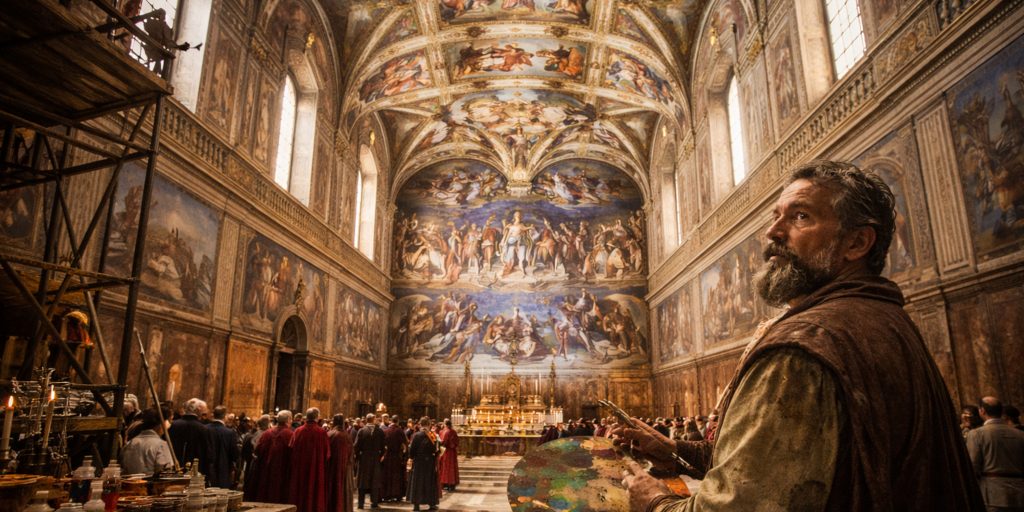
This is where the story becomes extraordinary.
The Medici used wealth not only to secure political power but also to shape culture. Patronage of the arts became both a status symbol and a civic investment.
Florence suddenly turned into a laboratory for artistic and intellectual experimentation.
Artists supported by Medici patronage included figures whose names still dominate museums today.
- Leonardo da Vinci
- Michelangelo
- Sandro Botticelli
- Donatello
Patronage did not simply fund individual artworks. It helped create an entire environment where creativity could flourish. Workshops expanded, apprentices trained, and ideas spread between artists, architects, philosophers, and scientists.
Humanism also grew under Medici influence. Scholars rediscovered classical Greek and Roman texts, which inspired new thinking about politics, philosophy, and the role of individuals in society.
Florence was no longer just wealthy. It had become culturally magnetic.
Lorenzo the Magnificent
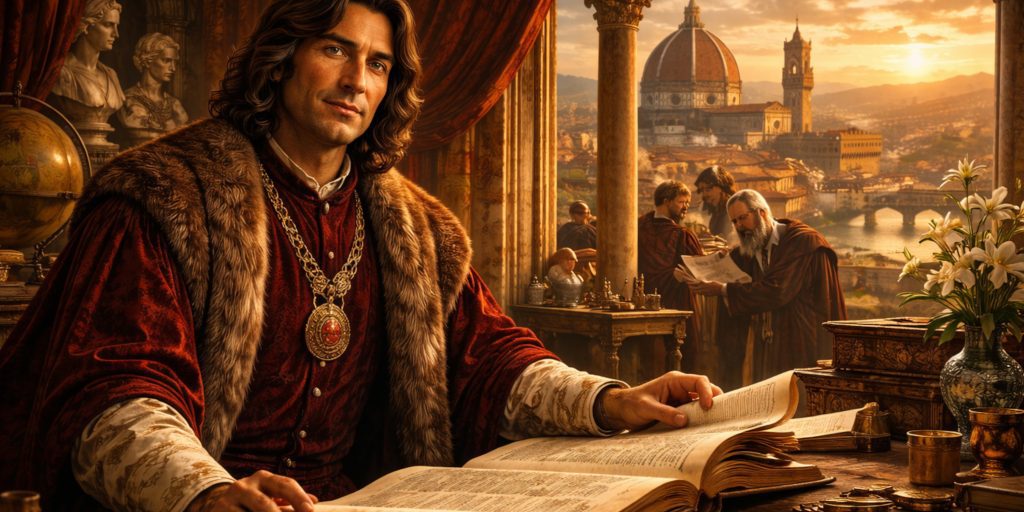
If Cosimo built the system, Lorenzo de’ Medici perfected it.
Lorenzo, often called Lorenzo the Magnificent, combined political skill with a genuine love of art and literature. He wrote poetry, hosted philosophers, and surrounded himself with creative minds.
Under his leadership Florence reached what many consider its cultural peak.
His court supported artists such as Botticelli and the young Michelangelo. Intellectual gatherings discussed classical philosophy. The city became a magnet for thinkers from across Europe.
Yet Lorenzo’s rule was not entirely peaceful. Rival families still plotted against the Medici. The most famous conspiracy took place in 1478 during the Pazzi plot, when enemies attempted to assassinate Lorenzo and his brother during mass in Florence Cathedral.
His brother Giuliano was killed. Lorenzo survived.
The aftermath was brutal. Florence closed ranks behind the Medici and the conspirators faced swift punishment.
The message was clear. Challenging Medici authority carried serious consequences.
Crisis, Exile, and the Return
After Lorenzo’s death the family’s grip on Florence weakened.
Political tensions rose. Economic pressures increased. A fiery Dominican preacher named Savonarola began attacking the moral corruption of Florence’s elite, including the Medici.
By 1494 the family was expelled from the city.
For a brief period Florence attempted to return to a more traditional republican government. Savonarola even orchestrated the famous Bonfire of the Vanities, where luxury items and artworks were burned in an attempt to purify the city.
This experiment proved unstable.
Savonarola himself was eventually executed and Florence drifted back toward Medici influence. By 1512 the family returned to power with support from powerful allies, including the papacy.
The Medici Become Dukes
The final transformation of Medici authority came in the sixteenth century.
What had begun as quiet influence within a republic evolved into formal rule. Members of the family gained papal positions and noble titles. Eventually Florence became the Duchy of Florence under Medici leadership.
This marked the end of the old Florentine republic.
Yet the cultural legacy of the earlier period remained. The buildings, sculptures, libraries, and intellectual traditions created during Medici patronage continued shaping European culture long after the political system changed.
Walking Through Florence Today
One of the remarkable things about Florence is how visible this history still is.
Medici influence appears everywhere.
- Palazzo Medici Riccardi, the family’s early residence
- The Uffizi Gallery, originally built to house government offices tied to Medici rule
- The Medici Chapels, an extravagant burial complex
- Numerous churches and monasteries funded through their patronage
Walk through the city and it quickly becomes clear that the Renaissance was not just an abstract historical movement. It was built by real people with wealth, ambition, rivalries, and very strong opinions about art.
The Medici simply happened to be the most effective at turning all of that into lasting influence.
Why the name Medici echos through time
The story of Renaissance Florence is often told through artists or famous artworks. That makes sense. Paintings and sculptures are easy to admire.
But behind much of that creative explosion stood the financial and political ecosystem created by the Medici.
They were bankers who understood the power of culture. Patrons who realised prestige could shape politics. Strategists who learned that influence could sometimes be more effective than official authority.
In other words they were the ultimate Renaissance power players.
And without them, Florence might have remained just another prosperous Italian city rather than the cultural engine that helped reshape Europe.
Watch the Medici trailer:
.