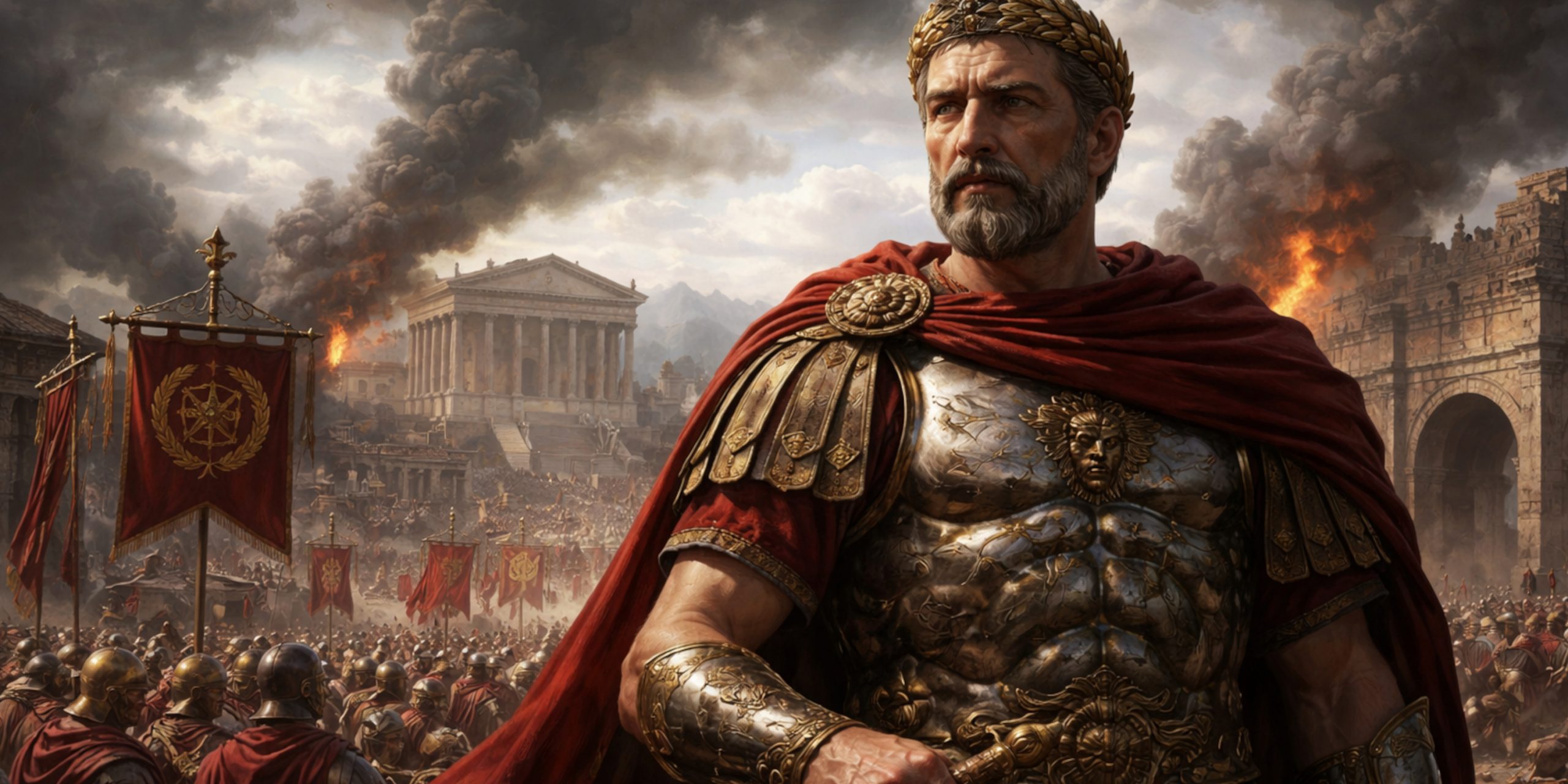
Licinius is one of those figures history half remembers and rarely celebrates. He stood at the hinge of eras, caught between the fading structure of the Tetrarchy and the rising dominance of a single ruler under Constantine the Great. For a time, Licinius was not merely a rival but an equal. Then he became an obstacle, and Rome had little patience for those.
He ruled much of the eastern Roman Empire and helped shape one of the most significant religious policies in European history. Yet his story ends, as many Roman political careers did, not with retirement but with execution.
Origins and Rise to Power
Licinius was born around 265 in the Balkans, likely in what is now Serbia. His background was modest. There was no great lineage to lean on, only military ability and useful friendships. One of those friendships proved decisive, his association with Galerius.
During the final years of the Tetrarchic system, Licinius rose through the ranks and was appointed Augustus in 308. This was no ceremonial title. It placed him among the senior emperors in a system already straining under too many ambitions and too little trust.
When Galerius died in 311, the balance collapsed further. Licinius moved quickly, securing control of the eastern provinces and positioning himself as a central player in the increasingly unstable imperial order.
The Edict of Milan and Religious Policy
In 313, Licinius and Constantine jointly issued what later became known as the Edict of Milan. The document granted religious toleration across the empire, most notably to Christians who had endured cycles of persecution.
The tone was pragmatic rather than pious. Stability mattered more than theology. As the edict states:
“We have resolved to grant both to the Christians and to all others full authority to observe that religion which each preferred.”
It is often remembered as Constantine’s triumph, though Licinius was equally responsible at the time. That balance did not last. As relations between the two emperors deteriorated, Licinius’ stance toward Christianity appears to have hardened. Sources, largely written under Constantine’s influence, accuse him of renewed restrictions. Whether this was ideological or political remains open to debate.
Wars with Constantine
The uneasy alliance between Licinius and Constantine broke into open conflict more than once. The first major clash came in 316 at Cibalae, where Constantine gained the upper hand. A fragile peace followed, though it convinced no one.
By 324, the empire could no longer sustain two emperors of equal ambition. The decisive campaign unfolded across the Balkans and into Asia Minor.
Key engagements included:
- Battle of Adrianople, where Constantine forced Licinius into retreat
- Naval defeat in the Hellespont, cutting Licinius off from reinforcement
- Final defeat at Chrysopolis, ending his military resistance
Licinius surrendered, reportedly under promises of mercy. It is worth noting that such promises in Roman politics were often temporary conveniences.
Arms, Armour, and Military Character
Licinius was a soldier first and emperor second. His forces reflected the late Roman army in transition.
Typical equipment and composition:
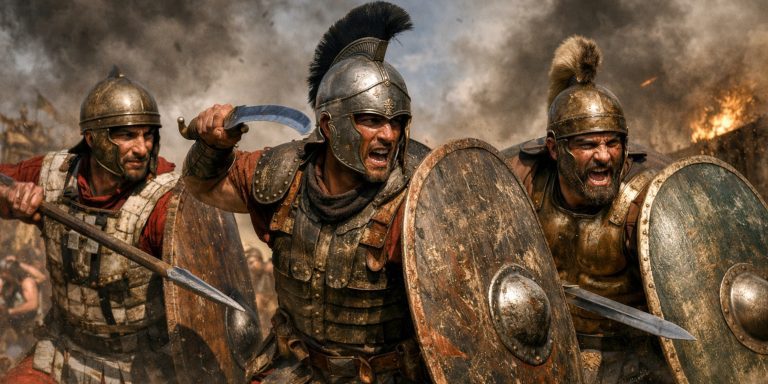
- Infantry armed with spatha swords, replacing the older gladius
- Oval or round shields, suited to more flexible battlefield tactics
- Heavy cavalry units increasingly decisive in open engagements
- Composite bows used by eastern auxiliaries
He was not an innovator in the way Constantine could be, but he was competent. His failure lay less in tactics and more in the political reality that he faced a rival with greater resources and sharper propaganda.
Personality and Reputation
Our sources are not kind to Licinius. Much of what survives comes through writers sympathetic to Constantine, including Eusebius of Caesarea.
He is portrayed as harsh, suspicious, and increasingly tyrannical. That may reflect reality. It may also reflect the fate of a defeated man whose enemies wrote the history.
There is a certain pattern here. Roman history tends to simplify its losers.
Fall and Execution
After his defeat in 324, Licinius was initially spared and placed under house arrest in Thessalonica. Within a year, he was executed on Constantine’s orders.
The justification given was conspiracy. Whether such a conspiracy existed is uncertain. What is clear is that Constantine had no interest in leaving a rival alive.
A brief note from later sources captures the tone of his end:
“He who had ruled so widely now found no place to stand.”
It is not the most detailed epitaph, though it is an accurate one.
Archaeology and Material Evidence
Licinius left behind a quieter archaeological footprint than some emperors, though traces remain.
Key evidence includes:
- Coinage bearing his image and imperial titles
- Military fortifications across the Balkans linked to his campaigns
- Inscriptions marking administrative activity in eastern provinces
His coinage is particularly telling. Early issues present him as a stabilising Augustus. Later issues, especially during conflict with Constantine, show a more defensive posture, emphasising legitimacy rather than dominance.
Legacy
Licinius is often remembered as the last serious obstacle to Constantine’s sole rule. That is accurate, though it reduces him to a supporting role in another man’s story.
He represents something more transitional. A figure of the old imperial system trying to survive in a world that had already shifted. The Tetrarchy required cooperation. The fourth century rewarded consolidation.
His association with the Edict of Milan alone ensures his place in history, even if it is rarely given equal weight.
In the end, Licinius did not fail through lack of ability. He failed because he stood opposite a man who reshaped the empire in his own image.
Rome had room for one such figure at a time.