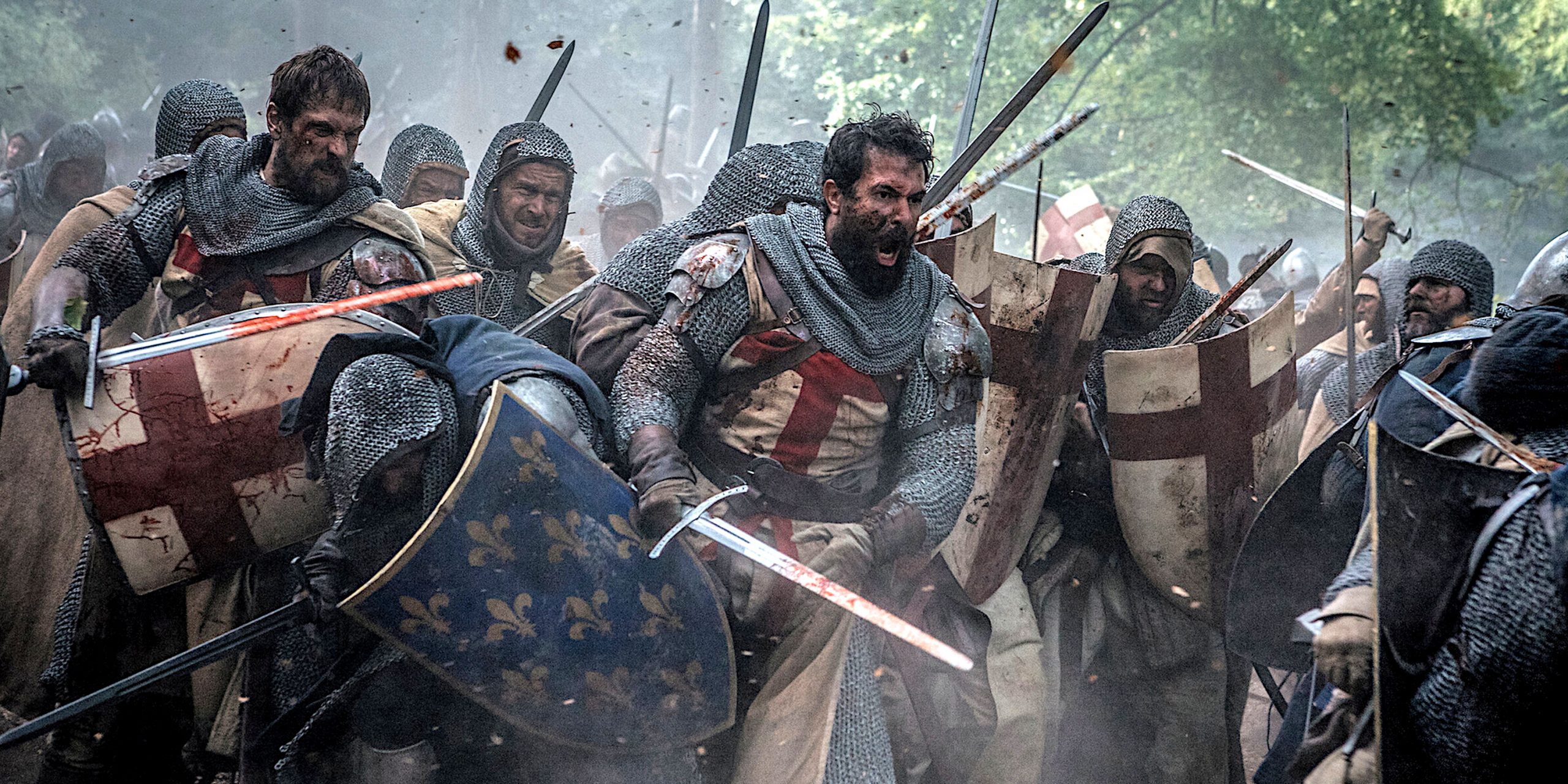
When Knightfall landed on screens, it promised secret rituals, brutal politics, and warrior monks fighting for survival. As historical TV goes, it had ambition and attitude. As history, it took liberties that would make a medieval chronicler sigh into his inkpot. That said, the series is not pure fantasy. Beneath the drama sits a real and surprisingly messy story of power, faith, money, and fear.
This article breaks down what Knightfall gets right, what it bends, and what it flat out invents. Think of it as a guided walk through the real world behind the show, with fewer cloaks and slightly more paperwork.
Who the Templars Really Were
The Templars began in the early twelfth century as a small group of knights tasked with protecting pilgrims travelling to Jerusalem. They were officially recognised by the Church in 1129 and quickly grew into one of the most powerful institutions in medieval Europe.
Unlike most knights, Templars took monastic vows. Poverty, chastity, obedience. In practice, this meant they owned nothing as individuals but controlled vast wealth as an organisation. Kings trusted them with treasure. Nobles sent their sons to join. Popes granted them special privileges that put them above local law.
They were not mysterious cultists. They were administrators, bankers, landlords, and soldiers. Less secret society, more medieval multinational.
The Holy Grail Problem
Knightfall treats the Holy Grail as the emotional core of the Templar story. This is where history politely excuses itself.
There is no credible evidence that the Templars searched for, possessed, or even seriously discussed the Grail. The idea links back to medieval romance literature, not Church records. Writers like Chrétien de Troyes turned the Grail into a literary object long before modern conspiracy theories got involved.
The Templars were deeply religious, but their focus was practical. Fortresses, supply lines, troop movements. If they had been guarding the most sacred relic in Christendom, someone would have written it down. Medieval clerks loved writing things down.
Paris, Power, and Philip IV
One of the show’s strongest elements is its portrayal of political pressure on the Templars, especially from the French crown. This part is very real.
King Philip IV of France was deeply in debt to the Templars after years of war. He was also deeply suspicious of any institution he could not control. The Templars answered only to the Pope, which in medieval politics was an open provocation.
In 1307, Philip ordered the arrest of Templars across France. The charges included heresy, idol worship, and obscene initiation rituals. These accusations were extracted under torture and repeated often enough to sound convincing to outsiders.
It was a coordinated strike, not a moral crusade.
The Fall of the Order
The destruction of the Templars was slow, legalistic, and grim. Trials dragged on for years. Some Templars confessed, recanted, and confessed again depending on who was holding the hot iron. Others held firm.
In 1312, the Pope officially dissolved the order under immense political pressure. Two years later, Grand Master Jacques de Molay was burned at the stake in Paris. According to legend, he cursed the king and the pope with his dying breath. Both were dead within a year, which did wonders for the mythmaking industry.
The reality is quieter but no less brutal. The Templars were destroyed because they were powerful, wealthy, and inconvenient.
What Knightfall Gets Right
The series captures the mood of the late Templar period surprisingly well. The sense of paranoia, internal doubt, and political hostility is spot on. The idea that the order was struggling to justify its existence after the loss of the Holy Land is historically sound.
The Templars were warriors without a war. Europe was changing. Centralised monarchies were emerging. Independent military orders no longer fit comfortably into the system.
That existential tension is real, and Knightfall leans into it effectively.
What Knightfall Gets Wrong
The timelines are compressed to the point of chaos. Characters who never met are thrown together for convenience. The Grail plot dominates everything despite having no historical foundation. Female characters are given roles that reflect modern storytelling rather than medieval reality, though this is a conscious creative choice rather than an error.
Also, medieval politics were less about whispered secrets and more about letters, councils, and slow grinding legal pressure. It makes poor television, but excellent history.
Why the Templars Still Matter
The Templars endure because they sit at the intersection of faith, violence, and money. They remind us that religious institutions can become economic powers, and that power always attracts enemies.
They also show how easily reputations can be destroyed once fear takes hold. The accusations against them would sound absurd if they had not been repeated under official seals.
In that sense, the Templars feel uncomfortably modern.
Seven Swords Takeaway
Knightfall is not a history lesson, but it is not nonsense either. It takes a real collapse and dresses it in myth, which is more or less how medieval history survives anyway.
If the show sparks curiosity about the real Templars, then it has done something worthwhile. Just remember that the truth is less shiny than the Grail and far more unsettling.
History rarely needs embellishment. It is already strange enough.
Watch the Trailer: