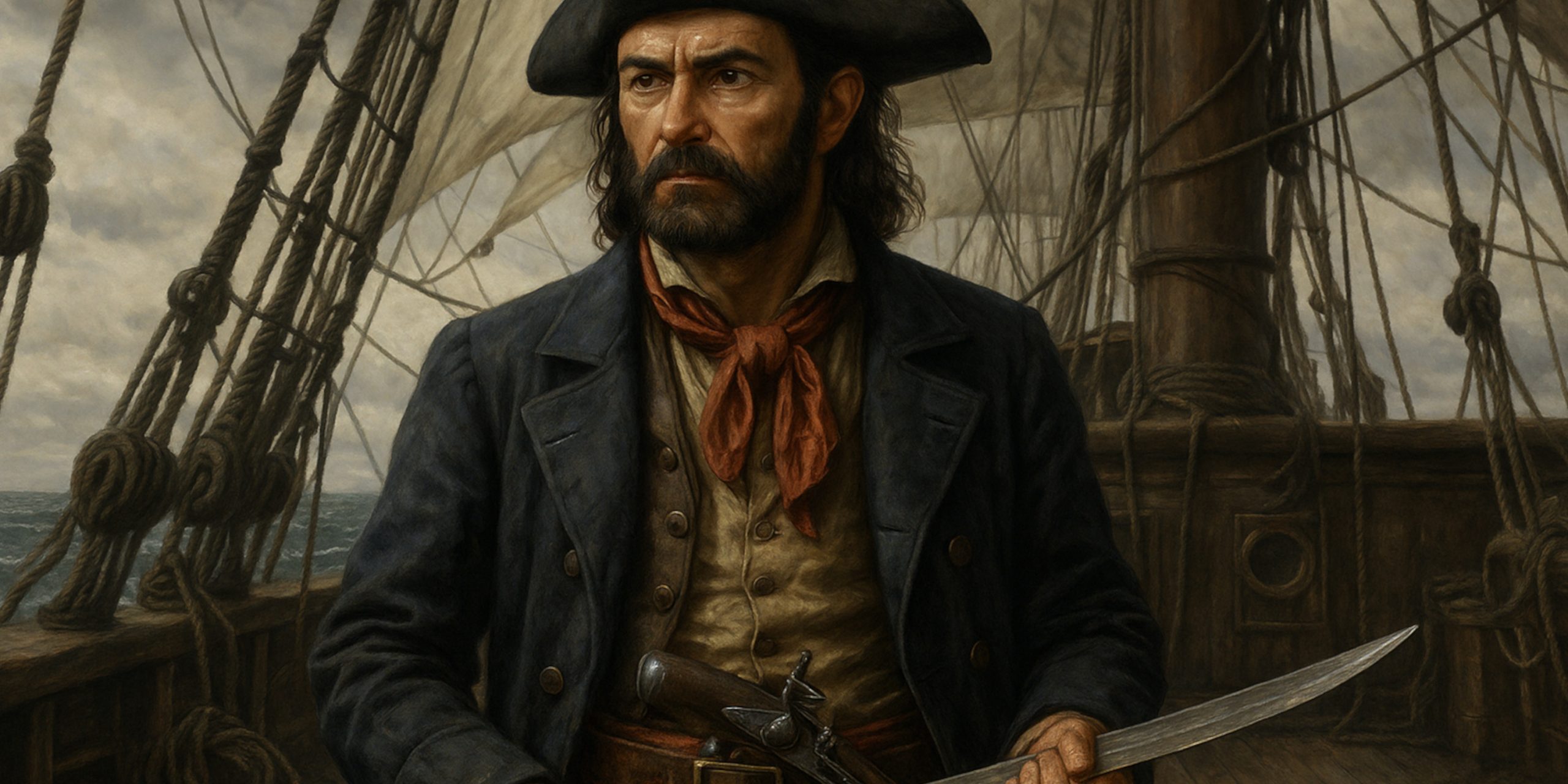
Jean Lafitte remains one of the most enigmatic figures of early 19th-century piracy. Smuggler, privateer, slave trader, war hero, and outlaw, his life was a tangle of contradiction. Operating primarily in the Gulf of Mexico, Lafitte walked the line between criminal and patriot, dealing in stolen goods while aiding the United States in its fight against the British.
Early Life and Origins
Jean Lafitte’s origins are uncertain. Most sources agree he was born around 1780, possibly in France or Saint-Domingue (modern-day Haiti), though some accounts suggest he may have been born in or near New Orleans. Fluent in French and English, he arrived in Louisiana with his brother Pierre in the early 19th century.
By 1805, the Lafitte brothers had established a blacksmith shop in New Orleans, but it served primarily as a front for their smuggling operation. Jean soon became the leader of a group known as the Baratarians, named for their base of operations in Barataria Bay, a network of swamps and bayous perfectly suited for evading customs authorities.
Weapons and Tactics
Lafitte’s men were well-armed for their time. The typical Baratarian fighter carried:
- Cutlasses and boarding axes for close-quarters fighting
- Flintlock pistols and muskets, often of British or Spanish make
- Swivel guns and small cannons mounted on their ships
Lafitte was not known for unnecessary bloodshed. He preferred speed and intimidation to achieve his goals and was a calculating strategist, choosing his engagements with care.
Ships and Smuggling Fleet
Lafitte’s fleet was nimble, often consisting of:
- Sloops and schooners: Fast and easily manoeuvred in shallow coastal waters
- Brigs and cutters: Used for longer-range raids and cargo transport
He avoided the use of large, heavily armed ships, opting instead for speed and stealth. His ships often flew false flags to confuse or avoid enemy patrols.
The Smuggling Empire
Barataria Bay became a hub for illicit trade. Lafitte and his network traded in:
- Captured Spanish and British goods
- Slaves (despite federal bans)
- Gunpowder, weapons, and luxuries
- Stolen cargo from Gulf and Caribbean merchant ships
His market was well-organised. Goods were auctioned openly in bayou camps, with local merchants, politicians, and even customs agents among his customers. Lafitte’s operation became so deeply entwined with Louisiana’s economy that it was, for a time, tolerated.
Battles and Role in the War of 1812
In 1814, the British offered Lafitte a large sum and a naval commission if he and his men would help them capture New Orleans. Lafitte stalled them and secretly informed American authorities.
General Andrew Jackson initially dismissed him, calling the Baratarians “hellish banditti”. But upon further negotiation, Lafitte struck a deal: he and his men would fight for the United States in exchange for pardons.
At the Battle of New Orleans in January 1815, Lafitte’s men manned artillery positions and provided vital intelligence. Jackson later wrote:
“The skillful and courageous conduct of the Baratarians has not only saved New Orleans but added to the glory of our young nation.”
Congress later granted full pardons to Lafitte and his men.
Treasure and Bounty
Myths of Lafitte’s hidden treasure are widespread, with legends claiming gold and silver were buried in swamps along the Gulf Coast. However, no verified caches have ever been discovered.
The value of goods smuggled through Barataria was immense. Contemporary estimates place Lafitte’s annual trade in the hundreds of thousands of dollars, a fortune for the time.
Exile and Final Years
After the war, Lafitte tried to re-establish his smuggling empire in Galveston, Texas. He founded a colony named Campeche around 1817 under a false commission from the Republic of Cartagena (in present-day Colombia), claiming to be a privateer. The United States, however, did not recognise his authority and again demanded he cease operations.
By 1821, pressure from American naval forces forced him to abandon Galveston. His final years are cloaked in uncertainty. Some say he died in battle off the coast of Honduras in the early 1820s. Others insist he faked his death and lived quietly under an assumed name. No grave has been confirmed.
Contemporary Quotes
Lafitte was mentioned in several contemporary reports and letters. Among the most notable:
- “A man of polish and dignity, who dressed the part of a gentleman far more than a ruffian,” – Governor William C. C. Claiborne, 1813
- “He spoke clearly and commandingly, with a gaze that held both charm and threat,” – American naval officer on meeting Lafitte in Galveston
- “Lafitte is a man of talents and many amiable traits, but he cannot exist in a state of civilisation,” – a New Orleans merchant
Legacy
Jean Lafitte occupies a unique place in American history. Smuggler and hero, pirate and patriot, he defied easy categorisation. His actions helped save New Orleans, yet his refusal to abandon illegal trade led to repeated exiles. He has been romanticised in novels, films, and folklore, often cast as a rebel with a code of honour.
What remains clear is that Lafitte’s story is more than legend. His real-life manoeuvres, battles, and choices left a lasting mark on Gulf Coast history.
Further Reading and Research
Visitors to the Barataria Preserve in Louisiana can explore the swamps once used by Lafitte’s men. Several museums in New Orleans and Galveston feature exhibits dedicated to his life, including personal letters and period weaponry. His name lives on through Lafitte, Louisiana, and countless stories still whispered along the coastlines he once ruled.
Watch the documentary: