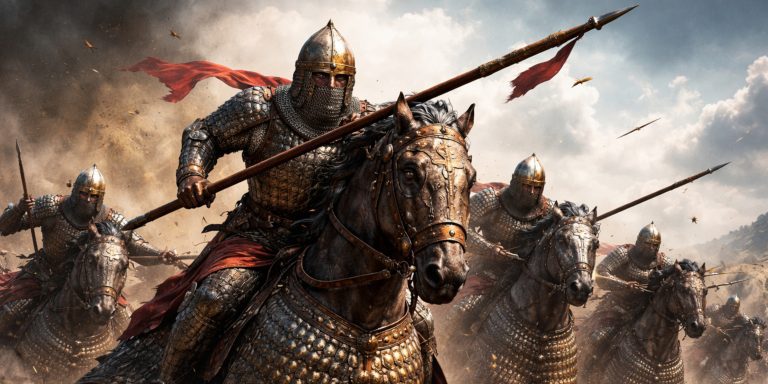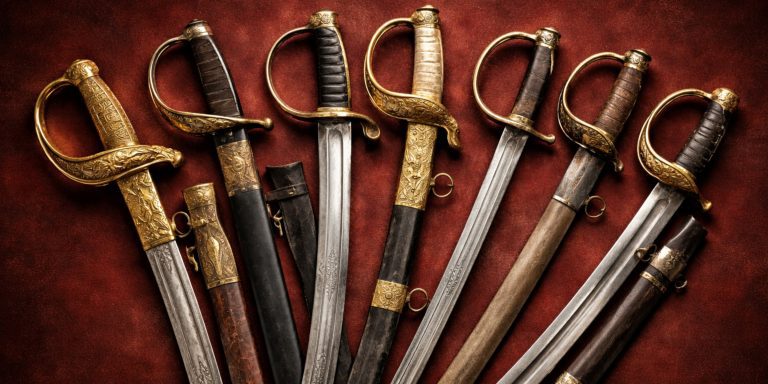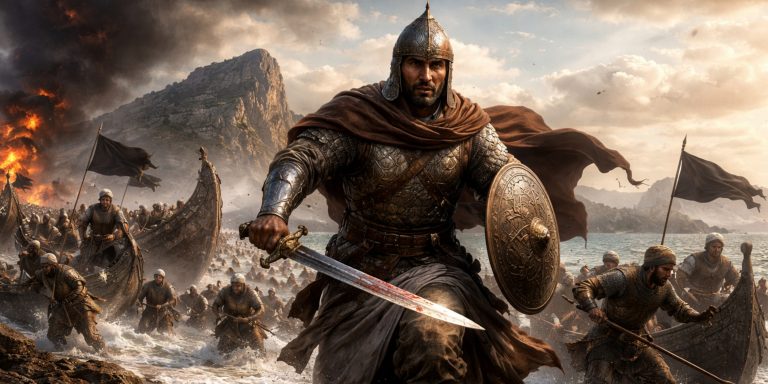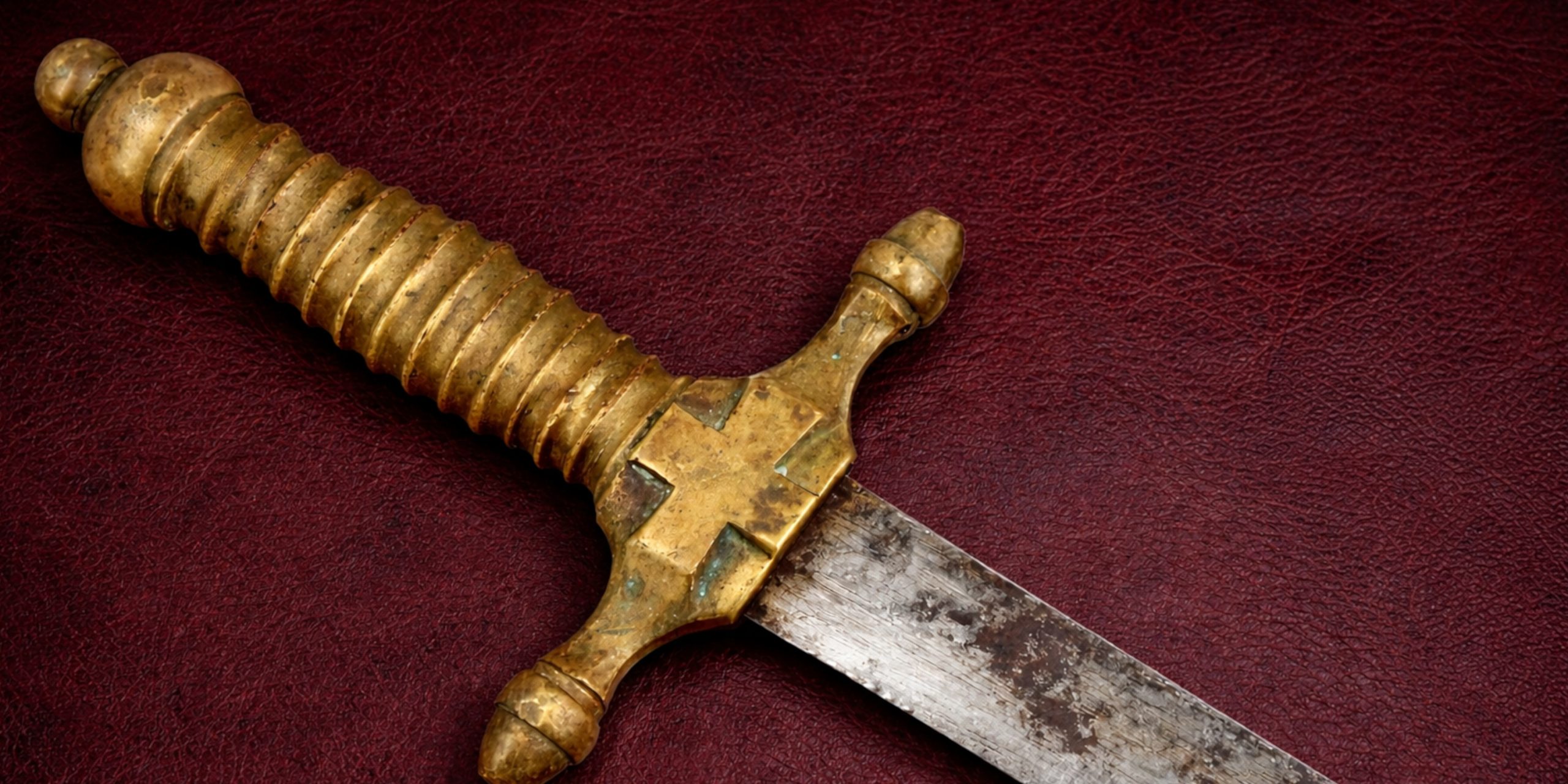
The Italian Papal Vatican City Guard short sword sits at the intersection of ceremonial display and practical sidearm tradition. Carried by guards in the orbit of the papal court, it reflects Renaissance Italian blade culture shaped by diplomacy, ritual, and close protection rather than open battlefield warfare. Compact, dignified, and unmistakably courtly, it was designed to be worn indoors and at close quarters without sacrificing authority.
Specifications
| Feature | Typical Characteristics |
|---|---|
| Overall length | 65 to 80 cm |
| Blade length | 45 to 60 cm |
| Blade form | Straight, double edged or lightly tapered |
| Blade cross section | Diamond or flattened diamond |
| Hilt | One handed, short grip |
| Guard | Simple cross or modest quillons |
| Pommel | Disc or scent stopper |
| Weight | 700 to 1,000 g |
| Period of use | Late 15th to 17th centuries |
| Carry style | Belt or sash |
Materials were consistent with high quality Italian workshops, featuring carbon steel blades with iron or brass hilts, sometimes gilt or engraved for ceremonial service.
History and Evolution
The short sword emerged alongside the consolidation of papal authority in Renaissance Italy. As the papacy transitioned from medieval power politics into an early modern court, guards required weapons suited to corridors, chambers, and formal processions. Long swords and polearms were impractical indoors, while daggers alone lacked visual authority.
Early examples were close relatives of the Italian spada corta and civilian side swords. Over time, ornamentation increased while proportions remained conservative. By the late sixteenth century, ceremonial examples were as much symbols of office as tools of defence.
Although often associated with the Papal States, similar swords were used across Italian city states. The Vatican examples stand out for their restraint, avoiding excessive flamboyance in favour of sober authority.
Advantages and Disadvantages
Advantages
- Compact profile suited to indoor and close protection roles
- Balanced handling with quick point control
- Formal appearance appropriate for ceremonial duties
- Durable construction from established Italian blade centres
Disadvantages
- Limited reach compared with full length side swords
- Less effective against armoured opponents
- Symbolic role eventually outweighed combat utility
Comparison With Similar Weapons
| Weapon | Key Difference |
|---|---|
| Italian side sword | Longer blade and more complex guard |
| Cinquedea | Much broader blade and civilian prestige weapon |
| Rapier | Optimised for thrusting with extended reach |
| Dagger or main gauche | Secondary weapon rather than primary sidearm |
| Swiss Guard halberd | Polearm for formation and ceremony, not personal defence |
The Papal Guard short sword occupied a middle ground, more authoritative than a dagger yet less aggressive than a battlefield sword.
Legacy
The weapon’s greatest legacy lies in continuity. As firearms reshaped warfare, the short sword remained embedded in papal ceremony and guard identity. Its silhouette influenced later ceremonial blades carried by ecclesiastical and civic guards across Europe.
Today, it is inseparable from the visual language of Vatican protection, even as modern security practices have replaced its original defensive function.
Where to See Examples
- Vatican Museums, Rome
- Pontifical Swiss Guard collections
- Museo Nazionale del Bargello
- Museo Stibbert
Public display examples often emphasise ceremonial fittings rather than wear patterns, so private collections provide useful context for service use.
Collector’s Guide and Auction Prices
What to Look For
- Blade geometry consistent with Italian Renaissance work
- Period correct tang construction and peening
- Matching patina across hilt components
- Subtle ecclesiastical motifs rather than later pastiche
Common Pitfalls
- Later ceremonial reproductions presented as original
- Rehilted blades with mismatched periods
- Over cleaned examples that erase tool marks
Indicative Auction Prices
| Condition | Typical Price Range |
|---|---|
| Fragmentary or rehilted | £1,200 to £2,500 |
| Complete but plain | £3,000 to £6,000 |
| Decorated ceremonial example | £7,000 to £12,000 |
| Exceptional provenance | £15,000 plus |
Recent sales through firms such as Sotheby’s and Bonhams show steady demand, particularly for pieces with clear Vatican or Papal States attribution.