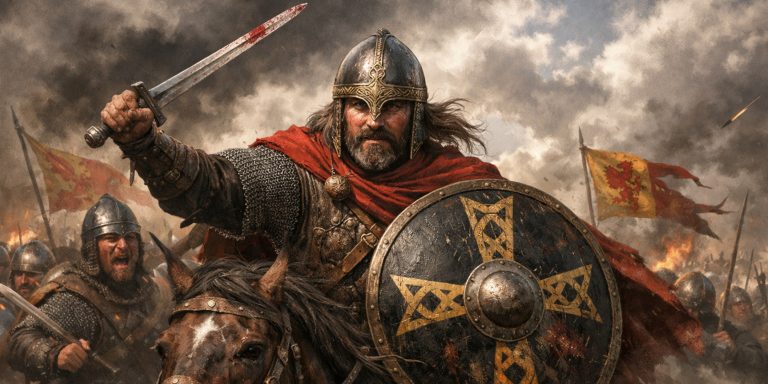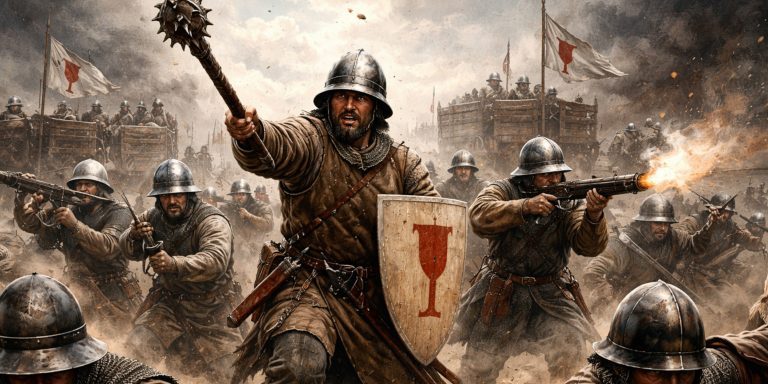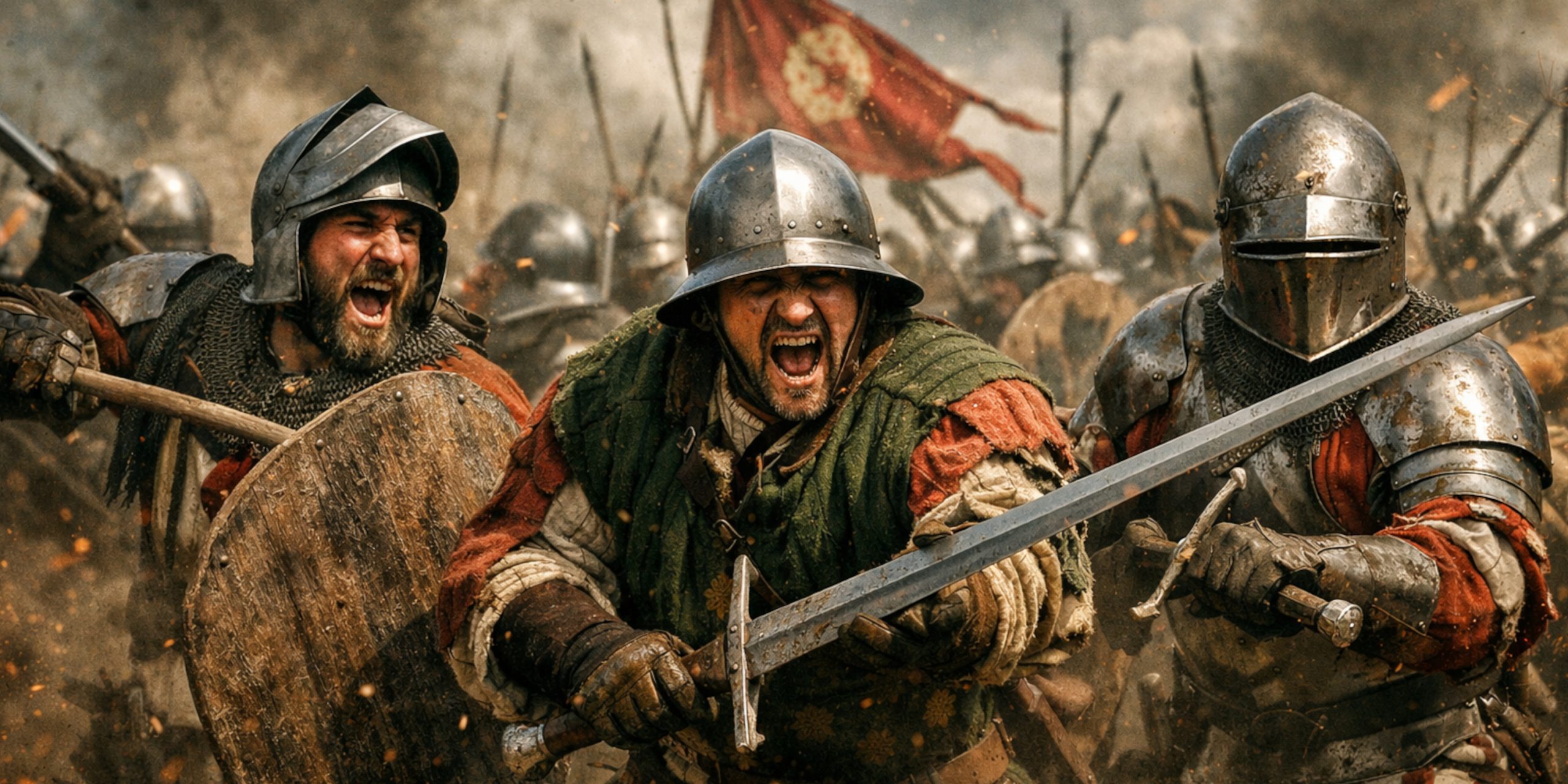
Italian condottieri infantry rarely receive the same attention as the richly armoured cavalry captains who dominate Renaissance paintings and modern imagination. That is a pity, because without the foot soldiers the condottieri system would have collapsed faster than a Milanese alliance in wartime.
The infantry of the Italian city-states were the men who held the line, stormed breaches, guarded artillery and, when absolutely necessary, died in large numbers while their employers argued over payment. They fought for Venice, Milan, Florence, Naples and the Papacy. They marched under famous captains such as Francesco Sforza, Bartolomeo Colleoni and Giovanni delle Bande Nere. They also fought each other with remarkable enthusiasm considering that half of them had probably served in the opposing army the year before.
Who Were the Condottieri Infantry?
Condottieri infantry were professional foot soldiers hired under a condotta, a military contract between a commander and a city-state, prince or pope. The word condottieri comes from these contracts. While the term is often used for the captains themselves, the armies they commanded included thousands of infantrymen.
During the fourteenth and fifteenth centuries these soldiers came from across Italy and beyond. Many were recruited from:
- Lombardy
- Tuscany
- Romagna
- The Kingdom of Naples
- Switzerland
- Germany
- Dalmatia and the Balkans
Italian infantry changed significantly over time. Early condottieri armies relied heavily on cavalry, while infantry played a supporting role. By the late fifteenth century the growing importance of pikes, firearms and field fortifications meant that infantry became increasingly central.
The rise of Swiss mercenaries and Spanish infantry exposed the weakness of older Italian methods. Italian captains eventually adapted, though often with all the speed and urgency of a medieval tax collector.
Organisation and Structure
A condottieri infantry force was usually divided into companies under captains. These companies could contain anywhere from a few dozen men to several hundred. The exact composition depended on the contract, the wealth of the employer and whether anyone had actually been paid.
Typical infantry units included:
| Type of Soldier | Role |
|---|---|
| Spearmen and Pikemen | Formed the main battle line and defended against cavalry |
| Swordsmen | Fought in close combat and during assaults |
| Crossbowmen | Provided missile support |
| Arquebusiers | Used early firearms from the late fifteenth century onward |
| Pavise Bearers | Protected missile troops with large shields |
| Halberdiers | Used polearms for close fighting and breaking formations |
| Engineers and Sappers | Dug trenches, built fortifications and undermined walls |
By the sixteenth century a well-equipped infantry company often combined pikes, swords and firearms. This reflected wider changes across Europe, where battles increasingly depended on disciplined formations rather than individual heroics.
Arms and Armour
Condottieri infantry were usually better equipped than many other medieval foot soldiers. Italian city-states were wealthy and possessed thriving armour-making industries in Milan, Brescia and Venice.
Even so, equipment varied widely. A veteran in Venetian service might own excellent armour and imported weapons, while a newly recruited labourer handed a spear and a bad temper would be fortunate to receive shoes.
Armour
Most infantry wore some combination of:
- Padded jack or gambeson
- Mail shirt or mail sleeves
- Breastplate or brigandine
- Sallet or kettle hat helmet
- Gauntlets
- Arm and leg protection for wealthier soldiers
Brigandines were particularly common. These garments contained small metal plates riveted inside cloth or leather. They offered good protection without the weight and expense of full plate armour.
Typical helmets included:
- Sallets with long tails to protect the neck
- Barbutes inspired by classical Greek designs
- Kettle hats, especially among missile troops
- Open-faced helmets for visibility during assaults
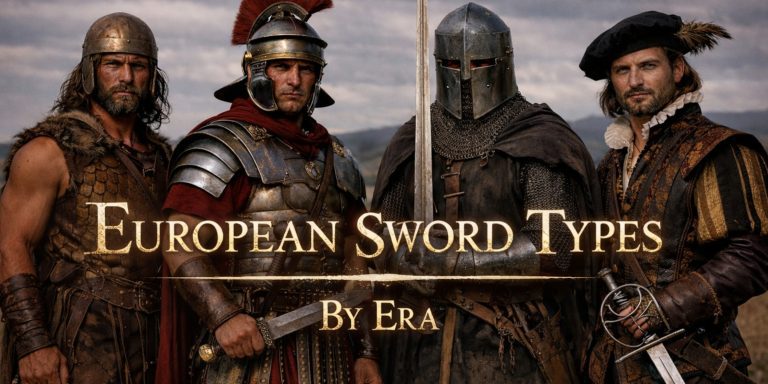
Sword Types Used by Condottieri Infantry
Italian infantry carried a wide variety of swords depending on region, wealth and period.
| Sword Type | Description | Typical Use |
| Arming Sword | One-handed straight sword with a cruciform hilt | Common sidearm for infantry and officers |
| Falchion | Single-edged cutting sword | Favoured by some lower-ranking infantry for brutal close fighting |
| Cinquedea | Broad-bladed Italian short sword with a wide triangular blade | Popular in northern Italy during the fifteenth century |
| Messer | Single-edged sword influenced by German designs | Used by mercenaries and northern troops |
| Early Sidesword | Longer thrusting and cutting sword emerging in the late fifteenth century | Increasingly common among professional infantry |
| Baselard | Dagger-sword hybrid with a distinctive hilt | Often worn as a secondary weapon |
The cinquedea deserves particular attention. It was unmistakably Italian and rather theatrical in appearance, with a broad blade and elaborate decoration. It looked splendid hanging from a belt and could still do considerable damage in a crowded street or breach. Renaissance Italians had a talent for making even practical violence appear stylish.

Daggers were equally important. Many infantrymen carried rondel daggers, bollock daggers or simple utility knives for fighting at very close range.
Other Weapons
Condottieri infantry often fought with:
- Spears and pikes up to 4 or 5 metres long
- Halberds and bills
- Crossbows
- Arquebuses
- Poleaxes
- Maces and war hammers
Crossbows remained extremely important in Italy long after other parts of Europe had adopted the longbow or firearm. Italian crossbowmen were respected throughout Europe. Genoese mercenaries in particular became famous, though not always for the right reasons. At Crécy they endured one of the worst days a crossbowman could possibly imagine.
By the early sixteenth century arquebuses began to replace crossbows. Firearms were slower and unreliable, but they could penetrate armour and terrify horses. The noise alone probably unsettled a fair number of soldiers who had never heard anything more alarming than a church bell or an angry mule.
Battlefield Tactics
Italian condottieri infantry fought in disciplined formations. Unlike the heroic chaos often shown in films, most battles involved careful manoeuvre, missile fire and attempts to outflank the enemy.
Common tactics included:
- Pike formations to stop cavalry
- Crossbow and arquebus fire from behind pavises
- Defensive fieldworks and trenches
- Sudden flank attacks by reserve infantry
- Combined operations with cavalry and artillery
Italian commanders often preferred caution over reckless attacks. This led foreign critics to accuse the condottieri of cowardice. There is some truth in the complaint, but it is also rather unfair. A dead mercenary could not collect his wages, and a dead captain could not renegotiate his contract.
The infantry played a major role in famous battles such as:
- Anghiari, 1440
- Fornovo, 1495
- Ravenna, 1512
- Marignano, 1515
- Bicocca, 1522
At Bicocca, Spanish arquebusiers and entrenched infantry devastated attacking Swiss mercenaries. The battle marked a turning point. Traditional charges against prepared infantry became increasingly dangerous and, in many cases, absurd.
Daily Life in Camp
Life for condottieri infantry was rarely glamorous. Soldiers marched long distances, lived in tents or rough shelters and often suffered from poor food, disease and delayed wages.
A typical infantryman’s daily routine included:
- Weapons practice
- Guard duty
- Building fortifications
- Marching
- Maintaining equipment
- Gambling, drinking and arguing
Mercenary camps could become rough temporary towns. Traders, blacksmiths, prostitutes, priests and camp followers travelled with the army. Discipline varied. Some captains kept tight control, while others presided over chaos held together only by fear and unpaid debt.
Pay was often irregular. Contemporary records are full of complaints from soldiers demanding money. Some resorted to looting, extortion or simply joining another employer. Loyalty in Renaissance Italy had its limits, and those limits were usually measured in florins.
Archaeology and Surviving Evidence
Archaeological discoveries have added greatly to our understanding of condottieri infantry.
Excavations at battlefields and former fortifications in northern Italy have uncovered:
- Crossbow bolts
- Lead shot from arquebuses
- Fragments of brigandines
- Helmet pieces
- Sword blades and dagger fragments
- Buckles and military fittings
Finds from battlefields such as Fornovo and sites around Lombardy reveal the gradual transition from medieval to Renaissance warfare. Archaeologists have discovered evidence of both traditional weapons and early firearms used side by side.
Several preserved armouries and museums contain original equipment associated with Italian infantry. Surviving brigandines from Milanese workshops show remarkable craftsmanship. Sword finds include arming swords, falchions and early sideswords, often heavily worn or damaged.
One particularly revealing discovery came from excavations near sixteenth-century fortifications, where large numbers of lead bullets and damaged armour fragments were found together. It is an uncomfortably direct reminder that the growing power of firearms made expensive armour increasingly less useful. Renaissance armourers responded by making breastplates thicker. Soldiers responded by complaining about how heavy they had become.
Contemporary Quotes
Several writers of the period commented on Italian infantry and the condottieri system.
The Florentine writer Niccolò Machiavelli was deeply critical of mercenary armies:
“Mercenaries and auxiliaries are useless and dangerous.”
Machiavelli believed that Italian states relied too heavily on paid soldiers who lacked loyalty. His criticism was not entirely wrong, though he was writing as a man who had to deal with the consequences.
The historian Francesco Guicciardini described the changing nature of warfare in Italy:
“The wars had become more cruel and more deadly than before.”
He was referring in part to the growing use of firearms and larger infantry armies.
A Venetian observer writing about the Swiss and Italian wars remarked:
“The foot soldiers now decide the fate of battles.”
That simple statement captures the great military transformation of the fifteenth and sixteenth centuries.
Why Condottieri Infantry are Important Units
Condottieri infantry stood at the crossroads between medieval and early modern warfare. They fought with swords, pikes and crossbows, but they also adopted firearms and new battlefield tactics.
They were not always loyal, not always brave and certainly not always paid. Yet they formed the backbone of the armies that shaped Renaissance Italy.
Without them there would have been no Sforza dynasty in Milan, no Venetian victories on the mainland and no resistance to the invasions of France and Spain. They also helped create the military world that later produced the great infantry armies of the sixteenth and seventeenth centuries.
The image of the condottieri is often dominated by mounted captains in polished armour. The infantryman behind him is easier to forget. He carried the pike, dug the trench, hauled the gun and stood in the mud while his commander posed for a portrait. History has a habit of overlooking such men, usually because they were too busy doing the actual work.
Further Reading
- Niccolò Machiavelli, The Art of War
- Michael Mallett, Mercenaries and their Masters
- Christopher Duffy, Siege Warfare
- William Caferro, John Hawkwood: An English Mercenary in Fourteenth-Century Italy
- Frederick Lewis Taylor, The Art of War in Italy 1494–1529