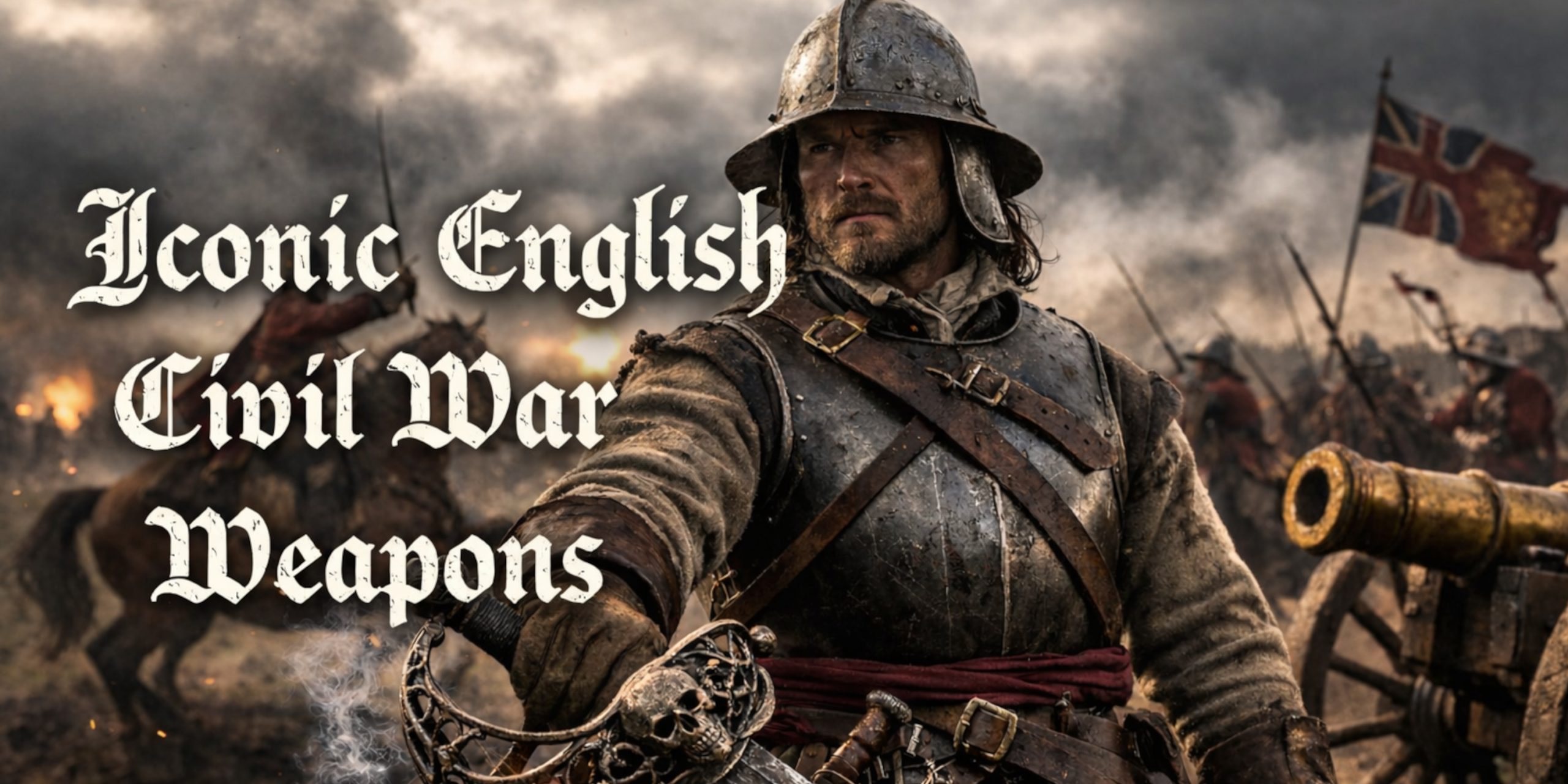
Steel, Shot and Conviction on Seventeenth Century Battlefields
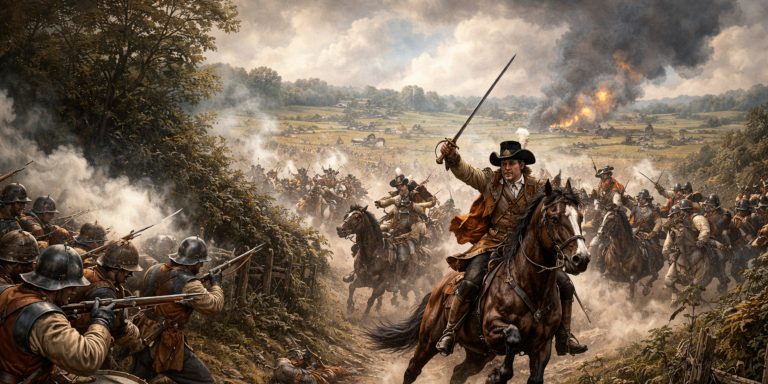
The English Civil War was a war fought at arm’s length and at point blank range, with smoke hanging low over fields that would never quite forget the sound.
Weapons in this conflict tell us as much about the age as any political tract. They reveal a world in transition. Medieval steel still held pride of place at a gentleman’s side, yet gunpowder had already rewritten the rules of engagement. Tradition and innovation stood shoulder to shoulder, occasionally tripping over one another.
What follows is a clear look at the arms that defined the struggle, used by both Royalist and Parliamentarian forces.
The Matchlock Musket
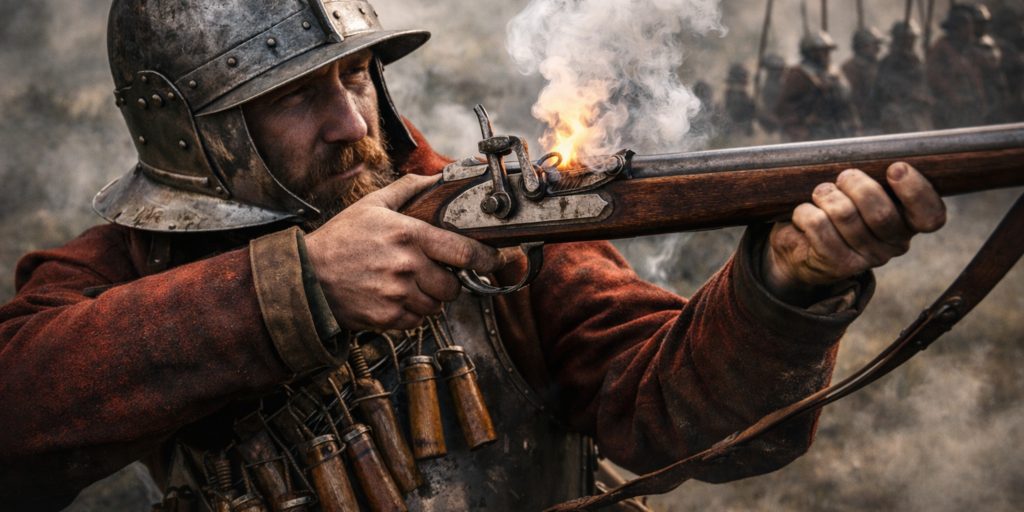
The backbone of Civil War infantry was the matchlock musket. It was heavy, temperamental and slow, yet decisive.
A glowing match cord was clamped into a serpentine lever. When the trigger was pulled, the match touched priming powder in a pan, igniting the main charge inside the barrel. The result was noise, smoke and often confusion.
A trained musketeer might fire two shots a minute under good conditions. Rain could render the weapon useless. Wind could carry sparks where they were not wanted. Soldiers carried wooden powder flasks known as “apostles” across their bandoliers, each holding a measured charge.
Despite its faults, the musket gradually overshadowed older missile weapons. Its penetrating power against armour made plate increasingly impractical.
The Pike
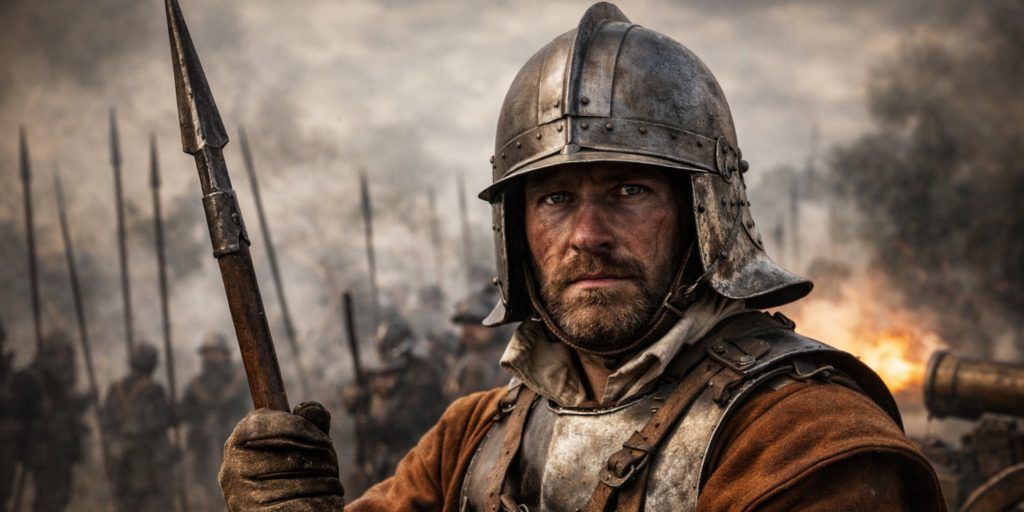
If the musket provided firepower, the pike provided reassurance.
Typically between fourteen and eighteen feet in length, the pike was designed to keep cavalry at bay. Infantry formations combined pikemen and musketeers in what became known as “pike and shot”. The musketeers delivered volleys while pikemen formed a hedge of steel against mounted attack.
The pike was not elegant. It was exhausting to carry and awkward to manoeuvre. Yet in close quarters it was formidable. Push of pike engagements were brutal affairs, more wrestling match than fencing bout.
By the war’s end, firearms had begun to dominate more clearly, but during the early campaigns the pike remained indispensable.
The Mortuary Sword
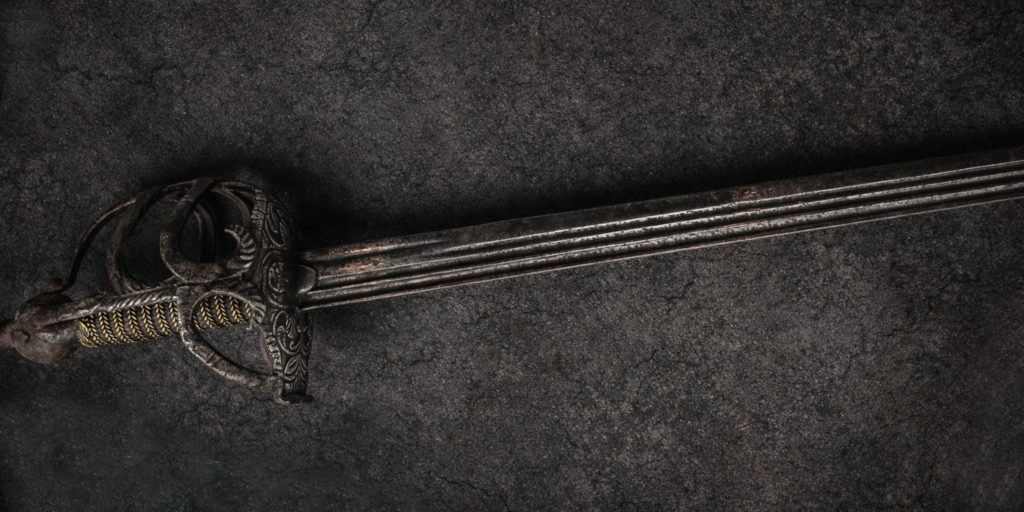
Among edged weapons, the mortuary sword stands out. Its name derives from the stylised human head often carved or cast onto the hilt, sometimes believed to represent the executed king Charles I.
This was primarily a cavalry and officer’s weapon. It featured a complex guard offering protection to the hand, and a broad blade capable of both cut and thrust.
In practical terms, it was well suited to mounted combat. In symbolic terms, it spoke volumes. The sword remained a badge of status, and in a war fuelled by loyalty and ideology, symbols mattered deeply.
I have handled a surviving mortuary hilt in a museum store. The weight is honest. The craftsmanship is deliberate. It feels less like ceremony and more like intent.
The Rapier and Civilian Swords
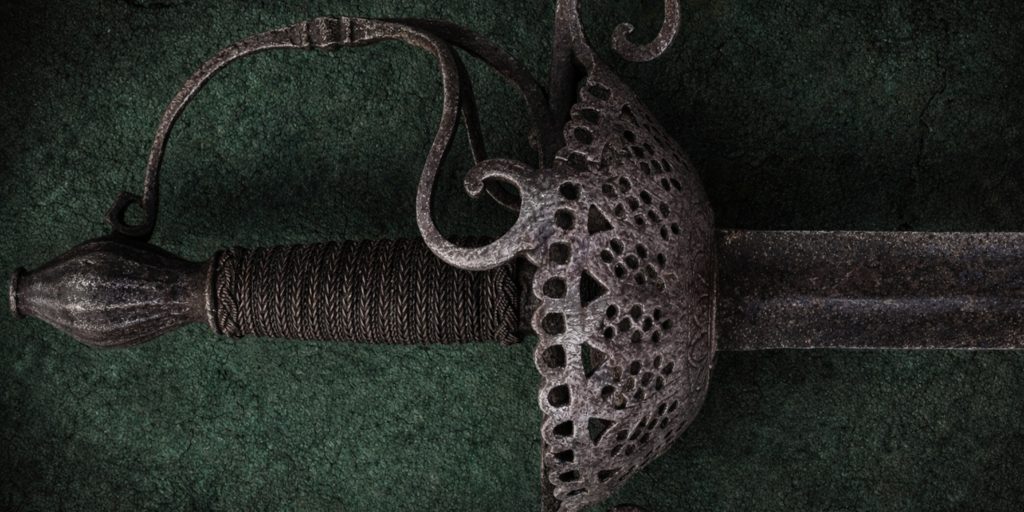
Not all swords were designed for battlefield hacking. The rapier, already fashionable in earlier decades, continued to be worn by gentlemen.
Long, slender and optimised for thrusting, the rapier was more at home in a duel than in the crush of infantry combat. Yet officers and aristocrats often carried what they already owned. In the chaos of war, practicality sometimes bowed to habit.
Alongside the rapier were simpler cut and thrust swords, often with less elaborate guards. Many were privately purchased, reflecting the fragmented supply systems of the period.
The Cavalry Broadsword
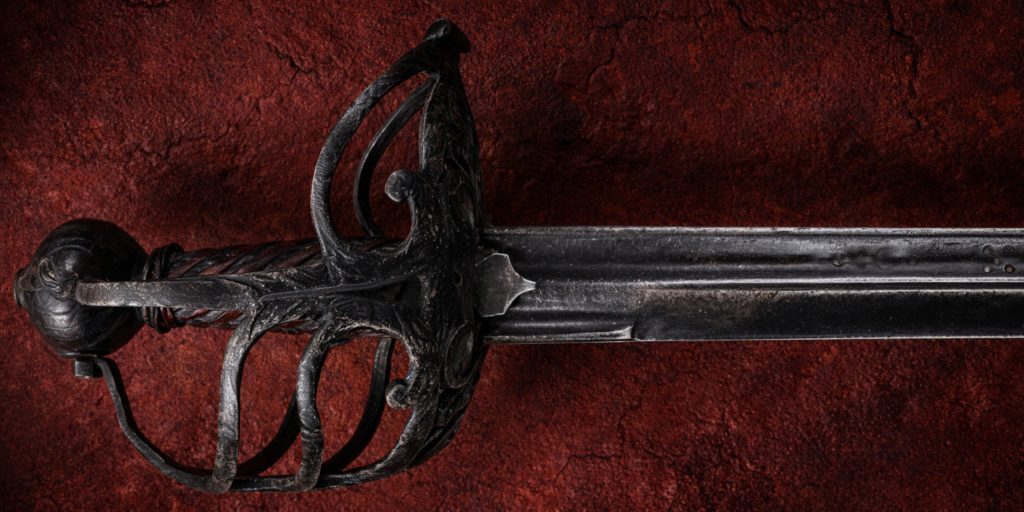
Cavalry played a dramatic role in many engagements, from Edgehill to Naseby. Mounted troops favoured sturdy broadswords built for slashing attacks delivered at speed.
Unlike the refined rapier, these blades were robust and direct. A cavalry charge relied on shock. The sword was an extension of momentum.
Both Royalist and Parliamentarian horse used similar patterns. Differences lay more in discipline and leadership than in equipment.
Pistols and Carbines
Cavalrymen frequently carried pistols, often in holsters at the saddle. Early in the war many were wheellock or snaphaunce mechanisms, later giving way increasingly to flintlock designs.
These were close range weapons. A rider might discharge a pistol just before contact, then draw his sword. Carbines offered mounted troops a slightly longer ranged option, though accuracy was limited.
Gun technology was evolving rapidly. The Civil War sits at an interesting midpoint, where older ignition systems overlapped with emerging improvements.
Artillery
Field guns, culverins and sakers thundered across battlefields and battered town walls.
Artillery was expensive and logistically demanding. Moving heavy cannon across muddy English terrain required animals, manpower and patience. Once in position, however, guns could disrupt formations and shatter morale.
Sieges made extensive use of artillery. Towns such as York and Bristol felt the weight of prolonged bombardment. The psychological effect of cannon fire should not be underestimated. It is one thing to face a man with a sword. It is quite another to face iron shot tearing through masonry.
Armour in Decline
Although not a weapon, armour shaped how weapons were used. Cavalry often wore cuirasses and distinctive lobster pot helmets. Infantry armour was lighter than in previous centuries.
As musket balls proved their power, heavy full plate became less viable. The age of the armoured knight had already faded, and this war confirmed the shift. Protection remained important, but mobility and firepower took precedence.
Seven Swords Takeaway
The weapons of the English Civil War reveal a society caught between eras. Pikes stood beside muskets. Rapiers hung at the hips of men commanding volleys of gunfire. Artillery reshaped the landscape while swords continued to settle arguments at close quarters.
Studying these arms brings the conflict into sharper focus. Steel and powder were the tools, but the real force behind them was conviction. Whether for king or Parliament, the men who carried these weapons believed they were defending something fundamental.
That belief, more than any blade or barrel, made the war so bitter and so enduring in memory.