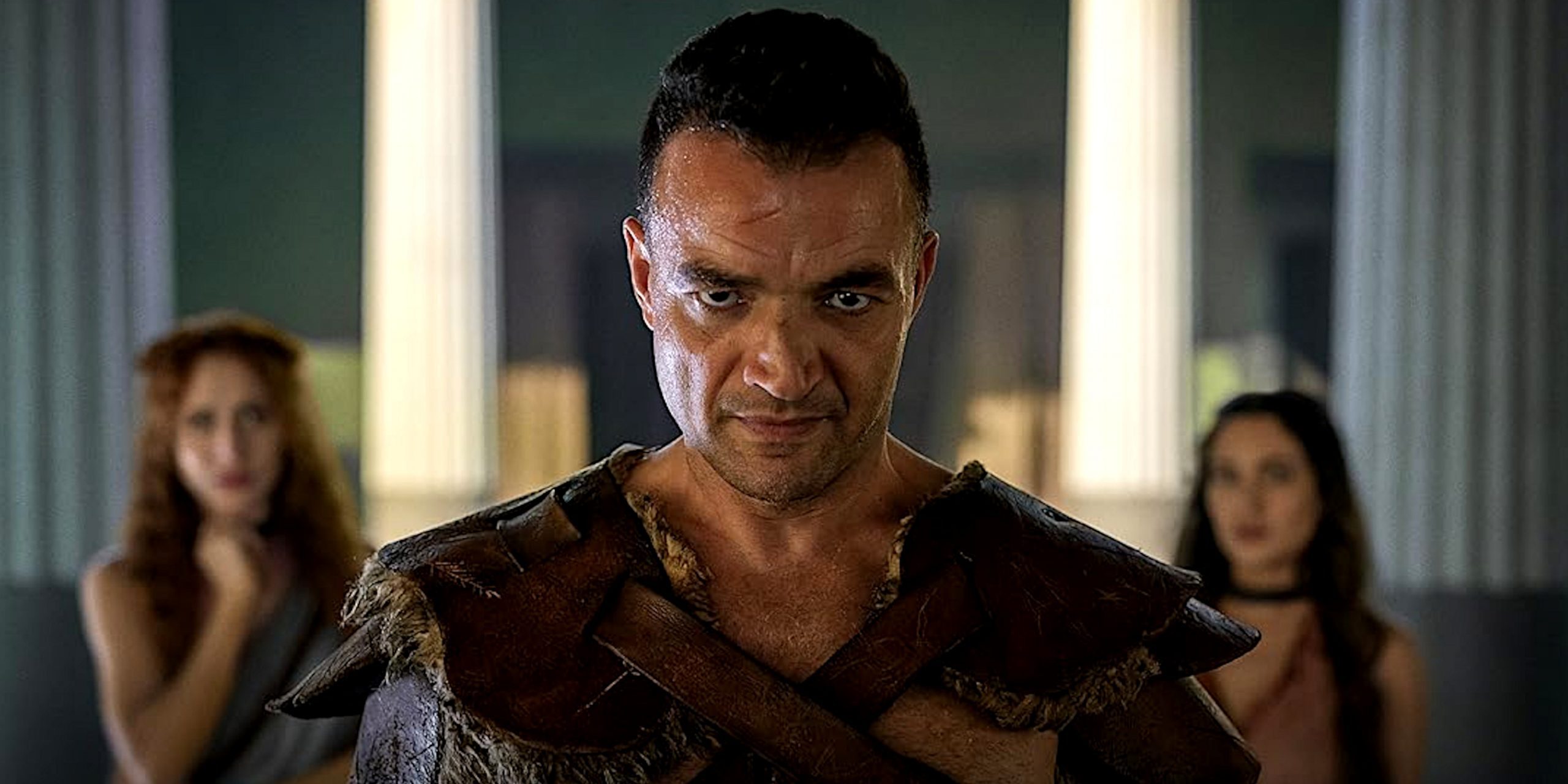
If you watched Spartacus when it first aired, you probably filed Ashur away as many things, slimy, clever, disposable, but never central. House of Ashur changes that assumption completely. It does not just spin off a familiar villain. It nudges the entire canon sideways and asks a slightly uncomfortable question, what if the story had been paying attention to the wrong people all along?
As someone who grew up rewatching the series on dodgy laptops and streaming re runs, this shift feels bold in a way TV rarely allows anymore. Not louder, not bloodier, just stranger and more thoughtful.
From Side Villain to Structural Pillar
In the original series, Ashur functioned as narrative grease. He made plots move, caused problems, and eventually got what Spartacus tradition demands, a violent end. House of Ashur rewrites that trajectory without pretending it never happened. Instead, it reframes his survival as a turning point that exposes how fragile the established power order always was.
By placing Ashur at the centre, the story quietly admits something Spartacus only flirted with before. Rome is not run by honour or strength alone. It is run by adaptability, gossip, and people willing to trade dignity for leverage. Ashur was always good at that. The canon simply stopped listening to him too early.
Power Without the Arena
One of the most meaningful changes to the canon is the reduced importance of the arena itself. In Spartacus, power flowed through spectacle. Fighters mattered because crowds mattered. Blood validated authority.
House of Ashur shifts the axis. Power now lives in corridors, contracts, whispered alliances, and financial desperation. The gladiators still exist, but they are assets rather than heroes. That change subtly redefines what victory even means in this universe.
For longtime fans, this feels almost subversive. The show is not abandoning violence. It is demoting it. And that choice forces the canon to grow up a little.
Moral Alignment Gets Messier
Spartacus thrived on clean emotional lines. Slaves were brutalised. Romans were cruel. Even when characters blurred those lines, the story usually pushed them back into place by the end of the episode.
Ashur refuses that structure. He is not secretly noble, and the show does not pretend he is misunderstood. Instead, it asks whether morality is even a useful lens for understanding survival in Rome.
This matters for canon because it reframes earlier characters retroactively. Lucretia, Batiatus, even Glaber now look less like exceptions and more like products of a system that rewards amorality. Ashur simply adapted faster.
The Reframing of Intelligence
One of Spartacus’ quiet habits was to punish cleverness unless it served brute force. Ashur was clever, therefore he had to fall. House of Ashur challenges that logic.
Here, intelligence becomes its own form of strength. Information replaces muscle. Strategy replaces loyalty. That recalibration changes how we interpret earlier seasons. Suddenly, Spartacus’ rebellion feels less inevitable and more narrowly timed. Had Ashur been positioned differently, history inside the canon might have bent another way.
As a viewer, it is oddly satisfying to see cunning finally treated as dangerous rather than pathetic.
Canon Expansion, Not Erasure
The most impressive thing House of Ashur does is avoid disrespecting what came before. It does not retcon events into irrelevance. Deaths still matter. Trauma still echoes. The rebellion still scars Rome.
What changes is perspective. By shifting the camera slightly to the side, the canon becomes wider rather than rewritten. Spartacus remains the mythic heart of the story, but Ashur becomes the footnote that explains how Rome kept functioning while legends were being made elsewhere.
That kind of expansion feels rare, especially in franchises that usually default to nostalgia or escalation.
Why This Change Actually Works
As someone who loves Spartacus precisely because it was excessive, theatrical, and emotionally blunt, I did not expect to enjoy a subtler extension of its world. But House of Ashur understands something important. The original show was never just about fights. It was about systems, exploitation, and who benefits when chaos erupts.
By letting a survivor tell the next chapter, the canon gains texture. It becomes less about destiny and more about consequence. Less about heroes and more about aftermath.
And honestly, watching a character who was never meant to win learn how to rule the ruins is far more interesting than watching another legend rise and fall on schedule.
Seven Swords Takeaway
House of Ashur does not overthrow the Spartacus canon. It exposes the scaffolding holding it up. By shifting focus from rebellion to management, from muscle to manipulation, it asks fans to reconsider what power looked like all along.
For a franchise built on excess, this quieter, sharper evolution feels like a risk worth taking. It does not replace Spartacus. It complicates him. And that might be the most Roman outcome of all.