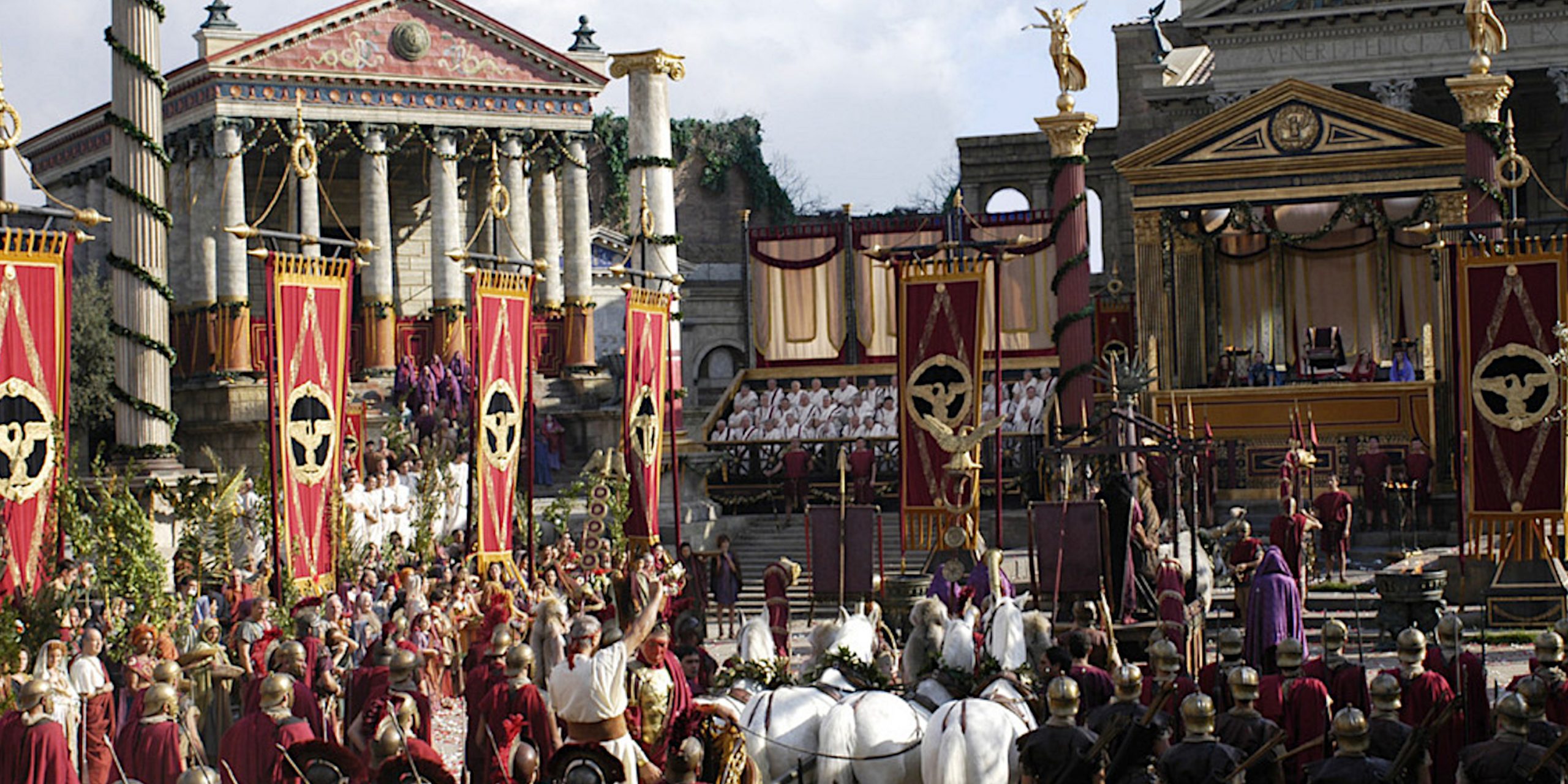
There was a time when spending blockbuster film money on a television series felt reckless. Then along came Rome, a historical drama so ambitious it practically dared accountants to keep up.
When it premiered in 2005, the reported production cost hovered around 100 million dollars for the first season alone. At the time, that figure was eye watering. Streaming giants had not yet entered their spending arms race. Prestige television was still proving itself. And HBO decided to build the Roman Republic from the ground up.
Let’s talk about how that happened.
A Partnership Built on Big Ambition
From the outset, Rome was not a modest cable project. It was a co production between HBO, BBC, and Italy’s RAI.
That collaboration allowed for shared costs, but it also raised expectations. This was meant to be definitive. A serious, adult retelling of the fall of the Roman Republic, not a tidy classroom adaptation.
The creative vision was cinematic. Sweeping politics, brutal street violence, and domestic drama unfolding alongside the rise of Julius Caesar. If it looked like a feature film stretched across twelve episodes, that was intentional.
Ambition costs money. Rome had it in abundance.
Rebuilding Ancient Rome at Cinecittà
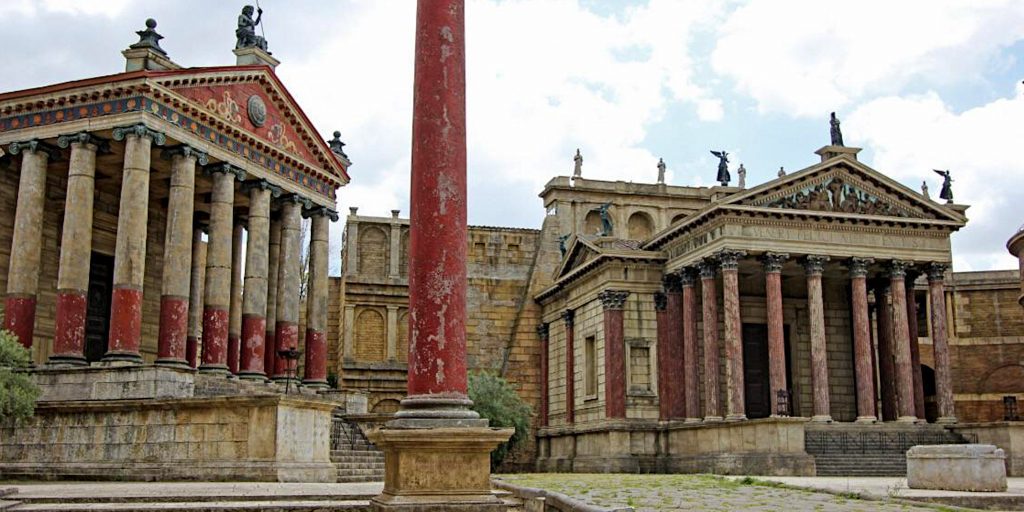
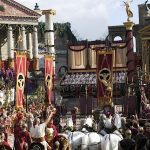
Rather than relying heavily on digital backdrops, the production built enormous physical sets at Cinecittà Studios.
The recreation of the Roman Forum alone covered several acres. Streets, temples, market stalls, political buildings, even graffiti were constructed with obsessive detail. Extras could wander through an environment that felt lived in rather than staged.
This commitment to physical scale did two things. It grounded the performances in something tangible. It also devoured the budget.
Maintaining those sets, staffing them, lighting them, and filming on them for months at a time was closer to running a historical theme park than shooting a typical television series.
Film Level Production Values
Rome treated television like cinema before that became common practice.
The series used large scale battle scenes, complex crowd choreography, and elaborate practical effects. Armour was not plastic. Swords were not toy props. Every senator’s toga was tailored, layered, and historically inspired.
Costume design alone required thousands of garments. Roman society was stratified and visual hierarchy mattered. Wealth, class, and political allegiance had to be visible at a glance.
Add to that a large international cast, location shoots, and extended production schedules, and you start to see why the budget ballooned. This was not a contained drama set in a few drawing rooms. It was political theatre on an imperial scale.
The Price of Prestige Television
In 2005, television was still shaking off its reputation as film’s cheaper cousin. HBO had already tasted success with shows like The Sopranos, but Rome was something else entirely.
It aimed to prove that television could handle historical spectacle with adult complexity. Graphic violence, explicit politics, moral ambiguity, all wrapped in Shakespearean intrigue.
The gamble was clear. If Rome succeeded, it would redefine what TV could be. If it failed, it would be remembered as a very expensive miscalculation.
Critically, the show was praised. Visually, it was stunning. Narratively, it was bold. Financially, it was complicated.
Why It Ended After Two Seasons
Despite strong reviews and a loyal audience, Rome concluded after two seasons.
The cost remained the sticking point. Even with international partners, sustaining that level of expenditure proved difficult. A studio fire at Cinecittà destroyed parts of the set after production wrapped, making continuation even more expensive.
In hindsight, Rome arrived just a little too early. Today, with streaming platforms routinely spending hundreds of millions on fantasy and historical epics, its budget does not seem quite as shocking.
At the time, though, it was extraordinary.
The Legacy of Rome
It is hard not to see Rome as a bridge between eras. Without it, would sprawling historical dramas have felt viable on television? Would later spectacles have been greenlit so confidently?
The series proved that audiences would commit to dense political storytelling if it looked and felt authentic. It also demonstrated that scale alone does not guarantee longevity.
There is something faintly romantic about it. A show about the excess and ambition of a collapsing republic that itself burned through vast sums in pursuit of greatness. Slightly ironic, maybe.
Rome did not become the longest running epic. It did become a landmark moment in television history. And for a brief window, it wore the crown as one of the most expensive shows ever made.
Not bad for a series set two thousand years ago.