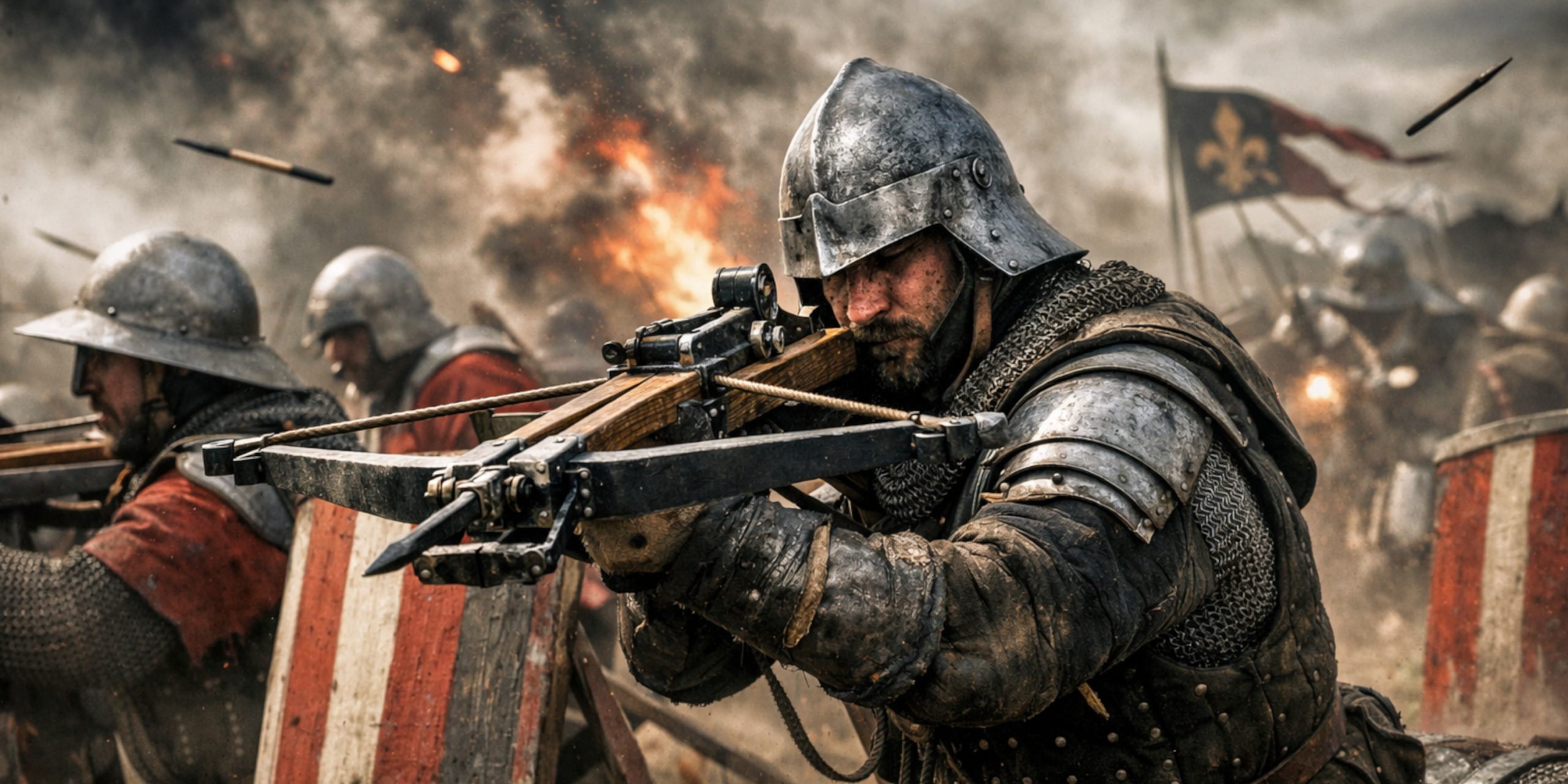
Few military specialists of the Middle Ages inspired such admiration and such irritation as the Genoese crossbowmen. Feared by cavalry, respected by kings, and occasionally blamed by chroniclers when things went wrong, they became synonymous with disciplined missile warfare. When medieval writers mention “the Genoese,” they rarely mean the entire population of the maritime republic. They mean the men with windlass and pavise, professionals for hire who turned mechanical tension into political leverage.
As a historian, I find them fascinating precisely because they were not romantic knights in shining armour. They were technicians. Engineers with muscle memory. In an age obsessed with chivalry, they won contracts through reliability and range.
The Republic of Genoa and the Rise of the Crossbow Corps
The city of Genoa, a major maritime republic, built its wealth on trade, naval power and shrewd diplomacy. By the twelfth and thirteenth centuries, it had also cultivated a reputation for disciplined infantry.
The crossbow suited a mercantile republic. It required training and organisation rather than aristocratic lineage. Genoa formalised its crossbow corps, often recruiting from urban guild structures. These men were not ad hoc levies. They trained, drilled and deployed in units with officers and logistical support.
Their fame spread across Europe. French, Spanish and even Middle Eastern rulers sought them out. In many armies, hiring Genoese crossbowmen was seen as a mark of seriousness.
Organisation and Battlefield Role
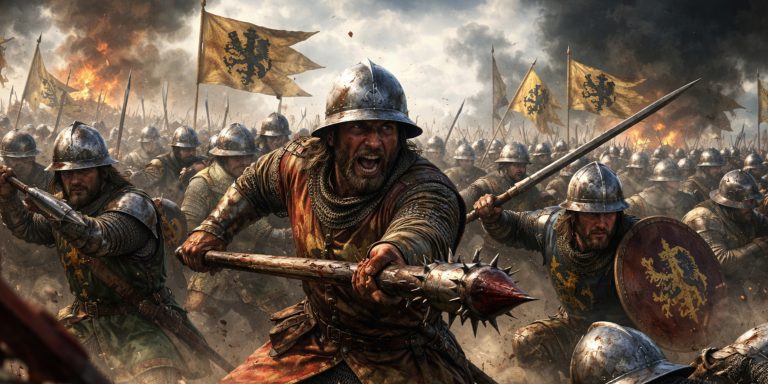
Genoese crossbowmen fought in coordinated units supported by large shields known as pavises. A typical formation included:
- Crossbowmen in ranks
- Pavise bearers providing cover
- Officers overseeing rate of fire and discipline
They operated as shock missile troops. Their purpose was to disrupt enemy formations before infantry engagement or cavalry charge.
In sieges they excelled. From city walls or behind mantlets, their penetrating bolts could harass attackers with grim persistence. Chroniclers frequently mention their ability to target officers and horses, both of which could destabilise medieval armies faster than any heroic duel.
Arms and Armour
The Crossbow
The Genoese crossbow was a formidable weapon. Early versions featured composite prods of wood, horn and sinew. Later, steel prods increased durability and power.
Loading methods included:
- Belt hooks
- Goat’s foot levers
- Windlass mechanisms for heavy draw weights
The steel crossbow, although slower to reload, delivered exceptional penetrating force. Contemporary sources often emphasise its ability to punch through mail and threaten even well armoured men.
The pavise, a tall, convex shield, was essential equipment. Planted into the ground, it provided cover during the lengthy reload process.
Swords and Sidearms
Although primarily missile troops, Genoese crossbowmen carried swords for close combat. Likely types included:
- Arming swords of the Oakeshott Type XII and XIII families
- Falchions for cutting power in confined fighting
- Later medieval sidearms akin to early messers in some contexts
These were practical weapons, not elaborate knightly blades. In tight siege conditions, a short arming sword was entirely sufficient. If a crossbowman found himself in prolonged melee, something had already gone wrong.
Armour
Typical equipment could include:
- Mail haubergeons
- Brigandines in the later period
- Steel helmets, including kettle hats and bascinets
- Thick leather gloves to handle bowstrings and mechanisms
They were not lightly equipped skirmishers. Many were well protected infantrymen whose value justified investment.
The Battle of Crécy
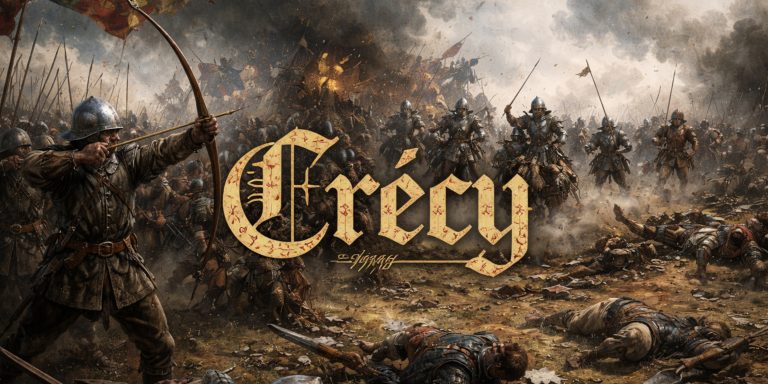
The most famous, or infamous, episode involving Genoese crossbowmen occurred at the Battle of Crécy.
Serving under the French crown during the early phase of the Hundred Years’ War, they faced English longbowmen in poor weather conditions. Heavy rain had slackened their bowstrings, and their pavises had reportedly not yet arrived in full deployment.
Jean Froissart records their frustration and fatigue after a forced march. He describes them advancing, loosing bolts with limited effect, then retreating under intense arrow fire. The French knights, impatient and perhaps contemptuous of infantry, charged through them.
Froissart writes that they were “so sorely annoyed by the English archers that they gave way.” His account, though dramatic, reflects the chaos of the moment.
It is tempting to treat Crécy as a verdict against crossbows. That would be simplistic. The circumstances were unfavourable. Fatigue, weather, lack of coordination and the absence of proper shield cover all played a role. In other contexts, Genoese crossbowmen performed admirably.
Contemporary Views
Medieval writers alternated between admiration and moral suspicion. The crossbow itself had been condemned by the Second Lateran Council for use against Christians, though such bans were widely ignored.
One chronicler described Genoese crossbowmen as “men practised in that art beyond all others.” The grudging respect is clear.
Knights sometimes disliked them. A missile that did not care for chivalric hierarchy unsettled the social order. A well aimed bolt could flatten a nobleman just as effectively as a peasant.
Archaeology and Material Evidence
Archaeological finds support the written record.
Recovered artefacts include:
- Steel crossbow prods
- Windlass components
- Bolt heads of varying designs
- Pavise fragments and shield fittings
Excavations at medieval siege sites in France and Italy have produced large numbers of quarrel heads. Their square bodkin forms were optimised for armour penetration.
Museums in Genoa and elsewhere preserve crossbows that illustrate the craftsmanship involved. The mechanical precision of trigger mechanisms and spanning devices demonstrates a high level of metallurgical skill.
Material culture confirms what the chronicles suggest. These were engineered weapons, not crude devices.
Decline and Legacy
By the fifteenth century, handguns and arquebuses began to rival crossbows in battlefield effectiveness. Firearms required less lifetime training and carried psychological impact.
Yet the legacy of the Genoese crossbowmen persisted. They influenced urban military organisation and demonstrated that disciplined infantry could shape campaigns once dominated by mounted elites.
Their story complicates the familiar narrative of knights and castles. It reminds us that medieval warfare was already becoming professional, technical and, at times, uncomfortably modern.
Takeaway
The Genoese crossbowmen were neither romantic heroes nor hapless victims. They were professionals in a competitive military marketplace. Their discipline, equipment and reputation carried them across Europe’s battlefields.
If one lesson emerges, it is that technology rarely decides wars in isolation. Organisation, weather, leadership and timing matter just as much. The crossbow was powerful. In the right hands, and under the right conditions, it was decisive. In the wrong moment, as at Crécy, it could become a scapegoat.
As a historian, I cannot help admiring their craft. They stood between tension and release, between calculation and violence. Not glamorous perhaps, but formidable all the same.