A Study of Elegance, Authority, and Imperial Reach
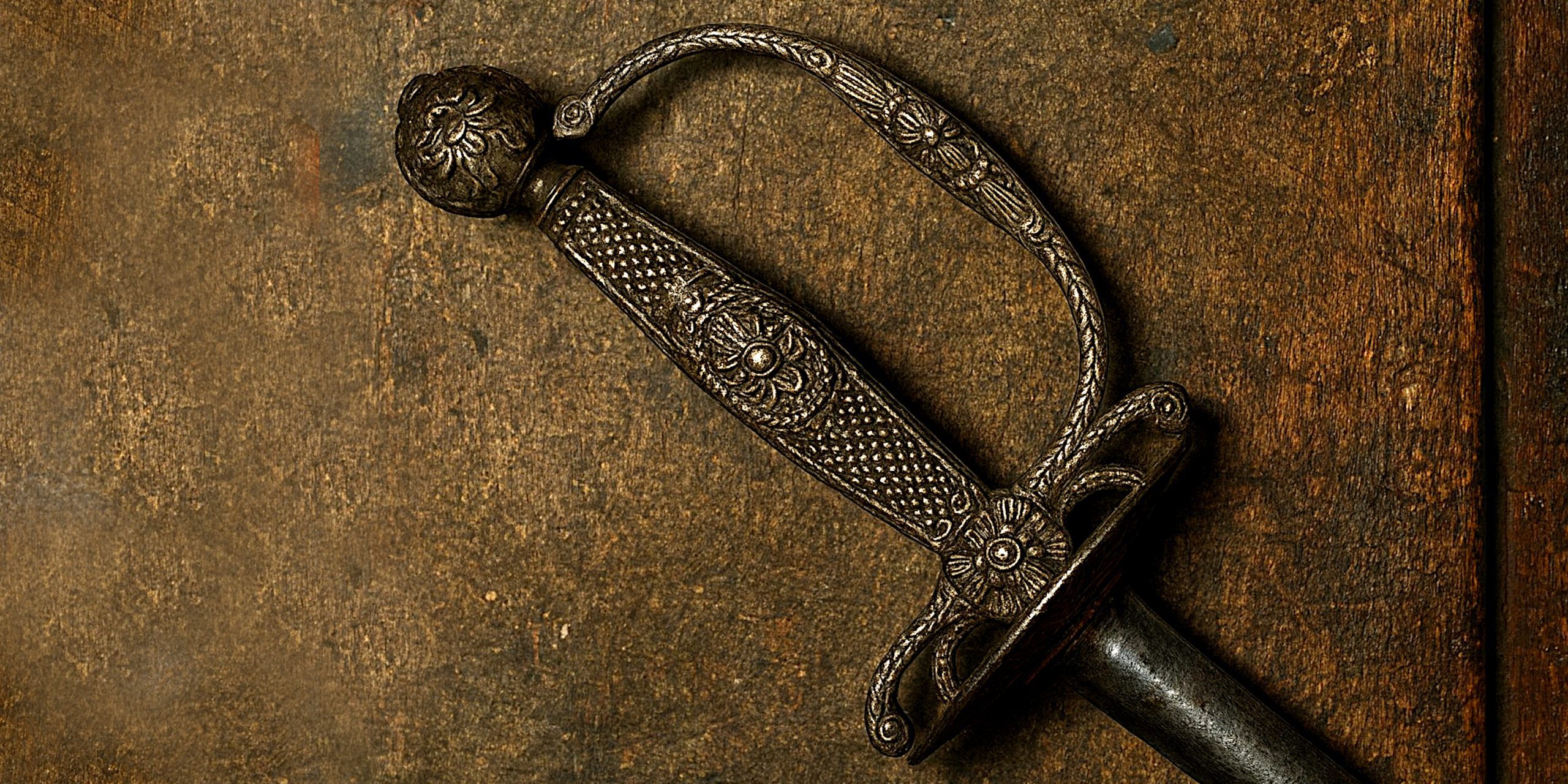
The French colonial smallsword occupies a curious space in imperial history. It carried the rules of French court culture across oceans while acting as a badge of rank in colonies from North America to the Caribbean and North Africa. Officers liked it for its elegance and its suggestion of order in unfamiliar environments. It was rarely a battlefield weapon, yet it shaped the presence and identity of French authority overseas.
Often lighter and more decorative than its metropolitan cousins, the colonial variant mirrored the cultural ambition of France during the seventeenth and eighteenth centuries. These were weapons intended to communicate hierarchy as much as skill.
Specification
Typical Measurements
| Feature | Detail |
|---|---|
| Total length | 85 to 100 cm |
| Blade length | 70 to 85 cm |
| Weight | 350 to 550 g |
| Blade type | Triangular or hollow ground, stiff for thrusting |
| Hilt style | Knuckle bow with small shell or double shell guard, often cast brass or gilt bronze |
| Grip | Wood core with wire wrap or shagreen |
| Scabbard | Leather with gilt or brass fittings |
Materials
- Blades forged from high carbon steel
- Hilts produced in brass, bronze, or occasionally silvered alloys
- Wire wrap in copper, silver, or iron
These swords were crafted to survive transport across humid or arid colonial climates, although many still suffered corrosion without proper storage.
History and Evolution
The smallsword emerged in France as a courtly replacement for the heavier rapier during the mid seventeenth century. Its shorter profile and rigid blade suited the increasingly codified fencing systems developing in Parisian academies.
As France consolidated and expanded its colonial presence, officers and administrators carried the smallsword as a visible symbol of rank. In New France, Saint Domingue, Senegal, and the Indian Ocean territories, the sword functioned less as a duelling instrument and more as a ceremonial badge that linked the wearer to the metropole.
By the late eighteenth century colonial smallswords adopted more robust and simplified hilts compared with the heavily decorated court versions. Tropical climates and rougher service demanded practicality. Some surviving examples show hybrid styles, produced locally by colonial craftsmen using imported blades.
The Napoleonic period marked the decline of the smallsword in active use. Sabres and cutlasses became standard military sidearms, and the smallsword retreated into full dress and ceremonial contexts until fading from service entirely in the nineteenth century.
Advantages and Disadvantages
Advantages
- Light and easy to wear for long periods
- Effective thrusting weapon at close quarters
- Strong cultural authority associated with French rank
- Simple to maintain compared with earlier rapiers
- Portable and suited to confined colonial environments such as ships, forts, and urban settlements
Disadvantages
- Limited cutting power
- Narrow blade vulnerable to bending after hard impact
- Poor utility compared with broader sabres or cutlasses
- Primarily a status item in many colonies rather than a practical battlefield weapon
Comparison with Similar Weapons
| Feature | French Colonial Smallsword | French Naval Cutlass | Infantry Sabre | Court Smallsword |
|---|---|---|---|---|
| Primary purpose | Status and duelling | Boarding combat | Battlefield sidearm | Court dress |
| Blade | Thin and triangular | Broad and curved | Broad, curved or straight | Slender and decorative |
| Strength | Precision thrusting | Strong cutting power | Versatile fighting | Elegance and symbolism |
| Weakness | Not robust in rough combat | Heavy and less refined | Heavier than smallsword | Less suited to colonial wear |
| Typical users | Officers, administrators | Sailors, marines | Infantry officers | Nobility and metropolitan elite |
The colonial smallsword sat between ceremony and combat. It lacked the raw utility of naval or infantry sabres but provided a level of refinement that colonies often sought to project.
Legacy
Although no longer a weapon of war, the French colonial smallsword carries historical weight. It reflects the cultural expectations France placed upon its overseas officers and the ways in which European martial fashion travelled across continents.
Collectors and historians value these swords for their ability to demonstrate local adaptation. A smallsword made in Saint Domingue with a Parisian blade and a hilt cast from colonial brass tells a wider story about trade patterns, identity, and authority.
Today the weapon appears frequently in studies of French imperial symbolism, fencing history, and eighteenth century martial display.
Where to See
Several museums display French smallswords with colonial provenance. Examples can appear in rotating exhibits, so availability may change.
- Musée de l Armée, Paris. Strong examples from the eighteenth century, including officer smallswords linked to colonial regiments.
- Musée du Quai Branly, Paris. Material culture collections that include weapons tied to West African and Caribbean colonial contexts.
- Canadian War Museum, Ottawa. Pieces from New France, sometimes featuring hybrid colonial craftsmanship.
- The Metropolitan Museum of Art, New York. High quality smallswords that illustrate the metropolitan style which influenced colonial variants.
Collectors Guide
Identifying Features
- Sturdier brass hilts compared with court models
- Signs of tropical corrosion or restoration
- Locally repaired scabbards
- Imported blades marked by French workshops such as Klingenthal or later Solingen trade blades
Market Notes
French colonial smallswords remain less common than metropolitan examples. Condition and provenance are the primary value drivers.
Typical Auction Prices
| Condition | Details | Price Range |
|---|---|---|
| Excellent | Complete hilt, original wire wrap, intact scabbard, strong provenance | 1,200 to 3,000 GBP |
| Good | Some wear, scabbard repairs, minor corrosion | 700 to 1,200 GBP |
| Fair | Missing scabbard, pitting, loose hilt components | 300 to 700 GBP |
| Poor | Fragmentary examples or heavy corrosion | Under 300 GBP |
Pieces with documented colonial histories can exceed these ranges, particularly those belonging to identifiable officers.
Collecting Advice
- Prioritise structural integrity over decorative appeal.
- Seek clear provenance due to the wide circulation of European smallswords without colonial links.
- Store in controlled humidity to prevent further blade corrosion.
- Be cautious with overly polished steel. Many collectors prefer original patina.