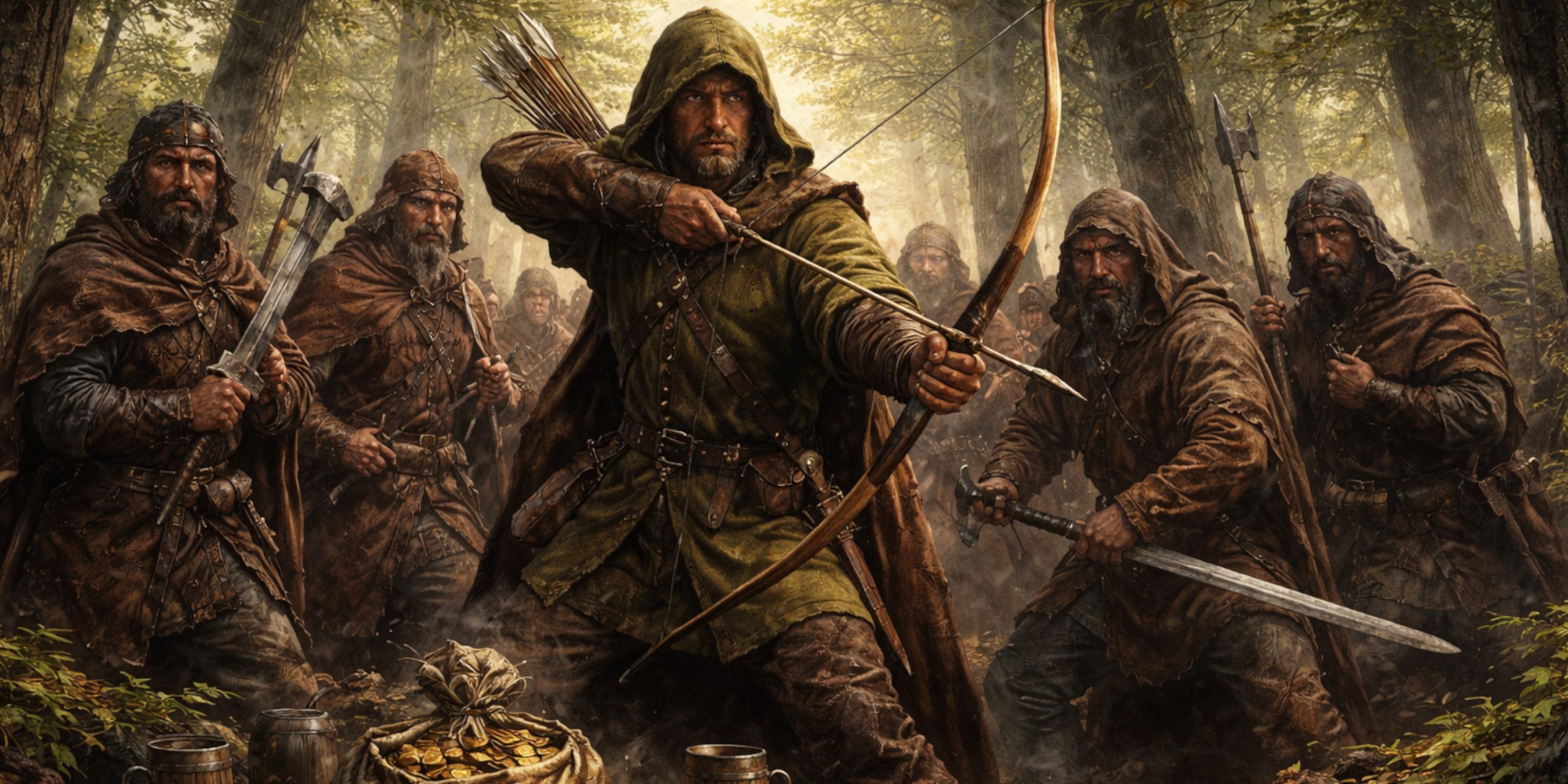
Medieval outlaws occupy a strange position in history. They were criminals by law, yet often celebrated in memory. Some were violent bandits, others dispossessed nobles, and a few became symbols of resistance long after their deaths. What unites them is not romance, but pressure. War, disease, and famine shaped the conditions that pushed people beyond the law.
Outlawry in the Middle Ages was rarely a choice made lightly. It was often the result of lost land, unpaid service, failed harvests, or political defeat. Once declared an outlaw, a person existed outside legal protection. Anyone could kill them without consequence. Survival required weapons, allies, and local support.
Who Were Medieval Outlaws?
In legal terms, an outlaw was someone who refused to submit to the courts or had fled justice. In practice, this label covered a wide range of people.
Some were professional criminals living by robbery. Others were former soldiers who had nowhere to go after war ended. A significant number were minor landholders or retainers who lost protection when their lord fell from power. Once stripped of legal status, outlawry became permanent unless royal pardon intervened.
From a historical standpoint, this matters because outlaw bands often mirrored the social structure they came from. Leadership, discipline, and hierarchy did not disappear just because someone crossed into illegality.
Robin Hood and the Greenwood Tradition
Robin Hood remains the best known medieval outlaw, though his historical reality is uncertain. Early ballads place him in late thirteenth century England, a period marked by heavy taxation, strict forest laws, and growing tension between royal officials and local communities.
Robin Hood is consistently portrayed as a yeoman, not a peasant. This detail matters. Yeomen were armed, trained, and economically vulnerable. They were also precisely the group most affected by forest law enforcement. The earliest stories show Robin killing royal agents without apology. Later moral polish comes centuries after.
As a historian, I see Robin Hood less as a person and more as a pressure valve. He absorbs public resentment and gives it a face that cannot be punished.
Hereward the Wake and Post Conquest Resistance
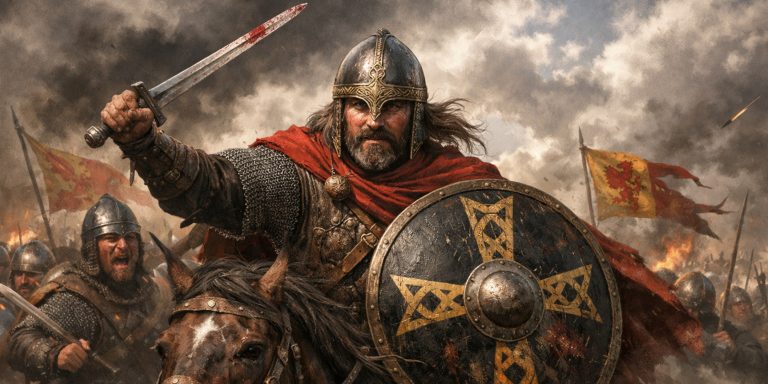
Hereward the Wake offers a clearer historical case. Active during the Norman consolidation of England, Hereward led resistance from the marshlands around Ely. Norman chroniclers describe him as a dangerous outlaw. English traditions cast him as a patriot.
The distinction is political rather than factual. Once the Norman regime secured control, opposition ceased to be war and became crime. Hereward’s story shows how quickly legitimacy shifted after conquest. A landholder defending ancestral rights could become an outlaw overnight.
His disappearance from the record is typical. Rebels were either killed, absorbed, or erased.
Eustace the Monk, Piracy and Royal Favour
Eustace the Monk demonstrates outlawry at sea. Originally a monk, Eustace turned to piracy and mercenary service in the English Channel. He served King John, then switched allegiance to France, raiding coastal towns and shipping lanes.
Eustace was an outlaw when politically inconvenient and a commander when useful. His career shows how flexible medieval morality could be when power was involved. His execution in 1217, once captured, was swift and public.
From my perspective, Eustace exposes the myth that outlawry always existed in opposition to authority. Sometimes it operated with it.
Fulk FitzWarin and Noble Outlawry
Fulk FitzWarin became an outlaw after falling into conflict with King John over land and inheritance. His story survives in a semi fictional romance, blending real disputes with heroic embellishment.
What stands out is that outlawry did not erase class. FitzWarin retained armed followers, horses, and political leverage. His eventual reconciliation with the Crown reinforces a consistent pattern. Outlaws with status were forgiven more easily than those without it.
Justice in the Middle Ages was negotiable.
War as a Generator of Outlaws
War created outlaws on a large scale. Campaigns destroyed farmland, disrupted local authority, and produced thousands of armed men once service ended. Without wages or protection, many drifted into banditry.
Border regions were especially prone to this. The Welsh Marches, northern England, and coastal zones saw cycles of violence that blurred the line between soldier and outlaw. Raiding was a normal tactic in war and remained so in peace.
From a historian’s viewpoint, outlawry often looks like warfare stripped of legitimacy rather than a separate phenomenon.
Disease, Plague and the Breakdown of Order
Disease weakened enforcement long before it created criminals. The Black Death killed officials, emptied courts, and left laws unenforced. Attempts to control wages and movement after the plague provoked resistance and resentment.
In these conditions, outlaw bands thrived. They offered protection, income, or revenge where institutions failed. This was not justice in a modern sense, but it was stability of a sort.
Legal authority depends on administration. When that collapses, law becomes theoretical.
Famine and Survival Beyond the Law
Famine arrived in cycles and hit hardest at those already on the edge. Theft of food was common and often tolerated until it became habitual. Repeat offenders were branded criminals, then outlaws.
This is where romantic ideas fall apart. Most medieval outlaws were not idealists. They were desperate. Hunger pushed people into actions that law had little power to prevent.
Memory softened these realities. Ballads remember defiance, not starvation.
What Medieval Outlaws reveal
Medieval outlaws reveal where systems failed. They appear when governance overreaches, when war lingers, or when hunger strips obedience away. Communities remembered them because they embodied refusal in a world where refusal carried lethal risk.
I do not admire them in a moral sense. I understand them. Outlawry in the Middle Ages was often not rebellion, but consequence.