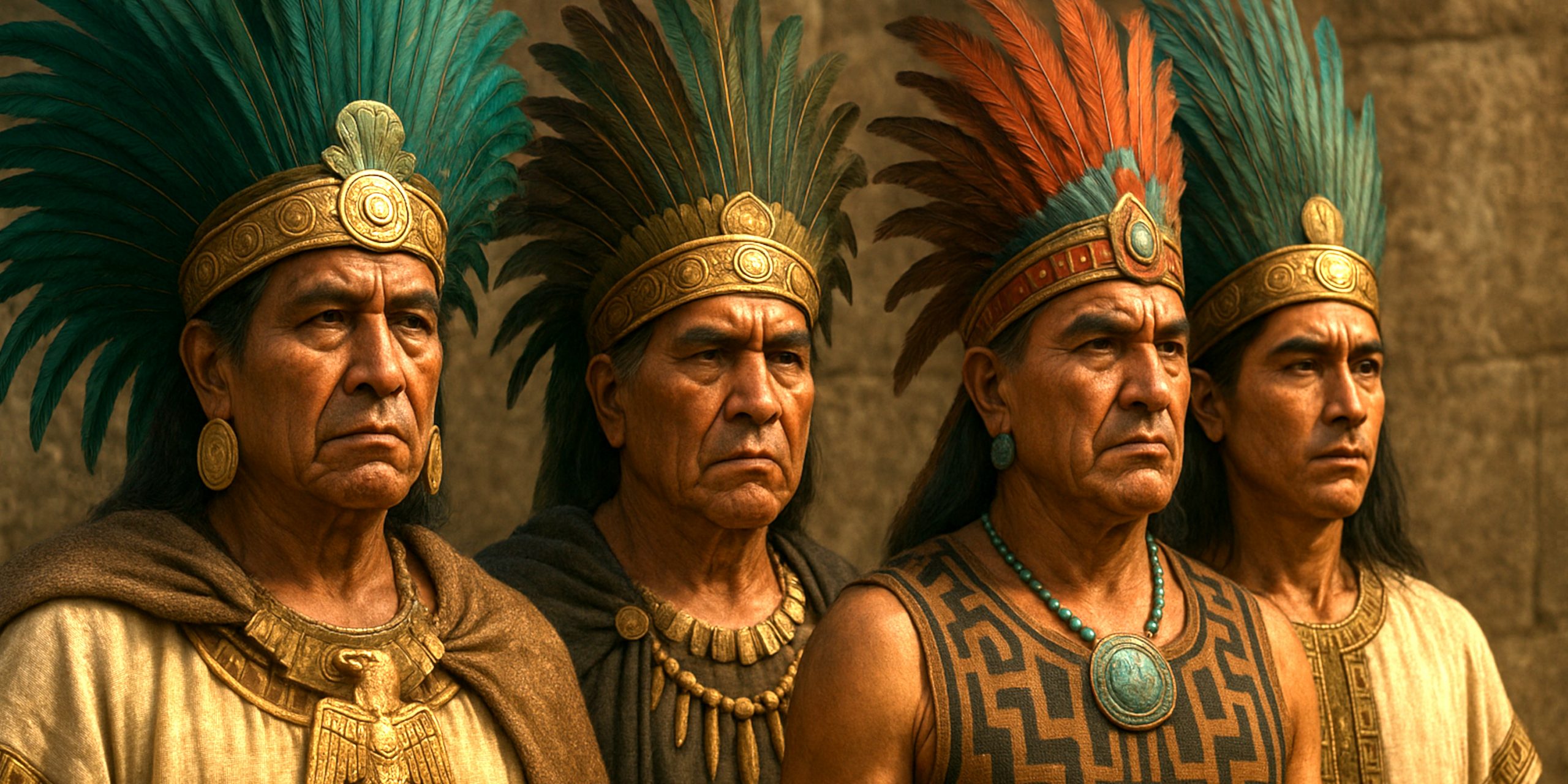
The Aztec world did not produce quiet administrators. It produced rulers who steered a fast growing empire through ritual, warfare and politics that would give most modern cabinets palpitations. Each tlatoani, the speaker who ruled Tenochtitlan, brought a distinct style to the throne and left behind stories that still spark debate in museum corridors and lecture theatres. What follows is a historian’s tour of the figures who shaped the empire with steel edged obsidian, sharp minds and occasionally sharp elbows.
Acamapichtli
The First Great Builder
Acamapichtli, chosen in the late fourteenth century, has the kind of origin story that makes later chroniclers sit up. He arrived at a time when the Mexica were still the new neighbours nobody fully trusted. His talent lay not in loud conquest but in the quiet work of marriage alliances, city planning and political smoothing. He established the hereditary model of rulership and set the foundations that let his more bellicose successors shine. Without him, later Aztec rulers would have had far less to thump their chests about.
Itzcoatl
The Architect of Empire
Itzcoatl reigned in the early fifteenth century and is often credited as the mind behind the Triple Alliance. His partnership with Tlacaelel, the reformer, delivered the administrative machinery that supported imperial expansion. He also reorganised historical narratives, a polite way of saying he had older records burned and new ones promoted. Historians have a well developed twitch over this, though it was clever statecraft. He pulled Tenochtitlan out from under the shadow of more established city states and laid the groundwork for dominance.
Moctezuma I
A Commander with Ambition
Moctezuma I expanded Aztec influence so quickly that tribute lists begin to look like shopping inventories. His campaigns stretched the empire from the Gulf coast to Guerrero and beyond. He fortified Tenochtitlan, strengthened legal codes, and refined ceremonial life. This produced an empire that was wealthy, structured and rather full of itself. Still, he knew how to keep a firm grip. His reign is often treated as the empire’s high noon, with the sun very much in their favour.
Axayacatl
The Warrior Who Learned the Hard Way
Axayacatl came to power young and fought hard. His victory over Tlatelolco brought the rival city under firm control and gave him a reputation that appealed to the more martial elements of Mexica society. His campaign against the Tarascans did not end well, though the chronicles do their best to soften the sting. Even great warriors meet opponents who refuse to play along. His reign shows the limits of expansion and the costs of overconfidence, which makes him oddly relatable.
Tizoc
The Unfortunate Benchmark
Tizoc is remembered more for what he failed to achieve than for what he attempted. He ruled briefly and struggled to impress either the military or the priesthood. His coronation stone is a work of art, but his campaigns brought minimal gains. Later rulers sometimes used him as an example of how not to reign. Every empire has one such figure, the person who inadvertently makes others look better.
Ahuitzotl
The Hawk of Tenochtitlan
Ahuitzotl brought energy that crackles on the page. His military campaigns brought vast territories into the empire, boosting tribute and reshaping the political map. The completion of the Great Temple under his rule turned Tenochtitlan into a ceremonial powerhouse. He also inadvertently caused a flood through an ill judged aqueduct scheme. Any historian who has watched a grand project backfire feels a certain sympathetic wince. Even so, his reign ranks among the most formidable in Aztec history.
Moctezuma II
A Ruler Facing an Unthinkable World
Moctezuma II has been typecast ever since the arrival of the Spanish. It is easy to flatten him into the man who lost an empire, though the reality is far more intricate. Before the upheaval, he was an accomplished centraliser who tightened palace protocol and expanded imperial oversight. He faced the Spanish with caution and ritual, neither of which matched the newcomers’ appetite for disruption. His story is tragic, layered and deeply human, and it still fuels arguments at conferences.
Cuauhtémoc
The Last Defender
Cuauhtémoc’s rise during the siege of Tenochtitlan reads like the final act of a drama whose ending everyone knows yet still hopes might change. Young, resolute and respected by the warriors, he attempted to hold the city under impossible conditions. Spanish siege tactics, disease and famine cut through his ability to resist. Even in defeat, his defiance became a symbol for later generations in Mexico. His legacy has a quiet strength that outlived the empire he tried to save.
Legacy of Aztec Leadership
Aztec rulers shaped their world through ritual authority, military talent and an ability to navigate politics that was always a little perilous. They left behind an empire of remarkable urban sophistication, rich symbolism and a historical record that mixes triumph with difficult truths. The tlatoque remain compelling partly because they lived at the crossroads of myth and statecraft, and partly because they remind us that empires rise not through one type of leader but through a tapestry of personalities, some brilliant, some flawed and all unforgettable.