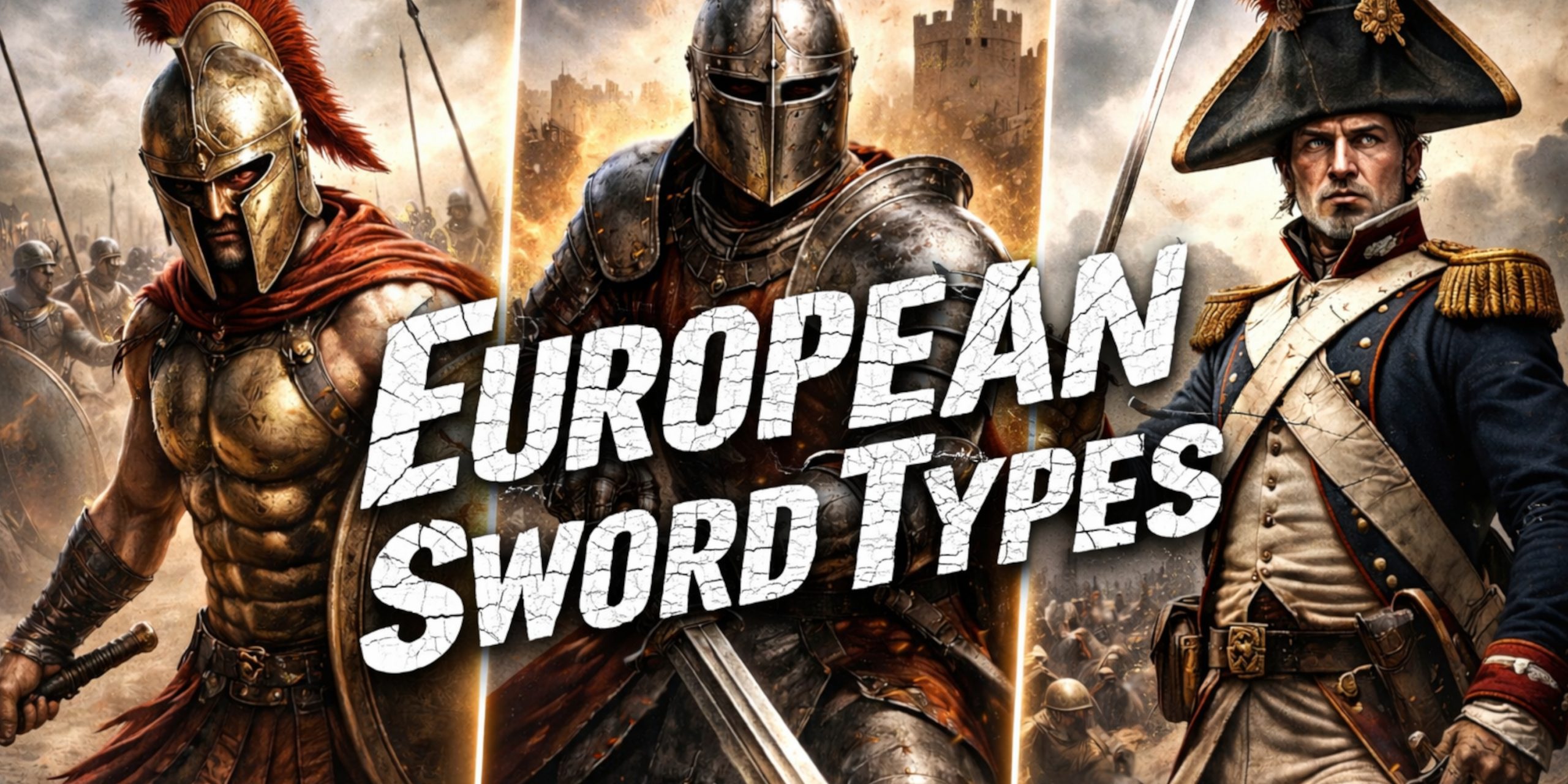
A working guide from an inquisitive historian who still checks museum labels twice
European swords are often flattened into a single idea. Straight blade, crossguard, knight in armour, job done. The reality is messier, more regional, and far more interesting. These weapons evolved alongside armour, tactics, social class, and fashion. Some were battlefield tools, others were legal accessories, and a few were very loud statements about status.
This guide expands on the core European sword families, explains why they existed, and clears up common misunderstandings. If you have ever wondered why a longsword is not just a bigger arming sword, or why rapiers terrified duelists but bored soldiers, you are in the right place.
Early European Swords
c. 800 BCE to 300 CE
Greek Swords and the Mediterranean Foundation
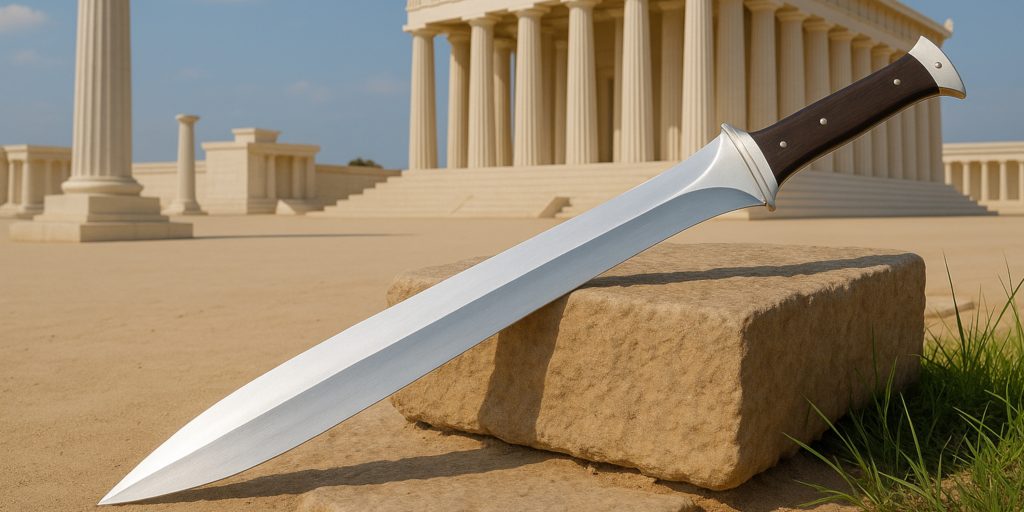
European sword history does not begin in the forests of northern Europe. It begins in the city-states of Greece, where warfare was structured, communal, and brutally close.
Greek soldiers fought primarily with spears. Swords were secondary weapons, but that did not make them incidental. Their design reflects tight formations and limited space.
Focus points
- Swords designed for backup use, not primary shock combat
- Emphasis on control and reliability
- Clear distinction between thrust-focused and cut-focused blades
Xiphos
A short, double-edged, leaf-shaped sword.
- Typically under 60 cm in blade length
- Effective for thrusting in dense formations
- Broad profile allowed competent cutting at close range
The xiphos tells you exactly how Greek warfare worked. If the spear failed, this was what finished the fight. No wasted length, no decorative excess.
Kopis and Makhaira
Curved, forward-weighted blades favoured by cavalry and lighter troops.
- Strong cutting bias
- Excellent against lightly armoured opponents
- Influenced later European single-edged designs
These swords solve a different problem. When mobility mattered more than formation, cutting power mattered more than reach. Medieval falchions would later arrive at similar conclusions.
Celtic and Roman Traditions

As Greek ideas moved west, they collided with very different approaches to warfare.
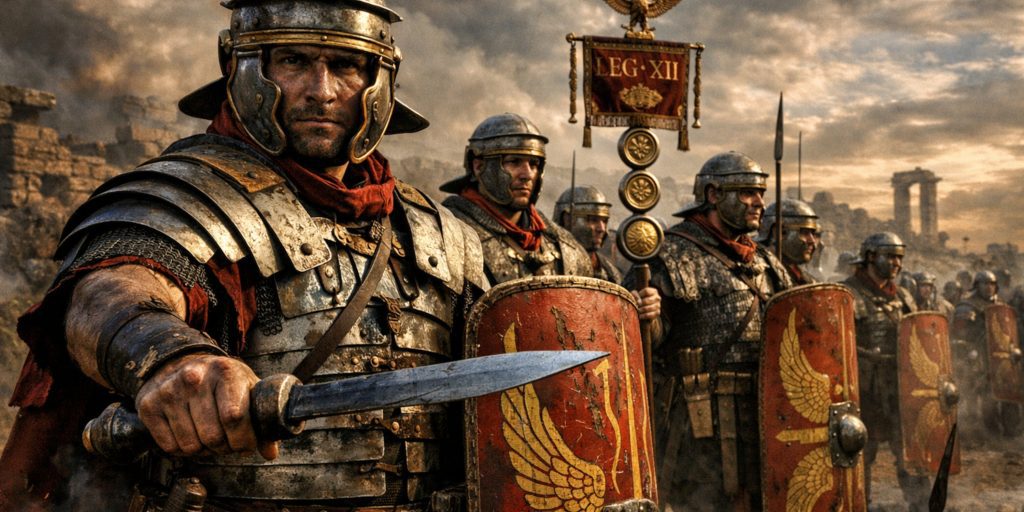
Celtic swords were long, slashing weapons tied to individual warriors and prestige. Roman swords were short, controlled, and designed for disciplined ranks.
Focus points
- Celtic blades emphasised reach and cutting
- Roman swords prioritised thrusting behind large shields
- Both traditions fed directly into medieval European design logic
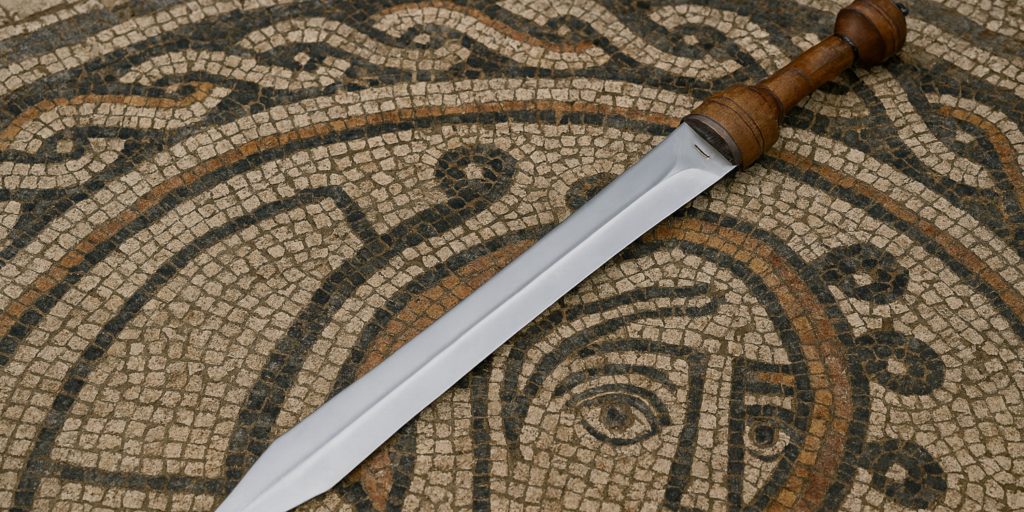
The Roman gladius and later spatha established the idea that swords should serve formations, not personal style. Europe never fully abandoned that mindset.
The Medieval Sword Tradition
c. 900 to 1400
Arming Swords
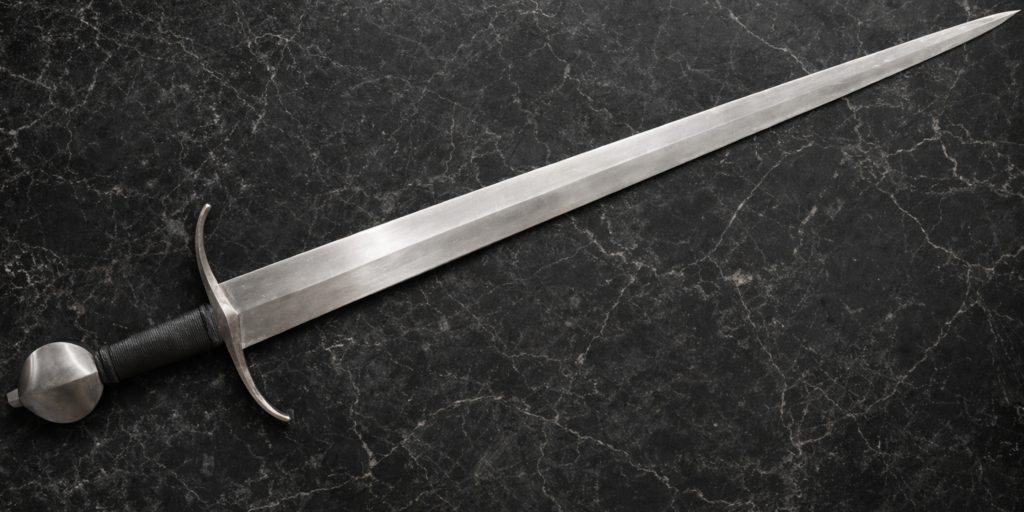
The one-handed sword of the High Middle Ages.
Focus points
- Used with shields and bucklers
- Balanced for both cut and thrust
- Effective against mail and unarmoured opponents
This was the workhorse of medieval warfare. Not exotic, not rare, and extremely capable. Most later European swords are refinements of this idea rather than replacements.
Longswords
Defined by two-handed use rather than sheer size.
Focus points
- Increased leverage and control
- Effective against plate armour when used correctly
- Supported sophisticated fencing systems
The longsword represents a shift in European combat thinking. Technique, timing, and precision became essential. Manuals appear. Opinions multiply. Arguments become inevitable.
Specialised Medieval Blades
Falchions and Messers

Single-edged swords that sat slightly outside the knightly ideal.
Focus points
- Heavy cutting power
- Common among infantry and civilians
- Sometimes classified as knives for legal reasons
These swords exist because laws and budgets matter. They were practical solutions to real constraints, and history quietly rewards that.
Estocs and Armour-Focused Swords
When plate armour improved, swords adapted rather than vanished.
Focus points
- Narrow, stiff blades
- Optimised for thrusting into gaps
- Minimal cutting capability
If a sword looks unpleasantly specialised, it usually means armour was doing its job very well.
Renaissance and Early Modern Swords
c. 1500 to 1700
Sideswords

The transitional sword between medieval and early modern Europe.
Focus points
- Capable of both cut and thrust
- Increasing hand protection
- Used by soldiers and civilians
This is what happens when arming swords move into cities and learn new manners.
Rapiers
A civilian weapon, despite persistent myths.
Focus points
- Long, slender blades
- Designed for duelling and self-defence
- Poor performance in battlefield conditions
Rapiers belong to crowded streets, legal disputes, and honour cultures. They make sense once you stop expecting them to behave like medieval swords.
The Decline of the Sword
c. 1700 to 1900
Smallswords
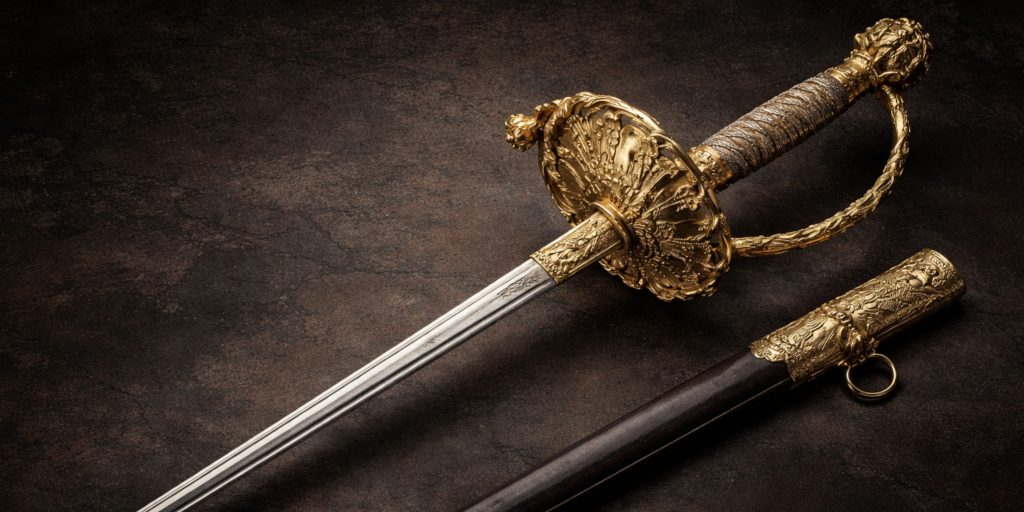
By this point, swords were more about appearance than survival.
Focus points
- Light, triangular blades
- Pure thrusting weapons
- Worn as part of formal dress
These swords are political objects. Carrying one marked social position far more clearly than fighting ability.
Military Sabres
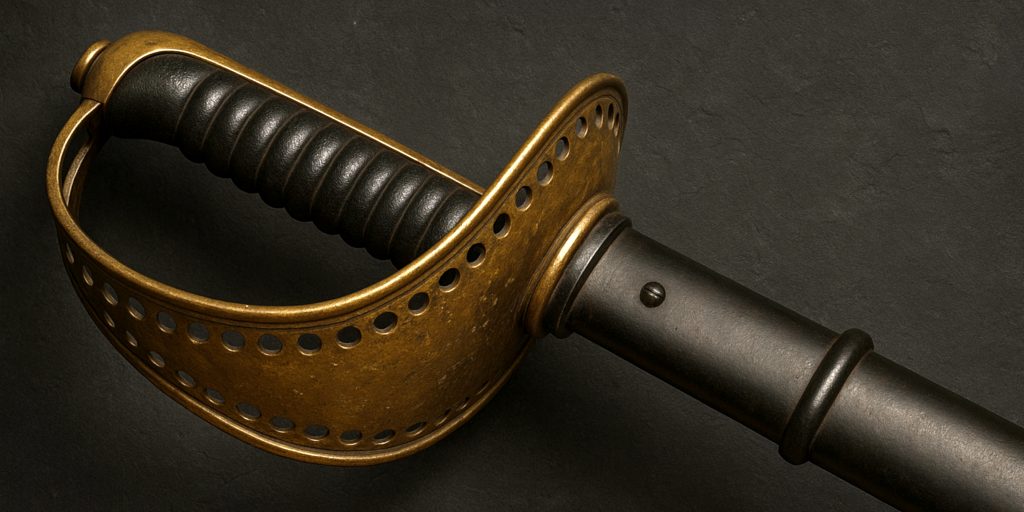
Straight swords faded, but curved blades lingered.
Focus points
- Continued cavalry use
- Emphasis on speed and reach
- Gradual replacement by firearms
The sword did not disappear so much as accept retirement with varying degrees of dignity.
Visual Timeline of European Sword Development
| Era | Approx. Dates | Dominant Sword Types | Context |
|---|---|---|---|
| Greek Archaic & Classical | c. 800 to 300 BCE | Xiphos, kopis, makhaira | Hoplite warfare, close formation combat |
| Celtic & Italic | c. 500 to 100 BCE | Celtic long swords | Slashing combat, warrior elites |
| Roman Republic & Empire | c. 300 BCE to 300 CE | Gladius, spatha | Shield-based formation fighting |
| Migration & Viking Age | c. 400 to 900 | Viking swords | Mobile warfare, light armour |
| High Medieval | c. 1000 to 1250 | Arming swords | Mail armour, cavalry dominance |
| Late Medieval | c. 1250 to 1450 | Longswords, estocs | Plate armour, two-handed fencing |
| Renaissance | c. 1500 to 1650 | Sideswords, rapiers | Urban violence, duelling culture |
| Enlightenment | c. 1650 to 1800 | Smallswords | Social status and fashion |
| Industrial Transition | c. 1800 to 1900 | Sabres | Cavalry and declining sword use |
Early European Sword Comparison
Greek, Celtic, and Roman
| Sword Type | Culture | Blade Length | Primary Strength | Typical Use |
|---|---|---|---|---|
| Xiphos | Greek | 45 to 60 cm | Control and thrusting | Hoplite backup |
| Kopis | Greek | 50 to 65 cm | Heavy cutting | Cavalry and skirmishers |
| Celtic Long Sword | Celtic | 70 to 90 cm | Slashing reach | Warrior elite |
| Gladius | Roman | 50 to 60 cm | Close-order stabbing | Legionary combat |
| Spatha | Roman | 70 to 90 cm | Extended reach | Cavalry, later infantry |
Medieval and Renaissance Sword Comparison
| Sword Type | Primary Use | Strengths | Limitations |
|---|---|---|---|
| Arming Sword | Battlefield | Versatile, durable | Limited reach |
| Longsword | Armoured combat | Control, leverage | Training intensive |
| Falchion | Infantry | Cutting power | Weak thrust |
| Rapier | Civilian | Precision, reach | Poor battlefield use |
| Smallsword | Social | Light, elegant | Minimal stopping power |
Takeaway
These weapons chart changes in warfare, class, law, and technology. They also explain why European fencing traditions became so systematic and argumentative, which is very on brand.
Swords did not evolve in straight lines. They looped, doubled back, borrowed ideas, and occasionally made things worse before making them better. That is what makes them worth studying.