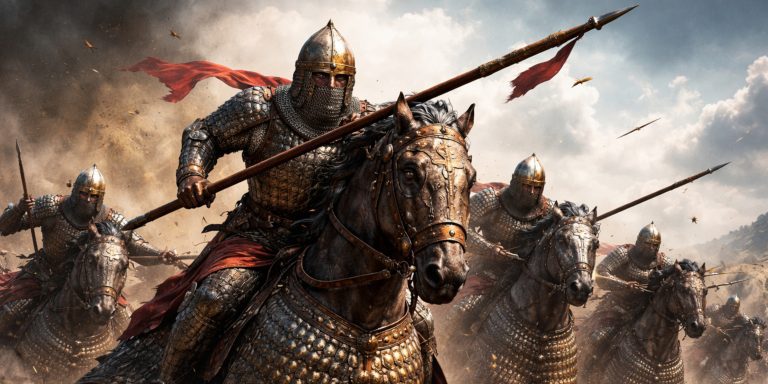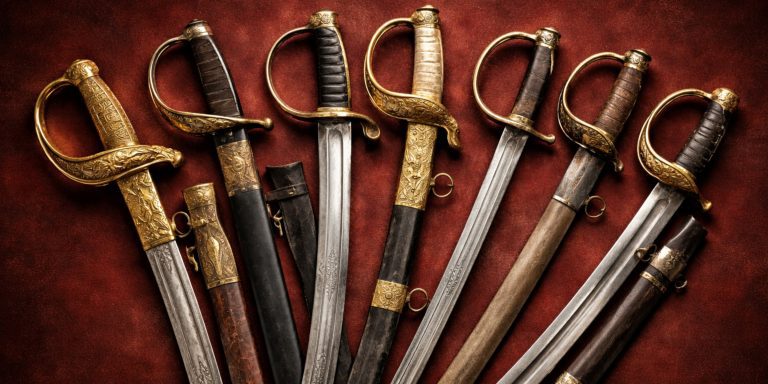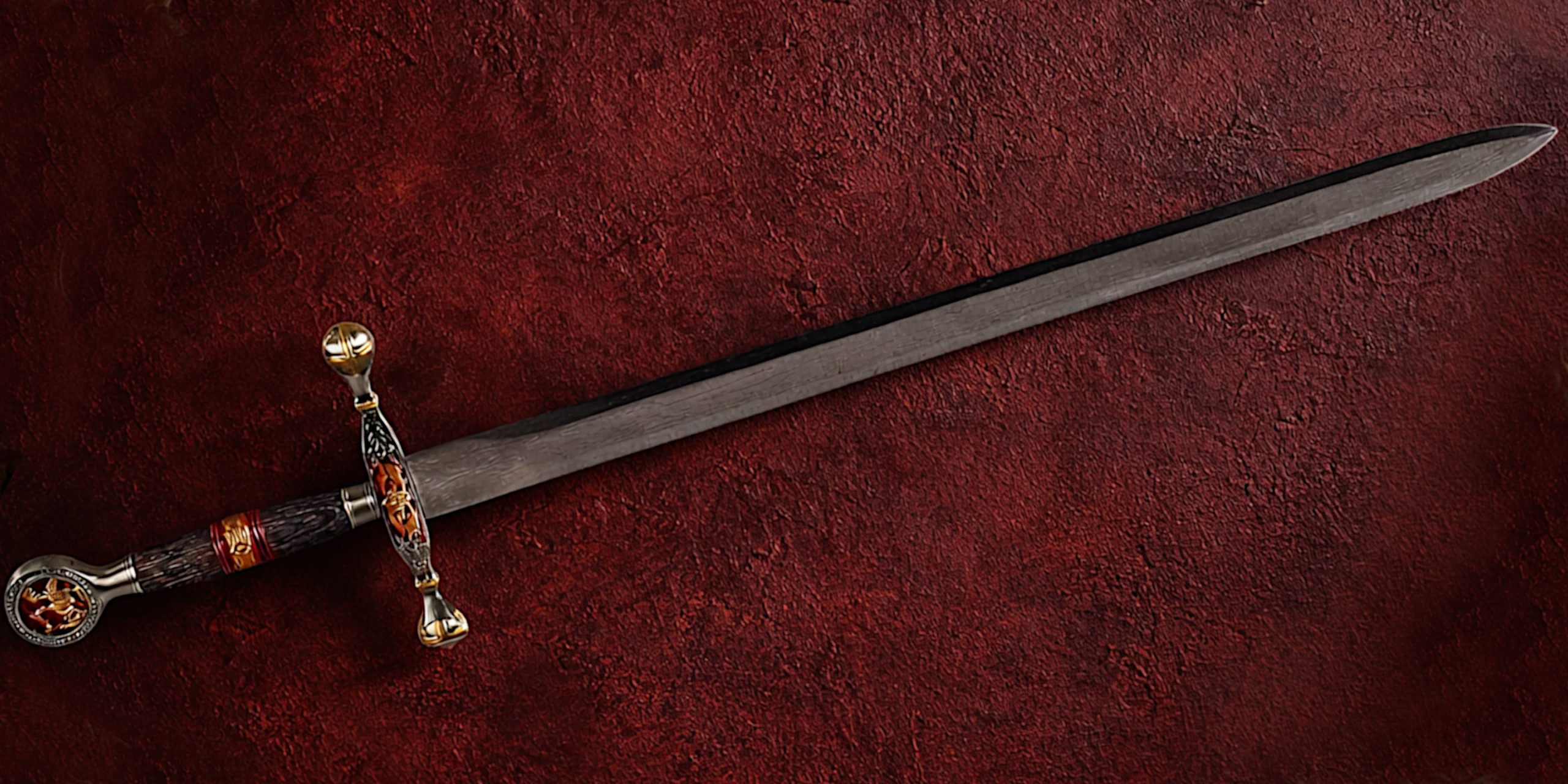
The Castilian knight’s sword is best understood as a category rather than a single, fixed design. It refers to the one handed cruciform swords carried by knights of the Kingdom of Castile from the high Middle Ages through to the later medieval period. These swords served as practical sidearms, visible symbols of status, and objects of religious meaning, all at once.
In the Iberian context, the knightly sword developed at a crossroads of influences. Northern European forms blended with local workshops, long established Spanish bladesmithing traditions, and sustained contact with Islamic material culture during centuries of frontier warfare.
Specification
While individual examples vary by century and owner, most Castilian knightly swords fall within well established European norms for one handed medieval swords.
| Feature | Typical range |
|---|---|
| Overall length | 90 to 105 cm |
| Blade length | 70 to 90 cm |
| Weight | 1.0 to 1.5 kg |
| Blade form | Straight, double edged, often with a fuller in earlier examples |
| Hilt | Cruciform crossguard with wheel or brazil nut pommels |
| Carry | Belt suspension, sometimes with decorated scabbards for elite owners |
Common typological groupings often associated with swords used in medieval Castile:
- Broad cutting oriented blades with long fullers, favouring effective blows against mail and lightly armoured opponents
- More tapered blades with reinforced points, appearing as armour coverage improves and thrusting becomes more important
History and evolution
11th to early 13th century
Castilian knights of this period typically fought with spear and shield as primary tools. The sword functioned as a secondary weapon and a social marker. Blades emphasised cutting power, with points capable of thrusting but not optimised for it.
Mid 13th to 14th century
This period represents the classic phase of the knightly sword in Castile. Blades remain broad and efficient cutters, but points begin to narrow. Decorative elements become more visible, including inscriptions and refined hilt work, reflecting both court culture and cross cultural contact.
Late 14th to 15th century
As plate armour becomes more common among elites, sword design adjusts. Blades grow stiffer and more tapered, better suited to thrusting into weak points. The sword remains a standard sidearm, but specialised weapons increasingly dominate battlefield roles.
Ceremonial and royal swords from this period often resemble functional knightly weapons but should be understood primarily as symbols of authority rather than frontline arms.
Advantages and disadvantages
Advantages
- Balanced handling that supports both cutting and thrusting
- Manageable weight that allows long periods of wear and rapid use
- Strong symbolic value within Castilian chivalric culture
Disadvantages
- Limited effectiveness against well made plate armour
- Shorter reach than spears, polearms, and longer swords
- Surviving examples are often fragmentary or heavily corroded
Comparison with similar weapons
| Weapon | Strengths | Limitations | Typical use |
|---|---|---|---|
| One handed knightly sword | Versatile, balanced, easy to carry | Short reach | Sidearm use, mixed combat |
| Longsword | Greater reach and leverage | Less convenient to wear | Armoured fighting, duels |
| Falchion | Powerful cuts | Reduced thrusting ability | Close combat against light armour |
| Spear or lance | Superior reach | Awkward in close quarters | Formation fighting, cavalry use |
The Castilian knight’s sword stands out as a dependable generalist rather than a specialist tool.
Legacy
- A lasting symbol of Castilian knighthood in tomb sculpture, manuscripts, and later romantic imagery
- Part of Spain’s long reputation for quality blades, especially in royal and courtly contexts
- Preserved in major national collections as dynastic and cultural artefacts, not just weapons
Where to see one
Examples of medieval Spanish swords associated with Castilian history can be viewed in major national arms collections in Madrid and Toledo. These collections include both functional weapons and ceremonial swords linked to royal ownership and court culture.
When visiting, note that objects may be catalogued under broader medieval or royal arms categories rather than labelled explicitly as “Castilian knight’s swords”.
Collector’s guide including auction prices
Authentic medieval swords occupy a specialist market where documentation and condition matter as much as visual appeal.
What collectors assess first
- Provenance and published history
- Condition, completeness, and degree of conservation
- Blade form, date, and regional characteristics
- Inscriptions and marks, which require careful scrutiny
Realistic auction price ranges
Based on published results for medieval European knightly swords:
| Category | Typical price range |
|---|---|
| Excavated or incomplete medieval swords | £2,000 to £6,000 |
| Better preserved knightly swords | £6,000 to £15,000 |
| Museum grade or exceptional examples | Significantly higher, case dependent |
True Castilian examples are rare on the open market and are usually grouped with broader European medieval swords rather than sold as a distinct category.
Common pitfalls
- Confusing later decorative Spanish swords with medieval originals
- Over valuing inscriptions without strong authentication
- Ignoring legal and export restrictions
Safer alternatives
For those interested in the Castilian knight aesthetic rather than original artefacts, high quality museum grade replicas offer historical accuracy without the risks of the antiquities market.