Bohemond I of Taranto sits uncomfortably between legend and calculation. He is remembered as a towering crusader prince, yet almost every major decision he makes is rooted in cold assessment rather than blind zeal. Raised among the Normans of southern Italy, he learned early that land, loyalty, and reputation were won through pressure and timing, not sentiment. Antioch becomes his greatest achievement precisely because it suits his instincts: a city taken by cunning, held by force, and justified afterwards with theology and treaties written for convenience.
This article brings together what the sources and archaeology allow us to say with confidence, while being honest about where certainty ends.
Early Life and Norman Foundations
Bohemond was born in the 1050s in Calabria, the eldest son of Robert Guiscard, the most formidable Norman warlord in southern Italy. From childhood he is immersed in warfare, administration, and family rivalry. His early campaigns against Byzantium in the Balkans during the 1080s shape his understanding of imperial power and its limits.
After Guiscard’s death, Bohemond does not inherit the whole Norman dominion. He becomes Prince of Taranto, powerful but constrained, a man with ambition larger than his initial holdings. This frustration matters. When the First Crusade appears, it offers him land, legitimacy, and a chance to step out from his father’s shadow.
The First Crusade and the Seizure of Antioch
Bohemond joins the First Crusade as one of its most experienced commanders. Unlike some leaders, he understands siege warfare and coalition politics from the outset. Antioch, one of the great fortified cities of the eastern Mediterranean, becomes the focal point of his strategy.
The siege of Antioch lasts from 1097 into 1098 and nearly destroys the crusading army. Bohemond’s role is decisive. Through negotiation with Firuz, a defender of the city, he secures a secret entry point. His men scale the walls by night, seize key towers, and open the gates. Antioch falls not through brute force alone, but through preparation and nerve.
Almost immediately, the crusaders are themselves besieged inside Antioch by Kerbogha of Mosul. Bohemond helps coordinate the defence and the eventual breakout. The victory that follows secures Antioch and transforms Bohemond from crusader commander into territorial ruler.
Prince of Antioch and the Reality of Rule
Bohemond establishes himself as Prince of Antioch in 1098. The title is impressive. The reality is fragile. Antioch sits at a crossroads of hostile powers, including Byzantium, Turkish states, and rival crusader leaders.
His rule is repeatedly interrupted. In 1100, Bohemond is captured while campaigning north and spends several years in captivity. During this time, his nephew Tancred governs Antioch as regent, consolidating its defences and extending its territory.
Despite these absences, Bohemond’s foundation endures. Antioch survives because it is militarised, diplomatically flexible, and economically valuable. It functions less like a romantic crusader kingdom and more like a frontier stronghold held together by walls, treaties, and constant readiness.
Wars with Byzantium and the Treaty of Devol
Bohemond’s earlier hostility with Byzantium never disappears. Emperor Alexios I expects Antioch to be returned to imperial control, based on oaths sworn by crusade leaders. Bohemond rejects this interpretation.
In 1107, he launches a renewed campaign against Byzantium, attacking across the Adriatic. It fails. Cut off and contained, Bohemond is forced into negotiation. The Treaty of Devol makes him, formally, a vassal of the Byzantine emperor and frames Antioch as an imperial fief.
On parchment, Byzantium wins. In practice, the treaty is never fully implemented. Bohemond never returns east, Tancred ignores its terms, and Antioch remains under Norman control. The episode reveals both Bohemond’s limits and his lasting influence. He loses the campaign, but his political creation survives him.
Battles and Military Acumen
Bohemond’s reputation rests on more than courage. His military skill lies in judgement and adaptability.
He excels at identifying decisive objectives rather than chasing symbolic victories. Antioch matters because it controls routes, resources, and legitimacy. He understands siege warfare as a process rather than a spectacle. He is comfortable using negotiation, bribery, and betrayal when they serve strategic ends.
Key military actions associated with his career include:
- Campaigns in the Balkans against Byzantium during the 1080s, including fighting around Dyrrhachium.
- Leadership during the siege and capture of Antioch in 1097 to 1098.
- The defence of Antioch and defeat of Kerbogha’s relief army.
- The northern campaign that leads to his capture in 1100.
- The failed Balkan expedition of 1107 to 1108 against Byzantium.
Bohemond is not invincible, but he is rarely careless. His failures tend to come from overextension rather than incompetence.
Arms and Armour
No personal equipment belonging to Bohemond survives with certainty. What we can reconstruct is the typical material culture of a Norman prince and his retinue at the end of the eleventh century.
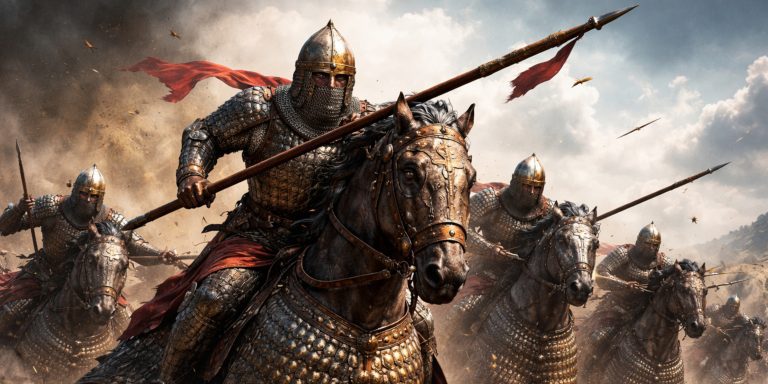
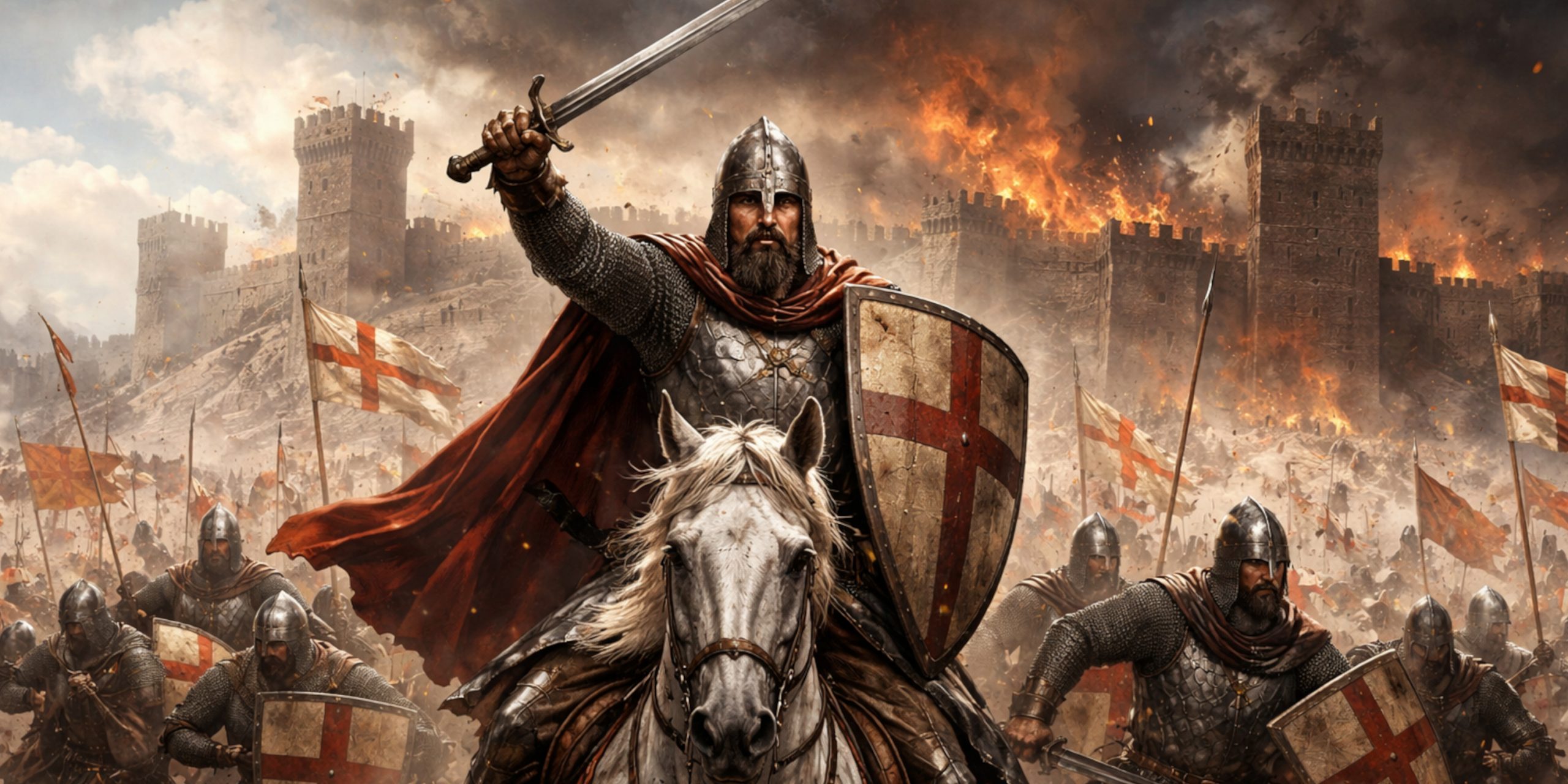
Bohemond and his elite cavalry would have worn:
- Mail hauberks, often knee length or longer, with integrated mail coifs.
- Conical helmets with nasal guards.
- Kite shields, offering protection from shoulder to leg.
- Spurs and heavy riding equipment for shock cavalry tactics.
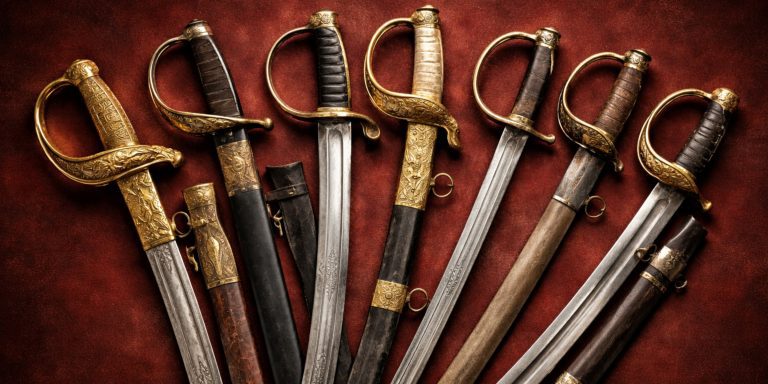
Their primary weapons included:
- Heavy lances for mounted charges.
- One handed swords typical of Norman and Frankish knights.
- Daggers or utility knives as secondary arms.
In the eastern Mediterranean, practical adaptation becomes necessary. Heat, supply constraints, and constant campaigning encourage lighter equipment and greater reliance on local resources. Antioch’s armies become a blend of Norman cavalry, Frankish infantry, local auxiliaries, and mercenaries.
Marriage, Image, and Propaganda
Bohemond’s marriage to Constance of France serves a political purpose. It binds him to one of the most prestigious royal houses in western Europe and reinforces his legitimacy as a ruler, not merely a crusader adventurer.
Narrative control also matters. Accounts favourable to Bohemond circulate widely, shaping how the First Crusade is remembered. These sources emphasise his leadership and downplay conflicts over oaths and authority. It is effective storytelling, and it works.
Death and Burial
Bohemond dies in southern Italy in either 1109 or 1111, depending on the source. He is buried at Canosa di Puglia beside the Cathedral of San Sabino.
His mausoleum is unusual for a Norman ruler. Separate, prominent, and symbolically charged, it presents Bohemond as both warrior and prince. The famous bronze door associated with the tomb has been the subject of modern scientific study, confirming its medieval manufacture and likely local production. It is a rare case where material analysis sharpens our understanding of crusader era commemoration.
Where to See Artefacts and Sites Today
Bohemond’s physical legacy is scattered and indirect.
In Canosa di Puglia, the mausoleum beside the cathedral remains the most tangible monument connected to him, including architectural elements and the bronze door traditionally associated with his burial.
In Antakya, ancient Antioch, surviving crusader layers are fragmentary, but regional museums preserve material culture from the city’s long and contested history, helping place Bohemond’s principality within a broader archaeological context.
Coins issued under his authority in Antioch are extremely rare but attest to his effort to express legitimacy through imagery and minting, often using Christian symbolism tied to the city’s apostolic identity.
Archaeology and Recent Research
Recent scholarship has focused less on finding personal objects and more on understanding the environments Bohemond shaped.
Scientific analysis of the bronze door at Canosa has clarified its composition and manufacture, strengthening the case for local production and intentional symbolic messaging.
Excavations and surveys in the Hatay region, including medieval levels at sites such as Kinet Höyük, help reconstruct the frontier world of the Principality of Antioch. These findings underline how contested, interconnected, and economically active the region was during Bohemond’s lifetime.
This evidence grounds crusader narratives in soil and stone, reminding us that Antioch was not an isolated outpost but part of a densely inhabited and fought over landscape.
Legacy and Historical Assessment
Bohemond I of Taranto leaves behind a principality that outlives him, a reputation that blends charisma with calculation, and a career that resists simple moral judgement. He is neither a pure holy warrior nor a cynical conqueror. He is a Norman prince doing what Norman princes did best, identifying opportunity and forcing the world to accommodate it.
As a historian, I find him difficult to admire without reservation and impossible to dismiss. That tension is probably the most honest verdict history can offer him.
Watch the documentary: