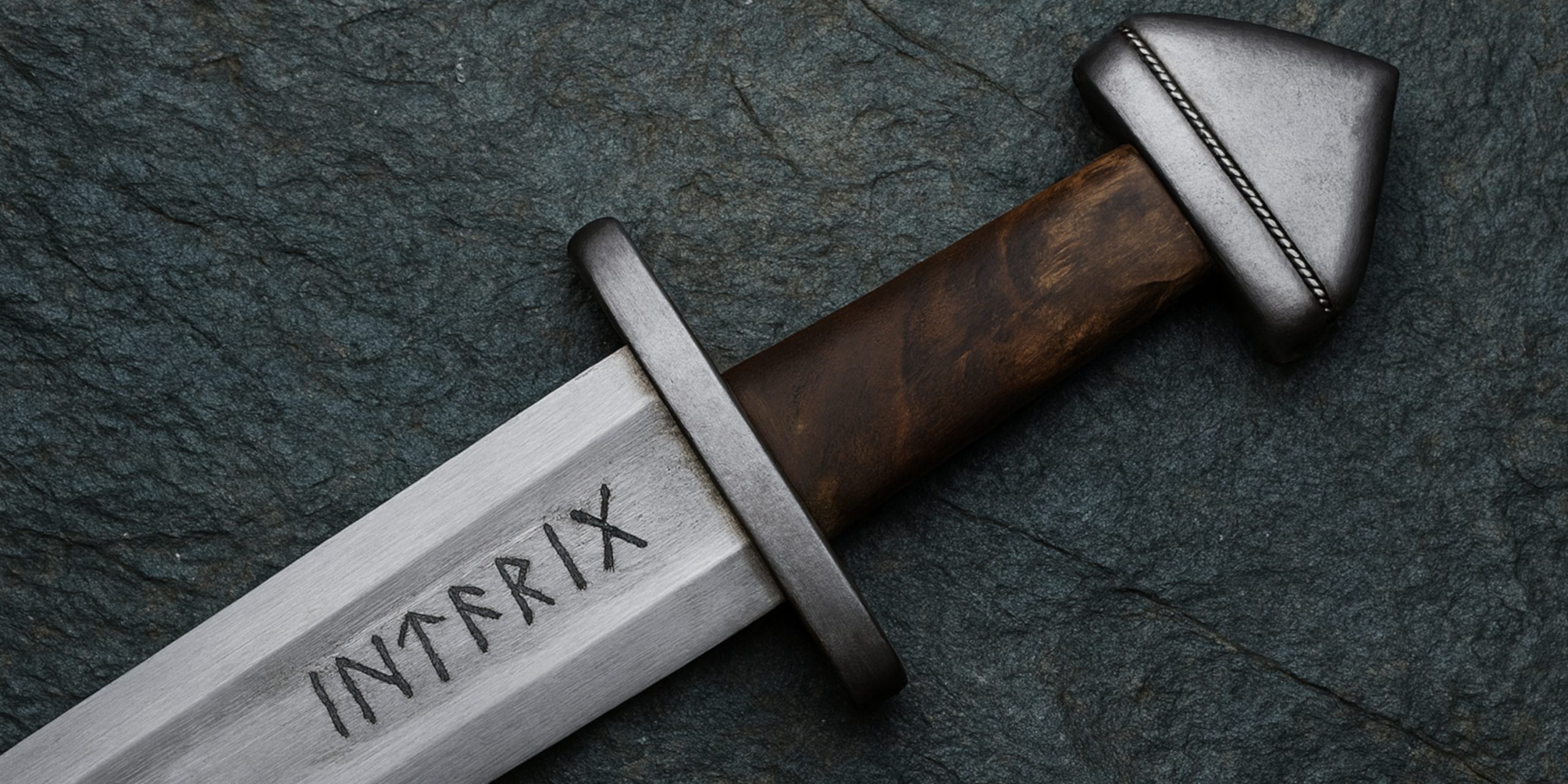
The Battle of Stiklestad in July 1030 sits at an awkward crossroads in Scandinavian history. It was part civil war, part resistance to Christian rule, and part stage play for later legends that embroidered every detail until the truth had to fight for oxygen. As a historian, I admire the sources yet often raise an eyebrow at them. Medieval writers had a talent for tidying a story until it shone like a polished axe.
Still, the battle deserves its reputation. A king died, a cult flourished and Norway gained a national memory that would outlive every participant.
Background
Olaf Haraldsson, later remembered as St Olaf, had ruled Norway for only a decade before exile forced him east. His return in 1030 was bold, possibly rash, and fuelled by the belief that his Christian reforms still had supporters. He marched through Sweden and into central Norway aiming to reclaim the throne. What he found was a broad coalition of chieftains, farmers and nobles who preferred the Danish backed Cnut’s influence to Olaf’s heavy handed style.
The two sides met near Stiklestad in Trøndelag. The setting was hardly chosen for grandeur. A rolling landscape, fields of rye and a reluctant sun that had no idea a saint was about to be made.
Forces
A simplified sense of the opposing sides is helpful. Precise numbers remain guesswork, but the saga tradition offers reasonable ranges.
Olaf’s Force
• Returning exiles, household warriors, loyal farmers
• Command anchored around the king’s hirdmen
• Smaller, better trained, strongly Christian
Opposing Bondi Coalition
• Local farmers called up by regional leaders
• Backed by powerful chieftains aligned with Cnut
• Large, loosely trained, motivated by autonomy and old loyalties
Table. Estimated Forces
| Side | Estimated Strength | Composition | Notes |
|---|---|---|---|
| Olaf II | 3,000 to 4,000 | Hird, Swedish and Rus retainers, Christian farmers | Cohesive core, strong leadership |
| Bondi Coalition | 6,000 to 10,000 | Regional levies, chieftain retinues | Numerical advantage and home terrain |
Leaders
Key Figures at Stiklestad
| Leader | Side | Role |
|---|---|---|
| Olaf II Haraldsson | Royal force | King of Norway seeking restoration |
| Kalv Arnesson | Bondi | Influential chieftain, later a conflicted figure in the sagas |
| Thorir Hund | Bondi | Feared northern leader, traditionally credited with striking the fatal blow |
| Bishop Sigurd | Royal force | Ecclesiastical supporter, present in Olaf’s host |
| Kalf’s brother Finn Arnesson | Royal leaning | His family’s shifting loyalties show the fractured politics of the period |
Some saga writers later hinted that a few of Olaf’s killers regretted the deed almost immediately. They clearly had not met medieval chroniclers who prefer revenge and remorse served cold and fully garnished.
Arms and Armour
The battlefield would have glimmered with a mix of late Viking Age kit and Christian royal trappings. Below is a structured breakdown.
Armour
• Mail hauberks among elites
• Conical helmets with nasal guards
• Round or kite shields painted with simple geometric designs
• Farmers with lighter gear, often padded tunics or leather
Weapons
• Spears, the backbone of Scandinavian fighting
• Shorter Viking Age axes in the hands of farmers
• Elite warriors favouring heavier two handed axes
• Bows for skirmishing before the shield walls met
Specific Sword Types
Several types appear in finds of the period, and they reflect the transition from Viking to early medieval design.
| Sword Type | Features | Likely Use at Stiklestad |
|---|---|---|
| Type X (Oakeshott) | Broad blade, fuller, short guard | Common among Norwegian elites |
| Type XI | Slightly longer blade, narrower profile | Favoured by warriors accustomed to mounted travel |
| Type K Viking hilt | Distinctive lobed pommel | Still present among traditionalists |
| Type H | Straight guard, compact pommel | Often worn by wealthier chieftain supporters |
Many participants probably carried inherited blades. Nothing says family heirloom quite like a sword handed down with the quiet instruction not to chip it on your enemies.
Archaeology
Stiklestad’s archaeology suffers from the usual problem. Later sanctity overwhelmed earlier layers. The site became a place of pilgrimage and memory rather than a tidy time capsule. Even so, a few important strands survive.
• Landscape analysis confirms a suitable battlefield shelf near the medieval church.
• Metal detecting surveys have recovered scattered artefacts, mostly agricultural or later medieval, but a few iron fragments have Viking Age character.
• A burial mound tradition near the site may have preserved earlier tumuli, although the link to the battle is unproven.
• Reassessment of saga road descriptions helps locate the likely approach routes into the valley.
As so often, the landscape provides better testimony than any spade. Soil and slope rarely lie, a trait chroniclers might consider adopting.
Battle Timeline
Morning
Olaf’s force advances toward local levies gathering behind their chieftains. The king gives a rousing speech which the sagas record with suspicious confidence.
Initial Clash
Skirmishers loose arrows. Shield walls form. Olaf’s right wing pushes forward effectively, driven by disciplined hirdmen.
Mid Battle
The larger bondi host extends its line. Olaf’s men feel the pressure. Fighting becomes close, exhausting, and deeply personal.
Final Phase
According to tradition, three men strike Olaf. Thorir Hund with a spear. Kalv Arnesson with a sword. A third attacker with a farm tool, which is a detail I suspect the sagas added for moral effect.
Aftermath
Olaf falls. His body is moved and reportedly shows signs that would later be described as miraculous. His death becomes the turning point that would, quite ironically, secure the Christian Norway he had struggled to impose.
Contemporary Quotes
The sagas, written later but drawing on oral memory, offer powerful lines.
From Heimskringla
“King Olaf stood bright as a flame before his men, and no shield could hide the light from his face.”
A fine sentiment, though one pictures a medieval scribe deciding that a glowing king would improve the drama.
Another line attributed to eyewitness tradition
“He called to his men to stand firm. The king’s voice carried over the field like a bell over water.”
Realistic or not, the imagery is unmistakable. Scandinavian poets rarely avoided the chance to make a king sound like the north wind with opinions.
Legacy
Olaf died as a defeated ruler but rose as a saint. His cult spread quickly, assisted by political convenience and genuine popular devotion. By the mid eleventh century he was Norway’s patron saint, and his memory became an anchor of national identity.
Stiklestad itself grew into a symbolic site. Plays, pilgrimages and politics all circled back to this quiet valley where a king fell and a legend stood back up.
Seven Swords Takeaway
The Battle of Stiklestad was less a grand tactical masterpiece and more a fierce local struggle that accidentally stepped into history’s spotlight. It shows how a single death can reshape a political order, and how landscape, memory and faith combine to create a story that refuses to fade.
If nothing else, it reminds us that medieval politics could be brutally efficient. Chieftains had no need for committees when a spear could settle the agenda.