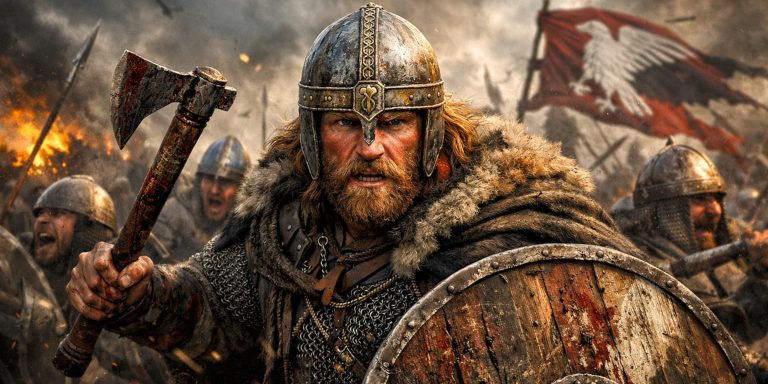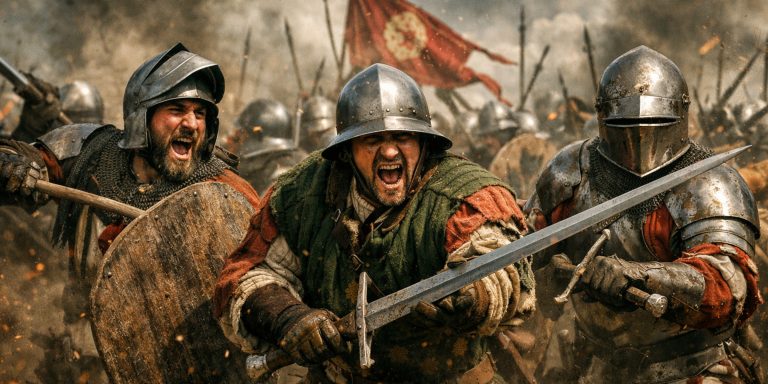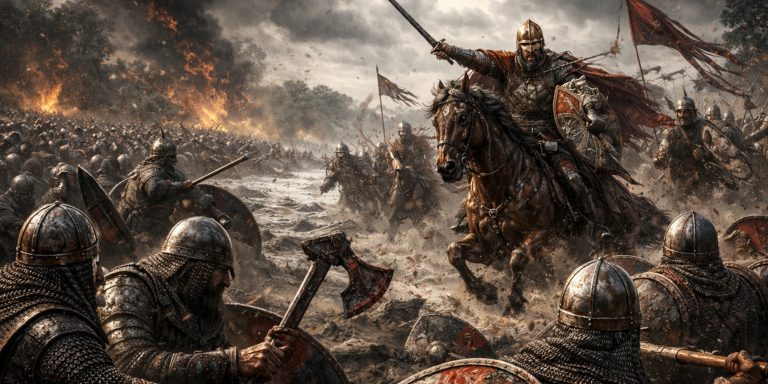
The Battle of Reading, fought on 4 January 871, was one of the first major clashes between the West Saxons and the Viking Great Army during its winter campaign in Wessex. It was a sharp and sobering encounter. For the young Alfred, not yet king but already tested in war, Reading was a harsh education.
The Vikings had established a fortified base at Reading, strategically placed between the Thames and the Kennet. It was an intelligent choice. From there they could strike deep into Wessex while maintaining secure supply lines. The West Saxons, under King Æthelred and his brother Alfred, moved to dislodge them. The result was a costly defeat that shaped the desperate months that followed.
Strategic Context
The so called Great Heathen Army had landed in East Anglia in 865. By 871 it had already broken Northumbria and subdued Mercia. Wessex remained the final substantial Anglo Saxon kingdom still standing.
Reading mattered because it was a gateway. Whoever held it controlled river access, road networks, and a corridor into the heart of Wessex. The Vikings fortified the site with earthworks between the rivers. The West Saxons could not ignore that threat.
They attacked quickly, perhaps too quickly.
Forces
Precise numbers are not recorded, but the Anglo Saxon Chronicle suggests substantial armies on both sides. Modern estimates remain cautious.
Estimated Strength
| Army | Estimated Numbers | Composition |
|---|---|---|
| West Saxons | 1,500 to 3,000 | Fyrd infantry, household thegns |
| Viking Great Army | 2,000 to 4,000 | Professional warriors, shield wall infantry |
These figures remain speculative, but the Vikings were seasoned and battle hardened. The West Saxon fyrd included capable men, yet many were part time soldiers summoned from local shires.
Leaders
West Saxons
- Æthelred of Wessex
- Reigning king during the campaign
- Commanded overall West Saxon forces
- Alfred the Great
- Younger brother of Æthelred
- Likely led contingents and tactical manoeuvres
- Not yet king, but already a central figure
Vikings
- Ivar the Boneless
- Senior commander of the Great Army
- Halfdan Ragnarsson
- Veteran of campaigns in Northumbria
The Viking leadership was experienced and pragmatic. They had been campaigning in England for years. That matters.
Arms and Armour
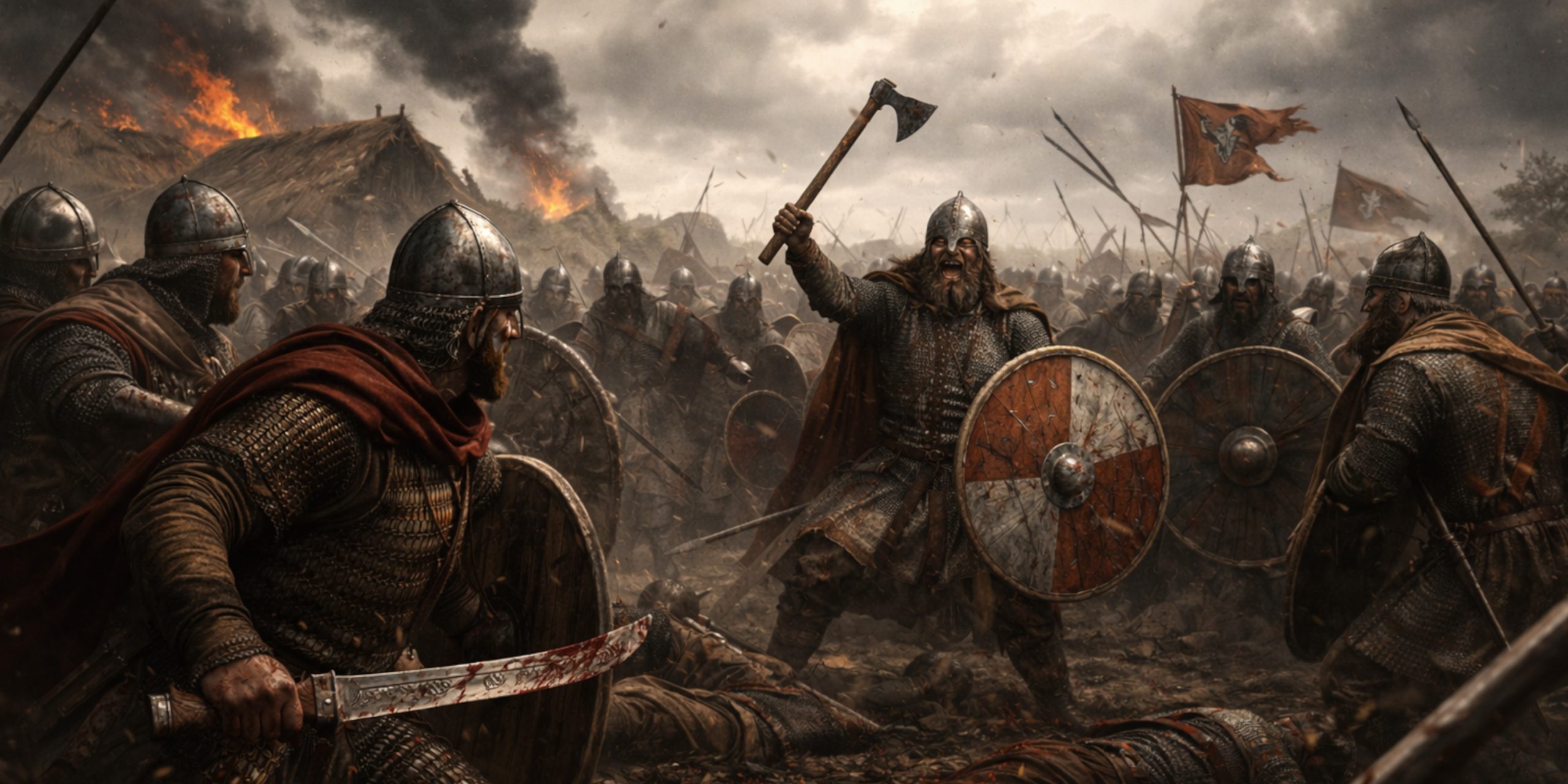
The battle would have been dominated by shield walls, spear thrusts, and close quarters fighting.
West Saxon Equipment
- Swords
- Pattern welded double edged swords
- Petersen Type H and related early medieval forms
- Spears
- Primary infantry weapon
- Leaf shaped iron heads
- Axes
- Single handed bearded axes
- Shields
- Round wooden shields with iron boss
- Armour
- Mail shirts for wealthier thegns
- Conical helmets, though rare
- Most fyrd likely fought without body armour
Viking Equipment
- Swords
- High quality Frankish blades
- Early Viking Age types, often pattern welded
- Spears
- Thrusting and throwing varieties
- Axes
- Bearded axes, versatile and lethal
- Shields
- Round shields, brightly painted
- Armour
- Mail for elite warriors
- Helmets scarce but present among leaders
Both sides fought in similar styles. The difference lay less in equipment and more in cohesion and experience.
Battle Timeline
| Date | Event |
|---|---|
| Late 870 | Vikings establish fortified camp at Reading |
| Early January 871 | West Saxon forces march to confront them |
| 4 January 871 | West Saxons attack Viking position |
| Same day | Initial West Saxon success against outer forces |
| Later that day | Viking counterattack from fortified camp |
| Afternoon | West Saxon forces routed, heavy casualties |
The Chronicle records that the West Saxons slew a Danish ealdorman before the main clash. Early success can breed confidence. The Viking counterattack, emerging from behind their earthworks, broke the West Saxon line.
It was not a total annihilation, but it was a clear defeat.
Contemporary Sources
The principal account comes from the Anglo Saxon Chronicle. Its tone is restrained yet unmistakably disappointed.
A translated passage states:
And there was great slaughter made on either side, and the Danes had possession of the place of slaughter.
Another entry notes that many West Saxon leaders fell, including Ealdorman Æthelwulf. Loss of experienced commanders would have been deeply felt.
As a historian, one senses the Chronicle’s quiet resolve. There is no melodrama. Just fact, loss, and continuation.
Archaeology
Modern Reading offers few dramatic finds directly tied to the battle. Urban development has obscured much of the early medieval landscape.
However:
- Earthwork traces near the confluence of the Thames and Kennet suggest defensive activity consistent with Viking fortifications.
- Isolated weapon finds from Berkshire indicate ninth century military presence.
- Landscape analysis confirms the tactical advantage of the river corridor.
Archaeology here is subtle rather than spectacular. No glittering hoards, no mass graves clearly identified. Yet the geography tells its own story. The rivers shaped the battle as surely as swords did.
Aftermath and Significance
Reading was not decisive in isolation. Five days later, the West Saxons fought again at Ashdown and won a famous victory.
Yet Reading demonstrated the scale of the challenge. The Vikings were organised, entrenched, and capable of swift counterattack. Alfred’s later brilliance did not appear fully formed. It was forged in defeats like this one.
One could argue that without Reading, there is no hardened Alfred at Edington seven years later. Hard lessons tend to produce durable kings.
Seven Swotds Takeaway
The Battle of Reading 871 was an early and painful episode in Wessex’s struggle for survival. It revealed Viking tactical competence and exposed weaknesses in the West Saxon response. It also marked the beginning of Alfred’s long education in warfare.
Reading does not enjoy the fame of Ashdown or Edington. It should. It reminds us that resilience is built on failure as much as triumph. History rarely grants greatness without first demanding humility.
And in January 871, humility was delivered in full.