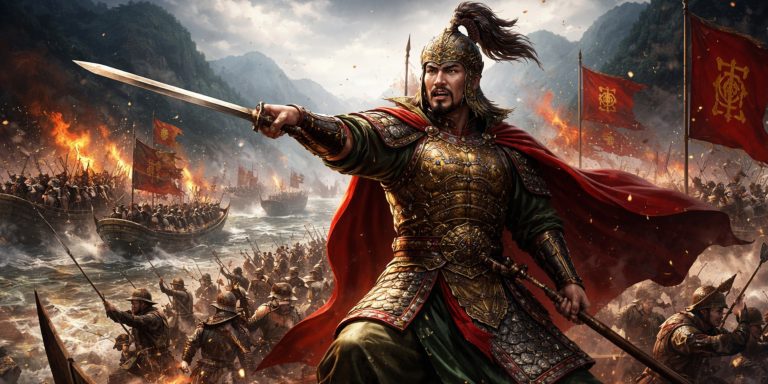
The Battle of Muye, fought around 1046 BC, sits at that comfortable crossroads between legend and history where a chronicler can never quite decide whether to reach for a brush or a stiff drink. It marked the end of the Shang Dynasty and the rise of the Zhou, a shift that shaped early Chinese statehood. The story is grand, the details are contested, and the sources can be as diplomatic as a court official who knows his king is doomed but still wants to keep his head.
The battle itself was short, decisive and surprisingly human in its rhythm. You can feel the tension in the older texts, a sense that everyone knew a reckoning was due.
Forces
A useful way to frame Muye is to set aside the myths and measure what we can. The Shang were still mighty, yet hollowed by internal dissent. The Zhou were smaller and leaner but carried the momentum of a rising coalition.
Estimated strengths
| Side | Estimated Strength | Notes |
|---|---|---|
| Zhou coalition | 45,000 to 50,000 | Includes allied tribal contingents. Mobility and discipline are better attested. |
| Shang forces | Up to 170,000 | Inflated by palace guards, conscripts and prisoners pressed into service, none of which helps morale. |
What really decided the matter was not simple numbers. It was the spirit of armies. The Shang host was large but brittle. The Zhou marched with purpose and a shared belief that the Mandate of Heaven had quietly packed its bags and left the Shang court.
Leaders
Zhou
- King Wu of Zhou, a calm and confident commander who had learned the art of waiting for the right moment.
- Duke of Zhou, his brother, who acted as strategist and political architect.
Shang
- King Zhou of Shang, a man whose reputation for excess has been polished by generations of hostile scribes. Whether he was depraved or just deeply unpopular, the effect was the same.
- Court nobles who appear to have been less eager than their annalists to die for their king.
Arms and Armour
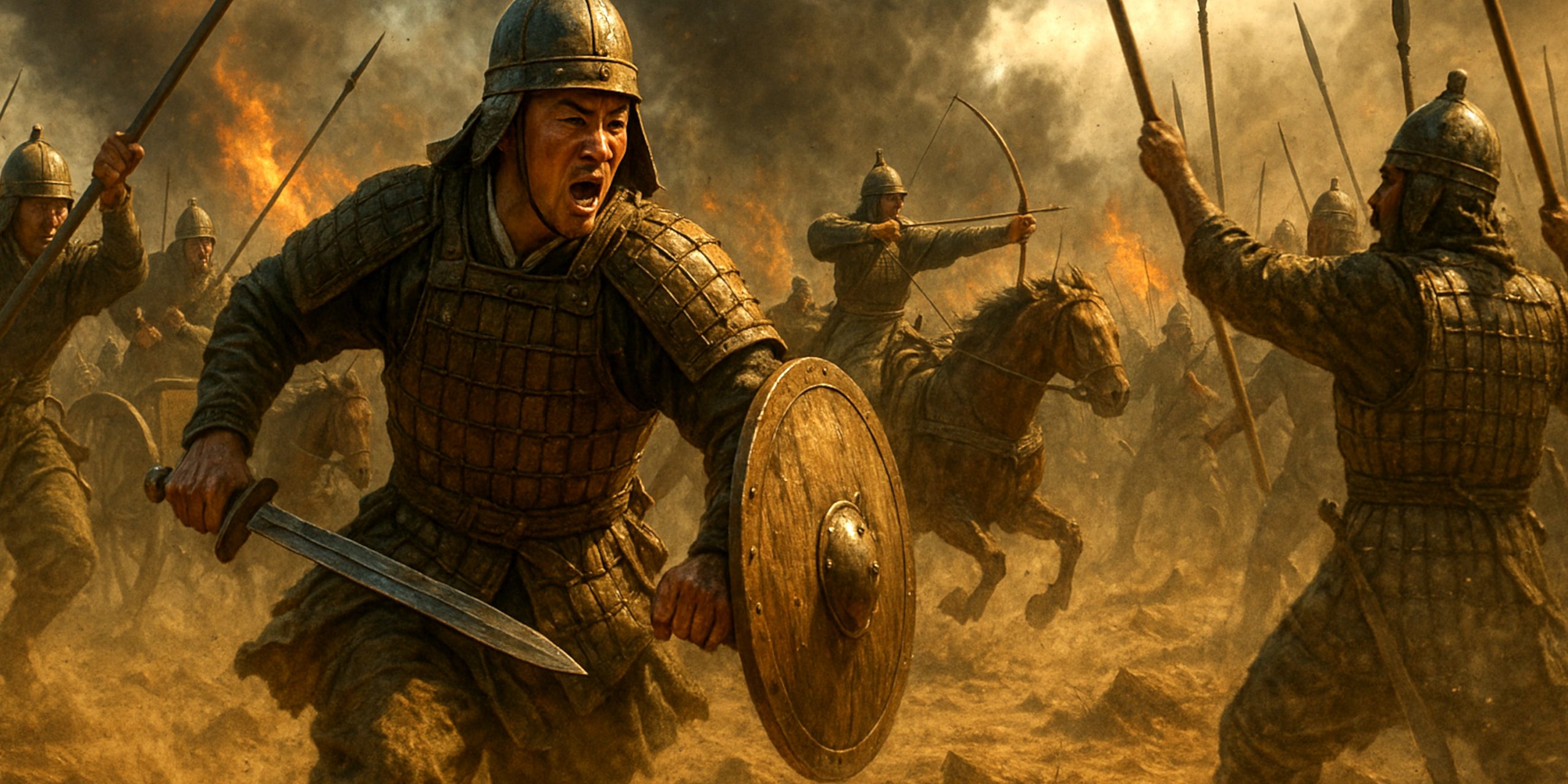
Archaeology and written tradition point to a mix of bronze weaponry shaped by long familiarity with war along the Yellow River. The Shang had superior bronze craftsmanship, but the Zhou used their arms with greater discipline.
Weapon types
- Dagger axes (ge) built for hooking and cleaving.
- Bronze spears with leaf shaped heads, prized for thrusting in disciplined lines.
- Bronze swords such as the early dao, single edged and sturdy, well suited to close fighting. Proto jian blades may also have been used though evidence is fragmentary for this period.
- Composite bows used by noble charioteers to disrupt enemy formations.
Armour
- Bronze helmets with simple cheek plates.
- Leather or rawhide cuirasses stiffened with lacquer.
- Large rectangular shields of wood and hide, often held by infantry supporting the chariots.
Troop composition
| Type | Zhou | Shang |
|---|---|---|
| Chariots | Around 300 | Possibly 600 or more, though control and coordination were weak |
| Infantry | Core fighting force, drilled and motivated | Large conscript body, mixed quality |
| Archers | Smaller but more effective units | Numerous but uneven training |
| Palace guard | Minimal | Central element of Shang defence but unreliable on campaign |
If anything wins Muye, it is the realisation that you cannot beat an army of believers with an army of the half hearted.
Archaeology
Archaeological digs at Anyang and other Shang sites tell us far more about the dynasty that died at Muye than about the battlefield itself. Burn layers and collapsed structures hint at violent ends. Ritual bronzes and oracle bones provide the cultural heartbeat that thudded beneath the political drama.
Chariot remains, bronze weapon caches and moulds used for casting weapons give texture to the armies described in the texts. They confirm the technical sophistication of both Shang and Zhou warfare. What they also reveal, sometimes a little too clearly, is that the Shang elite fought like aristocrats of a world already passing.
There is no confirmed battlefield layer for Muye. What survives instead are the echoing consequences.
Contemporary Quotes
Later texts preserve speeches attributed to the period. Their accuracy is debated yet they capture the mood with appealing directness.
From the Shu Jing:
“Heaven sees as the people see. Heaven hears as the people hear.”
A polite, ancient way of saying that your subjects have had enough.
Another, placed in the mouth of King Wu just before the advance:
“I dare not presume upon Heaven’s favour, only upon the will to do what is right.”
A lovely sentiment and the sort of line commanders tend to utter once victory looks achievable.
Battle Timeline
Before the march
King Wu gathers allies, hesitates, consults omens and waits until the political winds favour rebellion. The delay frustrates some of his followers but it pays off.
Approach to Muye
The Zhou army crosses the Yellow River and moves toward the Shang heartland. The Shang muster a huge host but its morale is already eroding.
Opening manoeuvres
Zhou chariots drive at the flanks while disciplined infantry push forward in tight files. The Shang respond with chariot charges that lack cohesion.
Defection and collapse
Large portions of the Shang infantry refuse to fight. Some lay down their arms. Others flee. This is the moment most chroniclers enjoy, mostly because it makes moral judgment so easy.
Final assault
Zhou infantry break through to the Shang centre. King Zhou retreats to his palace at Yin.
Aftermath
The Shang king commits suicide. The Zhou enter the capital and establish a new dynasty. The Mandate of Heaven, ever flexible, has found new lodgings.
Seven Swords Takeaway
The Battle of Muye lasted only a short span of a day but toppled one of the world’s earliest dynastic systems. It shows how brittle greatness becomes once its moral authority slips. As a historian, I find the texts half triumphant and half relieved, as though the scribes had been waiting for a change of regime and were delighted to finally write about one that did not terrify them.
For all its legendary overtones, Muye remains a case study in political timing, morale and the peculiar habit of armies to turn on rulers who have outstayed their welcome.
If only more kings read their oracle bones with greater attention.
Watch the documentary: