A hard ride through hostile country, a desperate fight for water, and one of the stranger victories of the Third Crusade
The Battle of Iconium, fought on 18 May 1190, rarely receives the attention lavished on Acre or Arsuf. That is a pity, because without Iconium the Third Crusade might have ended in central Anatolia, quietly and ignominiously, with a great imperial army dying of thirst. Instead, Frederick I Barbarossa, Holy Roman Emperor, forced his way through Seljuk territory, seized the Seljuk capital of Iconium, and briefly reminded the eastern Mediterranean that crusading armies were still capable of disciplined violence when properly led.
This was not a glamorous battle. It was hot, exhausting, and logistically ugly. As a historian, I find that makes it far more revealing.
Background
Barbarossa chose the overland route to the Holy Land, marching his army through Hungary, the Balkans, and into Anatolia. The Seljuk Sultanate of Rum, under Kilij Arslan II, had formally agreed to safe passage. In practice, Seljuk forces harassed the crusaders relentlessly, cutting off supplies and poisoning wells. By the time the Germans approached Iconium, morale was brittle and water was a strategic objective rather than a comfort.
Iconium mattered because it controlled roads, food stores, and, crucially, water. If Barbarossa failed here, his crusade was finished.
Foces
Holy Roman Empire and Crusader Allies
| Element | Estimate |
|---|---|
| Total strength | 15,000 to 20,000 |
| Heavy cavalry | Several thousand |
| Infantry | Majority of the army |
| Command | Emperor Frederick I Barbarossa |
The army was reduced by attrition but still formidable, with a hard core of veteran knights and disciplined infantry.
Seljuk Sultanate of Rum
| Element | Estimate |
|---|---|
| Total strength | 20,000 to 30,000 |
| Light cavalry | Dominant arm |
| Infantry and garrison troops | Several thousand |
| Command | Kilij Arslan II, with sons commanding detachments |
The Seljuks relied on mobility, missile fire, and harassment rather than pitched battle.
Leaders
Holy Roman Empire
- Frederick I Barbarossa, Holy Roman Emperor
- Frederick of Swabia, Duke of Swabia
Seljuk Sultanate
- Kilij Arslan II, Sultan of Rum
- Qutb ad Din Malik Shah, commanding field forces near the city
Arms and Armour
Crusader Equipment
- Swords
- Knightly arming swords, broad bladed and double edged
- Early hand and a half swords among elite cavalry
- Polearms
- Spears and lances for cavalry charges
- Infantry spears and glaives
- Armour
- Mail hauberks with coifs
- Kite and early heater shields
- Nasal helmets and emerging great helms
German armour was heavy and uncomfortable in Anatolian heat, but devastating in close combat.
Seljuk Equipment
- Swords
- Curved sabres of Turco Persian type
- Straight spathion style swords among elite guards
- Missile Weapons
- Composite reflex bows, the real killers of the campaign
- Armour
- Lamellar cuirasses for heavy cavalry
- Light armour or padded coats for horse archers
- Round shields of leather or wood
The Seljuks fought smartly, but urban defence limited their usual advantages.
The Battle Timeline
Morning
Seljuk cavalry harassed the crusader columns as they approached Iconium, targeting stragglers and supply wagons. Water shortages were already critical.
Midday
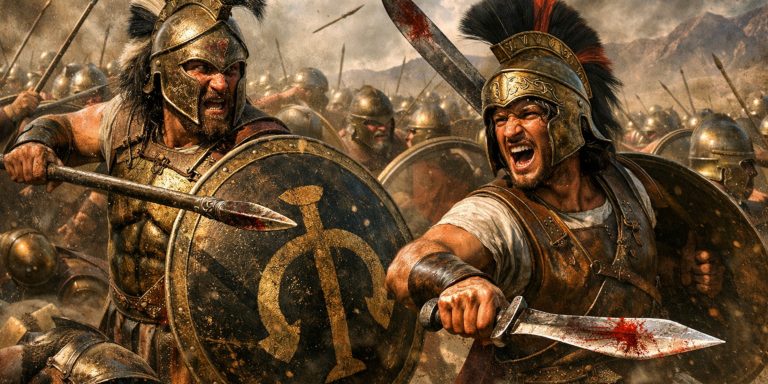
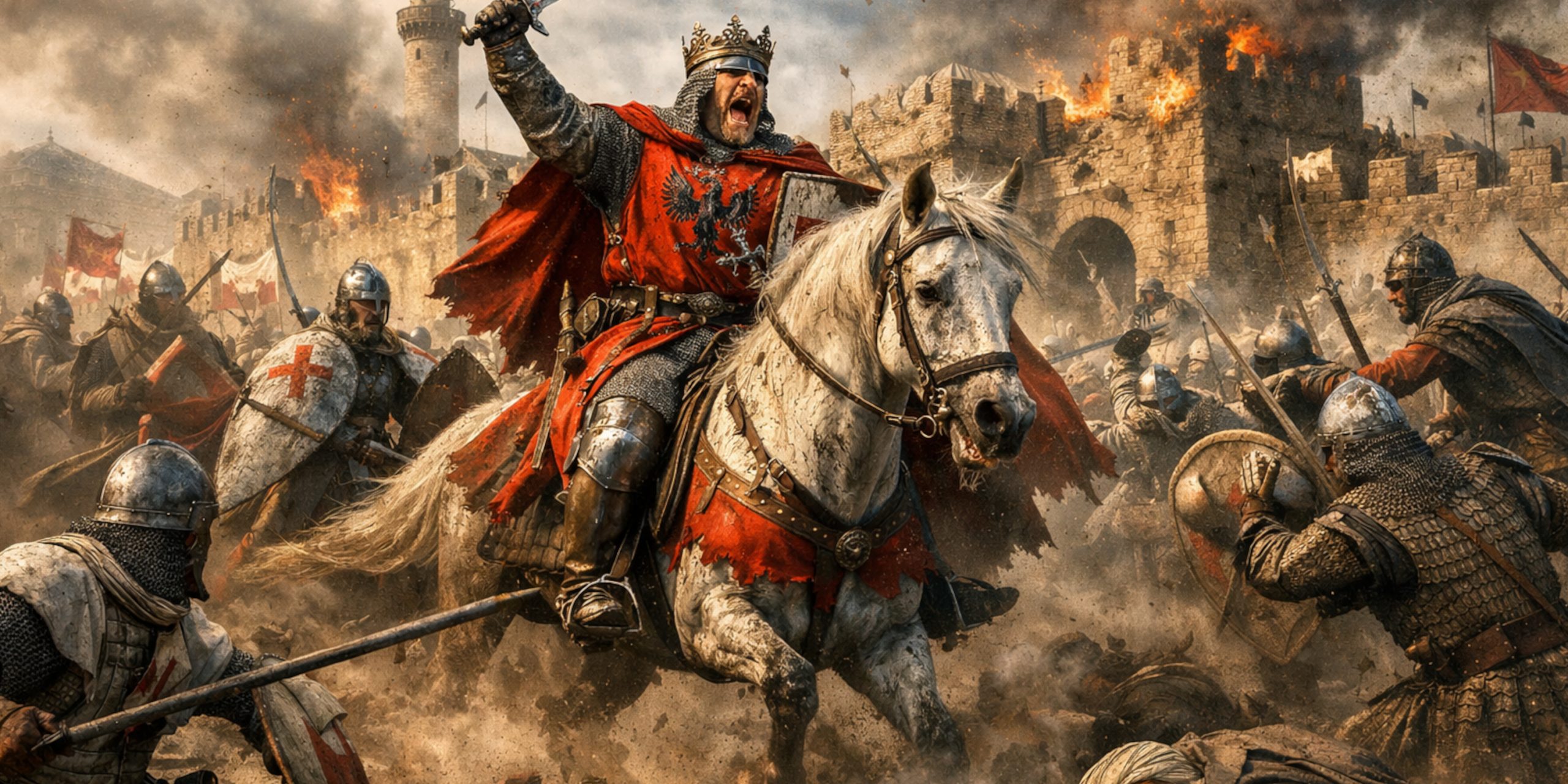
Barbarossa ordered a direct assault. One force engaged Seljuk field troops outside the city, while another attacked the walls. This was a gamble, but thirst concentrates the mind.
Afternoon
Crusader infantry broke into the city after fierce fighting at the gates. Once inside, the heavier armour and close combat discipline of the Germans proved decisive.
Late Afternoon
Seljuk forces withdrew. The crusaders secured the city, its wells, and its supplies. The army survived.
Archaeology and Physical Evidence
Iconium, modern Konya, is a continuously occupied city, which complicates archaeology. No single battlefield layer has been conclusively identified. However:
- Medieval fortifications remain partially traceable beneath later structures
- Weapon finds in the region, including arrowheads and sword fragments, support accounts of sustained military activity
- Contemporary Islamic and Latin sources agree on the capture of the city, which suggests the event was not exaggerated propaganda
Absence of clear archaeology is frustrating, but hardly unusual for urban medieval battles.
Contemporary Quotes
The chronicler Ansbert of Aachen, who travelled with the army, wrote:
“The army fought not for glory but for water, and in that necessity found victory.”
Ibn al Athir, writing from the Islamic world, noted with some understatement:
“The Franks entered the city by force, and the people withdrew from them.”
Both accounts agree on one thing. This was not a subtle affair.
Aftermath and Significance
Iconium allowed Barbarossa’s army to rest, resupply, and continue towards Cilicia. Tragically, the emperor drowned shortly afterwards in the Saleph River, proving that even the greatest medieval leaders could be undone by a bad swim.
Strategically, Iconium showed that Seljuk control of Anatolia was real but not absolute. A disciplined western army could still punch through, at great cost. For the Third Crusade, it was a necessary success, even if its long term benefits died with Barbarossa.
The Seven Swords Takeaway
The Battle of Iconium lacks the romance of crusader charges on the Levantine coast, but it offers something better. It shows crusading as it actually was. Hungry, thirsty, confused, and occasionally effective. As victories go, it was practical rather than heroic, which may be why it worked.
History is often decided by who gets to the well first. Iconium is proof of that.
Watch the documentary: