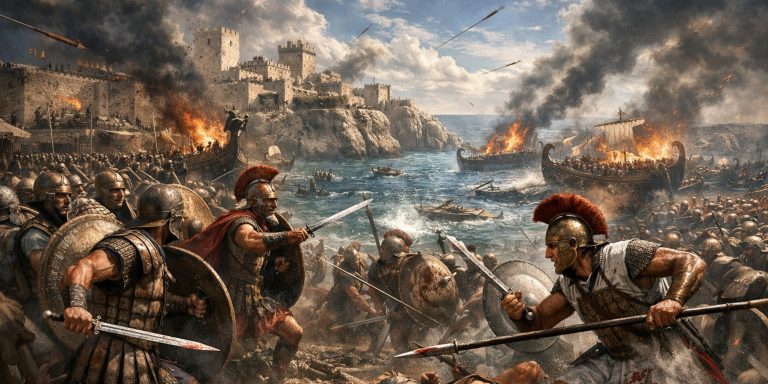
The Battle of Alesia in 52 BC was one of the defining moments of the Gallic Wars, where Julius Caesar faced the united Gallic forces led by Vercingetorix. It was a clash of tactics, engineering, and endurance that ultimately secured Roman supremacy in Gaul.
Background
By 52 BC, resistance to Roman occupation had spread across Gaul. Vercingetorix, a chieftain of the Arverni, had forged a coalition of tribes determined to resist Caesar’s legions. After a series of engagements, the Gallic leader withdrew to the fortified settlement of Alesia, located on a high plateau in modern Burgundy. Caesar seized the opportunity to trap his enemy, launching one of the most ambitious sieges of antiquity.
Forces
The battle was marked by two sets of opponents: the Gallic army within Alesia and the relief force that attempted to break the Roman siege.
Leaders and Troop Composition
| Side | Leader | Estimated Strength | Composition |
|---|---|---|---|
| Rome | Julius Caesar | 60,000 | 10 legions, cavalry auxiliaries, engineers, siege specialists |
| Gauls (inside Alesia) | Vercingetorix | 80,000 warriors, plus civilians | Infantry drawn from multiple tribes, cavalry |
| Gallic Relief Army | Various tribal chiefs | 250,000–330,000 (ancient estimates, likely lower in reality) | Infantry from allied tribes, large cavalry force |
Arms and Armour
Roman Legions
- Helmets: Montefortino and Coolus types, offering good protection and visibility.
- Body Armour: Mail shirts (lorica hamata) and some scale armour.
- Shields: Large rectangular scuta, ideal for defensive formations.
- Primary Weapons:
- Gladius Hispaniensis: Short thrusting sword used in close combat.
- Pilum: Heavy throwing javelin designed to penetrate shields.
Gallic Warriors
- Helmets: Bronze and iron, often with crests or animal motifs.
- Body Armour: Mail shirts for wealthier warriors, leather and padded protection for common fighters.
- Shields: Oval wooden shields, often painted and decorated.
- Primary Weapons:
- Longswords (La Tène type): Iron slashing swords, longer than the Roman gladius, designed for wide, sweeping attacks.
- Spears and javelins: Used both for throwing and thrusting.
- Cavalry employed long spears and occasionally curved swords.
The Siege Works
Caesar’s strategy relied on engineering brilliance. To prevent breakout and reinforcement, the Romans built two massive lines of fortifications:
- Inner Circumvallation: 18 km of ramparts, ditches, towers, and traps encircling Alesia.
- Outer Contravallation: 21 km of defences facing outward to repel the relief army.
These fortifications included spiked pits (lilia), wooden stakes, and hidden traps, creating lethal zones for attackers.
Battle Timeline
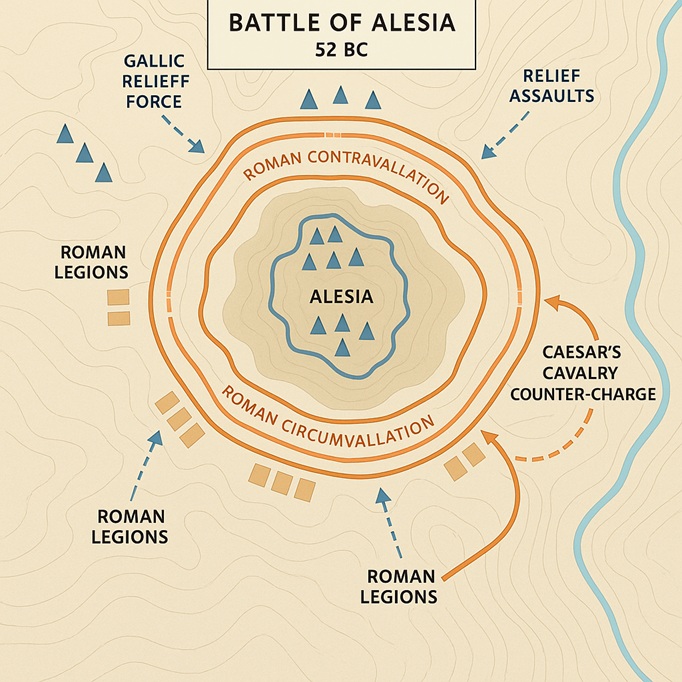
- Late Summer 52 BC: Vercingetorix retreats into Alesia, pursued by Caesar.
- Construction Phase: Roman legions build dual lines of fortification under constant harassment.
- Arrival of Relief Army: Vast Gallic forces assemble outside the Roman lines.
- Initial Assaults: Gallic relief army attacks the outer lines while Vercingetorix launches sorties from within.
- Climactic Battle: A coordinated Gallic attack nearly overwhelms the Romans. Caesar personally leads cavalry in a decisive counter-charge.
- Aftermath: The relief force collapses. With supplies exhausted, Vercingetorix surrenders.
Archaeology
The site of Alesia has long been debated, but most evidence points to Alise-Sainte-Reine in Burgundy. Excavations reveal:
- Remnants of ditches and ramparts consistent with Caesar’s descriptions.
- Gallic and Roman weapons including arrowheads, pila fragments, and La Tène swords.
- Traces of Gallic coinage, supporting the presence of a major settlement.
These finds align closely with Caesar’s Commentarii de Bello Gallico, though some historians argue the numbers he recorded were exaggerated.
Contemporary Quotes
Julius Caesar himself provides the most detailed account of the battle:
- “So close were the enemy to victory that our men admitted they had never faced greater danger. But Caesar, seizing a shield, went forward into the front line and restored the fight.” (Commentarii de Bello Gallico, Book 7)
On the surrender of Vercingetorix:
- “Vercingetorix summoned a council and declared that he had acted for the freedom of all Gaul. He then surrendered himself to Caesar.”
Legacy
The fall of Alesia broke the backbone of Gallic resistance. Vercingetorix was taken to Rome, paraded in Caesar’s triumph, and executed. Gaul was firmly under Roman control, setting the stage for centuries of Romanisation. The victory also cemented Caesar’s reputation, strengthening his political position in Rome and paving the way for his eventual dictatorship.
The Seven Swords Takeaway
The Battle of Alesia combined Roman discipline with extraordinary feats of engineering. Against overwhelming numbers, Caesar’s legions demonstrated the effectiveness of their training, equipment, and leadership. For the Gauls, Alesia became a symbol of defiance, while for Rome it was the decisive moment that secured mastery over Western Europe.
Watch the documentary: