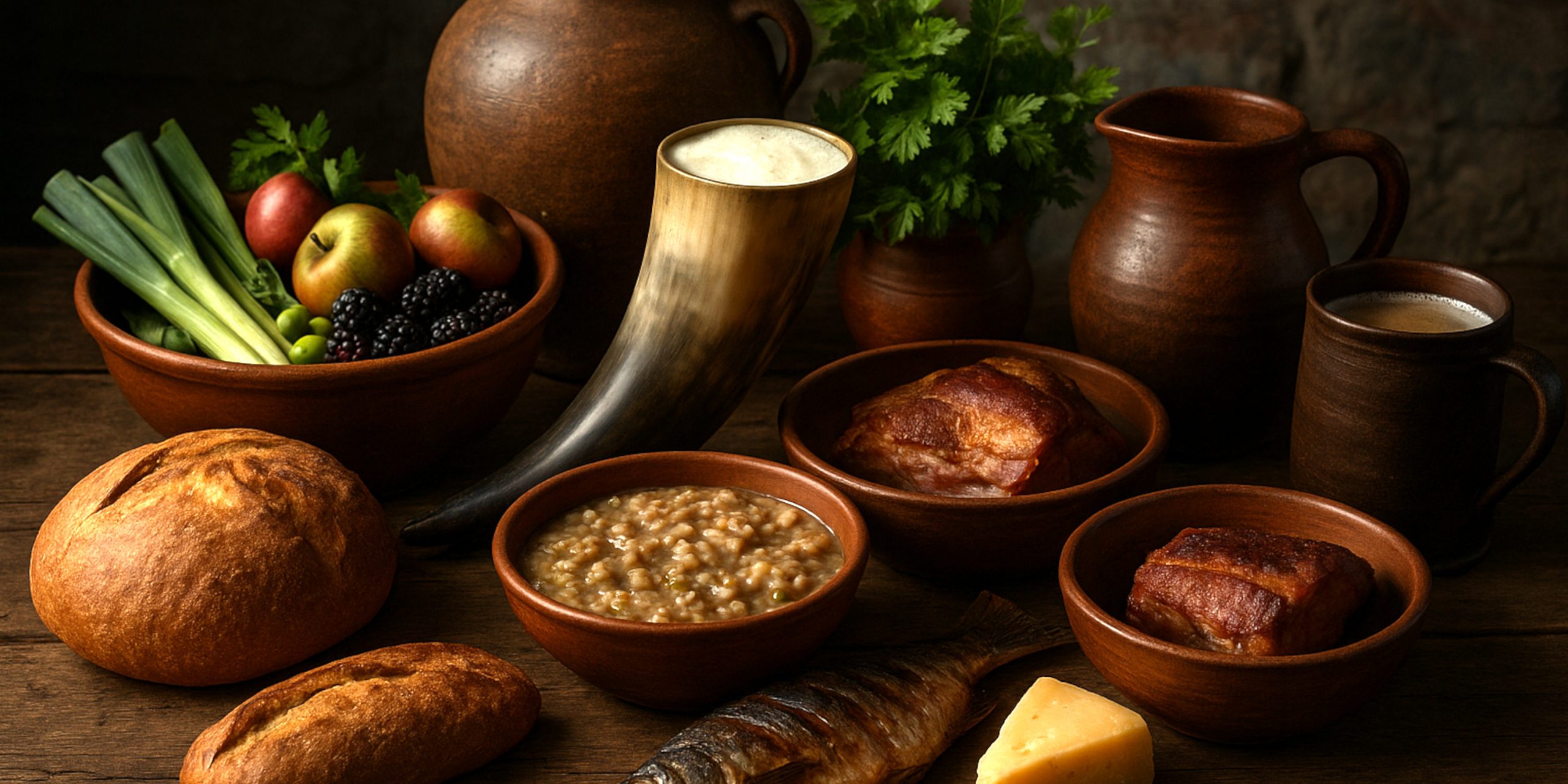
I have spent years wandering through museum reconstructions and leafing through charters full of scattered clues about daily life, and food is always the detail that hits closest to the bone. It is one thing to study kings and battles. It is quite another to imagine what the average person had simmering in a pot over the fire. Anglo Saxon food and drink feel wonderfully honest. Ingredients came from field, forest or sea, and meals followed the weather with very little room for indulgence. Yet within that simplicity you find a kind of quiet creativity.
Staple Ingredients and Everyday Meals
Grain sat at the heart of almost everything. Barley, oats, rye and wheat all carried the diet through the year. Most households relied on coarse bread or pottage, that thick and often rather sour mixture of grains and vegetables that could bubble away for hours. If you ever try a reconstruction recipe you will discover how filling it is, although you might also understand why spices became prized in later centuries.
Vegetables such as leeks, onions, beans and peas filled out the day to day meals. Pottage was adaptable. If someone brought in a rabbit or a bit of bacon fat you could add it without ceremony. Many communities lived close to rivers or marshes, so fish regularly appeared on the table. Eels in particular were so common they even served as a form of rent, which tells you a little about priorities in early medieval England.
Meat, Dairy and Preservation
People ate meat in moderation, more often as a seasonal treat than a daily expectation. Pork was most common because pigs were easy to manage in woodland. Cattle were valuable for labour and milk, so slaughtering one was a decision with consequences. Salted beef, smoked fish and cured hams helped households survive winter, and I always find myself imagining the smoky scent of those storage buildings during the darker months.
Dairy played an important role. Milk was rarely consumed fresh. Instead it became butter, soft cheese or buttermilk. These products varied between regions, shaped by grazing land and local habits. Archaeologists have traced butter buried in peat bogs, a wonderfully human attempt at refrigeration before anyone even dreamed of ice houses.
Flavourings, Herbs and Sweeteners
The Anglo Saxons had a fairly restrained palette when compared with later medieval tastes. Herbs such as dill, mint, wild garlic and coriander gave character to otherwise steady dishes. Mustard seeds appear in several finds and reveal that people liked a sharp note now and then.
Honey was the main sweetener. The care and labour required for beekeeping meant that honey was a valued resource. It worked in remedies, rituals and the kitchen. A spoonful brightened porridge or bread, and every time I read a recipe mentioning it I suspect it brought a rare moment of delight to the table.
Drinks and Social Customs
Water was not always trusted, especially near settlements or livestock. Beer and ale dominated daily drinking. They were usually low in alcohol and brewed quickly, with a cloudy appearance that would confuse any modern drinker. Even children had small ale, not for merriment but for safety.
Mead occupied a more ceremonial place. Honey gave it a prestige that connected feasting halls with poetry, gift giving and the performance of loyalty. When you read accounts of kings hosting warriors in timbered halls, mead often stands as a symbol of order and fellowship. Wine existed but was usually imported and expensive, so only high status households could rely on it.
Seasonal Rhythms
The Anglo Saxon diet turned with the seasons. Spring offered greens and fresh dairy. Summer granted berries and fish in good supply. Autumn brought the vital harvests of grain, apples and nuts. Winter focused on preserved goods and whatever could be kept from spoiling. These cycles created a sense of rhythm that shaped everything from labour to celebration. As a historian, I find this seasonal pulse one of the most grounding features of early medieval life. You cannot study these people without sensing how tightly their survival clung to the weather.
Seven Swords Takeaway
Writing about Anglo Saxon food always leaves me with the impression of a society that balanced hardship with invention. Their meals were plain on the surface but steady enough to support a complex culture of kingship, farming and craft. If you follow the breadcrumbs left in archaeology and manuscripts, you begin to see how much care went into each decision, from grazing patterns to brewing methods. It makes our own shelves of ready meals feel oddly distant.
Watch the deocumentary: