The bladed weapons of the Americas present a unique narrative of cultural adaptation and technological innovation. Unlike the linear development seen in Eurasian sword traditions, American edged weapons reflect a complex interplay between indigenous technologies and colonial influences. This study systematically examines pre-Columbian, colonial, and modern sword types across the continent, analysing their combat applications, manufacturing techniques, and socio-cultural significance through a structured typological framework.
Pre-Columbian Bladed Weapons (Pre-1500 CE)
Mesoamerican and Andean Innovations
| Weapon | Culture | Materials | Dimensions | Primary Use |
|---|---|---|---|---|
| Macuahuitl | Aztec/Maya | Obsidian, hardwood | 60–90 cm | Battlefield slashing |
| Tumi | Moche/Inca | Bronze/gold alloys | 30–50 cm | Ritual sacrifice |
| Flint War Club | Mississippian | Chert/flint, wood | 50–80 cm | Combat/hunting |
Key Observations
- The macuahuitl’s obsidian blades could inflict horrific wounds but required frequent replacement
- Andean metallurgy focused on ceremonial rather than martial applications
- North American cultures prioritised multifunctional tools over dedicated swords
Colonial-Era Adaptations (1500–1800 CE)

Hybrid Sword Designs
| Type | Origin | Blade Characteristics | Combat Role |
|---|---|---|---|
| Espada Ancha | New Spain | 45–60 cm, broad single-edge | Cavalry skirmishing |
| Corvo | Chile | 40 cm curved hook blade | Close-quarters combat |
| Naval Cutlass | Caribbean | 60–70 cm, basket hilt | Shipboard engagements |
Technological Shift
- Spanish colonial smiths repurposed European blades for local conditions
- The corvo evolved from agricultural tool to military weapon during independence wars
19th Century Military Swords

Standardised Patterns
| Model | Nation | Specifications | Service Period |
|---|---|---|---|
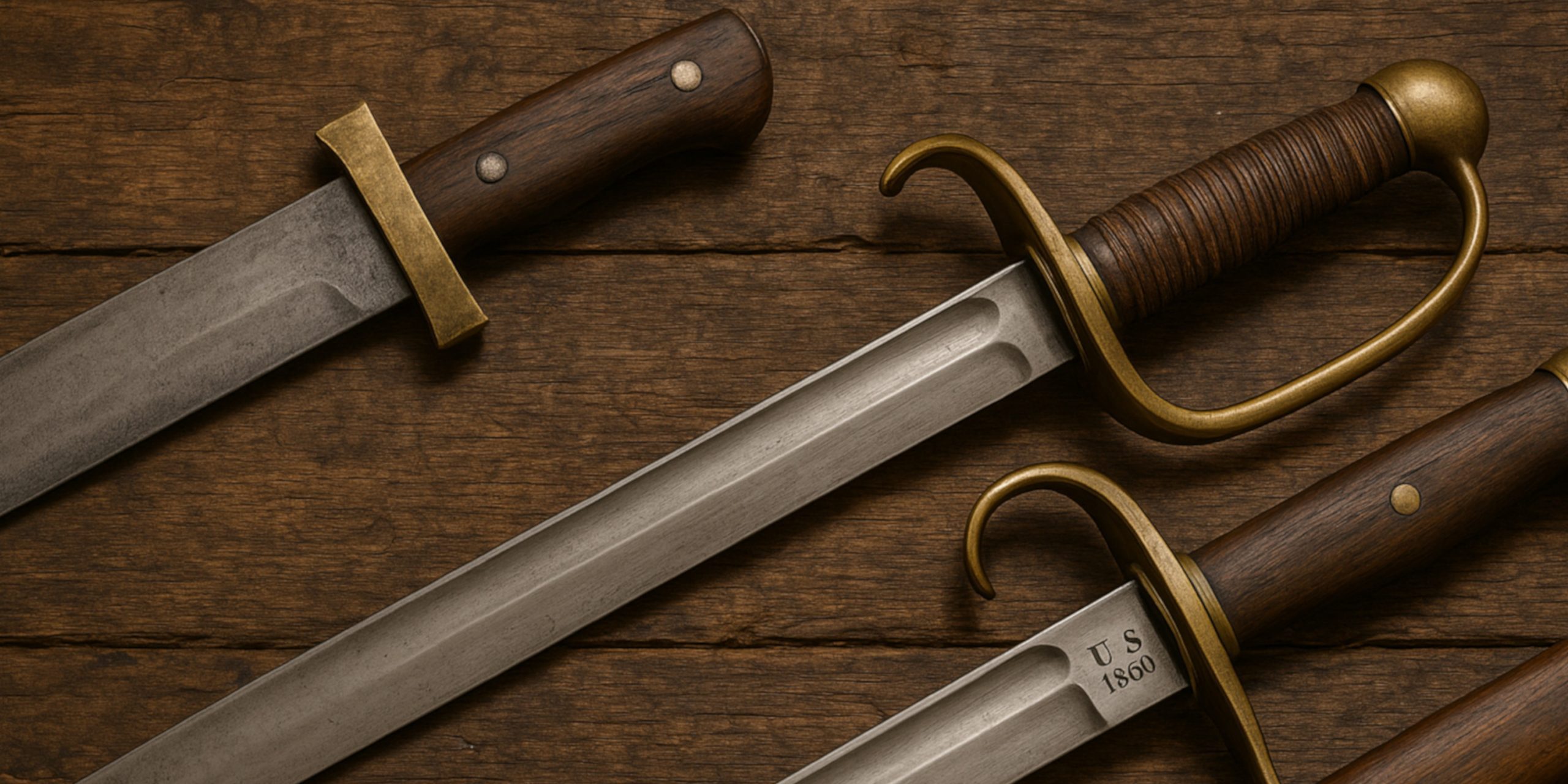
| M1860 Saber | United States | 86 cm curved blade | Civil War cavalry |
| Brazilian M1888 | Empire of Brazil | 85 cm straight blade | Imperial army |
| Mexican Espada | Post-independence | 75 cm cutlass-style | Federales |
Combat Effectiveness
- Union cavalry sabers averaged 3.5 lbs versus Confederate 2.75 lbs variants
- South American independence movements adapted European designs to guerrilla warfare

Civilian and Ceremonial Blades
Cultural Significance
| Category | Example | Symbolic Function | Materials |
|---|---|---|---|
| Fraternal | Masonic sword | Initiation rituals | Silver, ivory |
| Presentation | Congressional | Military honours | Gilded steel, ebony |
| Frontier | Bowie knife | Personal defence | Spring steel, antler |
Manufacturing Centres
- 19th century production concentrated in Philadelphia and Springfield armouries
- Imported German steel dominated South American markets until local forges developed
Material Science and Production
Comparative Metallurgy
| Period | Technique | Limitations |
|---|---|---|
| Pre-Columbian | Obsidian flaking | Brittle edge retention |
| Colonial | Recycled Spanish steel | Inconsistent tempering |
| Industrial | Crucible cast steel | Higher carbon consistency |
Archaeological Evidence
- Metallurgical analysis reveals European steel in 78% of post-1600 Mesoamerican blades
- Andean copper-arsenic alloys show sophisticated pre-Columbian alloying knowledge
Regional Distribution
Geographical Typology
| Area | Dominant Type | Historical Context |
|---|---|---|
| Mexican Plateau | Espada Ancha | Spanish colonial warfare |
| Southern Cone | Corvo | Chilean independence conflicts |
| Eastern Seaboard | Cavalry saber | US expansion wars |
| Amazon Basin | Tapered wood blades | Indigenous close-combat systems |
Modern Scholarship
Key Research Resources
| Discipline | Authoritative Work | Focus Area |
|---|---|---|
| Archaeology | Brinckerhoff (1972) | Spanish colonial armaments |
| Ethnohistory | Flayderman (2004) | Bowie knife evolution |
| Materials Science | Scott (1991) | Andean metallurgy |
Museum Collections
- Smithsonian Institution (Washington DC)
- Museo del Ejército (Mexico City)
- Royal Armouries (London)