Few seasons in the medieval calendar carried the same mixture of anticipation, religion and mischief as Christmas. It sat in the deep midwinter when fields slept, work slowed and people finally had room in their year for appetite and ritual. Whenever I read accounts from the period, I am struck by how familiar parts of it feel, even though the world that shaped those customs has long since thawed away. Christmas in the Middle Ages was not just a single day. It was a full season that unfolded in stages and brought its own blend of devotion, noise and comfort.
The Roots of the Season
Christmas sat on top of older winter customs that refused to fade. The Church set the date securely, yet the mood of the season always carried echoes of older feasts that welcomed the return of the light. Medieval priests understood this well, sometimes grumbling that the laity were far keener on revelry than repentance. Still, the liturgy of Advent set the tone. It was a period of fasting and preparation that built towards the midnight Mass, the high point of Christmas devotion.
People would pack into cold churches lit by candles. In wealthier parishes you might even hear polyphony drifting over the nave. For many, this was the closest thing to majesty they ever encountered. I imagine villagers stepping out into the frosted air after Mass, breath rising like incense, grateful for any excuse to return to warmth.
Feasting and Merriment
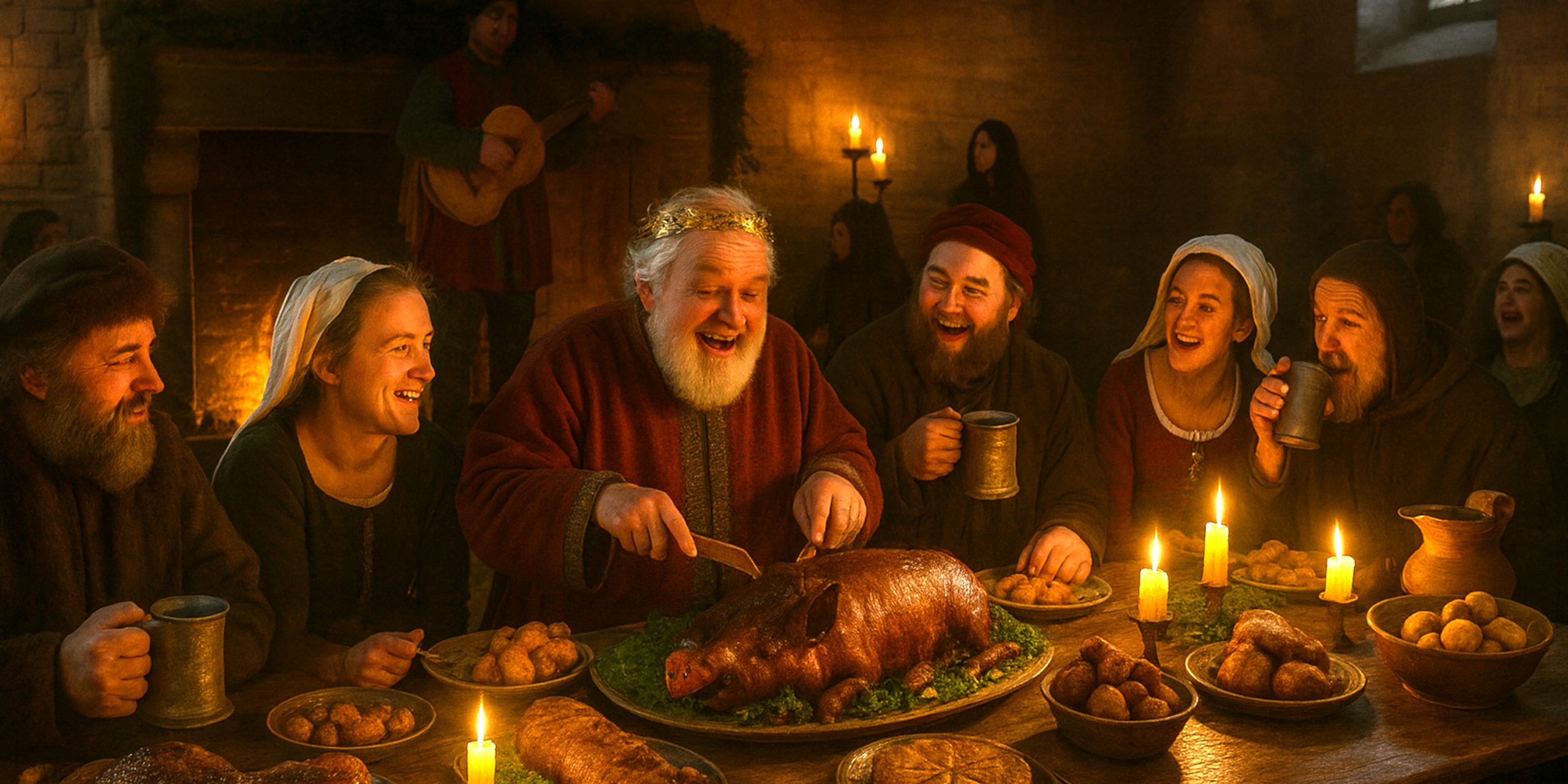
Once Advent loosened its grip, the feasting began. Medieval Christmas meals were ambitious, sometimes bordering on theatrical. Boar’s head carried in procession, swans glazed until their feathers were reattached for display, pies hiding entire menageries. It sounds excessive, but in a world where hard winters could thin a community, there was meaning in showing abundance.
Wassailing, too, added a glow to the season. The communal bowl passed from hand to hand with a mixture of ale, cider or spiced wine. There was always the slight worry that the line between celebration and unruliness might crumble. Manor courts occasionally mention fines for people who took their Christmas spirits too seriously, which tells you everything you need to know about medieval self-control.
Gifts and Hospitality
Gift giving worked differently. It leaned toward tokens rather than extravagance. Lords offered favours or clothing to their households. Tenants brought small dues to their manorial lords. Even the poorest made gestures, often in the form of shared food or candles given to the parish church.
Hospitality was central. A household showed its character through the number of strangers it welcomed. Travellers, minstrels and poor neighbours often found a place by the fire. As a historian, I find this generosity one of the most endearing features of the medieval Christmas. It carried a sense that no one deserved to face winter alone.
Music and Performance
The season filled with noise. Carols developed not as church pieces but as lively songs with refrains designed for group singing. They were performed in halls and across village greens. Mummers, masked or painted, staged short plays that cheerfully ignored theological precision. The Church tolerated much of this, although you can sense the raised eyebrows in some surviving sermons.
Still, these songs and performances reveal the social heart of the holiday. People wanted stories, rhythm and shared laughter. In a world with long evenings and unreliable heating, music did the work of lifting spirits.
The Twelve Days and Epiphany
Christmas did not end abruptly on the twenty sixth. The Twelve Days stretched toward Epiphany, each day with its own small customs. Lords of Misrule were chosen in some households, turning hierarchies upside down for a brief season. It is tempting to imagine that these inversions offered a release valve for social tension. At the very least, they allowed people to laugh at the structures that governed them.
Epiphany itself marked the close of the festive run, with its reminder of the Magi and the wider world beyond frostbitten fields. After that, life drifted back into its ordinary rhythm, though I suspect many faced that return with the same reluctance we feel now when January rolls in.
A Historian’s Reflection
Whenever I explore medieval accounts of Christmas, I notice how winter presses into every detail. The cold shaped the rituals, the food, the hospitality. The season acted as a promise that even the darkest months held room for warmth and communion. The medieval Christmas allowed people to affirm their community, their faith and their shared endurance.
If anything, the period reminds me that celebration carries weight only when it stands against hardship. Medieval people understood this instinctively. Their Christmas was not perfect or quaint. It was human, layered with hope, excess and the familiar need to gather close when the world outside grows quiet.
Watch the documentary: