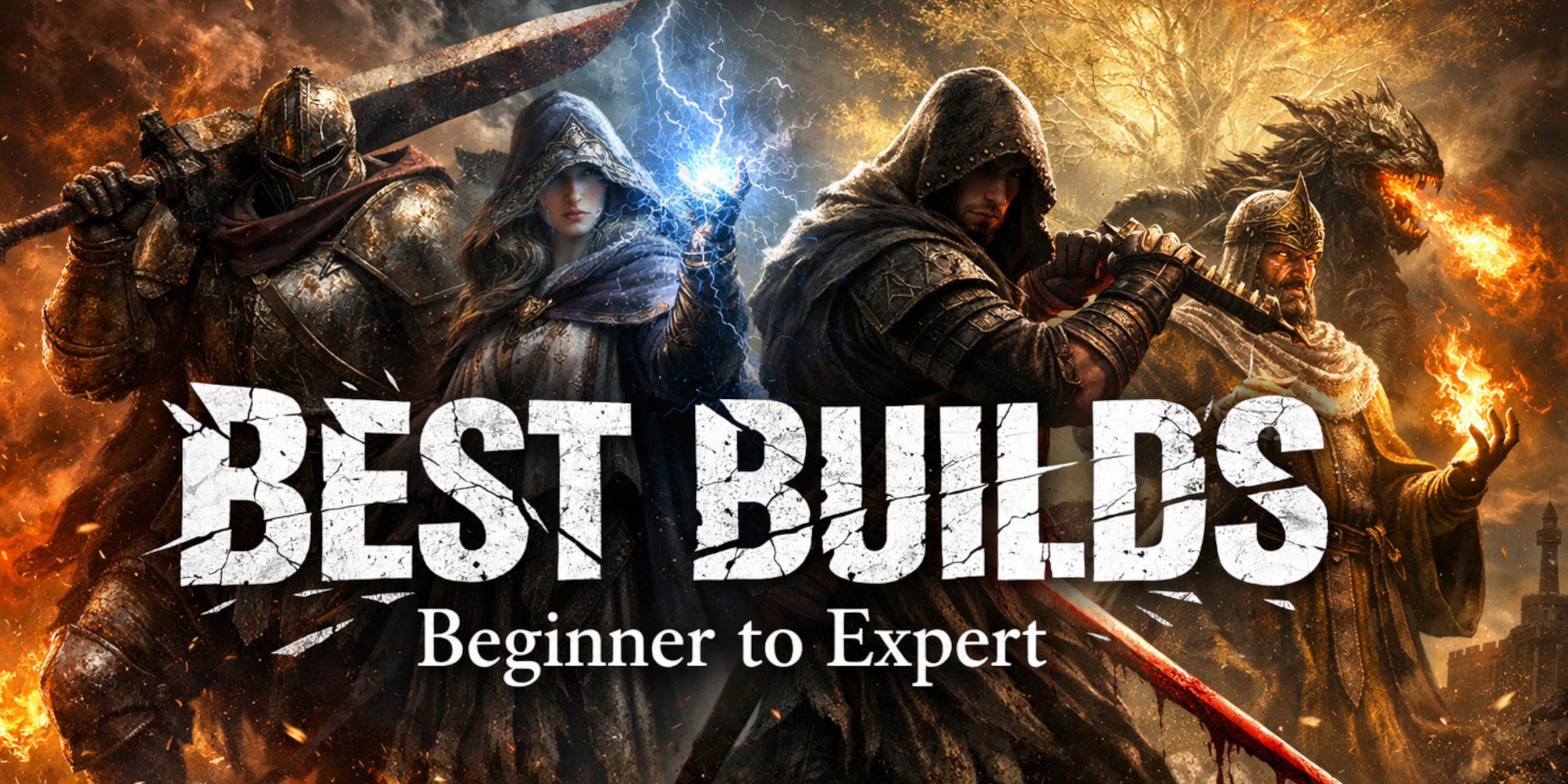
Elden Ring does not care how experienced you think you are. It will flatten you all the same. What it does give you, quietly and without fuss, is choice. More choice than any Souls game before it, and more ways to accidentally ruin your build by level 40 if you are not paying attention.
This guide exists to stop that from happening.
Rather than chasing min max extremes or YouTube one shot fantasies, these builds are grounded, flexible, and actually playable. Each one is tuned for a clear playstyle, with advice that works whether you are stepping into Limgrave for the first time or chasing late game bosses that seem personally offended by your existence.
Strength Build – The Reliable Problem Solver
This is the build for players who like solutions that involve gravity and blunt force. Strength builds in Elden Ring are forgiving, powerful, and oddly elegant once you accept that rolling late is a lifestyle choice.
A good Strength build prioritises Vigor early, because being alive is the best buff in the game. Strength should climb steadily, with Endurance not far behind to support heavier armour and colossal weapons. Mind can stay modest unless you lean into Ashes of War.
Colossal swords, great hammers, and oversized axes all shine here. Jump attacks are absurdly strong, stance damage racks up fast, and most enemies crumble before they can show you their second phase. It is not subtle, but it is effective.
Strength builds scale beautifully into the late game and remain strong even when enemies start hitting like freight trains. If you want consistency over cleverness, this is the answer.
| Aspect | Details |
|---|---|
| Playstyle | Tanky, high-damage melee |
| Best For | Beginners who prioritise survivability |
| Key Stats | Strength, Vigor, Endurance |
| Recommended Weapon | Greatsword (“Guts’ Sword”) |
| Armour | Bull-Goat Set |
| Talismans | Radagon’s Scarseal, Green Turtle Talisman |
| Tips | Two-hand your weapon for maximum damage, use charged heavy attacks to stagger enemies, and trade hits confidently with high poise. |
Dexterity Build – Precision and Patience
Dexterity builds reward timing, spacing, and restraint. They feel weaker early on, then quietly become terrifying once upgrades and scaling kick in.
Dexterity should be your primary stat, supported by Vigor and enough Endurance to avoid wheezing after three rolls. These builds benefit hugely from weapon upgrades, often more than raw stat investment early on.
Katanas, curved swords, and thrusting weapons dominate here. Bleed synergy pushes damage far beyond what the numbers suggest, especially against bosses who insist on having enormous health bars.
This build suits players who enjoy learning enemy patterns and punishing mistakes rather than trading hits. When it clicks, combat feels sharp and deliberate, like you are always one step ahead.
| Aspect | Details |
|---|---|
| Playstyle | Agile melee, fast weapons, bleed effects |
| Best For | Intermediate players who enjoy fast-paced combat |
| Key Stats | Dexterity, Endurance, Vigor |
| Recommended Weapon | Uchigatana / Bloodhound’s Fang |
| Armour | Raging Wolf Set |
| Talismans | Lord of Blood’s Exultation, Rotten Winged Sword Insignia |
| Tips | Master dodging and quick combos, stack bleed for burst damage, and exploit enemy openings with rapid strikes. |
Quality Build – Adaptable and Honest
Quality builds split Strength and Dexterity, which makes them unfashionable in a game obsessed with hyper specialisation. That is a mistake.
A quality build trades peak damage for flexibility. You can use almost anything, swap weapons on a whim, and adapt to situations without respeccing every other boss fight. It is a build for explorers, tinkerers, and players who enjoy experimenting.
Damage comes online later than pure builds, but the payoff is versatility. Greatswords, halberds, and straight swords all perform well. You are never locked out of content due to stat choices, which makes this an excellent first full playthrough option.
It is not flashy, but it is quietly one of the most satisfying ways to play.
| Aspect | Details |
|---|---|
| Playstyle | Balanced melee with weapon flexibility |
| Best For | Players who want to experiment with different weapons |
| Key Stats | Strength, Dexterity |
| Recommended Weapon | Claymore / Godrick’s Greatsword |
| Armour | Knight Set |
| Talismans | Radagon’s Scarseal, Claw Talisman |
| Tips | Power-stance weapons for dual-wielding, swap between ashes of war for adaptability. |
Intelligence Build – Control Through Knowledge
Sorcery builds in Elden Ring feel powerful, occasionally broken, and sometimes fragile enough to collapse if sneezed on.
Intelligence should rise quickly, supported by Mind for casting and Vigor so you are not erased by stray arrows. Early game can feel rough if you rely too heavily on spells, but once your toolkit expands, the battlefield becomes yours to choreograph.
Glintstone sorceries provide ranged dominance, while later spells offer absurd burst damage and crowd control. Pairing Intelligence with a reliable melee weapon prevents panic rolling when enemies close the gap, which they will.
This build suits players who like planning, spacing, and winning fights before they technically begin.
| Aspect | Details |
|---|---|
| Playstyle | Long-range magic damage |
| Best For | Players who prefer a glass-cannon role |
| Key Stats | Intelligence, Mind, Vigor |
| Recommended Weapon | Lusat’s Glintstone Staff |
| Armour | Snow Witch Set |
| Talismans | Magic Scorpion Charm, Graven-Mass Talisman |
| Tips | Maintain distance, prioritise FP management, and use high-damage spells like Comet Azur for devastating bursts. |
Faith Build – Flexible, Patient, and Dangerous
Faith builds are slower to reveal their strength, which is fitting. Early incantations feel modest, but the build grows into one of the most versatile setups in the game.
Faith scales offensive miracles, defensive buffs, healing, and some of the most visually dramatic attacks in Elden Ring. The ability to pivot between support and offence gives Faith builds enormous endurance in long areas and boss attempts.
Strength Faith hybrids are especially effective, combining heavy weapons with buffs that push damage far beyond expectations. Pure Faith builds lean more on casting, status effects, and survivability.
This is a build for players who value adaptability and are happy to think one encounter ahead.
| Aspect | Details |
|---|---|
| Playstyle | Versatile support/offensive spellcasting |
| Best For | Players who want healing and holy/fire damage |
| Key Stats | Faith, Mind, Vigor |
| Recommended Weapon | Blasphemous Blade / Erdtree Seal |
| Armour | Crucible Tree Set |
| Talismans | Flock’s Canvas, Fire Scorpion Charm |
| Tips | Use healing incantations in co-op, buff allies, and exploit fire/holy spells for high damage in solo play. |
Arcane Build – Risk, Reward, and Status Chaos
Arcane builds look strange on paper and terrifying in practice. They revolve around status effects, especially bleed, poison, and madness, scaling damage through enemy suffering rather than raw numbers.
Arcane should be paired with Dexterity or Strength depending on weapon choice. Vigor remains essential because these builds often fight up close to apply pressure quickly.
When optimised, Arcane builds shred bosses at alarming speed. When misplayed, they fall apart just as fast. This is not a beginner friendly path, but it is one of the most satisfying once mastered.
It rewards aggression, confidence, and a willingness to commit.
| Aspect | Details |
|---|---|
| Playstyle | High burst damage via bleed and status effects |
| Best For | Advanced players and PvP enthusiasts |
| Key Stats | Arcane, Dexterity |
| Recommended Weapon | Rivers of Blood / Eleonora’s Poleblade |
| Armour | White Mask |
| Talismans | Lord of Blood’s Exultation, Rotten Winged Sword Insignia |
| Tips | Stack bleed for rapid health depletion, use fast attacks to trigger effects quickly. |
Hybrid Builds – When One Identity Is Not Enough
Hybrid builds thrive in Elden Ring because the game actively supports them. Strength Faith paladins, Dexterity Intelligence spellblades, and Arcane Faith dragon cultists all feel intentional rather than gimmicky.
The key is focus. Pick two stats that genuinely work together and ignore the rest. Hybrid builds that try to do everything usually end up doing nothing particularly well.
When done properly, hybrids offer the most expressive playstyles in the game, blending melee, magic, and utility into something uniquely yours.
| Aspect | Details |
|---|---|
| Playstyle | Magic-enhanced melee combat |
| Best For | Players who enjoy versatility and flashy combat |
| Key Stats | Intelligence, Strength/Dexterity |
| Recommended Weapon | Moonveil / Dark Moon Greatsword |
| Armour | Spellblade Set |
| Talismans | Carian Filigreed Crest, Magic Scorpion Charm |
| Tips | Use weapon arts for burst damage, infuse weapons with magic scaling, and balance melee with spellcasting. |
Build Advice That Actually Matters

Vigor is never optional. If you are dying in two hits, the build is not bad, your priorities are.
Upgrade weapons early and often. Scaling means nothing if the weapon itself is underlevelled.
Respec later. Elden Ring gives you room to experiment, and you should take it. Early mistakes are not permanent unless you refuse to adapt.
Fashion matters, but not more than survivability. There is a balance, even if it hurts.
Seven Swords Takeaway
The best Elden Ring build is the one that makes you want to keep playing after you die for the tenth time to something with too many arms.
This game rewards curiosity, adjustment, and a willingness to learn. Whether you are swinging a sword the size of a door or quietly erasing enemies from across the map, the Lands Between has room for your playstyle. It will just make you earn it.
Watch a video build guide: