The Battle of Heiligerlee occupies an unusual place in European military history. It was not one of the largest battles of the sixteenth century, nor was it especially bloody by the standards of the age. Yet its consequences echoed for eighty years.
Fought on 23 May 1568 in the marshes of Groningen, the battle marked the first significant military success of the Dutch Revolt against Spanish Habsburg rule. It demonstrated that the seemingly unstoppable Spanish administration could be challenged, even if only briefly. More importantly, it transformed what had been political unrest into open war.
As a historian, I have always found Heiligerlee fascinating because it combines careful planning with almost accidental success. The rebel commanders achieved precisely what they intended tactically, yet strategically they would gain far less than they hoped. History has a habit of handing out victories with one hand while quietly preparing setbacks with the other.
Background
By the late 1560s, the Low Countries were simmering with unrest.
Religious tensions between Catholics and Protestants had intensified after the Iconoclastic Fury of 1566, when Calvinist mobs destroyed church images throughout parts of the Netherlands. King Philip II of Spain responded by sending Fernando Álvarez de Toledo, the Duke of Alba, with a professional army to restore order.
Alba established the Council of Troubles, quickly nicknamed the “Council of Blood,” executing hundreds of suspected rebels.
William of Orange escaped into exile and organised resistance from Germany. His strategy in 1568 was ambitious. Several invading armies would enter the Netherlands simultaneously, forcing Alba to divide his forces.
One of these armies was led by William’s brothers:
- Louis of Nassau
- Adolf of Nassau
Their objective was to raise support in the northern provinces before larger Spanish forces could react.
The Battlefield
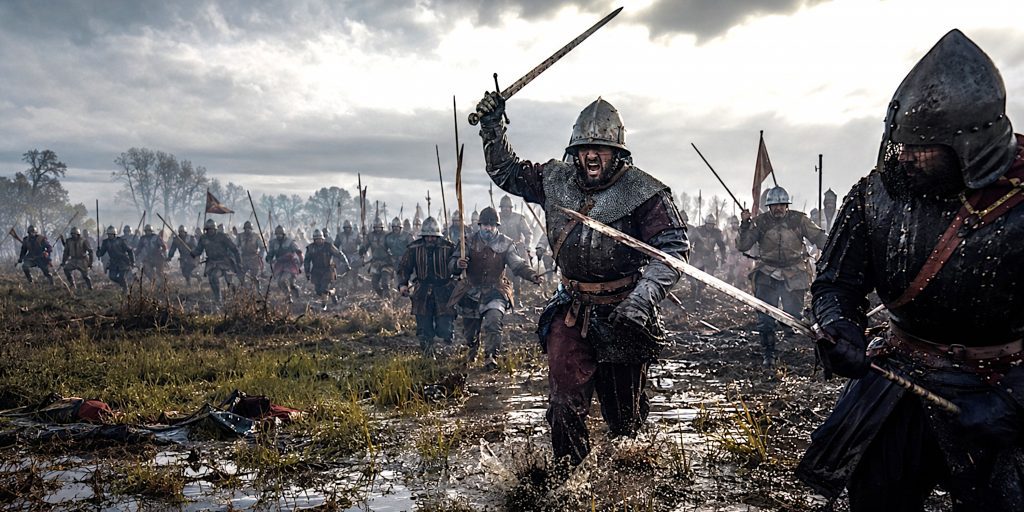
Heiligerlee lies in modern Groningen, close to the German border.
The landscape during the sixteenth century was very different from today.
It consisted of:
- Marshland
- Peat bogs
- Narrow raised roads
- Drainage ditches
- Small wooded areas
- Limited open fields
This terrain heavily restricted cavalry and rewarded commanders who understood local geography.
Louis of Nassau certainly did.
Rather than seeking a conventional engagement, he deliberately positioned his army where Spanish discipline could be disrupted.
Forces
| Army | Dutch Rebels | Spanish Royal Army |
|---|---|---|
| Commander | Louis of Nassau | Jean de Ligne, Duke of Aremberg |
| Strength | Approximately 3,800 to 4,500 | Approximately 3,200 to 3,500 |
| Infantry | German Landsknechts, Dutch volunteers, Calvinist militia | Spanish, Walloon and German infantry |
| Cavalry | Small mounted contingent | Several hundred cavalry |
| Artillery | Limited field guns | Few light guns |
Although the numbers were relatively balanced, the quality varied considerably.
The Spanish army contained experienced professionals, while much of the rebel force consisted of newly raised volunteers alongside veteran German mercenaries.
Leaders
Louis of Nassau
- Younger brother of William of Orange
- Skilled organiser and competent battlefield commander
- Preferred careful positioning over reckless attack
- Successfully used terrain to negate Spanish advantages
Unlike some commanders driven by personal glory, Louis showed considerable patience. He allowed his opponent to make the crucial mistake.
Strengths
- Excellent use of terrain
- Flexible leadership
- Strong political judgement
- High morale among followers
Adolf of Nassau
The youngest brother of William of Orange.
Adolf fought courageously during the battle but was killed while leading a cavalry attack.
His death turned him into one of the first major martyrs of the Dutch Revolt.
Jean de Ligne, Duke of Aremberg
A respected nobleman serving Spain.
Aremberg possessed considerable military experience but underestimated the rebels and advanced into unfavourable ground.
He fought bravely until being killed during the fighting.
Troop Composition
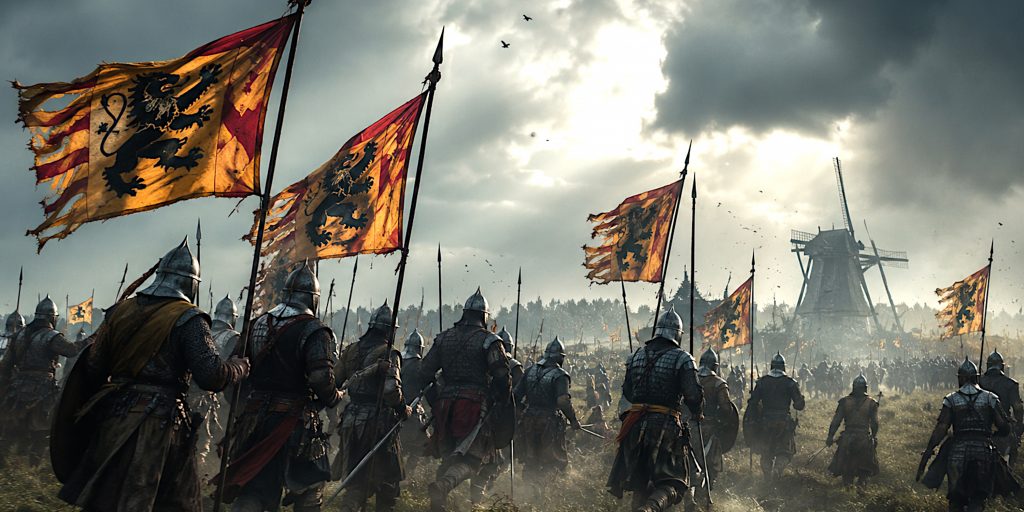
Dutch Rebels
- German Landsknecht pikemen
- Calvinist volunteers
- Dutch infantry
- German arquebusiers
- Light cavalry
- Small artillery detachment
Spanish Royal Army
- Spanish professional infantry
- Walloon infantry
- German mercenaries
- Arquebusiers
- Heavy cavalry
- Officers from experienced Habsburg campaigns
Arms and Armour
The battle reflected the changing face of Renaissance warfare.
Heavy medieval knights had largely disappeared, replaced by disciplined infantry armed with firearms and long pikes.
| Weapon | Used By | Purpose |
|---|---|---|
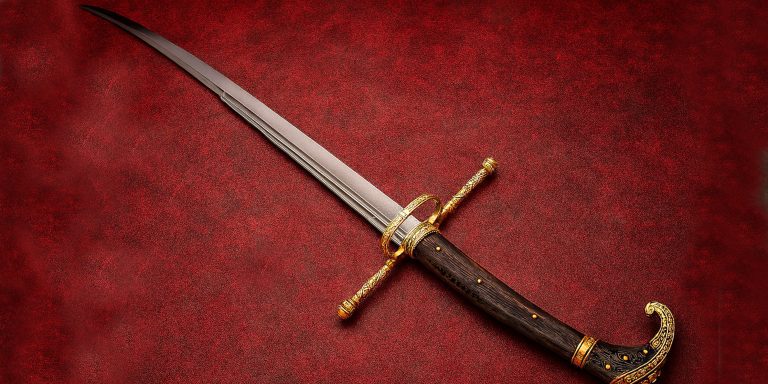
| Katzbalger | German Landsknechts | Close combat after pike engagements |
| Side Sword | Rebel and Spanish officers | Civilian and military sidearm |
| Arming Sword | Some cavalry and nobles | Secondary weapon |
| Estoc | Wealthier cavalry | Armour penetration |
| Pike | Both armies | Main infantry weapon |
| Halberd | Officers and elite infantry | Command weapon and close combat |
| Arquebus | Both armies | Fire support |
| Crossbow | Limited local militia | Secondary missile weapon |
Armour
Typical protection included:
- Morion helmets
- Burgonet helmets
- Breastplates
- Backplates
- Tassets
- Mail collars
- Buff coats
- Gauntlets for cavalry
The image many people have of fully enclosed medieval plate armour belongs to an earlier age. By 1568, practicality had begun to outweigh spectacle. Soldiers still looked impressive, but they were expected to march long distances rather than merely shine in tournaments.
The Battle
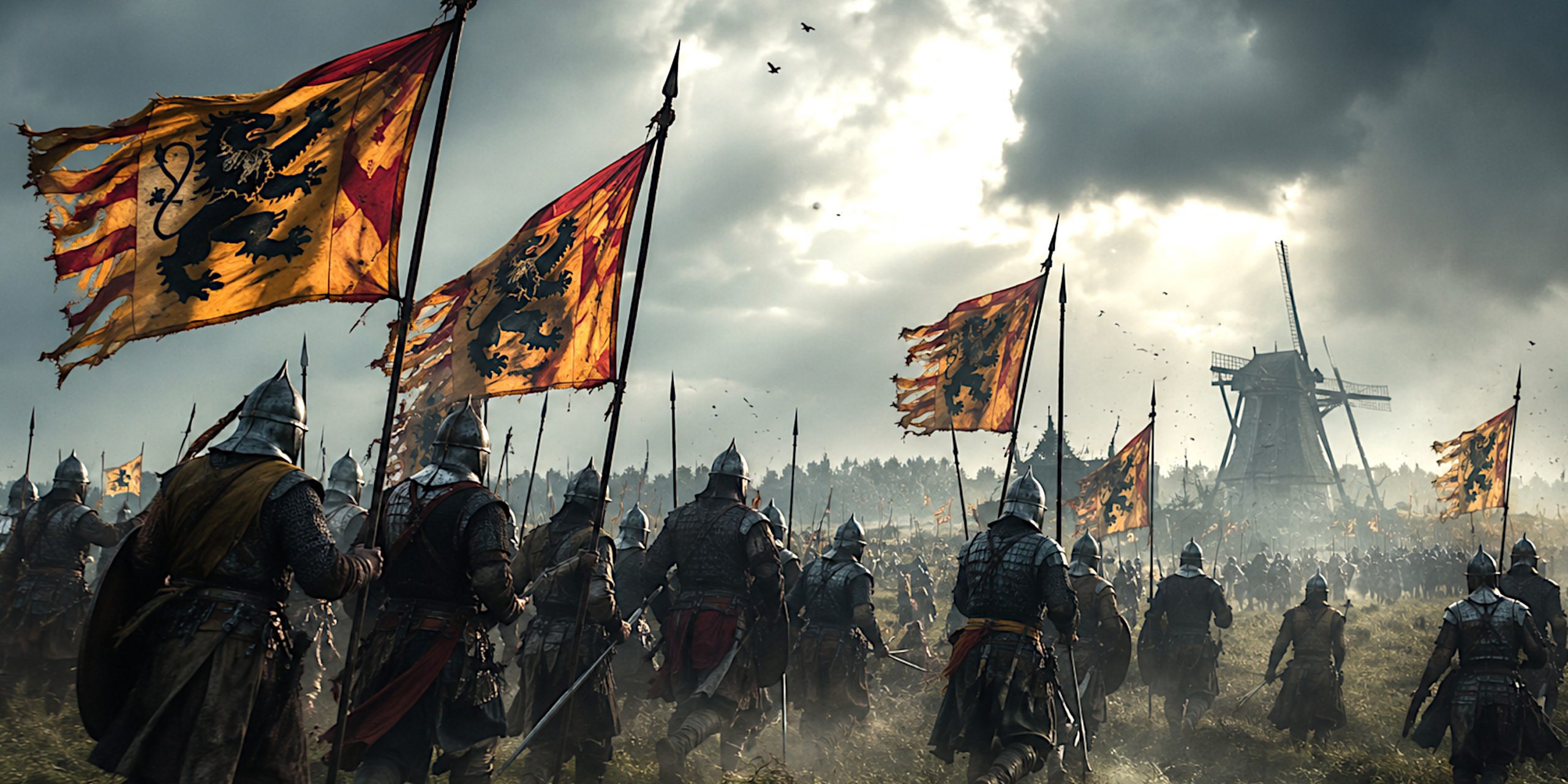
Louis of Nassau concealed much of his force behind woodland and marshland near Heiligerlee.
Aremberg advanced aggressively, believing he was facing only a small rebel detachment.
The rebels deliberately withdrew.
The Spanish pursued.
Once they entered the confined ground, Louis launched his concealed infantry.
The Spanish formation quickly lost cohesion.
The marshes made cavalry manoeuvres difficult.
German mercenary infantry fighting for the rebels held their ground while arquebusiers delivered effective volleys.
Adolf of Nassau led a mounted charge during the climax of the battle.
Although successful in helping secure victory, he was killed.
Aremberg himself also fell during the fighting.
Without effective leadership, Spanish resistance collapsed.
Battle Timeline
| Time | Event |
|---|---|
| Early morning | Rebel forces prepare concealed positions |
| Morning | Spanish advance toward Heiligerlee |
| Mid morning | Rebel withdrawal draws Spanish forward |
| Late morning | Louis launches main ambush |
| Midday | Fierce infantry fighting in confined terrain |
| Shortly after | Adolf of Nassau killed leading cavalry |
| Afternoon | Duke of Aremberg killed |
| Later afternoon | Spanish retreat becomes rout |
| Evening | Rebel victory secured |
Casualties
| Army | Estimated Losses |
|---|---|
| Dutch Rebels | Around 50 to 150 killed |
| Spanish Army | Approximately 500 to 700 killed |
The casualty figures vary between sources, but Spanish losses were substantially heavier.
Why the Rebels Won
Several factors combined to produce victory.
- Superior use of terrain
- Successful deception
- Spanish overconfidence
- Well-timed ambush
- Effective German mercenary infantry
- Poor cavalry mobility in marshland
- Death of Spanish commander
Perhaps the greatest lesson is that disciplined troops can still be defeated if persuaded to fight the wrong battle in the wrong place.
Archaeology
Unlike battlefields such as Towton or Visby, Heiligerlee has produced relatively modest archaeological evidence.
Finds include:
- Lead musket balls
- Iron shot
- Fragments of pikes
- Military buckles
- Horse fittings
- Personal equipment
Much of the battlefield has been altered through centuries of drainage and agriculture.
Modern archaeological work has relied heavily upon:
- Metal detecting surveys
- Landscape reconstruction
- Historic maps
- Contemporary military reports
Researchers continue refining the exact positions of troop movements using geographic information systems and environmental studies.
Contemporary Accounts
Several contemporary writers recorded the battle.
The rebel victory was celebrated throughout Protestant Europe.
One chronicler described the engagement as:
“God granted victory to the Prince’s faithful servants.”
Spanish correspondence was noticeably more restrained, acknowledging both the loss of Aremberg and the unexpectedly fierce resistance encountered.
William of Orange later reflected upon the campaign with determination rather than triumph, recognising that one victory alone would not free the Netherlands.
Immediate Aftermath
Celebrations proved short-lived.
The Duke of Alba responded rapidly.
Only weeks later, Louis of Nassau faced Alba himself at the Battle of Jemmingen.
There, the experienced Spanish army crushed the rebels.
Many of the gains achieved at Heiligerlee disappeared almost immediately.
Yet psychologically, everything had changed.
The myth of Spanish invincibility had been broken.
Military Significance
Heiligerlee demonstrated several enduring principles.
- Terrain can outweigh numerical superiority.
- Ambush remains one of the most effective battlefield tactics.
- Leadership losses often determine outcomes.
- Overconfidence remains one of the oldest military mistakes.
Many later Dutch commanders would continue exploiting flooded landscapes and restricted terrain throughout the Eighty Years’ War.
Legacy
Although overshadowed by later battles such as Nieuwpoort and the Siege of Leiden, Heiligerlee deserves recognition as the battle that truly began the Dutch struggle for independence.
Without this victory, the rebellion might easily have collapsed before gathering momentum.
Instead, it became the opening chapter of one of Europe’s defining wars.
Walking the peaceful fields today, it is difficult to imagine nervous arquebusiers waiting behind marshes or noble cavalry struggling through boggy ground. The silence feels almost deceptive. Yet history often begins not with grand spectacles but with small victories in forgotten places. Heiligerlee reminds us that revolutions rarely announce themselves with certainty. They simply begin, and only afterwards does the world realise something irreversible has happened.
Frequently Asked Questions
When was the Battle of Heiligerlee?
The battle was fought on 23 May 1568.
Who won the Battle of Heiligerlee?
The Dutch rebel army under Louis of Nassau defeated the Spanish royal forces commanded by the Duke of Aremberg.
Why was the battle important?
It marked the first major military victory of the Dutch Revolt and is widely regarded as the opening significant battle of the Eighty Years’ War.
Where was the battle fought?
Near the village of Heiligerlee in the province of Groningen in the northern Netherlands.
What happened after the battle?
The victory inspired the rebellion, but the rebels suffered a major defeat only weeks later at the Battle of Jemmingen, showing that the conflict was far from over.