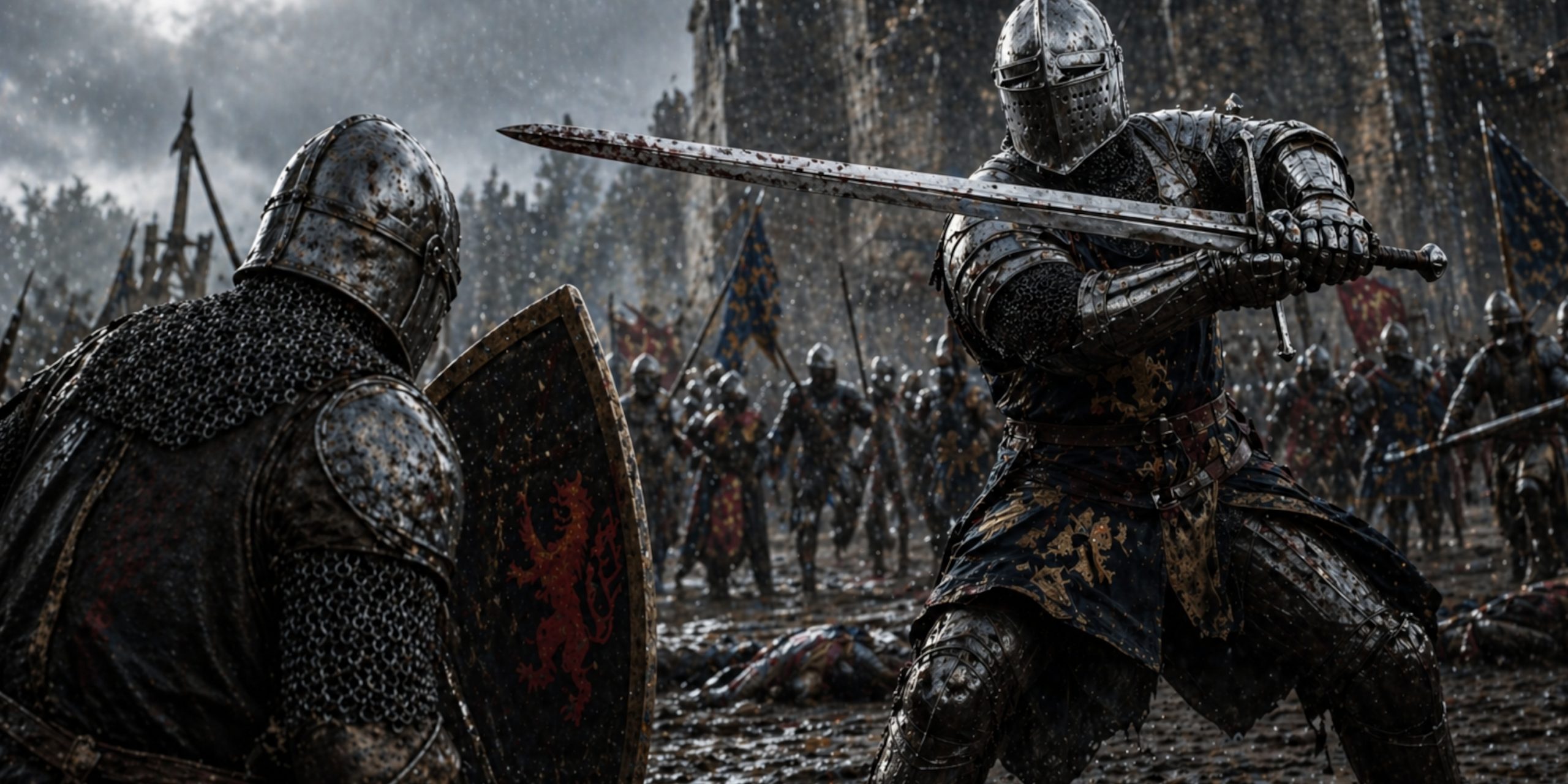
The greatsword sits at the far end of medieval and Renaissance sword design, a weapon built not for subtlety but for dominance of space. When people picture towering warriors cleaving through ranks, this is often the blade in hand.
Yet that image can be misleading. These swords were not crude or wildly heavy. They were refined tools used by trained fighters who understood distance, timing, and control. In the right hands, a greatsword could break formations, counter polearms, and command attention on the battlefield.
Specification
| Feature | Typical Range |
|---|---|
| Overall length | 140 cm to 180 cm |
| Blade length | 100 cm to 140 cm |
| Weight | 2.0 kg to 3.5 kg |
| Grip | Two-handed, extended grip |
| Blade type | Double-edged, straight |
| Fuller | Often present to reduce weight |
| Crossguard | Large, sometimes with side rings |
| Pommel | Large, for counterbalance |
Key characteristics
- Long reach designed for wide, sweeping control
- Balanced centre of gravity despite size
- Extended grip allowing leverage and half-sword techniques
- Some examples include ricasso sections for hand placement
History and Evolution
Early Development
Large two-handed swords appear in Europe as early as the 13th century, though they were rare. These early forms were precursors rather than fully realised greatswords.
Late Medieval Growth
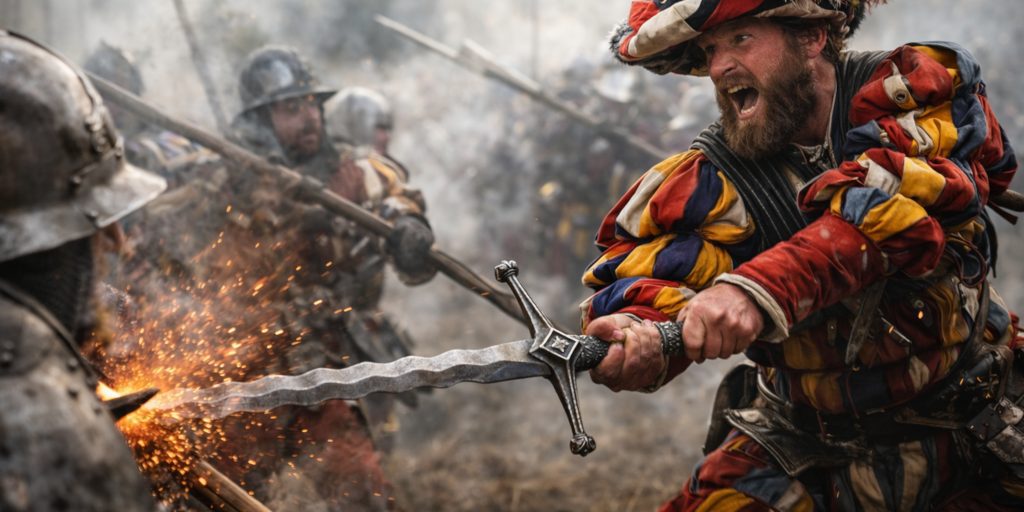
By the 15th century, greatswords became more common, particularly in German and Swiss regions. This period saw the rise of specialised infantry who trained specifically with these weapons.
The German Zweihänder and Italian spadone are among the most recognisable forms. Landsknecht mercenaries famously carried them, often tasked with disrupting enemy pike formations.
Renaissance Refinement
In the 16th century, the greatsword evolved into a more ceremonial and duelling weapon as well as a battlefield tool. Guards became more elaborate, and blades more refined.
Some were still used in combat, though firearms and pike formations gradually reduced their battlefield role.
Advantages and Disadvantages
Advantages
- Exceptional reach, allowing control of distance
- Powerful cutting potential, capable of breaking through lighter defences
- Versatile techniques, including half-swording and thrusting
- Psychological impact, intimidating presence on the battlefield
Disadvantages
- Requires significant training and strength
- Less effective in tight formations or confined spaces
- Slower recovery compared to shorter swords
- Vulnerable if distance control is lost
Comparison with Similar Weapons
| Weapon | Key Difference | Strengths Compared to Greatsword |
|---|---|---|
| Longsword | Shorter, more agile | Faster, more versatile in close combat |
| Claymore (Scottish) | Slightly shorter, broader blade | Easier handling in formation fighting |
| Montante | Iberian variant of greatsword | Similar reach, often more structured in fencing traditions |
| Halberd | Polearm with axe and spike | Greater reach and armour penetration |
| Pike | Much longer shaft weapon | Superior formation fighting capability |
Observations
- The greatsword bridges the gap between sword and polearm
- It sacrifices speed for reach and authority
- Against disciplined formations, polearms usually held the advantage
Legacy
The greatsword has endured as one of the most iconic weapons in European history. Its legacy extends beyond warfare into martial arts traditions and modern culture.
Historical fencing schools preserved techniques for these large blades, particularly in German and Iberian traditions. Manuals show structured systems rather than brute force.
In modern media, the greatsword often appears exaggerated in size and weight. In reality, it was a balanced weapon that demanded skill rather than sheer strength.
Where to See
Greatswords survive in a number of major museum collections across Europe.
- Royal Armouries
- Wallace Collection
- Kunsthistorisches Museum
- Germanisches Nationalmuseum
These collections include battlefield examples as well as ceremonial pieces, offering a useful contrast in design and purpose.
Collector’s Guide
What to Look For
- Authenticity of blade construction and markings
- Condition of the grip, guard, and pommel
- Provenance, particularly links to known regions or periods
- Presence of original components versus later restoration
Common Types on the Market
- Late medieval European greatswords
- Renaissance ceremonial Zweihänders
- 19th century reproductions and parade pieces
Auction Prices
| Type | Typical Price Range |
|---|---|
| Original 15th century greatsword | £20,000 to £80,000+ |
| Renaissance ceremonial Zweihänder | £10,000 to £40,000 |
| Partial or restored examples | £5,000 to £15,000 |
| 19th century reproductions | £1,000 to £5,000 |
Prices vary widely depending on condition, rarity, and historical significance. Provenance can dramatically increase value.
Practical Advice
- Always request documentation and expert verification
- Be cautious of heavily restored pieces
- Consider museum-grade conservation for long-term preservation
- Storage should control humidity and prevent corrosion