The Battle of Fulford is often treated like the forgotten opening act of 1066. Everyone remembers Stamford Bridge. Everyone remembers Hastings. Fulford, meanwhile, is left standing awkwardly in the corner like a nervous minstrel at a feast.
That is a mistake.
On 20 September 1066, just south of York, an English army under Edwin, Earl of Mercia, and Morcar, Earl of Northumbria, tried to block the advance of Harald Hardrada and Tostig Godwinson. The result was one of the bloodiest and most important battles ever fought in northern England. The defeat shattered the northern earls, handed York to the invaders and forced Harold Godwinson into the exhausting march north that would shape the rest of the year.
Without Fulford, there is no Stamford Bridge. Without Stamford Bridge, Harold is fresher, stronger and perhaps rather less doomed at Hastings.
Where and When Was the Battle of Fulford?
The battle took place on 20 September 1066 near the village of Fulford, immediately south of York. The battlefield lay between the River Ouse to the west and marshy ground and streams to the east.
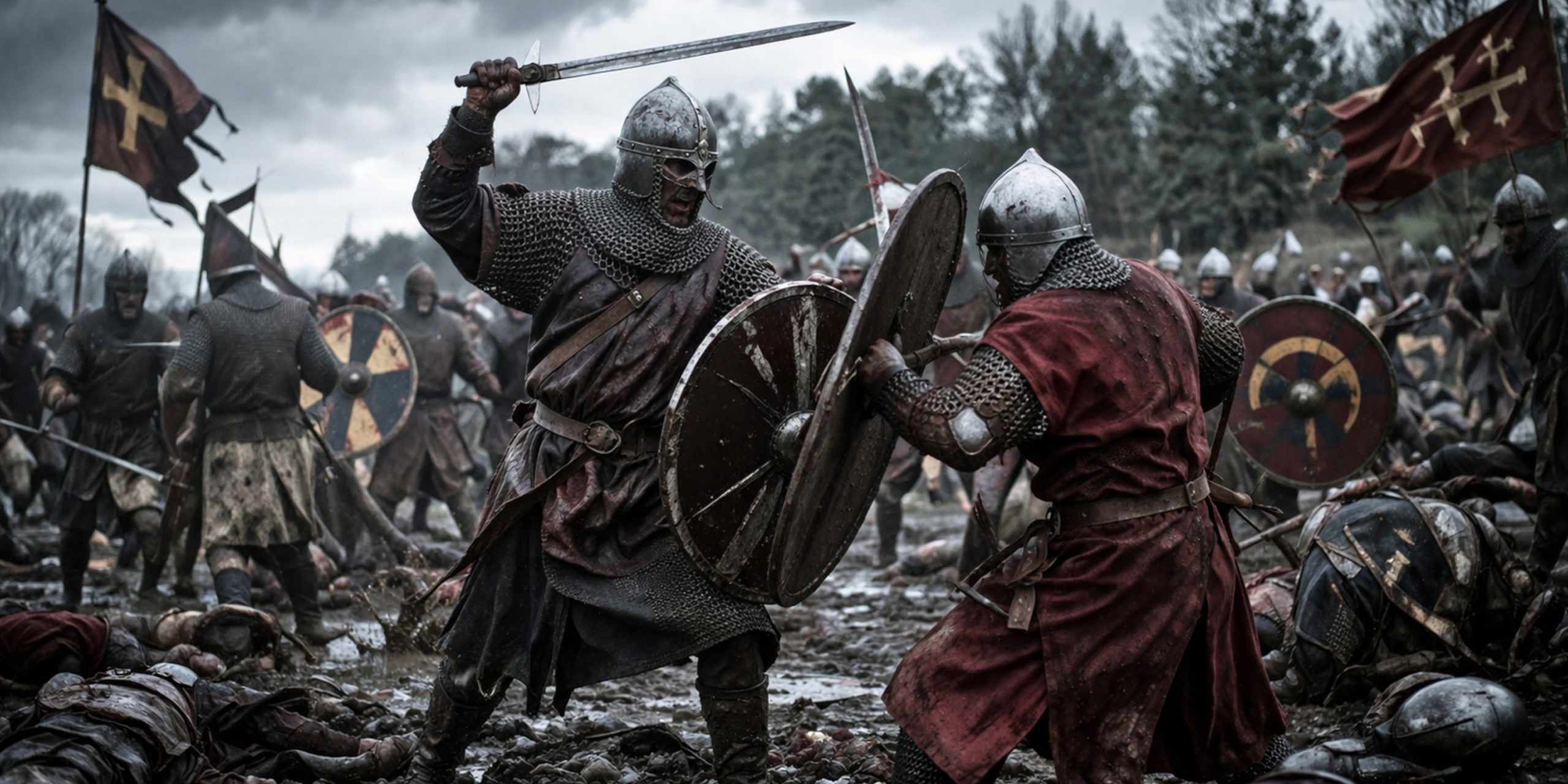
The landscape mattered enormously. This was not a broad, open field where armies could spread out freely. It was a cramped, muddy strip of ground, pinched between water and bog. Men had little room to manoeuvre. Once the fighting began, the battle became a brutal shoving match of shield walls, spear thrusts and men slipping into the marshes.
Modern Fulford is now largely covered by roads and housing, although parts of the terrain can still be traced. The low, marshy ground remains surprisingly easy to recognise. It still has the faintly unpleasant look of somewhere you would rather not march an army through.
Why the Battle Happened
The invasion was the result of two men with very different ambitions.
- Harald Hardrada, King of Norway, claimed the English throne through an old Scandinavian agreement.
- Tostig Godwinson, the exiled brother of King Harold Godwinson, wanted revenge after being driven out as Earl of Northumbria.
- Together they assembled a fleet and sailed into northern England.
After entering the Humber and then the Ouse, the invaders advanced toward York. Edwin and Morcar gathered the northern levies and marched south to block them.
The English had to fight quickly. If they waited for Harold Godwinson to arrive from the south, York might fall before help arrived. Edwin and Morcar therefore chose to stand at Fulford and stop the Norwegians there.
It was a brave decision. It may also have been a dreadful one.
Forces
English Army
| Commander | Position | Estimated Troops |
|---|---|---|
| Edwin | Earl of Mercia | 2,000 to 3,000 |
| Morcar | Earl of Northumbria | 2,000 to 3,000 |
| Local Yorkshire levies | Fyrd and retainers | 1,000 to 2,000 |
Estimated English strength: 4,000 to 6,000 men
The English army consisted largely of the fyrd, local levies raised from Mercia and Northumbria, supported by the household troops of Edwin and Morcar.
The best English soldiers were probably the earls’ housecarls and retainers. These men were experienced, heavily armed and capable of holding a shield wall under intense pressure. Much of the rest of the army consisted of local levies with less training and less armour.
Norwegian and Viking Army
| Commander | Position | Estimated Troops |
| Harald Hardrada | King of Norway | 4,000 to 5,000 |
| Tostig Godwinson | Former Earl of Northumbria | 1,000 to 2,000 |
| Norwegian warriors and fleet crews | Viking army | 1,000 to 2,000 |
Estimated Norwegian strength: 6,000 to 8,000 men
Hardrada’s army was one of the most formidable military forces in Europe. Many of his warriors were hardened veterans of campaigns in Scandinavia, Byzantium and Russia.
Harald himself had spent much of his life fighting. He had served in the Varangian Guard at Constantinople, fought in Sicily and campaigned across the Baltic. By 1066 he was in his early fifties, which for an eleventh-century warrior king was practically a miracle and perhaps a warning sign that he knew what he was doing.
Leaders and Military Ability
| Leader | Strengths | Weaknesses |
| Harald Hardrada | Experienced commander, aggressive, adaptable, battle-hardened | Sometimes overconfident |
| Tostig Godwinson | Knew Northumbria and local politics well | Unpopular in the north |
| Edwin of Mercia | Brave and energetic | Limited battlefield experience |
| Morcar of Northumbria | Strong local support | Outmatched by Hardrada |
Harald Hardrada dominated the battle. He recognised the weakness in the English line and exploited it quickly. According to later accounts, he pushed against the English right, where the marshy ground made it difficult for Edwin and Morcar to keep their forces together.
Edwin and Morcar fought with courage, but they were not in the same league. They were young earls facing one of the most seasoned commanders in Europe. It was rather like asking two capable local boxers to deal with a retired heavyweight champion who had suddenly decided he fancied one last fight.
Arms and Armour
The battle was fought almost entirely with infantry. Cavalry played little or no role because the terrain was too narrow and wet.
English Arms and Armour
| Equipment | Description |
| Spear | The most common weapon of the fyrd |
| Seax | Short fighting knife carried by many English soldiers |
| Danish axe | Used by elite housecarls, capable of breaking shields and helmets |
| Sword | Worn by wealthier warriors and nobles |
| Shield | Round wooden shield with iron boss |
| Helmet | Conical iron helmet, often with nasal guard |
| Mail shirt | Worn by wealthier warriors and retainers |
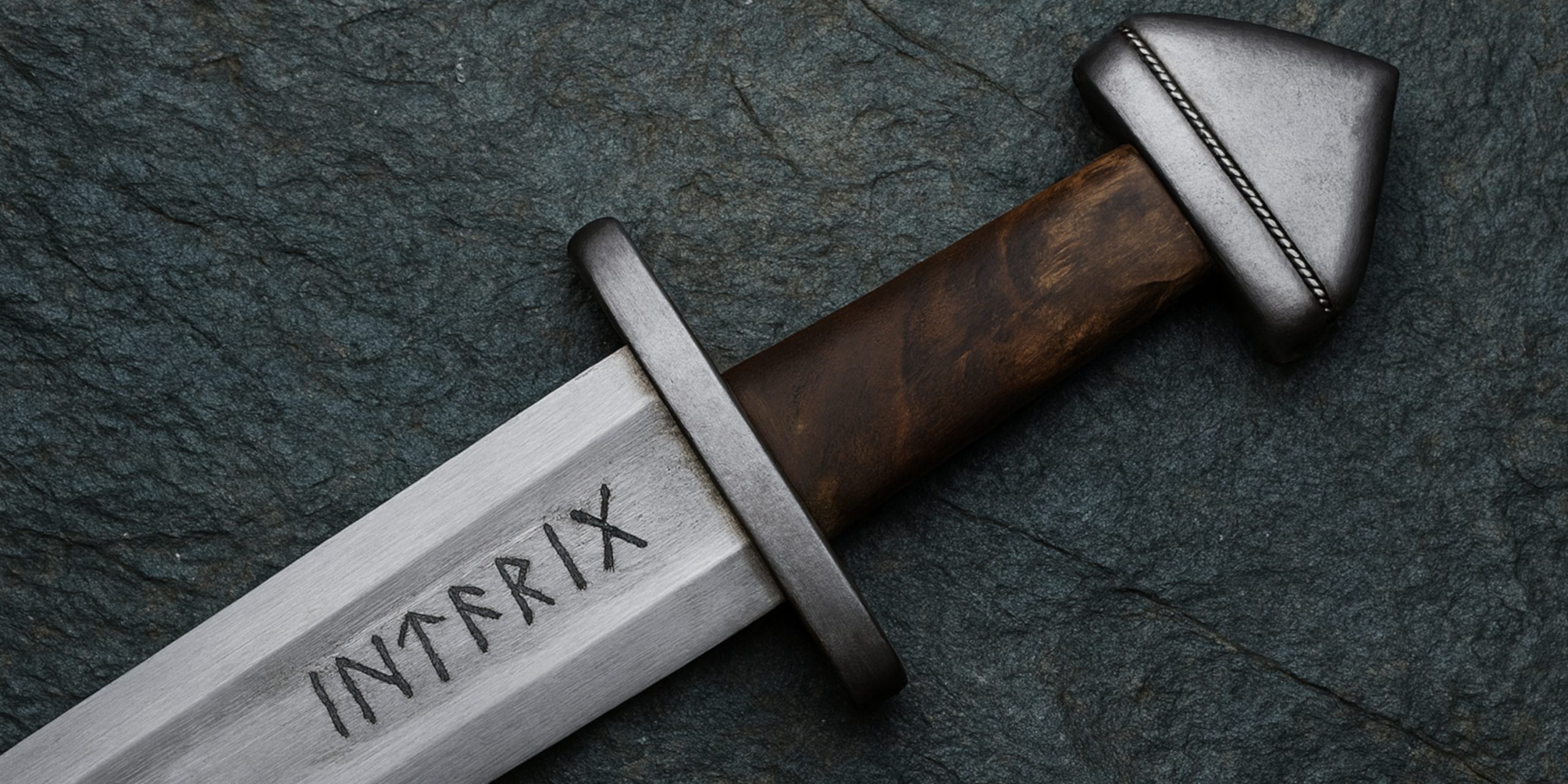
Specific sword types used by the English were typically broad, straight, double-edged blades of late Viking style. Surviving examples from the period often fall into Petersen Type S or Type X forms, with broad blades designed for powerful cuts.
Norwegian Arms and Armour
| Equipment | Description |
| Spear | Main weapon of most Norwegian warriors |
| Viking sword | High-quality double-edged swords carried by experienced fighters |
| Dane axe | Heavy two-handed axe used by elite warriors |
| Round shield | Usually painted and strongly built |
| Helmet | Iron conical helmet with nasal guard |
| Mail hauberk | More common among Norwegian veterans |
Harald Hardrada’s men probably carried some of the finest swords in northern Europe. Many Norwegian elite warriors used high-status Viking swords, including Petersen Type H, Type S and early Type X examples. These were broad-bladed weapons with deep fullers, designed for quick cuts and hard blows in the crush of a shield wall.
There is something rather grimly practical about these swords. They were not ceremonial objects. They were expensive, beautiful and built to split a man open in the mud.
The Battle Timeline
| Time | Event |
| Morning, 20 September 1066 | Edwin and Morcar deploy south of York near Fulford |
| Late morning | Hardrada and Tostig arrive and form their line |
| Early afternoon | Fighting begins between the opposing shield walls |
| Mid-afternoon | Norwegian pressure builds against the English right flank |
| Later afternoon | English line collapses near the marshes |
| Late afternoon | English army breaks and retreats toward York |
How the Battle Unfolded
At the beginning of the battle, the English line held firm. Edwin commanded one wing and Morcar the other. The shield walls met in a fierce struggle along the narrow strip of dry ground.
For a time, the English may even have had the advantage. The northern levies were defending their homeland and fighting with the sort of desperate determination that usually appears when someone unpleasant has arrived at your front door with several thousand armed friends.
The decisive moment came when the Norwegian army pressed against the English flank near the marshes.
The English position was vulnerable because the line was squeezed between bog and river. Once Hardrada forced part of the English army backward, confusion spread rapidly. Men stumbled into marshy ground, units became separated and the shield wall lost its shape.
According to later chroniclers, some English soldiers were trapped and drowned in the marshes while trying to escape.
Once the line broke, the battle became a rout.
Edwin and Morcar escaped, but their army was shattered. York could no longer resist.
Casualties
Precise numbers are impossible to know, but casualties were probably heavy.
| Army | Estimated Losses |
| English | 1,500 to 2,500 |
| Norwegian | 500 to 1,000 |
The English suffered especially badly during the retreat. Men trying to flee across marshy ground had little chance once the shield wall collapsed.
Medieval chroniclers describe the battlefield as covered with bodies. Such descriptions are often exaggerated, but in this case they were probably not far wrong.
Archaeology and the Search for the Battlefield
The Battle of Fulford is one of the few major battles of 1066 whose location can be identified with reasonable confidence.
Archaeological work and landscape study have suggested that the fighting took place near Germany Beck and the old marshland south of York.
Finds from the area include:
- Iron weapon fragments
- Arrowheads and spearheads
- Human remains discovered in nearby areas
- Evidence of the old marsh channels and watercourses that shaped the battle
No spectacular treasure hoard has appeared, unfortunately. Archaeology rarely behaves like a particularly enthusiastic adventure film. More often it involves muddy trenches, tiny fragments of metal and several people becoming very excited about soil layers.
Yet the landscape itself is perhaps the most important evidence. The narrow strip between river and marsh explains exactly why the English line collapsed.
Several modern battlefield projects have attempted to map the ground and preserve what remains of the site.
Contemporary Quotes
The Anglo-Saxon Chronicle gave a blunt and sombre account:
Then came Harald, King of Norway, into the north of England with a very great naval force.
Another chronicler later described the result:
There was great slaughter on both sides, but the Norwegians gained the victory.
The twelfth-century writer Henry of Huntingdon painted the scene vividly:
The marsh swallowed many, and the sword consumed more.
Like many medieval chroniclers, Henry was not especially interested in restraint. Still, on this occasion he was probably not entirely wrong.
The Consequences of Fulford
The victory at Fulford allowed Hardrada and Tostig to take York.
Only five days later, however, Harold Godwinson marched north from southern England with astonishing speed. On 25 September 1066 he surprised the Norwegians at Stamford Bridge and destroyed their army.
The northern campaign exhausted Harold’s forces. Immediately afterwards he had to march south again to face William of Normandy.
Fulford therefore mattered far beyond Yorkshire.
Its consequences included:
- The temporary fall of York
- The destruction of the northern earls’ army
- Harold Godwinson’s forced march north
- The exhaustion of the English king and his housecarls before Hastings
- A chain of events that helped shape the Norman Conquest
It is one of history’s great ironies. Harald Hardrada won brilliantly at Fulford, only to lose everything five days later. Edwin and Morcar lost the battle, survived, and then managed to contribute very little at Hastings. 1066 was not a year that encouraged sensible planning.
Why the Battle of Fulford is important to the story of England
Fulford deserves to stand alongside Stamford Bridge and Hastings as one of the defining battles of 1066.
It revealed the strength of the Norwegian invasion, exposed the weakness of the northern earls and forced Harold Godwinson into the desperate sequence of marches and battles that ended his reign.
The battle also reminds us how much terrain matters. The marshes of Fulford were as deadly as any sword or axe. Armies in the Middle Ages often lived or died by the ground beneath their feet.
And in the muddy fields south of York, that ground proved fatal.
Further Reading
- The Anglo-Saxon Chronicle
- Henry of Huntingdon, Historia Anglorum
- Frank McLynn, 1066: The Year of the Three Battles
- Ian Heath, The Viking Army of Harald Hardrada
- Kelly DeVries, The Norwegian Invasion of England in 1066