Ser Duncan the Tall should not have mattered.
He begins life as a Flea Bottom orphan with no name worth remembering, no coat of arms, and no clear future beyond carrying a shield for someone more important. Yet by the time history catches up with him, he has shaped a king, influenced the Targaryen dynasty, and quietly altered the course of Westeros.
Created by George R. R. Martin and introduced in The Hedge Knight, Dunk stands at the centre of the Dunk and Egg novellas, set roughly ninety years before the events of Game of Thrones. He is not clever in the Tyrion sense, not ruthless in the Tywin sense, and not magically gifted in the Bran sense. He is just decent. In Westeros, that is almost radical.
A Hedge Knight With No Pedigree
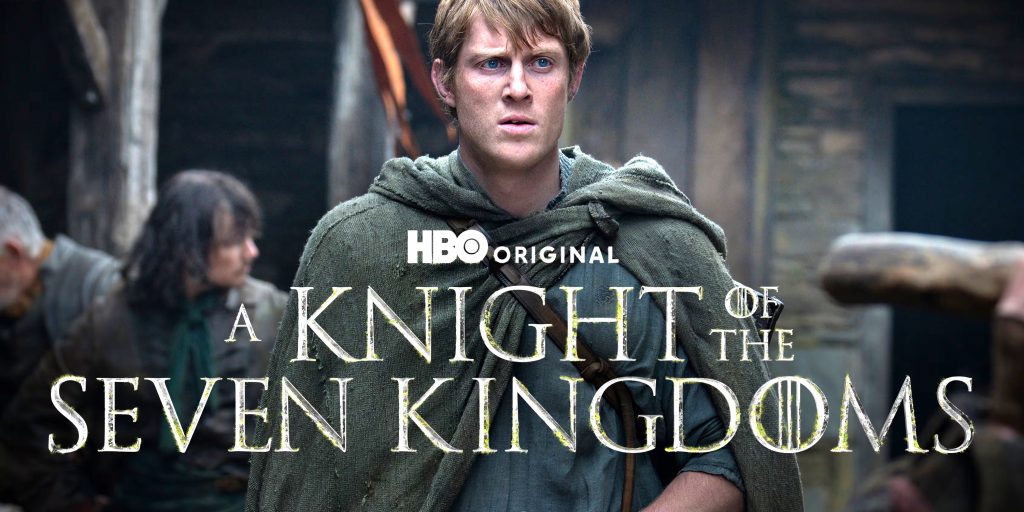
Dunk grows up in Flea Bottom in King’s Landing, a place that specialises in turning children into statistics. He becomes squire to Ser Arlan of Pennytree, a wandering hedge knight who may or may not be as grand as he claims.
When Ser Arlan dies, Dunk makes a choice that defines him. He buries his master, takes his armour, and declares himself a knight.
Was he formally knighted? It is deliberately ambiguous. He believes he was. That belief becomes the foundation of everything.
In a society obsessed with bloodlines and banners, Dunk is a walking contradiction. He is huge, awkward, and blunt. He has no polish, no noble education, and a suspicious lack of paperwork. Yet he takes the vows of knighthood seriously, even when the knights around him treat them as decorative.
The Knight Who Should Not Win
Dunk’s first real test comes at the Ashford Tourney in The Hedge Knight. He defends a puppeteer girl against a Targaryen prince. It is a terrible political decision. He could have walked away.
Instead, he chooses the harder path.
That choice drags him into a Trial of Seven, where he faces members of the royal family. The odds are not kind. What saves him is not brilliance but stubborn integrity. He refuses to bend when bending would be easier.
This becomes his pattern.
He makes mistakes. He misjudges people. He is occasionally slow on the uptake. But when pushed, he stands firm. Westeros is full of knights who speak beautifully about honour. Dunk is one of the few who acts on it.
Egg and the Future King
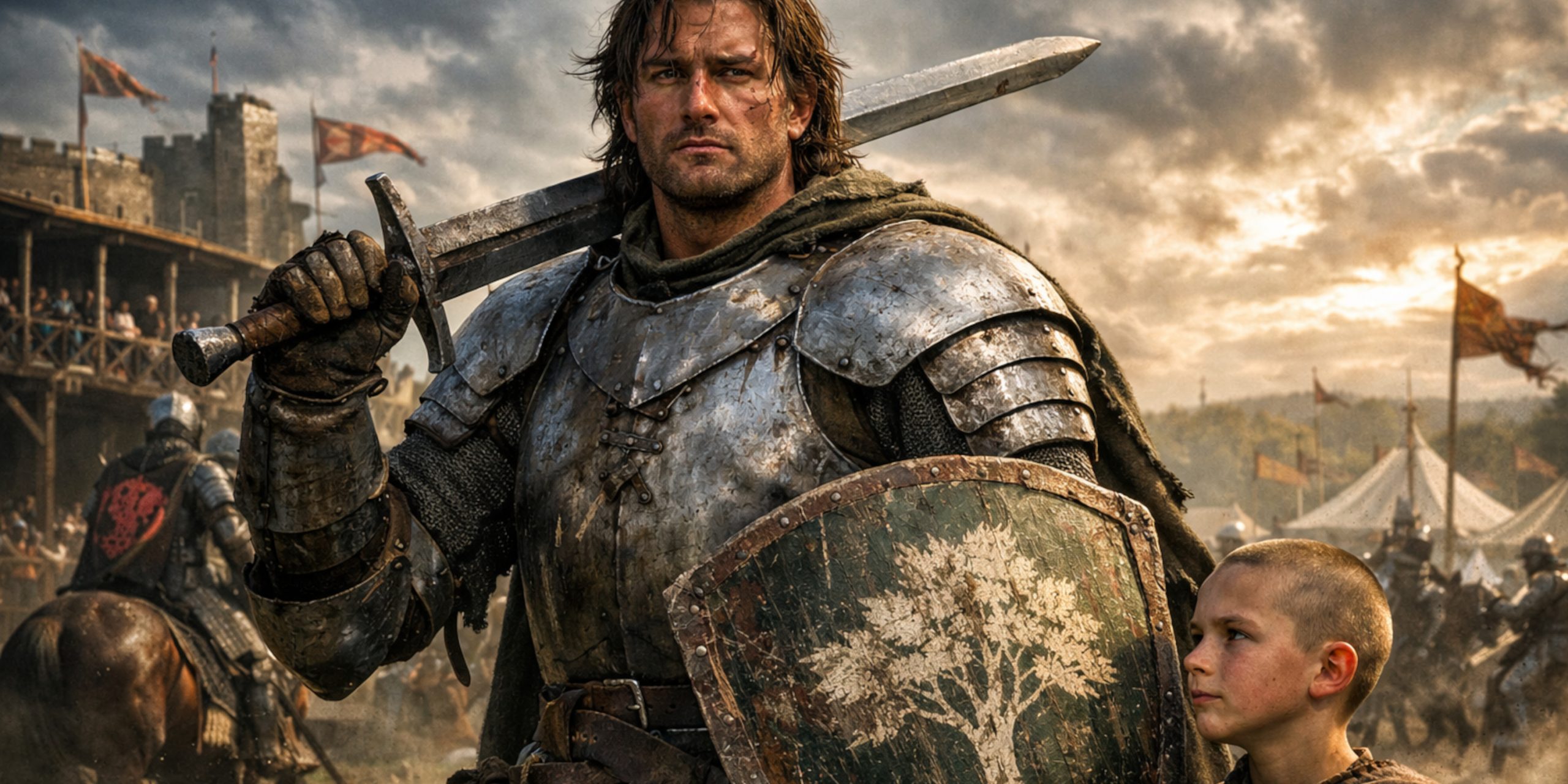
Dunk’s squire is a bald, cheeky boy named Egg. The twist is that Egg is actually Prince Aegon Targaryen, later King Aegon V Targaryen.
The dynamic is quietly brilliant. Dunk, the common-born knight of uncertain status, mentors a royal prince. Instead of filling the boy’s head with entitlement, he teaches him empathy.
Aegon V becomes known for reforms that favour the smallfolk. That does not come from nowhere. It comes from years spent travelling with Dunk, sleeping in stables, meeting peasants, and watching injustice up close.
If you want to trace the roots of Aegon’s policies, you start with Dunk’s influence.
It is hard not to see this as Martin’s subtle commentary on power. The greatest king of his generation was shaped not by courtiers, but by a man from Flea Bottom who believed that vows should mean something.
Strength Without Swagger
Dunk is described as enormous. Well over six and a half feet tall, broad as a gate, and strong enough to dominate most opponents in a melee.
Yet his physical power is not what defines him. It is restraint.
He does not relish cruelty. He does not seek glory for its own sake. When he fights, it is usually because he feels he must.
Compared to the larger than life heroes of Westerosi legend, Dunk feels almost modern. He doubts himself. He worries that he is not clever enough. He fears that he is not a “true” knight.
That insecurity is precisely why he works. He never assumes moral superiority. He tries to earn it.
Dunk and the Targaryen Legacy
Dunk’s story weaves directly into the Targaryen line.
He lives during the reign of King Aerys I and the political turbulence that follows the Blackfyre Rebellions. He witnesses the fragility of royal authority and the dangerous romanticism of rebel claimants.
By serving alongside Aegon V, Dunk stands at a hinge moment in history. The reforms of Aegon, and the later tensions between crown and nobility, help shape the unstable political climate that eventually produces the Mad King.
There is also the quiet theory, heavily implied in the wider lore, that Dunk may be an ancestor of Brienne of Tarth. His height, sense of honour, and physical build echo through generations.
Nothing is stated outright. Martin prefers suggestion over confirmation. But the thematic link is hard to ignore.
Why Dunk Feels Different
Many characters in the main series operate in shades of grey. Dunk is different. He is not naive, but he is guided by a clear moral centre.
That makes him stand out.
In a world where political calculation usually wins, Dunk’s victories feel strangely satisfying. He does not scheme his way to power. He does not manipulate outcomes. He simply refuses to betray his own code.
For a Gen Z reader raised on anti heroes and moral ambiguity, there is something refreshing about that. He is not flashy. He is not edgy. He is just solid.
And in Westeros, solid is rare.
The Tragedy of Summerhall
Dunk’s end comes at the Tragedy of Summerhall, a catastrophic fire linked to attempts at hatching dragons.
The event also claims the life of King Aegon V. Dunk dies trying to save people, most likely Egg’s family. It is exactly how you would expect him to go.
No betrayal. No grand speech. Just action.
There is a quiet poetry in that. The boy from Flea Bottom who pretended to be a knight dies as one in truth.
The Unlikely Hero Who Matters
Ser Duncan the Tall is not the smartest character in Westeros. He is not the most politically powerful. He does not command armies or dragons.
What he does command is respect.
He proves that knighthood is not about birth or banners. It is about choice. Every time he chooses the harder road, he reinforces that idea.
In a franchise filled with dragons, assassins, and prophetic destinies, Dunk’s greatest weapon is stubborn decency. Somehow, that feels more subversive than wildfire.
If Westeros ever deserved a genuine knight, it was lucky to have him, even if it did not quite know it at the time.