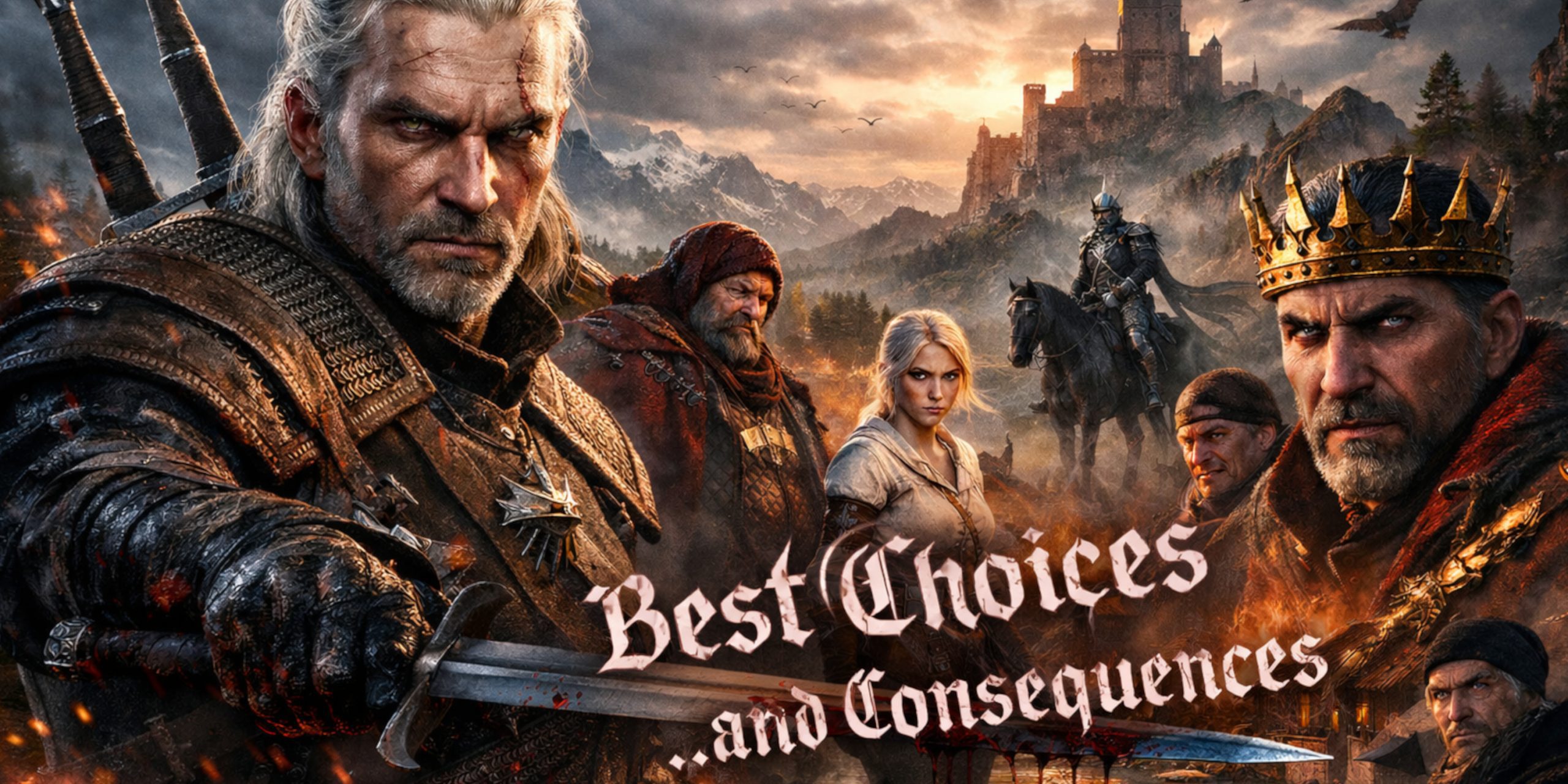
There are games that pretend your choices matter, and then there is The Witcher 3: Wild Hunt, which quietly watches you make decisions and then punishes you later with a straight face. It is less a power fantasy and more a long lesson in unintended consequences. As a historian, I find this oddly comforting. Real lives rarely hinge on heroic speeches. They hinge on awkward conversations, bad timing, and the belief that you were doing the right thing at the time.
This guide looks at the most important choices in the game, not to tell you how to be perfect, but to help you understand what the game is actually judging you for.
The Bloody Baron: Mercy, Guilt, and No Clean Ending
If you want to know what sort of story you are in, the Bloody Baron will tell you within the first ten hours. His questline is a masterclass in moral exhaustion.
Helping him save Anna by lifting the curse, even when it means sacrificing the spirit under the Whispering Hillock, leads to the least catastrophic outcome. Anna survives, broken but alive, and the Baron sets out to help her. It is not happy. It is merely survivable, which feels intentional.
Free the spirit and you save innocent children, only to doom Anna and drive the Baron to despair. It feels noble until it very much does not. From a historical perspective, this is classic triage ethics. You choose who lives now, not who lives well later.
The game never rewards you for feeling righteous. It rewards you for understanding damage control.
Ciri’s Fate: Parenting Disguised as Heroism
Ciri’s ending hinges on how you treat her, not how well you fight the Wild Hunt. This is where many players accidentally fail by trying too hard.
Supporting her independence, listening rather than lecturing, and trusting her judgement leads to the best outcomes. Comfort her after Vesemir’s death. Let her speak for herself. Do not hover.
Act like an overbearing commander and the game responds accordingly. From a medieval standpoint, this is almost amusing. Dynastic politics collapsed all the time because powerful men mistook control for care. The Witcher 3 simply lets you repeat the mistake.
If Ciri survives and becomes a witcher, it feels earned. If she becomes Empress, it feels politically correct and emotionally colder. If she dies, the game offers no melodrama. It just lets the silence sit there.
Skellige: Kings, Queens, and the Cost of Tradition
Skellige’s succession crisis looks simple. It is not.
Backing Cerys an Craite produces the most stable and humane future for the isles. She modernises without burning tradition to the ground, which historically is a rare and impressive trick.
Support Hjalmar and you get glory, raids, and short term unity. Long term stability is another matter. It mirrors countless warrior cultures that thrived in war and stumbled badly in peace.
Ignore the questline entirely and Skellige descends into chaos. This is one of the game’s quietest judgements. History does not wait for heroes who are too busy elsewhere.
Radovid, Roche, and Dijkstra: Choosing Your Tyrant
There is no good political option in the Northern Realms, only varying degrees of tolerable.
Allowing Radovid to live leads to fanaticism, purges, and cultural annihilation. It is the worst outcome, and the game makes little effort to hide that.
Siding with Roche and assassinating Radovid creates a fragile but survivable balance of power. It feels cynical, which is usually a sign you are close to realism.
Backing Dijkstra promises efficiency and strength, at the cost of personal betrayal. Killing Roche to secure that future is a moment many players regret immediately. As a historian, I would note that revolutions often eat their allies first.
Smaller Choices That Matter More Than They Should
Refusing payment for contracts builds Geralt’s reputation, even when it leaves him poorer. Accepting coin from the desperate does not break the world, but it colours it.
Deciding the fate of the botchling shapes an entire community’s future. Failing to engage with it condemns them quietly.
Even how you speak to minor characters changes the tone of later interactions. Power in The Witcher 3 is social as much as martial.
What The Witcher 3 Is Actually Saying
This is not a game about being good. It is a game about being attentive. The best outcomes come from listening, withholding judgement, and accepting that heroism is often just careful empathy under pressure.
The Witcher 3 feels less like fantasy and more like a grimly accurate depiction of leadership. Every choice solves one problem and creates another. The only real failure is refusing to choose at all.
If that sounds bleak, it is. It is also why the game still holds up so well. History rarely offers clean victories. Neither does this world.