The Battle of Lake Poyang remains one of those moments in history where scale, audacity, and sheer stubbornness collide. Fought in late summer 1363 on China’s largest freshwater lake, it was a naval contest so vast that even seasoned chroniclers struggled to make sense of it. Thousands of ships, tens of thousands of men, and two rival warlords gambling everything on control of the Yangtze heartlands.
At its centre stood Zhu Yuanzhang, a former monk turned rebel commander, and Chen Youliang, a brutal and confident naval strongman. Their struggle would decide far more than a single campaign. It would shape the fall of the Yuan dynasty and clear the path for the Ming dynasty.
Background and Strategic Context
By the 1360s, Yuan authority had fractured across southern China. Regional warlords ruled through fleets and fortified river cities, and whoever mastered the waterways controlled supply, taxation, and troop movement. Lake Poyang sat at a strategic crossroads, feeding directly into the Yangtze and shielding the wealthy Jiangxi region.
Chen Youliang commanded the larger navy and believed, not unreasonably, that weight of numbers would settle the matter. Zhu Yuanzhang knew he could not win a conventional slugging match. What followed was less a neat naval engagement and more a prolonged, improvisational struggle that mixed tactics, morale, and luck in uncomfortable proportions.
Forces
Commanders
- Zhu Yuanzhang
Rebel leader of the Red Turban movement and future Hongwu Emperor - Chen Youliang
Ruler of the Han regime and dominant naval commander of the Yangtze
Estimated Strength
| Side | Ships | Troops |
|---|---|---|
| Zhu Yuanzhang | c. 2000 to 3000 | 60,000 to 80,000 |
| Chen Youliang | c. 3000 to 4000 | 100,000 plus |
Numbers vary wildly by source. Medieval Chinese historians were not immune to inflation, especially when writing for victorious patrons.
Arms and Armour
Naval Vessels
- Tower junks with multiple decks used as floating fortresses
- Fast river craft for scouting, harassment, and boarding actions
- Fire ships packed with combustibles and set adrift into enemy lines
Personal Weapons
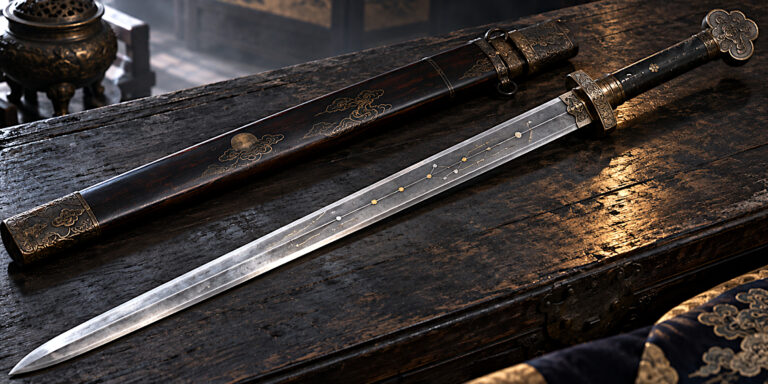
Sword types in use included:
- Jian straight double edged swords favoured by officers and elite guards
- Dao single edged sabres, practical for boarding and close combat
- Heavy polearms such as spears and halberds for fighting across ship rails
Protection and Equipment
- Lamellar armour of iron or hardened leather
- Shielded crossbowmen deployed on decks and fighting platforms
- Signal flags, drums, and gongs for command and control across the fleet
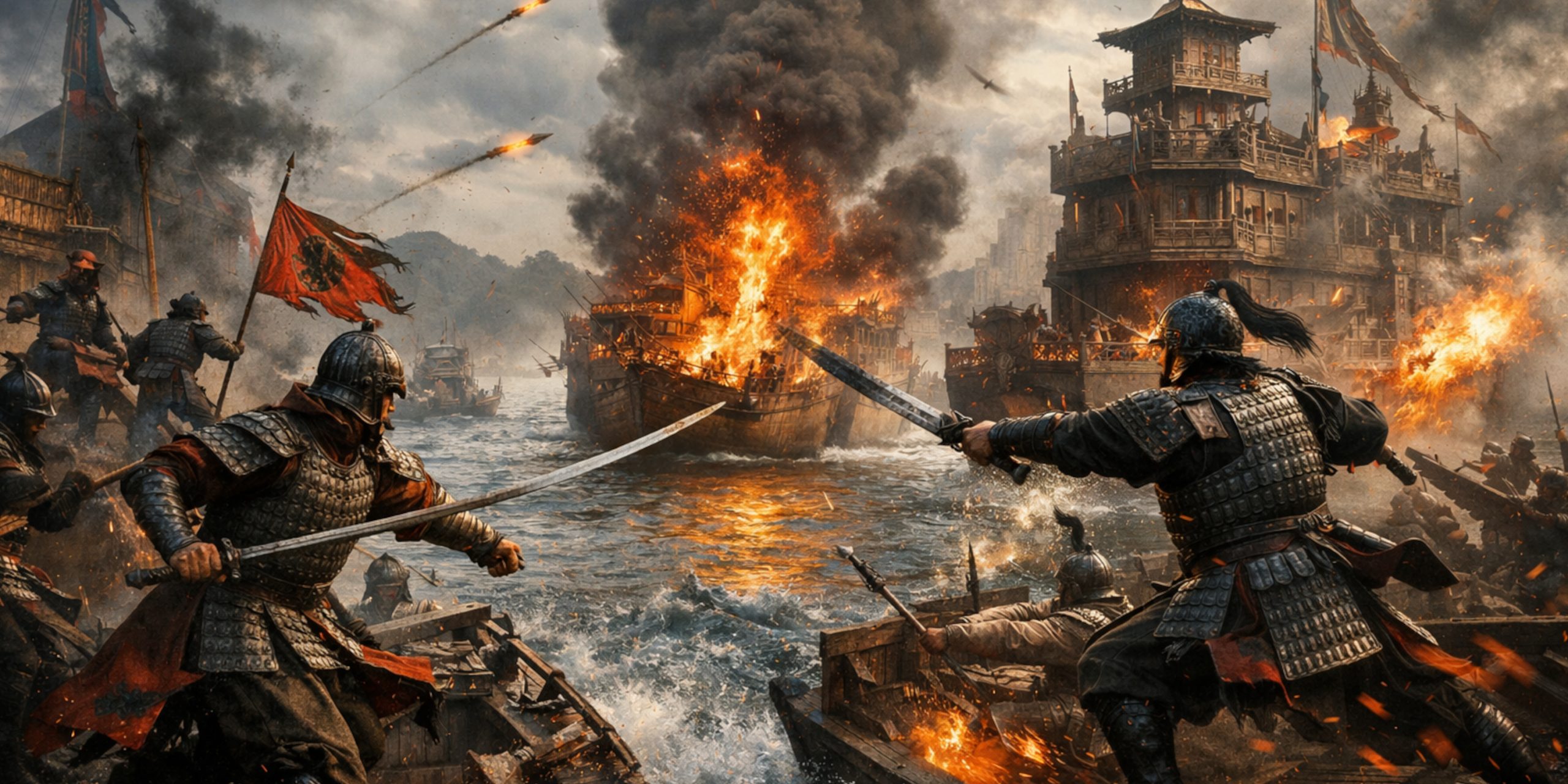
Naval combat here was intimate, violent, and chaotic. Once ships locked together, it became a floating infantry fight with very little dignity and no safe footing.
Battle Timeline
Late August 1363
Chen Youliang advances into Lake Poyang with his massive fleet, aiming to crush Zhu Yuanzhang’s forces outright.
Early September
Initial engagements favour Chen. His larger vessels dominate open water, forcing Zhu onto the defensive near shallower channels.
Mid September
Zhu deploys fire ships under favourable winds. Several of Chen’s largest tower junks are burned or disabled, sowing confusion.
Late September
Prolonged stalemate. Both sides suffer heavy losses. Disease, exhaustion, and dwindling supplies begin to bite.
4 October 1363
Chen Youliang is killed by an arrow while directing operations. His fleet rapidly loses cohesion.
Following Days
Zhu Yuanzhang presses the advantage. Chen’s remaining forces retreat or surrender. Control of the lake passes decisively to Zhu.
Archaeology and Material Evidence
Lake Poyang itself is a frustrating archaeological environment. Shifting waters, seasonal flooding, and silting have erased much direct evidence of wrecks. However:
- Ming era anchors and ship fittings have been recovered from nearby river channels
- Excavations at Nanchang reveal military storehouses linked to Zhu’s campaign
- Contemporary texts provide detailed logistical records that align with known terrain
The absence of dramatic wreck finds does not weaken the historical case. If anything, it reminds us how quickly water reclaims its own.
Contemporary Voices
A Yuan loyalist chronicler lamented the scale of the defeat, writing that:
“The lake burned for days, and the cries of men covered the water like mist.”
Later Ming accounts, predictably triumphant, recorded that:
“Heaven favoured the just cause, and the great ships of the enemy became their own tombs.”
As ever, Heaven seems remarkably flexible in its political preferences.
Consequences and Legacy
The defeat of Chen Youliang removed Zhu Yuanzhang’s most dangerous rival. Within five years, Zhu would proclaim himself emperor and found the Ming dynasty. Lake Poyang was not the final battle of the Yuan collapse, but it was the moment the balance tipped beyond recovery.
From a military perspective, it stands as one of the largest naval battles in history and a masterclass in asymmetric thinking. Bigger fleets do not always win. Better leadership, timing, and a willingness to set half the lake on fire can compensate nicely.
As a historian, I find it hard not to admire the grim pragmatism on display. It is not romantic, and it is not clean. It is power politics fought with smoke, steel, and a remarkable tolerance for chaos.